
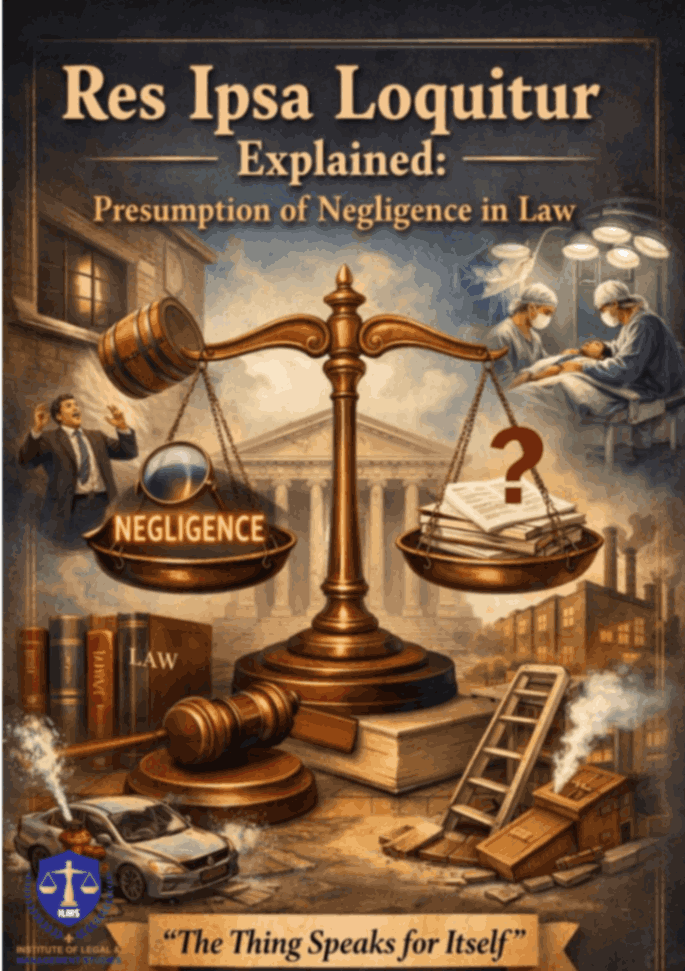
1. Introduction
1.1 Understanding Negligence as a Legal Concept
Negligence is one of the most foundational concepts in the law of torts, representing a failure to exercise the level of care that a reasonable and prudent person would have exercised under similar circumstances. At its core, negligence is concerned with conduct that falls below the expected standard of care, leading to harm or injury to another individual. The law does not punish every mistake or misjudgment; instead, it intervenes when the conduct in question deviates significantly from what society considers reasonable. To establish negligence in the traditional sense, the plaintiff must prove four crucial elements: duty of care, breach of that duty, causation (both factual and legal), and actual damage. These elements collectively create a framework through which courts assess responsibility and evaluate whether a defendant should be held liable for harm suffered by the plaintiff. In civil law systems across the world, negligence serves not only as a mechanism to compensate victims but also as a deterrent against careless behavior that could endanger individuals or the public at large.
1.2 The Challenge of Proving Breach in Traditional Negligence Claims
While the theoretical structure of negligence appears straightforward, its practical application often reveals significant complexities. One of the biggest challenges faced by plaintiffs is proving the breach of duty by the defendant. In many accidents, the exact cause of the injury may not be directly observable. Evidence may be unavailable, lost, destroyed, or exclusively controlled by the defendant. The injured party often lacks access to the technical knowledge, documentation, or physical materials necessary to explain precisely how the accident occurred or what specific action constituted the breach. This evidentiary gap becomes even more pronounced in contexts such as medical negligence, industrial accidents, or cases involving complex machinery. For example, a patient under anesthesia cannot possibly know what error was committed during surgery; similarly, a passenger injured in a train accident may have no way of discerning whether the mishap was due to a mechanical defect, negligent maintenance, or operator error. Traditional negligence law requires plaintiffs to prove conduct that falls below the standard of care, but in certain situations, doing so becomes practically impossible without some legal mechanism that allows inference of negligence from the circumstances themselves.
1.3 Emergence and Purpose of the Doctrine of Res Ipsa Loquitur
To address the inherent evidentiary difficulties in proving negligence, courts gradually developed a special doctrine known as Res Ipsa Loquitur, a Latin phrase meaning “the thing speaks for itself.” This doctrine serves as a judicial tool that allows courts to infer negligence from the very nature of the accident, even when the plaintiff cannot identify the precise negligent act. Instead of requiring direct proof of breach, the doctrine shifts the evidentiary burden in such a way that the defendant must provide an explanation showing the absence of negligence. The emergence of this doctrine reflected a pragmatic judicial response to situations where the defendant possessed superior knowledge regarding the event and where the accident itself suggested that negligence was the most probable explanation. Res Ipsa Loquitur’s purpose, therefore, is not to grant automatic liability but to ensure fairness in situations where demanding strict proof from the plaintiff would be unjust and contrary to the principles of equitable adjudication.
1.4 Relevance of the Doctrine in Modern Tort Law
In contemporary tort law, the doctrine of Res Ipsa Loquitur remains highly relevant due to the increasing complexity of social and technological life. As societies become more industrialized and dependent on specialized knowledge, the information asymmetry between plaintiffs and defendants continues to widen. Medical procedures involve advanced instruments and multi-member surgical teams; transportation systems rely on intricate mechanical and digital interfaces; factories operate heavy machinery that laypersons cannot understand. In such contexts, the plaintiff frequently lacks the evidence or expertise to pinpoint the exact cause of an accident. Courts therefore use Res Ipsa Loquitur as a doctrine that aligns legal reasoning with practicality. Its modern relevance is also seen in consumer protection law, medical litigation, public infrastructure liability, and product liability contexts where failure mechanisms are too complex for ordinary individuals to explain. The doctrine thus continues to serve its original purpose: addressing evidentiary challenges while promoting justice through reasonable presumptions.
2. Meaning and Definition of Res Ipsa Loquitur
2.1 Literal Interpretation of the Latin Maxim
The phrase Res Ipsa Loquitur literally translates to “the thing speaks for itself.” This linguistic formulation signifies that the occurrence of the accident, by its very nature, provides sufficient evidence of negligence. In other words, the event itself carries a message, without the need for the plaintiff to articulate how exactly the defendant acted carelessly. The maxim does not imply that the accident automatically confirms negligence beyond doubt; instead, it suggests that the incident is of such a kind that, in ordinary experience, it does not occur unless someone has been negligent. The emphasis is on allowing the facts to speak through the inherent improbability of the accident happening without fault.
2.2 The Legal Essence of the Doctrine
Legally, Res Ipsa Loquitur is a rule of evidence rather than a substantive principle of liability. It functions by shifting the evidentiary burden from the plaintiff to the defendant, requiring the latter to rebut the presumption that arises from the nature of the accident. The doctrine is applied only when the facts indicate that negligence is the most plausible explanation and that the defendant was in exclusive control of the instrumentality that caused the harm. Its essence lies in its capacity to prevent injustice by allowing courts to draw logical inferences based on human experience. Instead of demanding direct evidence, the law recognizes that certain accidents are inexplicable without negligence and that requiring strict proof would unfairly favor defendants who control the relevant information.
2.3 Evolution of the Maxim in Common Law Jurisdictions
The concept first developed in English common law during the 19th century and has since undergone significant refinement in various jurisdictions. Early English courts hesitated to apply the presumption because it appeared to contradict the traditional rule that plaintiffs must prove negligence. Over time, however, courts began to acknowledge that the strict requirement of direct proof was unrealistic in many cases. The doctrine matured through judicial pronouncements, especially in contexts involving falling objects, transportation accidents, and medical errors. Later, American courts adopted and expanded the doctrine, applying it with greater flexibility in personal injury lawsuits. Indian courts, influenced by both English and American jurisprudence, integrated the doctrine into their tort law framework, particularly through cases decided under the Consumer Protection Act, where courts frequently rely on Res Ipsa Loquitur due to its emphasis on fairness and practicality.
2.4 Distinguishing Res Ipsa Loquitur from Ordinary Negligence Claims
Ordinary negligence claims require the plaintiff to prove each element of negligence with concrete evidence, including showing exactly how the defendant breached the duty of care. Res Ipsa Loquitur modifies this burden by allowing courts to infer breach when direct evidence is lacking. The doctrine does not eliminate the plaintiff’s responsibility altogether; instead, it allows circumstantial evidence to play a more decisive role. In ordinary negligence, the plaintiff must identify the wrongful act; under Res Ipsa Loquitur, the plaintiff only needs to establish the circumstances that make negligence the most likely cause. The distinction is crucial because it underscores the doctrine’s role as an evidentiary shortcut based on probability and logic, rather than a substantive transformation of negligence standards.
3. Historical Background and Development
3.1 Early English Roots and Foundational Principles
The origins of Res Ipsa Loquitur lie in early English tort law, where courts sought ways to address accidents that clearly pointed toward negligence but lacked direct evidence. Before the doctrine was formally articulated, courts implicitly relied on reasoning similar to Res Ipsa Loquitur when dealing with unexplained accidents such as collapsing structures or mechanical failures. The foundational principle was rooted in common sense: if an occurrence is highly unusual and typically results from carelessness, it is reasonable to infer that someone failed to exercise due care. This logical starting point gradually paved the way for the explicit recognition of the doctrine in later cases.
3.2 The Landmark Case of Byrne v. Boadle (1863)
The formal recognition of the doctrine is widely attributed to the landmark English case Byrne v. Boadle (1863), where a barrel of flour rolled out of a warehouse window and injured a passerby. The plaintiff had no way of proving exactly how the barrel had fallen or what specific negligence had occurred inside the warehouse. The court held that barrels do not ordinarily fall out of windows without some negligence, and therefore, the accident itself constituted prima facie evidence of negligence. This judgment marked a turning point, as it established the principle that the occurrence of an unusual accident could be sufficient to shift the burden to the defendant. Byrne v. Boadle thus became the cornerstone case that shaped the subsequent evolution of the doctrine.
3.3 Growth of the Doctrine Through English Common Law
Following Byrne v. Boadle, English courts began applying the doctrine more frequently, although they did so cautiously. In Scott v. London and St. Katherine Docks Co., the court further refined the doctrine by stating that when an accident occurs under circumstances where it is under the defendant’s management and such accidents do not normally occur without negligence, the plaintiff needs no further evidence. This expanded the scope of the doctrine and provided clearer guidelines for its application. Subsequent decisions extended the doctrine to cases involving transportation, construction equipment, and infrastructure failures.
3.4 Importation into American Tort Law
American courts initially followed English formulations but later adapted the doctrine to suit local legal and societal needs. U.S. courts were more willing to apply the doctrine expansively, particularly in medical malpractice and product liability cases. They recognized that modern life created scenarios where plaintiffs would be left without recourse unless courts allowed inferences of negligence. As a result, American jurisprudence developed more nuanced categories of Res Ipsa Loquitur, such as “exclusive control” being interpreted more liberally and allowing application even when multiple defendants were involved.
3.5 Recognition and Development in Indian Jurisprudence
Indian law, influenced by both English common law and American legal developments, embraced Res Ipsa Loquitur as a vital tool for ensuring justice in negligence cases. Indian courts applied the doctrine in various contexts, including medical negligence, railway accidents, industrial mishaps, and municipal failures. Noteworthy cases such as Shyam Sunder v. State of Rajasthan and V. Krishna Rao v. Nikhil Super Specialty Hospital reinforced the importance of the doctrine in Indian law. The Consumer Protection Act, 1986 further strengthened the role of Res Ipsa Loquitur by simplifying procedural requirements and emphasizing speedy, fair compensation for victims. Over time, Indian courts have adopted a flexible and pragmatic approach to the doctrine, treating it as a logical inference based on probability rather than a rigid rule.
4. Essential Conditions for Invoking Res Ipsa Loquitur
4.1 The Nature of the Accident Must Suggest Negligence
For Res Ipsa Loquitur to apply, the accident must be of a type that ordinarily does not happen without negligence. Courts rely on common human experience to determine whether the event is inherently unusual or improbable in the absence of carelessness. Examples include surgical tools left inside a patient’s body, trains derailing, or electric poles collapsing without external influence. The foundational idea is that the accident itself indicates a departure from standard care because such incidents rarely occur unless someone failed in their responsibilities.
4.2 Exclusive Control of the Instrumentality by the Defendant
A crucial requirement of the doctrine is that the instrumentality or agency that caused the harm must have been under the exclusive control of the defendant. This condition ensures that the defendant is in the best position to explain how the accident occurred. Exclusive control does not always imply literal or physical control; courts interpret it broadly to include responsibility, oversight, management, or operational authority. In modern contexts such as hospital settings or industrial factories, several actors may be involved, yet courts recognize constructive or collective control as sufficient for the doctrine’s application.
4.3 Absence of Contributory Negligence by the Plaintiff
The doctrine does not apply if the plaintiff’s own careless conduct contributed to the accident. Courts examine whether the injured party exercised reasonable care and whether their actions played any role in causing the harm. If contributory negligence is evident, the presumption of negligence weakens, as the accident may not be solely attributable to the defendant. This condition ensures fairness and prevents plaintiffs from benefiting from a presumption of negligence when they themselves contributed to the risk.
4.4 Courts’ Interpretation of the “Ordinary Course of Events” Principle
Courts apply the doctrine by analyzing whether the accident is one that, in the ordinary course of events, does not occur without negligence. This principle relies heavily on logic, probability, and common human experience. Courts do not demand statistical data; instead, they ask whether the nature of the incident aligns with general expectations of safety. If an event is highly abnormal and carries a natural inference of carelessness, the doctrine becomes applicable. This interpretation ensures that the doctrine remains flexible and adaptable to a wide range of factual situations.
4.5 When the Doctrine Fails Due to Lack of Factual Foundation
Res Ipsa Loquitur cannot be applied mechanically. If the basic facts do not support the inference of negligence, courts decline to apply the doctrine. For example, if an accident could have occurred due to multiple non-negligent reasons, or if evidence shows that the defendant exercised reasonable care, the presumption does not arise. The doctrine also fails when the plaintiff cannot demonstrate the foundational facts necessary for invoking the presumption, such as proving that the defendant had control or that the accident was indeed unusual.
5. The Rationale Behind the Doctrine
5.1 Addressing the Imbalance of Information Between Parties
One of the primary rationales behind Res Ipsa Loquitur is addressing the inherent imbalance of information between plaintiffs and defendants. In many accidents, the defendant possesses superior knowledge regarding how the event occurred, while the plaintiff remains in the dark. This imbalance creates a significant barrier to justice, as the plaintiff cannot be expected to prove facts that lie entirely within the defendant’s domain. By shifting the burden of explanation to the party with greater access to evidence, the doctrine ensures fairness and prevents defendants from escaping liability merely because plaintiffs cannot uncover hidden information.
5.2 The Logic of “Proof by Circumstances”
The doctrine is grounded in the principle that circumstances themselves can act as proof. Instead of requiring direct evidence, courts draw reasonable inferences from the nature of the accident. This approach aligns with human experience, which often relies on circumstantial reasoning. When a type of accident is so closely associated with negligence that its occurrence alone suggests carelessness, it becomes logical to presume negligence unless the defendant can offer a convincing explanation. This method of inference ensures that justice is not derailed by technicalities or lack of direct evidence.
5.3 Judicial Policy Considerations
Courts also support the doctrine because it serves important policy objectives, such as encouraging higher standards of care among individuals and organizations responsible for potentially dangerous activities. By shifting the burden of proof to defendants in certain circumstances, the law incentivizes careful behavior and promotes the adoption of safety measures. Additionally, the doctrine supports judicial efficiency by preventing lengthy trials in cases where negligence is the most obvious explanation. It simplifies litigation without compromising fairness, making it a valuable tool within the judicial system.
5.4 Ensuring Fairness When Evidence Is Destroyed or Unavailable
In many accidents, especially those involving machinery, fire, or medical procedures, relevant evidence may be destroyed, hidden, or inaccessible to the plaintiff. Res Ipsa Loquitur ensures that such situations do not unfairly prejudice victims. For example, in surgical cases where the patient is unconscious, it is unreasonable to expect them to know exactly what went wrong. Similarly, accidents involving collapsing structures or malfunctioning equipment may leave no trace of the exact cause. The doctrine ensures that plaintiffs are not denied justice simply because critical evidence lies beyond their reach.
5.5 Balancing Probability and Presumptions in Civil Liability
Civil law operates on the standard of the preponderance of probabilities, not absolute certainty. Res Ipsa Loquitur aligns with this principle by allowing courts to rely on the most probable explanation for an accident. The doctrine balances probabilities in favor of the plaintiff when the nature of the accident suggests negligence is the more likely cause. This probabilistic approach ensures fairness while maintaining the integrity of the burden-shifting framework. It recognizes that civil liability does not require pinpointing every detail but instead focuses on logical inference based on circumstances.
6. Elements of Presumption Under Res Ipsa Loquitur
6.1 Understanding the Concept of Presumed Negligence
Presumed negligence lies at the core of the doctrine of Res Ipsa Loquitur. In ordinary negligence cases, the plaintiff must establish the defendant’s breach of duty by presenting direct or circumstantial evidence of the wrongful act. However, presumed negligence operates differently: it allows the court to infer negligence from the very nature of the accident. This presumption arises when the event is so uncommon in the absence of negligence that a reasonable mind would naturally conclude that carelessness is the most likely explanation. The presumption does not mean that negligence is conclusively established; rather, it functions as a logical inference that the defendant must rebut. The law recognizes that certain incidents—such as the sudden collapse of a bridge, a surgical tool left inside a patient’s body, or a train carriage door inexplicably opening during motion—carry with them an inherent suggestion of negligence. Thus, presumed negligence serves as a legal bridge between the unexplained accident and the plaintiff’s need for justice.
6.2 Burden of Proof vs. Burden of Evidence
The distinction between burden of proof and burden of evidence is fundamental to understanding Res Ipsa Loquitur. The burden of proof refers to the plaintiff’s responsibility to establish the elements of negligence on a balance of probabilities. This burden remains with the plaintiff throughout the trial and never fully shifts to the defendant. The burden of evidence, however, is the responsibility to produce or explain facts. Under Res Ipsa Loquitur, while the overall burden of proof technically remains with the plaintiff, the burden of evidence shifts to the defendant once the foundational facts supporting the doctrine are established. This means that the defendant is compelled to offer an explanation that shows how the accident could have occurred without negligence. If the defendant fails to produce such an explanation, the court may hold the defendant liable based on the presumption that negligence is the most probable cause. This dynamic shifting of evidentiary responsibility ensures fairness and aligns the law with practical realities.
6.3 The Shift of Evidentiary Responsibility to the Defendant
One of the most significant contributions of Res Ipsa Loquitur is its ability to shift evidentiary responsibility from the plaintiff to the defendant. In many scenarios, the defendant is in the best position to know how the accident occurred or to access evidence relating to the event. When an accident itself suggests negligence, the defendant must provide a reasonable explanation to avoid liability. This shift operates as a protective mechanism for plaintiffs, preventing defendants from hiding behind their superior knowledge. For example, a hospital that used complex surgical equipment cannot remain silent by claiming that the plaintiff has not shown which specific act caused the injury. Instead, the hospital must demonstrate that the surgery was conducted with due care and that the injury could occur even in the absence of negligence. The shift does not guarantee liability but compels defendants to clarify the circumstances, ensuring that justice is not frustrated by information asymmetry.
6.4 The Role of Circumstantial Evidence
Circumstantial evidence plays a central role in the application of Res Ipsa Loquitur. Unlike direct evidence, which points specifically to the wrongful act, circumstantial evidence involves surrounding facts that allow courts to infer negligence. The doctrine itself is built upon the idea that circumstances can “speak” in ways that create a strong presumption of carelessness. Courts consider the nature of the accident, the defendant’s position of control, the typical causes of such events, and the absence of alternative explanations. Circumstantial evidence does not diminish the quality of proof; in many cases, it can be equally, if not more, persuasive than direct testimony. For instance, the sudden snapping of a brand-new elevator cable is a circumstantial indication of defective maintenance or manufacturing. In medical settings, postoperative complications that do not ordinarily occur without negligence may also serve as circumstantial evidence. Therefore, the doctrine allows courts to draw rational conclusions from facts that surround the accident, even when no one witnessed the precise negligent act.
6.5 Rebuttable vs. Irrebuttable Presumptions
Res Ipsa Loquitur generally gives rise to a rebuttable presumption, meaning that the defendant has the opportunity to disprove or explain the circumstances. The presumption is not conclusive; defendants may escape liability by showing that they exercised reasonable care or that the accident was caused by an unforeseeable event such as an act of God. Courts hesitate to apply an irrebuttable presumption because it would undermine fairness and contradict the adversarial nature of civil litigation. However, in rare and extreme cases—such as when the defendant intentionally destroys evidence or provides obviously false explanations—the court may treat the presumption as stronger or nearly conclusive. Typically, though, the doctrine preserves balance by allowing defendants to rebut the inference. This ensures that the doctrine functions as a flexible evidentiary tool rather than a rigid rule of automatic liability.
7. Application of the Doctrine in Different Types of Cases
7.1 Medical Negligence and Surgical Accidents
Medical negligence represents one of the most prominent areas where Res Ipsa Loquitur applies, primarily due to the knowledge gap between patients and healthcare providers. When a patient undergoes surgery, especially under general anesthesia, they are entirely dependent on the medical team. If an unexpected injury occurs—such as damage to an unrelated body part or retention of a surgical object—the court naturally infers negligence because such events do not ordinarily occur with proper care. Medical environments are replete with instruments, protocols, and procedures that patients cannot observe or control. Courts, therefore, rely on the doctrine to address situations where it would be unreasonable to expect patients to identify specific errors. This application of the doctrine ensures that medical professionals remain accountable and uphold high standards of care.
7.2 Accidents Involving Transportation and Public Carriers
Transportation systems involve complex machinery, heavy-duty infrastructure, and large numbers of passengers, making public safety a matter of utmost importance. When transportation accidents occur—such as derailments, unexplained collisions, or malfunctioning doors—the courts apply Res Ipsa Loquitur because public carriers owe a heightened duty of care to passengers. These accidents rarely occur in the absence of negligence, and the operational details are typically under the exclusive control of the carrier. The doctrine has historically played a crucial role in cases involving railways, airlines, buses, and ships. Courts use it to infer that the transportation authority failed to follow safety protocols unless they can provide a plausible explanation to the contrary.
7.3 Industrial and Workplace Mishaps
- Certificate Course in Labour Laws
- Certificate Course in Drafting of Pleadings
- Certificate Programme in Train The Trainer (TTT) PoSH
- Certificate course in Contract Drafting
- Certificate Course in HRM (Human Resource Management)
- Online Certificate course on RTI (English/हिंदी)
- Guide to setup Startup in India
- HR Analytics Certification Course
Industrial accidents often involve heavy machinery, hazardous materials, and complex operational processes. Workers may not understand the intricacies of machines or safety systems, making it difficult for them to identify specific causes when accidents occur. Courts recognize that such mishaps—such as the collapse of factory structures, machine malfunctions, or explosions—typically arise from negligence in maintenance, inspection, or supervision. As a result, Res Ipsa Loquitur becomes an essential doctrine in workplace injury claims, especially in cases where employers possess exclusive control over the machinery and workplace environment. The doctrine thus plays a vital role in ensuring safe workplace practices and holding employers accountable.
7.4 Accidents Caused by Dangerous Objects or Machinery
Dangerous objects such as electrical appliances, lifts, gas cylinders, construction cranes, and industrial reactors require stringent supervision. When accidents occur involving such objects—like a lift plunging downward or a gas cylinder exploding—the courts often invoke Res Ipsa Loquitur because individuals handling such items must exercise a high level of care. The doctrine is particularly relevant in cases involving malfunctioning consumer appliances or defective public utilities, where the internal mechanisms are too technical for ordinary users to understand. The presumption of negligence arises from the dangerous nature of the object itself, combined with the fact that such failures are uncommon without carelessness.
7.5 Fire, Electricity, and Infrastructure-Related Accidents
Accidents arising from fire outbreaks, electric shocks, or collapsing infrastructure frequently fall within the ambit of Res Ipsa Loquitur. Such incidents are often caused by negligent maintenance, faulty wiring, structural weaknesses, or failure to follow safety standards. When a building collapses or an electric pole falls in normal weather conditions, courts infer negligence based on the abnormality of the event. Infrastructure cases often involve public authorities, contractors, or municipal bodies who have exclusive control over the relevant structures. As such, the doctrine serves an important public-interest function by holding authorities accountable for the safety of public spaces.
7.6 Consumer Cases and Product Liability Claims
Consumer protection and product liability are contemporary domains where Res Ipsa Loquitur has gained increasing significance. Consumers often lack the technical expertise to understand the internal mechanics of products such as pressure cookers, automobiles, electrical devices, or packaged goods. When such products malfunction in unexpected ways—such as bursting, overheating, or causing injury—courts apply the doctrine to presume negligence by the manufacturer or supplier. The Consumer Protection Act in India, for example, encourages reliance on Res Ipsa Loquitur to ensure justice for consumers without requiring them to decode complex technical failures. The doctrine thus strengthens the consumer’s position in the marketplace. Below is Section 8 explained in extreme detail, in your preferred paragraph-style writing with minimal pointers, fully aligned with the table of contents you provided.
8. Landmark Cases Shaping the Doctrine
The doctrine of Res Ipsa Loquitur has not evolved merely through conceptual development, but rather through a long lineage of judicial precedents where courts confronted unusual accidents that could not be explained by ordinary human conduct. These cases collectively shaped the contours of the doctrine, refined its applicability, and helped courts across common law jurisdictions understand how presumptions of negligence should be treated in civil liability cases. Every major judgment has contributed either a principle, a limitation, or a clarification, ultimately making Res Ipsa Loquitur a powerful but carefully regulated legal tool. This section explores each landmark case in depth, elaborating on its facts, issues, legal reasoning, and its contribution to the doctrine.
8.1 Byrne v. Boadle (1863)
The case of Byrne v. Boadle is universally regarded as the foundational judgment that formally recognised the principle of Res Ipsa Loquitur. The incident involved a man walking on a public street when a barrel of flour suddenly fell from a warehouse and struck him. The defendant argued that the plaintiff failed to provide evidence showing exactly how the defendant had been negligent. There was no witness who could explain whether the barrel slipped, whether it was mishandled, or whether employees were careless. However, the court reasoned that a barrel does not ordinarily fall from a warehouse window unless someone has failed in exercising due care. The event itself carried an inherent suggestion of negligence. This decision was groundbreaking because it rejected the rigid requirement that plaintiffs must always produce direct evidence of negligent behaviour. Instead, the court established that in certain situations, the accident itself is sufficient to presume negligence. The ruling introduced the idea that unexplained accidents, when inconsistent with ordinary care, justify shifting the evidentiary burden onto the defendant. This case became the cornerstone for the doctrine across jurisdictions, influencing later English, American, and Indian tort law.
8.2 Scott v. London and St. Katherine Docks Co.
The case of Scott v. London and St. Katherine Docks Co. is the first formal articulation of the doctrine in explicit legal language. The plaintiff was passing by a dock when heavy bags of sugar fell on him from a crane controlled by the defendants. The defendants denied responsibility and asserted that there was no evidence showing what caused the fall. The court ruled that certain accidents are so obviously connected with a lack of due care that courts can presume negligence unless the defendant provides an explanation. It was in this judgment that the classic formulation—“the thing speaks for itself”—was clearly stated. The court held that if the plaintiff had suffered an injury from an object under the management of the defendant, and if such an accident does not ordinarily occur with proper care, the burden shifts to the defendant to prove absence of negligence. This case refined the doctrine by identifying two essential elements: exclusive control and nature of the accident. It remains one of the most frequently cited cases internationally for understanding the theoretical foundation of Res Ipsa Loquitur.
8.3 Gee v. Metropolitan Railway Co.
This case contributed to the doctrine by illustrating the relevance of control and timing. In Gee v. Metropolitan Railway Co., a passenger was injured when a railway carriage door suddenly opened while the train was in motion. The passenger argued that doors do not ordinarily open unless they have been negligently secured. The railway company attempted to argue that another passenger might have tampered with the door. The court rejected the defence because the door opened immediately after the journey began, at a time when only the staff had control over it. This case clarified that the presumption of negligence arises when the instrumentality causing harm was within the defendant’s exclusive management at the critical moment. The ruling highlighted that the timing of the accident is essential in determining whether the defendant had control. Courts began to understand that exclusive control does not always mean literal control at every moment, but rather control at the point when negligence could likely have occurred. The case strengthened the evidentiary reasoning of the doctrine, demonstrating how circumstantial inferences can be powerful tools in the absence of direct proof.
8.4 Easson v. London and North Eastern Railway
The judgment in Easson v. London and North Eastern Railway provided an important limitation to the doctrine of Res Ipsa Loquitur. Here, a child fell from a train through a door that somehow opened between stations. Unlike the earlier case of Gee, the accident occurred long after the journey had begun, and many passengers might have interacted with the door. The court held that the railway company could not be presumed negligent because the door may have been tampered with by passengers. As a result, the requirement of exclusive control was not satisfied. This case is significant because it demonstrated that courts will not apply the doctrine merely because the defendant owns or operates the instrumentality. Instead, there must be a reasonable basis for concluding that the defendant was in charge at the relevant moment. The ruling set an important restraint: Res Ipsa Loquitur cannot be applied if the facts are equally consistent with negligence by someone other than the defendant. The case thus served to prevent misuse of the doctrine in situations where uncertainty is too great to justify shifting the burden.
8.5 Cassidy v. Ministry of Health
The case of Cassidy v. Ministry of Health is one of the most influential medical negligence precedents applying Res Ipsa Loquitur. The plaintiff underwent a routine operation to correct stiffness in two fingers. However, following the surgery, the condition worsened, leaving the plaintiff’s hand permanently deformed. The hospital argued that medical treatment involves inherent risks and that the plaintiff failed to show exactly what went wrong during the procedure. The court rejected this argument, holding that a routine medical procedure that results in a worsening of the patient's condition without a logical explanation naturally suggests negligence. The ruling recognised that during surgery, doctors and nurses possess exclusive control over the patient’s body and medical instruments. Therefore, when an unexpected and unexplained injury arises in a controlled medical setting, the burden shifts to the healthcare provider to show that reasonable care was taken. This judgment expanded the doctrine into the field of medical negligence and acknowledged that patients cannot provide evidence of what happens in the operating room. It remains a guiding authority for courts dealing with surgical errors, postoperative complications, and unexplained injuries in hospital settings.
8.6 Indian Case Laws
India has developed a robust jurisprudence around Res Ipsa Loquitur, often applying the doctrine in public safety, medical negligence, consumer protection, and infrastructural failure cases. Indian courts generally interpret the doctrine as a rule of evidentiary inference rather than substantive law. They have consistently held that when the circumstances of an accident point overwhelmingly to negligence, the defendant must present a convincing explanation to rebut the presumption.
8.6.1 Shyam Sunder v. State of Rajasthan
This landmark case involved the collapse of a public building that resulted in casualties. The structure was under government management, and the collapse occurred without any intervening external forces such as storms or earthquakes. The Supreme Court held that buildings do not collapse unless there is negligence in maintenance, supervision, or construction. The State had exclusive control over the structure, and ordinary citizens had no role in its upkeep. Therefore, the burden shifted to the State to explain how the collapse occurred without negligence. The court emphasised that in public institutions, where the government alone possesses technical knowledge and relevant records, Res Ipsa Loquitur is vital to prevent injustice. This judgment strengthened accountability in public administration and is frequently cited in cases involving infrastructural failure.
8.6.2 V. Krishna Rao v. Nikhil Super Specialty Hospital
This judgment is one of the most important medical negligence decisions of the Supreme Court applying Res Ipsa Loquitur. The plaintiff’s wife died due to staff negligence in diagnosis and treatment. The Court held that the hospital’s explanation was vague, incomplete, and inconsistent. Since hospitals possess superior knowledge about patient care and have exclusive control over medical procedures, the burden lay on them to disprove negligence. The ruling reinforced that in medical settings, the doctrine plays a crucial role because patients cannot access internal information about treatment protocols, equipment handling, or surgical decisions. It also emphasised that poor record-keeping by hospitals allows courts to draw adverse inferences under the doctrine. The case significantly strengthened patient rights in India.
8.6.3 Municipal Corporation of Delhi v. Subhagwanti
This case involved the collapse of a 70-year-old clock tower maintained by the Municipal Corporation of Delhi. The sudden failure caused fatalities and widespread damage. The Court held that structures like clock towers do not fall spontaneously without negligence in inspection and maintenance. Since the object was under the exclusive control of the municipality, the presumption of negligence was justified. The judgment reiterated that Res Ipsa Loquitur is especially relevant when civic bodies are responsible for public safety and private citizens have no access to operational details. The ruling expanded the doctrine’s applicability to municipal negligence and failures of public infrastructure.
8.6.4 Pushpabai Purshottam Udeshi v. Ranjit Ginning & Pressing Co.
This case dealt with an accident involving a motor vehicle owned by a company. The plaintiff’s husband died in an accident while travelling in the company's car. The driver was speeding and lost control. The court observed that such accidents ordinarily point toward negligent driving unless there is evidence of some exceptional circumstance. Therefore, the burden shifted to the company to show that the accident did not arise due to lack of reasonable care. The case is important because it applied the doctrine in the context of motor vehicle accidents and employer liability. It also strengthened the idea that where the defendant has control over both the instrumentality and the actor (the employee-driver), the presumption of negligence is stronger.
9. How Courts Interpret “Exclusive Control”
The requirement of “exclusive control” is one of the most debated components of the doctrine of Res Ipsa Loquitur. Courts have historically relied on this element to determine whether the defendant was in a position to prevent the accident and whether the presumption of negligence is justified. However, exclusive control does not imply absolute physical control at every moment, nor does it mean that no one else could ever have interacted with the instrumentality. Instead, courts look for practical, supervisory, and operational control that signifies the defendant had the primary responsibility to prevent the accident. Over time, the interpretation has broadened, especially in cases involving multiple actors, medical negligence, or complex institutional settings, where defining control requires understanding the context rather than focusing solely on ownership or physical possession. The central judicial inquiry is whether the defendant was in a better position than the plaintiff to explain how the accident occurred. If the answer is yes, the element of control is generally satisfied.
9.1 Traditional Interpretation of Exclusive Control
Traditionally, courts interpreted exclusive control in a literal and narrow sense, focusing primarily on physical possession of the object that caused the injury. Under this classical approach, a defendant was considered to have exclusive control only when the instrumentality was entirely within their custody and no third party had access to it. This interpretation emerged in early English cases dealing with falling objects, malfunctioning machinery, or railway accidents where it was easy to determine control based on physical boundaries. For example, when a barrel fell from a warehouse or when a train door opened while the vehicle was in motion, control was assumed to lie exclusively with the owner or operator. The logic was simple: when only one party had direct access to the object, that party must explain how the accident happened. This version of exclusive control reflected a period when workplaces and public utilities were simpler and the chain of responsibility could be identified with relative ease. However, as society evolved, workplace structures changed, medical teams expanded, and modern institutions became more complex, necessitating a more flexible interpretation.
9.2 Multiple Defendants and Shared Responsibility
In cases involving multiple defendants or situations where control appears fragmented, courts have recognised that strict adherence to exclusive physical control would unjustly deny plaintiffs access to remedies. Therefore, the modern approach acknowledges shared, joint, or overlapping control. Courts have held that Res Ipsa Loquitur may still apply even when several individuals or entities shared responsibility for the instrumentality. For example, in medical procedures involving surgeons, anesthetists, nurses, and hospital staff, each actor contributes to the overall control of the patient’s condition. Similarly, in industrial accidents, more than one organisational unit may be involved in maintenance, inspection, or supervision. Instead of requiring plaintiffs to identify which specific defendant acted negligently, courts accept that the entire group may be collectively responsible, unless they can demonstrate otherwise. This approach prevents defendants from exploiting institutional complexity to escape liability. The presumption of negligence, therefore, shifts to all possible defendants collectively, who must then clarify their individual roles and produce exculpatory evidence.
9.3 Control in Medical and Hospital Settings
In medical litigation, courts interpret exclusive control far more generously in favour of patients. During surgeries, diagnostic procedures, and inpatient treatment, patients are unconscious or incapacitated, having surrendered their bodies entirely to the care of the medical team. Courts recognise that it is neither reasonable nor possible for patients to identify which doctor or nurse mishandled a procedure or equipment. As a result, hospitals and medical practitioners are deemed to have exclusive control over not only the surgical instruments but also the timing, method, and manner of treatment. The doctrine is frequently invoked when injuries occur in situations where patients are anesthetised, when sterile objects are left inside the body, or when unexplained complications arise in otherwise routine procedures. This broad interpretation of control ensures that healthcare institutions cannot hide behind collective responsibility, lack of record-keeping, or gaps in documentation. The burden falls squarely on the medical personnel to prove that they exercised appropriate standard of care throughout.
9.4 Res Ipsa Loquitur and Vicarious Liability
Vicarious liability expands the idea of control by recognising that employers exercise supervisory authority over employees even if the employees have direct control over the instrumentality. Courts treat employers as having constructive control through their right to supervise, train, and enforce protocols. Therefore, accidents caused by employees during the course of employment may invoke Res Ipsa Loquitur against the employer even if the employer was not physically present. This interpretation is especially relevant in cases involving negligent drivers, machine operators, hospital staff, and public utility workers. Courts have repeatedly held that institutional negligence, poor maintenance systems, and inadequate training all qualify as failures of control. Thus, exclusive control does not require proof of personal involvement but extends to organisational oversight. This interpretation strengthens public safety by placing responsibility on entities that are best positioned to prevent harm through effective management.
9.5 When Exclusive Control Is Not Strictly Required
Modern jurisprudence recognises that exclusive control is a flexible rather than rigid requirement. The focus is not on literal control but on whether the defendant was in the best position to explain the accident. Courts have applied the doctrine even when the instrumentality passed through multiple hands or when there was no clear chain of custody. Examples include packaged food contamination, defective products, and poorly maintained public infrastructure. In such cases, courts treat evidence of proper inspection, maintenance, or quality control as the key indicator of control. Furthermore, the element of control becomes less important when the nature of the accident strongly suggests negligence, such as the collapse of a building, falling of heavy objects, or surgical complications. Courts adopt a pragmatic, justice-oriented approach, ensuring that technicalities do not prevent legitimate claims. Thus, exclusive control, in modern tort law, is a contextual inquiry rather than a strict prerequisite.
10. Res Ipsa Loquitur in Medical Negligence Cases
Medical negligence is the area where the doctrine of Res Ipsa Loquitur finds its most profound application. This is because patients are rarely in a position to understand medical procedures, access hospital records, or observe the way surgical teams handle instruments. When an unexpected injury occurs during treatment, the healthcare provider is inherently in a superior position to explain what happened. Courts appreciate that medical science is specialised and technical, and therefore, they do not expect patients to produce direct evidence of the exact negligent act. Thus, Res Ipsa Loquitur becomes a critical evidentiary tool to bridge the information gap. Its application does not imply automatic liability but shifts the burden onto hospitals and doctors to prove that the injury did not result from a breach of duty. The doctrine ensures fairness, accountability, and patient safety, especially in situations where negligence is almost self-evident based on the outcome
10.1 Why the Doctrine Is Crucial in Medical Litigation
Medical litigation inherently involves an imbalance of knowledge and power. Patients rely completely on doctors, believing that they possess the expertise, skill, and equipment to provide safe treatment. When complications arise, patients are often unable to identify the cause or determine whether it was due to inherent risk or avoidable negligence. Courts recognise that medical institutions hold exclusive access to surgical logs, nursing notes, sterilisation records, and treatment data. If the doctrine were not available, plaintiffs would struggle to prove negligence, especially in cases where hospitals fail to maintain proper documentation. Res Ipsa Loquitur therefore prevents injustice by allowing courts to infer negligence from the very nature of the injury. It is particularly relevant in closed environments like operation theatres, intensive care units, and maternity wards where every action is controlled by medical staff. The doctrine ensures that the absence of direct evidence does not shield negligent professionals from liability
10.2 Situations Where Courts Commonly Apply the Doctrine
Courts typically invoke the doctrine in medical cases where the outcome is so unusual that it cannot be explained without some form of negligence. Examples include damage to body parts unrelated to the surgery, loss of personal autonomy during treatment, or injuries that occur while the patient is unconscious. These situations demonstrate that something must have gone wrong inside the hospital. Further, the doctrine is frequently applied in cases where instruments malfunction, sterilisation failure causes infection, anaesthesia errors occur, or where hospitals lose critical medical records. Courts expect hospitals to maintain high standards of professionalism, meticulous record-keeping, and proper team coordination. When any of these elements fail, resulting in harm to the patient, the presumption of negligence becomes justified. Thus, Res Ipsa Loquitur becomes a practical mechanism for ensuring accountability in complex medical environments.
10.3 Surgical Instruments Left Inside the Body
Perhaps the clearest application of Res Ipsa Loquitur arises when surgical instruments such as sponges, forceps, clamps, or needles are left inside a patient after surgery. Courts universally recognise that such incidents do not occur in the ordinary course of medical practice unless someone on the surgical team is negligent. Since the patient is unconscious and incapable of participating in or observing the surgery, the hospital bears the full burden of explanation. Detailed accountability procedures, including sponge counts and instrument registers, exist precisely to prevent such incidents. When they fail, the inference of negligence becomes almost inevitable. Courts have repeatedly held that such errors reflect systemic failure—whether in staffing, supervision, or adherence to surgical protocols. Hospitals must then justify how such a mistake occurred despite maintaining standard procedures. This category of cases represents the strongest illustration of the doctrine in modern tort law.
10.4 Wrong-Site Surgery and Anesthesia Errors
Wrong-site surgery, where a doctor operates on the wrong limb or organ, epitomises medical negligence. Courts treat such incidents as prima facie evidence of failure in pre-operative verification, communication among surgical staff, or identification protocols. Similarly, anaesthesia errors, such as administering excessive doses, using contaminated equipment, or failing to monitor vital signs, often fall squarely within the scope of the doctrine. Patients harmed during anaesthesia are unconscious and entirely dependent on the anaesthesiologist and support staff. Because anaesthesia involves highly technical equipment and delicate judgment calls, courts expect doctors to provide a thorough and convincing explanation when an unexpected injury occurs. The presumption of negligence arises naturally because these injuries rarely happen without a lapse in vigilance, training, or procedural compliance.
10.5 Hospital-Acquired Injuries and Infections
Hospital-acquired injuries and infections form another category where courts frequently apply Res Ipsa Loquitur. These incidents may include falls from hospital beds, burns from overheated equipment, pressure sores due to inadequate repositioning, or infections caused by poor sterilisation practices. Although some infections are unavoidable, courts examine whether the hospital followed standard protocols for hygiene, sterilisation, and patient monitoring. When a patient who was admitted for a routine treatment suffers an entirely unrelated injury, the doctrine becomes highly relevant. Hospitals bear the responsibility of ensuring safety, cleanliness, and proper supervision. Therefore, when a patient suffers harm that cannot be explained as a natural complication of treatment, the burden shifts to the institution to demonstrate adherence to reasonable care. Courts often draw adverse inferences when hospitals fail to produce maintenance records, nursing logs, or CCTV footage that could clarify the incident.
10.6 Doctor–Patient Trust and Ethical Implications
The doctor–patient relationship is built on trust, vulnerability, and an expectation of transparency. When a doctor fails to disclose complications or provide clear explanations following an unexpected injury, that trust is undermined. Courts recognise this ethical dimension and therefore enforce a high standard of accountability through the doctrine. Res Ipsa Loquitur ensures that doctors cannot rely on their superior knowledge to obscure the truth or avoid responsibility. It compels healthcare providers to maintain integrity, documentation accuracy, and open communication. The doctrine also reinforces ethical medical practice by discouraging negligence, promoting better supervision, and encouraging hospitals to adopt stringent safety protocols. In this sense, the doctrine not only serves a legal purpose but also strengthens public confidence in the healthcare system.
11. Relationship with Other Tort Principles
The doctrine of Res Ipsa Loquitur does not exist in isolation. It interacts closely with other core principles of tort law, including strict liability, vicarious liability, negligence per se, and foreseeability. Courts often compare and contrast these doctrines to determine which standard applies to a particular case and how the shifting burdens of proof should be treated. Understanding the relationship between these principles is essential to appreciate the broader function of Res Ipsa Loquitur within the negligence framework. While strict liability and negligence per se impose liability based on legal rules or the nature of the activity, Res Ipsa Loquitur remains a rule of evidence that facilitates the establishment of negligence. Its application is guided by fairness and probability rather than technical legal requirements.
11.1 Res Ipsa Loquitur vs. Strict Liability
Strict liability imposes responsibility on defendants regardless of fault or negligence, typically in cases involving hazardous activities, dangerous animals, or defective products. Under strict liability, the plaintiff does not need to prove negligence at all; it is enough to show that the harm resulted from the defendant’s activity or product. In contrast, Res Ipsa Loquitur operates within the framework of negligence. It does not eliminate the need for plaintiffs to prove negligence but assists them by allowing courts to infer negligence from the mere occurrence of certain types of accidents. While strict liability is substantive law that creates liability automatically, Res Ipsa Loquitur is an evidentiary tool that shifts the burden of explanation onto defendants. The distinction is crucial because strict liability applies regardless of the defendant’s conduct, whereas Res Ipsa Loquitur still requires proof that the defendant failed to exercise reasonable care.
11.2 Res Ipsa Loquitur vs. Vicarious Liability
Vicarious liability holds employers responsible for the negligent acts of employees committed within the scope of employment. It is based on the principle of organisational responsibility and not on any presumption arising from the nature of the accident. Res Ipsa Loquitur, however, focuses on situations where the accident itself suggests negligence. When combined, the doctrines can significantly strengthen a plaintiff’s case. If an accident implies negligence under Res Ipsa Loquitur and the wrongdoer is an employee, the employer becomes vicariously liable. Courts, therefore, use these two doctrines together to ensure comprehensive accountability. However, unlike vicarious liability, Res Ipsa Loquitur does not create liability by itself; it only shifts the evidentiary burden.
11.3 Comparison with Negligence Per Se
Negligence per se applies when a defendant violates a statutory duty intended to protect a specific class of individuals. In such cases, the violation itself is considered negligence without requiring further proof. Res Ipsa Loquitur, on the other hand, does not depend on statutory violations but on the probability that the accident would not have occurred without negligence. The doctrines differ conceptually: negligence per se is based on breach of law, while Res Ipsa Loquitur is based on circumstantial inference. However, they may intersect in cases where statutory violations create conditions that lead to unexplained accidents. In such situations, courts may use both doctrines to strengthen the presumption of negligence.
11.4 Interaction with the Principle of Foreseeability
Foreseeability is central to establishing duty of care and breach in negligence law. Res Ipsa Loquitur interacts with foreseeability because courts must first determine whether the harm was of a type that reasonable care could have prevented. If the accident was foreseeable and preventable with ordinary precautions, the presumption of negligence becomes stronger. Conversely, if the accident was inherently unpredictable or occurred despite reasonable safety measures, the doctrine may not apply. Courts therefore analyse whether similar accidents have historically occurred in the absence of negligence. Foreseeability ensures that the application of Res Ipsa Loquitur remains grounded in logical probability rather than mere speculation.
11.5 Role in Civil vs. Criminal Negligence
The doctrine is primarily applicable in civil negligence cases, where the standard of proof is based on preponderance of probabilities. In criminal negligence, where the standard is beyond reasonable doubt, Res Ipsa Loquitur plays a more limited role. Courts are reluctant to presume criminal negligence solely from the occurrence of an accident because criminal liability involves higher moral blameworthiness and stricter evidentiary standards. However, the doctrine may still assist courts in identifying prima facie negligence in criminal investigations, especially in cases involving severe medical errors, road accidents, or structural collapses. Ultimately, its role remains more significant and effective in civil litigation, where shifting burdens and circumstantial inferences are fundamental tools of justice.
- Certificate Course in Labour Laws
- Certificate Course in Drafting of Pleadings
- Certificate Programme in Train The Trainer (TTT) PoSH
- Certificate course in Contract Drafting
- Certificate Course in HRM (Human Resource Management)
- Online Certificate course on RTI (English/हिंदी)
- Guide to setup Startup in India
- HR Analytics Certification Course
12. Evidentiary Implications of the Doctrine
12.1 The Shift in Evidentiary Burden: Practical Effects
The doctrine of Res Ipsa Loquitur creates one of the most significant evidentiary consequences in negligence law by altering the normal distribution of proof obligations between the parties. Ordinarily, the plaintiff must establish each of the essential elements of negligence, including duty, breach, causation, and damage. However, when the circumstances satisfy the conditions for invoking Res Ipsa, the law recognizes that the plaintiff is at a substantial disadvantage because the evidence of how the accident occurred is typically within the defendant’s knowledge or control. As a result, the burden of producing evidence shifts to the defendant. This does not mean the plaintiff is fully relieved of the legal burden, but it does mean the defendant must offer a credible explanation that the accident did not result from negligence. In practical terms, this shift compels defendants to put forth affirmative evidence, which may include demonstrating that all reasonable precautions were taken, that the harm was unavoidable despite due care, or that external factors beyond their control were responsible. This shift significantly increases the pressure on defendants, as failure to rebut the presumption often leads the court to infer negligence based solely on circumstantial evidence.
12.2 Standard of Proof in Civil Negligence Claims
In civil cases, the standard of proof traditionally required is the “preponderance of probabilities,” meaning that liability is imposed if the plaintiff shows it is more likely than not that the defendant’s negligence caused the harm. When Res Ipsa Loquitur applies, the standard remains the same, but the method of meeting it changes because the doctrine provides a presumption that satisfies the plaintiff’s initial burden of making out a prima facie case. Courts generally hold that once the plaintiff demonstrates the circumstances in which the accident occurred satisfy the criteria for invoking the doctrine, the plaintiff has essentially met the threshold of showing probability of negligence. The defendant must then rebut this presumption with evidence that disrupts the inference of fault. If the defendant’s rebuttal lacks credibility or substance, the court readily concludes that the plaintiff’s version prevails on the balance of probabilities. This evidentiary dynamic reinforces the doctrine’s role as a powerful procedural tool rather than a substitute for substantive liability rules.
12.3 Impact on Trial Strategy and Litigation Tactics
The evidentiary consequences of the doctrine have profound implications for litigation strategy. For plaintiffs, invoking Res Ipsa Loquitur is often a deliberate tactic to bypass the need to reconstruct the precise chain of events or obtain technical evidence that may be inaccessible. Plaintiffs’ lawyers strategically rely on the doctrine to build cases involving complex machinery, institutional negligence, medical procedures, or accidents with limited visibility. From the defendant’s perspective, the presence of the doctrine dictates an aggressive evidence-gathering approach, including creating detailed documentation of safety procedures, maintenance logs, staff training, and operational protocols. Defendants often attempt to undermine the applicability of the doctrine by arguing that the plaintiff contributed to the harm, that the accident could have occurred without negligence, or that multiple actors shared control of the instrumentality of harm. Thus, the doctrine becomes not only a legal presumption but also a strategic battlefield where the question is not merely what happened, but who must explain what happened.
12.4 Role of Expert Testimony
Expert testimony plays an increasingly prominent role in cases involving Res Ipsa Loquitur, especially in technologically complex or medically specialized contexts. While the doctrine traditionally functioned on common-sense inferences understandable to laypersons, modern industries involve systems, procedures, and equipment that are beyond the comprehension of an average individual. Courts rely on experts to clarify whether an accident ordinarily occurs without negligence, to define industry standards, and to interpret whether deviations from those standards likely caused the injury. In medical negligence, for example, experts help determine whether certain complications can arise naturally or whether their occurrence indicates a breach of professional care. Experts also guide the court on whether the defendant had exclusive control and whether other plausible causes exist. Although Res Ipsa is rooted in inference rather than technical proof, expert testimony enhances the court’s ability to evaluate whether the plaintiff’s reliance on the doctrine is justified.
12.5 How Courts Assess Probabilities and Presumptions
Courts approach the doctrine through a probabilistic lens, asking whether the occurrence of the accident aligns with general human experience or scientific knowledge about how similar events unfold. The presumption of negligence arises only when the accident is of a type that does not usually happen without someone failing to exercise reasonable care. Judges evaluate the totality of circumstances, including the nature of the instrumentality, the environment in which the harm occurred, and the extent to which the defendant exercised supervision or control. The assessment also involves examining alternative explanations offered by the defendant and determining their plausibility. Courts must also ensure that the inference drawn is rational and not speculative because the doctrine cannot operate where multiple uncontrollable variables could have caused the accident. In this sense, Res Ipsa Loquitur creates a structured method for judicial reasoning based on circumstantial evidence, allowing courts to convert probability into legal presumption.
12.6 When the Defendant Must Provide an Explanation
The obligation for the defendant to provide an explanation arises once the plaintiff meets the foundational conditions of the doctrine. This requirement is not merely procedural but becomes central to the judicial inquiry. When a defendant fails to offer an explanation or offers one that does not sufficiently account for the circumstances, the court is entitled to draw an adverse inference that the defendant was negligent. The quality of explanation also matters: vague assertions, unsupported denials, or speculative claims do not rebut the presumption. Courts expect defendants to show, through affirmative proof, that they exercised due care or that the accident was caused by unavoidable events such as latent defects, unforeseeable natural forces, or third-party interference. The absence of such explanation essentially seals the plaintiff’s case and shifts the judicial narrative toward establishing liability.
13. Limitations and Criticisms of the Doctrine
13.1 Criticism for Being Too Plaintiff-Friendly
One of the major criticisms of Res Ipsa Loquitur is that it can disproportionately benefit plaintiffs by allowing them to rely on circumstantial evidence and common-sense inferences instead of concrete proof. Critics argue that this undermines the adversarial system, where the plaintiff traditionally carries the burden of proving negligence. The doctrine, in their view, risks enabling weak or speculative claims by allowing plaintiffs to bypass the evidentiary rigor normally required in negligence cases. Defendants may find themselves compelled to defend against claims in which the plaintiff presents no direct evidence of wrongdoing. This creates the perception that the doctrine encourages litigation and pressures defendants into settlements simply to avoid adverse inferences.
13.2 Difficulty in Defining “Exclusive Control” in Modern Contexts
The requirement of exclusive control becomes increasingly problematic in modern legal contexts characterized by shared responsibility, complex supply chains, and interconnected systems. In contemporary industrial, medical, or technological environments, determining who had “exclusive control” over the instrumentality at the moment the harm occurred is often highly complex. Multiple persons, entities, or automated processes may simultaneously influence an object or system’s functioning. For example, in a hospital setting, surgical equipment might be handled by several professionals, cleaned by outsourced staff, and maintained by external technicians. In such scenarios, the rigidity of the exclusive control requirement makes the doctrine difficult to apply consistently. This limitation reflects the doctrine’s origins in a simpler era when control was easier to attribute.
13.3 Problems in Multi-Actor and Multi-System Accidents
Accidents involving multiple actors or interconnected systems challenge the fundamental logic of Res Ipsa Loquitur because the doctrine assumes a single responsible party exercising control. In aviation accidents, industrial mishaps, electrical grid failures, or multi-vehicle collisions, attributing negligence to one entity based on inference is not only unfair but also unrealistic. Modern accidents frequently involve overlapping responsibilities and technical complexities that prevent courts from inferring negligence from the mere happening of the event. The doctrine’s application in such situations risks oversimplification of causation and can lead to unjust outcomes if courts assign liability without considering the multifaceted nature of modern systems.
13.4 Critique of Over-Reliance on Presumptions
Another criticism concerns the doctrine’s reliance on presumptions rather than evidence. Critics argue that inferring negligence from circumstantial facts may violate the principle that liability must be based on proof rather than assumption. Over-reliance on presumptions can also distort the standard of care by shifting the focus from what reasonable precautions were taken to the mere fact that harm occurred. In this sense, the doctrine risks transforming negligence law from a fault-based regime into one that resembles strict liability. Some scholars warn that such an approach erodes the distinction between negligence and unavoidable accidents, potentially creating unfair burdens on defendants who operate in inherently risky industries despite exercising reasonable care.
13.5 Concerns About Unfair Burden Shifting
While the doctrine does not formally shift the legal burden of proof, its practical effect often resembles a shift because defendants must provide elaborate explanations to escape liability. Critics argue that this pressure effectively forces defendants to prove their innocence, contrary to the traditional norm that plaintiffs must prove fault. This concern is especially acute in cases where relevant records have been lost, where key employees are unavailable, or where systems function in unpredictable ways. Defendants may be unfairly disadvantaged simply because they cannot fully reconstruct events or produce evidence that no negligence occurred. This criticism highlights the tension between procedural efficiency and fairness.
13.6 Judicial Discretion and Inconsistent Application
The doctrine’s application varies widely across jurisdictions, and even within jurisdictions there is inconsistency in how courts interpret criteria like exclusive control, the nature of the accident, and the adequacy of the defendant’s explanation. Judicial discretion plays a large role in determining whether the doctrine is invoked and how strongly the presumption operates. Some judges treat the doctrine as creating a strong inference, while others treat it as a weak procedural device. This inconsistency leads to unpredictability for litigants, making it difficult for lawyers to assess liability risk or develop standardized legal strategies. The doctrine’s vagueness also enables judicial subjectivity, which may result in unjust outcomes depending on the judge’s view of negligence, fairness, or policy considerations.
14. Contemporary Developments and Judicial Trends
14.1 Expansion of the Doctrine in Consumer Litigation
In recent decades, courts have shown increasing willingness to apply Res Ipsa Loquitur in consumer-related cases involving defective products, faulty services, and preventable hazards. This expansion is rooted in consumer protection policies that favor fairness and accountability for businesses that control product quality and safety. When goods malfunction in a manner inconsistent with normal consumer use, courts readily infer negligence on the part of manufacturers, service providers, or retailers. The doctrine is especially useful where consumers lack technical knowledge or access to internal design and manufacturing processes. The expansion of the doctrine thus strengthens consumer rights and incentivizes companies to maintain higher safety standards.
14.2 Use in Public Safety and Infrastructure Liability
The doctrine’s modern relevance extends to matters involving public safety and infrastructure, including road collapses, bridge failures, municipal service mishaps, and utility accidents. Public authorities often control systems that, if maintained properly, should not cause harm. When such failures occur, courts invoke the doctrine to hold authorities accountable for lapses in inspection, maintenance, and hazard prevention. This expansion reflects the recognition that individuals cannot reasonably be expected to inspect or monitor public systems, and that authorities are better placed to prevent harm. The doctrine thus reinforces public accountability by requiring governmental bodies to justify failures that endanger citizens.
14.3 Growing Application in Medical Negligence Cases in India
In India, courts increasingly apply Res Ipsa Loquitur in medical negligence cases, especially when the injury sustained is so unexpected and rare that it would not ordinarily occur without negligence. Examples include leaving foreign objects inside a patient’s body, operating on the wrong body part, or causing injuries unrelated to the treatment. Indian courts recognize the challenges patients face in accessing hospital records, understanding medical procedures, and proving deviations from professional standards. The doctrine helps correct this imbalance by placing an evidentiary burden on hospitals and doctors who possess the necessary information. This trend has strengthened patient rights but has also generated debate about whether the doctrine is being overused.
14.4 Re-Examining the Doctrine in Technological and Digital Contexts
The rise of digital technologies, automated systems, and cyber-physical infrastructures has forced courts to reconsider how the doctrine applies to contexts where machines, algorithms, or software autonomy introduce new layers of complexity. When an automated system malfunctions, causing economic or physical harm, it is not always clear whether responsibility lies with programmers, manufacturers, operators, data controllers, or even the system itself. Traditional principles like exclusive control and foreseeability become difficult to apply. Courts are beginning to explore whether technological environments require a modernized interpretation of Res Ipsa Loquitur that accommodates shared control, algorithmic opacity, and machine learning unpredictability.
14.5 The Future of Res Ipsa Loquitur with AI-Driven Systems
Artificial intelligence creates unprecedented challenges because AI systems can make autonomous decisions based on real-time data, self-learning, and predictive modeling. When AI-driven systems such as autonomous vehicles, robotic surgery devices, or intelligent industrial machines cause harm, the question arises whether the accident “speaks for itself” in a way that permits inference of negligence. Courts are grappling with whether unexplained AI behavior can trigger the doctrine or whether such incidents fall outside traditional negligence frameworks entirely. Scholars predict that Res Ipsa Loquitur may evolve into a broader principle designed to allocate responsibility in environments where human oversight coexists with machine autonomy. This evolution could redefine negligence law for the digital age.
14.6 Trends in Comparative Jurisdictions (U.S., U.K., Canada, Australia)
Across major common-law jurisdictions, the doctrine continues to evolve in diverse ways. U.S. courts generally retain a flexible approach, treating Res Ipsa Loquitur as a strong inference that varies in force depending on the facts. The U.K. adopts a more conservative approach, emphasizing that the doctrine merely permits an inference but does not compel one. Canadian courts use the doctrine sparingly, focusing heavily on the requirement of exclusive control and discouraging reliance on presumptions in complex cases. Australian courts, while acknowledging the doctrine, tend to approach negligence through broader principles of circumstantial evidence rather than relying on a formal doctrine. These comparative trends demonstrate that while the doctrine remains relevant, its application is far from uniform and continues to adapt to modern legal realities.
15. Misconceptions About Res Ipsa Loquitur
15.1 The Doctrine Does Not Automatically Prove Negligence
One of the most widespread misconceptions about Res Ipsa Loquitur is that once invoked, the doctrine automatically results in a finding of negligence. In reality, the doctrine merely creates an inference or presumption that negligence is a plausible explanation for the accident. It does not override the fundamental legal standard that courts must evaluate all evidence presented. The doctrine cannot replace factual inquiry, nor does it transform a probability into certainty. Courts still assess competing explanations, alternative causes, and the credibility of the defendant’s rebuttal before arriving at a conclusion. Thus, the doctrine simplifies the plaintiff’s burden of producing initial evidence but does not guarantee success. It remains a procedural device rather than a substantive rule of liability, and negligence must still be established within the broader evaluative framework of tort law.
15.2 It Is Not Applicable in Every Unexplained Accident
Another common misunderstanding is that the doctrine applies whenever an accident lacks an obvious explanation. The law specifically requires that the accident be of a type that ordinarily does not occur in the absence of negligence. Mere absence of explanation does not satisfy this requirement. There are many situations—such as equipment malfunctions, natural occurrences, or human physiological responses—where accidents may occur without anyone’s fault. Courts are careful not to apply Res Ipsa Loquitur merely because an accident seems unusual or unexpected. Its applicability hinges on whether the nature of the incident aligns with prior common or scientific knowledge about typical accident patterns. Thus, the doctrine does not function as a universal shortcut in negligence litigation; it is reserved only for distinct categories of accidents associated with human carelessness.
15.3 Plaintiffs Must Still Establish Basic Foundational Facts
Even when plaintiffs invoke the doctrine, they must first establish foundational facts that justify its application. These include demonstrating that the instrumentality causing harm was under the defendant’s control, that the accident is one that normally does not occur without negligence, and that the plaintiff did not contribute to the harm. These foundational elements require evidence and cannot be assumed. Courts emphasize that the doctrine cannot be used to fill gaps in the plaintiff’s case where essential factual elements are missing. Plaintiffs must also establish the existence of duty and damage, as the doctrine does not address these aspects. This requirement ensures that the doctrine does not undermine the structural integrity of negligence law by bypassing basic legal thresholds.
15.4 Misinterpretation of “Thing Speaks for Itself”
The literal phrase “the thing speaks for itself” is often taken too simplistically, leading to an exaggerated understanding of the inference created. The phrase does not imply that the accident provides a perfect or uncontested narrative of what occurred. Instead, it means that the circumstances surrounding the accident are sufficiently suggestive of negligence that the burden of offering an explanation shifts to the defendant. Courts repeatedly warn against interpreting the phrase literally, as doing so risks conflating inference with evidence and allowing courts to rely on intuition rather than judicial reasoning. The doctrine is grounded not in metaphoric “speech” but in logical deduction based on probability, scientific understanding, and collective experience.
15.5 Limits of the Presumption in Complex Medical and Technical Cases
Modern medical procedures and technological operations involve complex systems where outcomes may vary significantly even with proper care. Some complications are inherent risks, and some machine failures cannot be predicted or prevented despite reasonable diligence. In such contexts, the presumption underlying Res Ipsa Loquitur becomes weaker because courts cannot rely on ordinary human experience to determine whether negligence is the probable cause. Expert testimony becomes essential, and courts often refrain from applying the doctrine unless the injury is so extraordinary that professional negligence is the most probable explanation. Therefore, the doctrine does not offer a universal presumption in all medical and technical cases; its applicability depends on whether the nature of the harm falls outside the range of natural or acceptable outcomes.
16. Practical Implications
16.1 For Plaintiffs and Litigants
For plaintiffs, the doctrine offers a strategic advantage by enabling them to build a viable negligence case even when they lack access to direct evidence. It allows them to overcome informational asymmetries, particularly in institutional settings such as hospitals, factories, transportation systems, and large organizations where much of the relevant evidence lies in the hands of the defendant. The doctrine also reduces financial and logistical burdens associated with obtaining expert reports, technical documents, or eyewitness accounts. Plaintiffs can approach the case with greater confidence, knowing that courts are willing to draw reasonable inferences in their favor when foundational conditions are met.
16.2 For Defendants and Organizations
For defendants, the doctrine imposes significant obligations because the burden of explanation becomes central to their defense strategy. Organizations must maintain detailed records of operational practices, maintenance schedules, employee training, safety protocols, and emergency procedures to rebut inferences of negligence. Failure to maintain such documentation can be devastating in litigation, as courts may conclude that negligence occurred simply because the defendant cannot produce evidence of due care. The doctrine serves as a powerful reminder for organizations to institutionalize risk management, ensure compliance with safety standards, and adopt transparent operational policies.
16.3 For Medical Professionals and Hospitals
Medical professionals face heightened scrutiny under Res Ipsa Loquitur, particularly because healthcare involves procedures that patients cannot observe or comprehend. Hospitals must implement detailed procedure notes, patient monitoring records, surgical checklists, sterilization logs, and documentation of staff responsibilities to demonstrate compliance with medical standards. The doctrine encourages healthcare facilities to improve supervision, training, and quality control systems. It also reinforces informed consent practices, as clear communication about inherent risks can reduce the likelihood of courts inferring negligence in cases where complications arise naturally.
16.4 For Courts and Judges
For courts, the doctrine offers a method to resolve cases efficiently by relying on presumptions grounded in probability rather than requiring exhaustive evidence. This efficiency is particularly relevant in judicial systems burdened by high case volumes. However, courts must simultaneously exercise caution to avoid overextending the doctrine or applying it mechanically. Judges must analyze the particular facts, consider expert testimony where needed, and ensure that the application of the doctrine remains consistent with negligence principles. The doctrine thus serves as both a tool of judicial facilitation and an ethical constraint requiring balanced reasoning.
16.5 For Insurance Companies
Insurance companies frequently deal with claims involving Res Ipsa Loquitur, especially in cases relating to medical malpractice, product liability, and industrial accidents. The doctrine influences claim evaluation, premium calculations, and risk categorization. Insurers must carefully assess whether the circumstances surrounding the accident justify the presumption of negligence, as unjustified payouts may distort actuarial models and financial projections. The doctrine also encourages insurers to promote loss-prevention initiatives among their clients, such as enforcing stricter maintenance protocols or recommending training programs. Thus, the doctrine indirectly shapes industry-wide risk management behaviors.
16.6 For Legal Practitioners and Academics
For lawyers, the doctrine is a critical component of legal strategy, influencing decisions about evidence presentation, expert consultations, and litigation posture. Plaintiff lawyers often rely on the doctrine to establish liability in cases where access to evidence is limited. Defense lawyers must anticipate such arguments and prepare robust rebuttals based on procedural integrity, alternative explanations, and technical documentation. For academics, the doctrine serves as a fertile area for research due to its evolving nature and its interaction with modern technology, digital systems, and AI-driven environments. Its flexibility invites scholarly debate on the balance between fairness and efficiency in negligence law.
17. Res Ipsa Loquitur in Indian Law: A Deeper Analysis
17.1 Adoption and Adaptation in Indian Tort Jurisprudence
Indian courts have adopted and adapted Res Ipsa Loquitur as a pragmatic doctrine that aligns with the country’s socio-economic realities. Given the difficulties plaintiffs often face in obtaining evidence, courts use the doctrine to ensure justice is not denied due to informational imbalances. Indian jurisprudence emphasizes that the doctrine acts as a rule of evidence rather than a substantive liability principle. Courts frequently refer to the doctrine in cases involving public authorities, hospitals, transportation, and utilities, reflecting its role in promoting accountability among institutions that wield significant control over safety mechanisms.
17.2 Role of Consumer Protection Act in Expanding the Doctrine
- Certificate Course in Labour Laws
- Certificate Course in Drafting of Pleadings
- Certificate Programme in Train The Trainer (TTT) PoSH
- Certificate course in Contract Drafting
- Certificate Course in HRM (Human Resource Management)
- Online Certificate course on RTI (English/हिंदी)
- Guide to setup Startup in India
- HR Analytics Certification Course
The Consumer Protection Act has played a transformative role in expanding the application of Res Ipsa Loquitur in India. Consumer forums often rely on the doctrine to assess claims involving defective goods, negligent services, and hospital malpractice. The Act’s pro-consumer orientation encourages the use of presumptions to compensate for power imbalances between consumers and large corporations. The doctrine thus becomes a key tool for consumer forums to resolve disputes swiftly and ensure that service providers maintain high standards of care.
17.3 Application in Motor Vehicle and Railway Accidents
Indian courts frequently apply the doctrine to accidents involving motor vehicles and railways, especially when vehicles or trains deviate from expected standards of operation. Railway accidents—such as derailments, track failures, or unexplained passenger injuries—often invoke the doctrine because the railway authorities exercise exclusive control over infrastructure, maintenance, and operation. In motor vehicle accidents, particularly those involving buses or commercial transport, courts rely on the doctrine when the cause of the accident lies squarely within the operator’s responsibility. These applications underscore the doctrine’s role in promoting public safety in sectors where large numbers of people depend on infrastructure maintained by governmental or commercial entities.
17.4 Judicial Attitude in Medical Negligence Claims
In India, the judiciary often uses Res Ipsa Loquitur to facilitate adjudication in medical negligence claims where patients lack technical expertise or access to medical records. Courts apply the doctrine when injuries suffered during medical procedures are so unusual that they strongly suggest negligence, such as leaving surgical instruments inside the body or causing nerve damage unrelated to the treatment. However, Indian courts also maintain caution, emphasizing that not all adverse outcomes constitute negligence. Thus, the doctrine is applied selectively and only when the injury is of a nature that common knowledge or medical science indicates should not occur without negligence.
17.5 Key Indian Judicial Standards for Invoking the Doctrine
Indian courts rely on a consistent set of standards to determine when the doctrine applies. These include demonstrating that the defendant had control over the instrumentality, that the nature of the accident points to negligence, and that the plaintiff did not contribute to the harm. Courts also emphasize the importance of context, considering whether the industry or activity in question involves inherent risks or unavoidable complications. The doctrine is applied more liberally when the defendant is in a superior position to explain the accident, such as hospitals, public authorities, or corporations responsible for public safety.
17.6 Compatibility with Indian Evidence Act Principles
Although the Indian Evidence Act does not explicitly mention Res Ipsa Loquitur, the doctrine is fully compatible with its underlying principles. It aligns with provisions that allow courts to draw presumptions based on the natural course of events, human conduct, and ordinary experience. The doctrine functions as a logical inference mechanism permitted under sections dealing with circumstantial evidence, burden of proof, and rebuttable presumptions. Thus, Res Ipsa Loquitur operates harmoniously within the Indian evidentiary framework, enhancing the judicial system’s ability to reach fair conclusions in complex negligence cases.
18. Case Studies and Illustrative Examples
The doctrine of Res Ipsa Loquitur becomes most powerful when explored through real or hypothetical case studies that reflect the typical fact patterns courts confront. These scenarios demonstrate how the doctrine operates, how courts reason through circumstantial evidence, and how defendants may attempt to rebut the presumption of negligence. Each example highlights not only the factual mechanics of the accident but also the legal principles that determine whether the doctrine applies. Together, these case studies show the doctrine’s value as a tool for balancing fairness and evidentiary practicality in modern tort litigation.
18.1 Classic Accident Scenarios Explained
Classic accident scenarios lie at the heart of Res Ipsa Loquitur because they exemplify situations where ordinary experience strongly suggests negligence. A traditional illustration involves a barrel falling from a warehouse window and striking a passerby on the street—an event central to the foundational case Byrne v. Boadle. In such cases, pedestrians have no access to the warehouse interior, no knowledge of the staff’s actions, and no ability to identify the exact cause of the falling barrel. Yet common human experience dictates that barrels do not roll out of storage areas and fall onto public streets unless someone has mishandled them or neglected safety measures. In these scenarios, the very occurrence of the accident challenges the notion of normalcy, making negligence the most probable cause.
Another classic example involves railway doors flying open during travel, causing passengers to fall out. Ordinary people expect railway doors to remain secure during transit, meaning that an unexpected opening likely indicates poor maintenance, faulty locking mechanisms, or negligent behavior by railway staff. Similarly, elevator crashes, collapsing balconies, unexplained explosion of bottled goods, or sudden breakage of amusement park rides fall into categories where courts instinctively recognize that such mishaps do not occur without some breach of duty. These classic scenarios show why the doctrine was created: to address situations where the injured party cannot possibly access evidence, but where the nature of the accident itself points unmistakably to negligent control or operation.
18.2 Medical Mishap Case Study
Consider a detailed hypothetical hospital case that illustrates the nuanced application of the doctrine. Suppose a patient undergoes abdominal surgery and emerges from anesthesia with severe nerve damage in their shoulder—an area unrelated to the surgical site. The patient was unconscious throughout the procedure, unable to observe or control the environment. The injury is not a known or common complication of abdominal surgery. In such cases, the plaintiff cannot reasonably pinpoint whether the injury arose from improper positioning, excessive pressure applied during the procedure, negligent handling by support staff, or malfunctioning equipment such as arm boards or restraints.
Under these circumstances, courts often invoke Res Ipsa Loquitur because the injury is so peculiar and inconsistent with the nature of the surgery that negligence becomes a logical inference. The doctrine helps address the evidentiary disadvantage inherent in medical settings where only the medical staff and hospital possess relevant knowledge. The hospital may attempt to rebut the inference by providing detailed surgical records, expert testimony demonstrating that rare nerve injuries can sometimes occur without negligence, or evidence of strict compliance with positioning guidelines.
However, if documentation is incomplete or explanations are vague, courts tend to uphold the presumption of negligence. This case study illustrates why the doctrine is vital in medical jurisprudence: patients cannot investigate operating rooms, interview anesthetic technicians, or analyze machinery. The doctrine bridges this gap, preventing hospitals from escaping accountability by hiding behind technical complexity or informational exclusivity.
18.3 Public Infrastructure Failure Case Study
Public infrastructure failures offer compelling examples of how the doctrine operates to hold authorities accountable. Imagine a city bridge that collapses suddenly, injuring pedestrians and motorists. Bridges are engineered with safety margins, periodic inspections, and load-bearing analyses. They are not expected to collapse without either structural defects, negligent maintenance, environmental deterioration that was ignored, or inadequate response to early warning signs. Since the municipality has exclusive access to inspection records, structural reports, repair logs, and monitoring data, injured victims cannot independently identify the exact cause of the collapse.
In such cases, Res Ipsa Loquitur allows courts to presume negligence against the civic authorities or contractors responsible for maintenance. The authorities must then demonstrate that inspections were timely, load limits were respected, and any deterioration was unforeseeable or unavoidable. They may provide engineering analyses indicating that sudden natural disasters, such as earthquakes or flash floods, caused the collapse without any human fault. But unless the defendant’s explanation is compelling and well-documented, courts lean toward presuming negligence because the event falls outside the ordinary course of safe infrastructure management.
This case study underscores the doctrine’s societal function: it ensures that public institutions remain vigilant and accountable, particularly when their actions or omissions involve matters of public safety affecting thousands of people daily.
18.4 Product Liability Case Study
In product liability cases, Res Ipsa Loquitur helps consumers who lack access to manufacturing processes or internal safety documentation. Consider a scenario in which a new pressure cooker explodes during normal use, severely injuring the consumer. The consumer used the appliance according to the manual, did not modify its parts, and maintained it as recommended. Pressure cookers are designed to withstand intense pressure and should not explode during routine cooking unless they contain manufacturing defects, faulty safety valves, or improper quality control measures.
Here, the consumer cannot inspect the factory, examine manufacturing logs, or analyze material testing records. Thus, courts permit the inference that negligence occurred somewhere in the manufacturing chain. The manufacturer can rebut the presumption by proving misuse, tampering, or latent defects that could not have been detected through reasonable care. If the defendant cannot produce convincing evidence, Res Ipsa Loquitur helps establish liability based on the logical improbability of such an explosion occurring absent negligence. This case study shows how the doctrine supports consumer protection in industries where asymmetry of knowledge and resources heavily favors corporations.
18.5 Workplace Accident Case Study
Workplace injuries frequently involve machinery, tools, or hazardous environments under the employer’s control. Consider a factory worker who loses a finger when a machine unexpectedly activates despite having a safety guard in place. The worker followed all safety instructions, and the machine is designed to remain inactive unless manually operated. Such an accident inherently suggests negligence in maintenance, supervision, or safety compliance. Possibilities include failure to inspect the machine, override of safety mechanisms, faulty electrical wiring, or employer negligence in training staff.
Under Res Ipsa Loquitur, courts may presume negligence because workers do not control the machine’s internal mechanisms or maintenance schedules. The employer must therefore produce maintenance logs, safety certifications, repair histories, and witness testimony to demonstrate that due care was exercised. If such evidence is weak or inconsistent, liability is likely to follow. This case study illustrates how the doctrine ensures workplace safety by compelling employers to maintain high standards of machinery upkeep and employee protection.
18.6 Lessons for Courts and Litigants from Each Scenario
Each case study reveals essential lessons about the strategic and judicial significance of Res Ipsa Loquitur. Courts learn to evaluate accidents not merely as isolated events but as occurrences with predictable probability patterns based on human experience, scientific knowledge, and engineering standards. The doctrine encourages judges to balance fairness and logic by understanding when circumstantial evidence legitimately points toward negligence.
For litigants, the case studies highlight the importance of preparedness. Plaintiffs learn that invoking the doctrine requires establishing foundational facts—such as control, absence of contributory negligence, and the abnormal nature of the accident. Defendants recognize the necessity of maintaining detailed records, compliance protocols, and transparent operational practices to rebut presumptions successfully. The doctrine thus fosters a culture of accountability, safety, and diligence across industries while empowering courts to reach equitable outcomes even when direct evidence is unavailable.
19. Conclusion
The doctrine of Res Ipsa Loquitur stands as one of the most influential evidentiary tools in the law of negligence. Rooted in common sense, grounded in probability, and shaped by centuries of judicial interpretation, the doctrine addresses the intrinsic challenges plaintiffs face when critical evidence lies solely in the hands of defendants. It transforms circumstantial evidence into a meaningful legal pathway, enabling courts to draw reasonable inferences in situations where the nature of the accident itself challenges the presumption of ordinary behavior and expected outcomes.
At its core, the doctrine reflects the judiciary’s commitment to fairness and balance. It recognizes that negligence often hides behind technical complexity, institutional control, and informational asymmetry. By shifting the evidentiary burden, the doctrine ensures that justice does not become inaccessible simply because the plaintiff lacks the means to reconstruct events that occurred behind closed doors, inside machinery, or within professional operations beyond public scrutiny.
In contemporary tort law, the doctrine remains dynamic. It continues to evolve alongside medical advancements, technological innovations, and new forms of public risk. Its growing application in consumer disputes, public safety cases, medical litigation, and infrastructure failures demonstrates its adaptability to modern challenges. As societies become more technologically advanced, the doctrine may further expand into fields involving digital infrastructure, AI-operated systems, and automated machinery, where direct evidence of fault becomes even more inaccessible to injured parties.
FAQ Section on Res Ipsa Loquitur
1. What does “Res Ipsa Loquitur” actually mean in simple terms?
“Res Ipsa Loquitur” is a Latin expression that literally translates to “the thing speaks for itself.” In legal terms, this means that the circumstances surrounding an accident are so unusual and inherently suggestive of fault that negligence can be inferred even without direct proof. Instead of requiring the plaintiff to produce precise evidence of how the defendant acted negligently, the law allows the nature of the accident itself to create a presumption of negligence. This doctrine becomes especially useful when the defendant has exclusive knowledge or control over the situation, making it nearly impossible for the plaintiff to know the exact cause of the incident.
2. Is the doctrine enough to win a negligence case on its own?
No, courts are very clear that Res Ipsa Loquitur alone does not guarantee a judgment in favor of the plaintiff. It merely raises a permissible inference of negligence; it does not compel the court to presume liability. Even when the doctrine is invoked, the defendant still gets a fair opportunity to rebut, explain, or disprove the presumption. Judges ultimately evaluate the credibility of both parties, the plausibility of the defendant’s explanation, and the broader surroundings of the incident before arriving at a verdict.
3. Can Res Ipsa Loquitur be used in every unexplained accident?
The answer is no. Courts apply this doctrine only in exceptional cases where the nature of the occurrence is so extraordinary that it ordinarily does not take place without negligence. Mere absence of explanation or the fact that something unfortunate happened is not sufficient for invoking Res Ipsa Loquitur. The event must be of such a character that, in the common course of human experience, it implies carelessness—for example, surgical instruments left inside a patient, a barrel falling from a warehouse window, or a railway engine derailing without mechanical disturbance.
4. Why is “exclusive control” important under this doctrine?
Exclusive control is essential because it ensures that the accident originated from something entirely under the defendant’s responsibility. This requirement helps the court prevent unfair blame-shifting and ensures that the right party is held accountable. While modern cases have relaxed this strict requirement—especially in complex medical or multi-defendant situations—the fundamental idea remains that the defendant must have had sufficient authority over the instrumentality or environment that caused the accident. Without this nexus, the inference of negligence becomes weaker and courts hesitate to invoke the doctrine.
5. Is expert testimony still required when using Res Ipsa Loquitur?
Often, yes—especially in medical, engineering, or technologically complex cases. Even though the doctrine allows courts to infer negligence without pinpointing the exact breach, experts help establish that the nature of the accident is indeed unusual and not something that could occur without negligent conduct. For instance, in medical negligence matters, surgeons or medical experts clarify whether an injury could reasonably happen without deviation from accepted standards. Thus, expert testimony complements the doctrine rather than replaces traditional evidence.
6. Can this doctrine be applied in medical negligence cases?
Absolutely. Courts across jurisdictions, including India, frequently invoke Res Ipsa Loquitur in medical negligence claims, especially in cases involving retained surgical instruments, wrong-site surgery, anesthesia-related harm, unexplained injuries to unconscious patients, or hospital-acquired damages attributable to institutional failures. The doctrine plays a vital role in balancing the power asymmetry between patients—who rarely know what occurred inside the operation theatre—and medical professionals who possess specialized knowledge and control.
7. How does Res Ipsa Loquitur affect the burden of proof?
The doctrine does not shift the legal burden entirely but it does shift the evidentiary burden to the defendant. Once the plaintiff successfully establishes foundational conditions—such as the nature of the accident and the instrumentality involved—the defendant must offer a credible explanation proving lack of negligence. This shift prevents defendants from escaping liability merely because plaintiffs lack access to the precise evidence or internal mechanisms that caused the incident.
8. Does invoking this doctrine violate the defendant’s rights?
While some critics argue that the doctrine unfairly presumes negligence, courts ensure that the defendant’s rights remain protected. They allow ample opportunity for evidence, rebuttal, and expert clarification. The doctrine is invoked only after establishing foundational facts, and it is designed to correct situations where strict proof would be practically impossible for the plaintiff. Courts also require reasonableness and proportionality to avoid arbitrary burden-shifting.
9. Can the doctrine be invoked against multiple defendants?
Yes, although the application becomes more nuanced. Modern judicial trends recognize that complex accidents—such as multi-specialty surgeries, product failures, or hospital-wide systemic breakdowns—may involve several actors. In such cases, courts sometimes hold that the relevant group had joint control or collective responsibility. As long as the plaintiff establishes that the cause of the accident was entirely within the defendants’ combined domain, Res Ipsa Loquitur may be used even when individual roles are unclear.
10. How does Indian law treat Res Ipsa Loquitur?
Indian courts have embraced the doctrine as a practical tool for achieving justice in negligence cases. It is widely used in motor accident claims, railway derailments, consumer disputes under the Consumer Protection Act, and medical malpractice suits. Indian judges emphasize that the doctrine is a rule of evidence, not of substantive liability, and must be used with caution, especially when technical or medical explanations are possible. Nonetheless, the judiciary acknowledges its value in circumstances where the plaintiff is incapable of producing direct evidence.
11. Is Res Ipsa Loquitur the same as Strict Liability?
No, the two doctrines are fundamentally different. Strict liability imposes responsibility regardless of fault, whereas Res Ipsa Loquitur still requires an inference of negligence. Under strict liability, the defendant’s due care is irrelevant. Under Res Ipsa Loquitur, negligence remains central—only the method of proving it becomes flexible.
12. Is the doctrine suitable for modern technological and AI-driven accidents?
Courts worldwide are beginning to re-examine how the doctrine applies to accidents involving autonomous systems, AI-driven medical devices, and complex digital infrastructures. The challenge lies in defining “exclusive control” and determining whether such accidents can meaningfully “speak for themselves.” Still, there is a growing recognition that the doctrine may need adaptation to address new-age harm where traditional evidentiary structures fall short.
13. Why do some courts reject the doctrine even when an accident seems unusual?
Courts reject the doctrine when foundational requirements are not met. If the accident could reasonably occur without negligence, or if multiple possible causes exist outside the defendant’s control, the inference becomes speculative. Courts are also cautious when technical complexities prevent them from determining whether the event was inherently negligent. In such scenarios, plaintiffs must rely on direct evidence, expert testimony, and traditional principles of negligence.
14. Does the doctrine encourage frivolous lawsuits?
This is a common misconception. The doctrine actually imposes strict foundational requirements before courts even consider shifting the evidentiary burden. Plaintiffs cannot invoke Res Ipsa Loquitur merely because they lack evidence; they must prove that the nature of the accident strongly suggests negligence. This filters frivolous claims and ensures that only cases with legitimate evidentiary gaps benefit from the doctrine.
15. Can insurance companies use the doctrine to deny claims?
Generally, insurance companies cannot directly apply Res Ipsa Loquitur because it is a doctrine for courts, not insurers. However, insurers may interpret the circumstances of an incident through the lens of the doctrine when evaluating whether the insured acted negligently or violated policy conditions. Courts, meanwhile, may rely on the doctrine to interpret claims involving structural failures, hospital negligence, or vehicle malfunctions, influencing how insurance disputes are ultimately resolved.
- Certificate Course in Labour Laws
- Certificate Course in Drafting of Pleadings
- Certificate Programme in Train The Trainer (TTT) PoSH
- Certificate course in Contract Drafting
- Certificate Course in HRM (Human Resource Management)
- Online Certificate course on RTI (English/हिंदी)
- Guide to setup Startup in India
- HR Analytics Certification Course