
1. Introduction
1.1 Background of Labour Reforms in India
India’s labour laws have long been criticized for their complexity, multiplicity, and lack of clarity. Historically, the Indian workforce has been governed by a patchwork of laws dating back decades, often resulting in compliance challenges for employers and confusion for employees. Over the years, governments have attempted to simplify these frameworks, aiming to balance worker protection with economic growth. The need for reform became particularly pressing as the economy modernized and the composition of the workforce shifted from primarily agriculture-based employment to service, manufacturing, and informal sectors. Labour reforms sought to streamline overlapping regulations, reduce bureaucratic hurdles, and encourage formal employment while maintaining social security measures for workers. The introduction of consolidated labour codes, including the Code on Wages, is part of this ongoing effort to modernize the country’s labour framework.
1.2 Genesis of the New Wage Code
The New Wage Code, formally known as the Code on Wages, 2019, emerged from the government’s vision to unify and simplify the existing wage-related laws. Prior to this consolidation, multiple legislations governed wages, minimum pay, bonus, and overtime, creating disparities across sectors and states. Recognizing the challenges faced by employers and the ambiguity for employees regarding entitlements, the government sought to bring all wage-related statutes under a single legislative umbrella. The Code on Wages aimed to provide a uniform definition of wages, ensure timely payment, and reduce litigation arising from conflicting interpretations of previous laws. Additionally, the Code reflects the government’s intention to expand coverage to a broader range of workers, including those in the informal and gig economy, while encouraging compliance through streamlined rules.
1.3 Objective of the Article
This article aims to provide an in-depth understanding of the New Wage Code and its implications for India’s middle class. It seeks to analyze the provisions, highlight the areas of concern, and assess the potential impact on employees’ take-home salaries, long-term benefits, and financial security. Through a combination of legislative insights, sectoral analysis, and expert perspectives, the article intends to equip readers—especially middle-class professionals—with the knowledge required to navigate the changing wage landscape and make informed decisions regarding their employment and compensation.
2. Understanding the New Wage Code
2.1 Overview of the Code on Wages, 2019
The Code on Wages, 2019, consolidates four major labour laws: the Payment of Wages Act, 1936; the Minimum Wages Act, 1948; the Payment of Bonus Act, 1965; and the Equal Remuneration Act, 1976. The objective is to establish a clear and consistent framework for determining wages, bonus payments, and remuneration equity across all sectors. It applies to all employees in both organized and unorganized sectors, extending its reach beyond traditional industrial workplaces. A key feature of the Code is its emphasis on standardizing wage structures, ensuring timely payments, and addressing inequities in compensation across gender and employment categories. By defining wages more comprehensively, the Code affects how salaries are calculated, what constitutes taxable income, and the components eligible for social security contributions.
2.2 Key Provisions and Definitions
Under the Code on Wages, “wages” are defined broadly to include all remuneration paid to an employee, encompassing basic pay, dearness allowance, retaining allowance, and other cash benefits. However, certain allowances, such as those related to travel or reimbursement of expenses, may be excluded. The Code also sets provisions for minimum wages, overtime rates, timely payment schedules, and bonus eligibility, aiming to ensure fair compensation for all workers. Furthermore, it mandates uniform practices across sectors while allowing state governments limited flexibility to fix minimum wages based on local economic conditions. Another significant provision is the equal remuneration clause, which seeks to eliminate gender-based wage disparities for similar work.
2.3 Changes from Previous Labour Laws
Compared to earlier labour statutes, the New Wage Code introduces significant changes in how wages are structured and interpreted. While previous laws often focused on specific components such as basic pay or bonus, the Code provides an integrated definition of wages that affects take-home pay, Provident Fund (PF), gratuity, and other benefits. It also expands coverage to workers in the unorganized sector, thereby formalizing wage regulation for a larger workforce. By merging multiple laws into one, the Code reduces procedural complexity but introduces new challenges for employers and employees in understanding what constitutes wages for calculation and tax purposes. Importantly, it alters the balance between fixed pay and variable components, with direct consequences for middle-class employees whose salaries often include diverse allowances and benefits.
3. The Middle Class in India: An Overview
3.1 Definition and Income Brackets
India’s middle class is a heterogeneous group, typically defined by income, consumption patterns, and urban living standards. Various studies suggest that households earning between ₹3 lakh and ₹20 lakh annually fall under the middle-class category, although exact figures vary depending on urban or rural context. This group is characterized by salaried employment, a reliance on formal financial services, and investment in education, housing, and health. Middle-class households are particularly sensitive to changes in disposable income, as their expenditure on essentials, lifestyle, and long-term savings is closely tied to salary components.
3.2 Economic Contribution and Employment Patterns
The middle class contributes significantly to India’s economy, both as a workforce and as a consumer base. They are concentrated in sectors such as IT, banking, education, healthcare, manufacturing, and the service industry. Employment patterns in this segment often include structured salary packages with multiple components such as basic pay, allowances, performance-linked incentives, and retirement benefits. The stability of this income group ensures consistent consumer demand, driving growth in urban markets and influencing macroeconomic trends.
3.3 Vulnerabilities in Wage Policies
Despite their contribution, middle-class employees are vulnerable to wage-related policy changes due to the structure of their compensation. A significant portion of their income is tied to allowances, bonuses, and benefits that may now fall under the redefined “wages” category. Changes in taxation, Provident Fund contributions, and gratuity calculations can reduce disposable income, affecting lifestyle, savings, and financial planning. Unlike the lower-income groups who receive protection through minimum wages, the middle class faces indirect impacts through shifts in take-home pay and the taxation of previously non-taxable components.
4. Major Changes Introduced by the New Wage Code
4.1 Redefinition of “Wages”
One of the most consequential changes under the Code is the broader definition of “wages,” which now includes basic pay, dearness allowance, retaining allowance, and most other cash allowances. Previously exempted allowances, such as HRA, travel reimbursements, and certain performance-linked incentives, may now be considered part of the wage, affecting PF, gratuity, and tax liabilities. This redefinition alters the way employers structure salaries and can directly reduce net take-home pay for employees, particularly in the middle-class segment where variable allowances form a substantial part of compensation.
4.2 Implications for Dearness Allowance, HRA, and Other Perks
The inclusion of Dearness Allowance (DA) and House Rent Allowance (HRA) in the wage definition has significant financial implications. While DA is now counted for PF and gratuity contributions, HRA, which previously provided tax benefits, may become partially taxable, depending on interpretations and exemptions. Other perks such as special allowances, performance bonuses, and retention benefits may also fall under the revised wage definition, thereby increasing the contribution burden on both employees and employers.
4.3 Consolidation of Bonus, PF, and Gratuity Contributions
The Code consolidates the calculation of bonus payments, Provident Fund contributions, and gratuity, linking them to the redefined wage. This integration simplifies compliance for employers but raises costs for employees, as contributions are now calculated on a larger base. For middle-class workers, this can mean a reduction in disposable income despite no increase in actual earnings, as a larger portion of their salary is diverted to statutory contributions.
4.4 Impact on Overtime and Working Hours
The Code standardizes overtime pay and working hour calculations, aiming to ensure fair compensation for additional work. However, with a higher base wage definition, overtime rates for middle-class professionals may also increase the cost for employers, potentially leading to stricter enforcement of working hours or reduced flexibility in compensatory benefits. Employees may experience changes in work scheduling, performance incentives, or bonus structures as companies adjust to the new compliance framework.
5. Why the Middle Class is Likely to Suffer
5.1 Reduction in Take-Home Salary
- Certificate Course in Labour Laws
- Certificate Course in Drafting of Pleadings
- Certificate Programme in Train The Trainer (TTT) PoSH
- Certificate course in Contract Drafting
- Certificate Course in HRM (Human Resource Management)
- Online Certificate course on RTI (English/हिंदी)
- Guide to setup Startup in India
- HR Analytics Certification Course
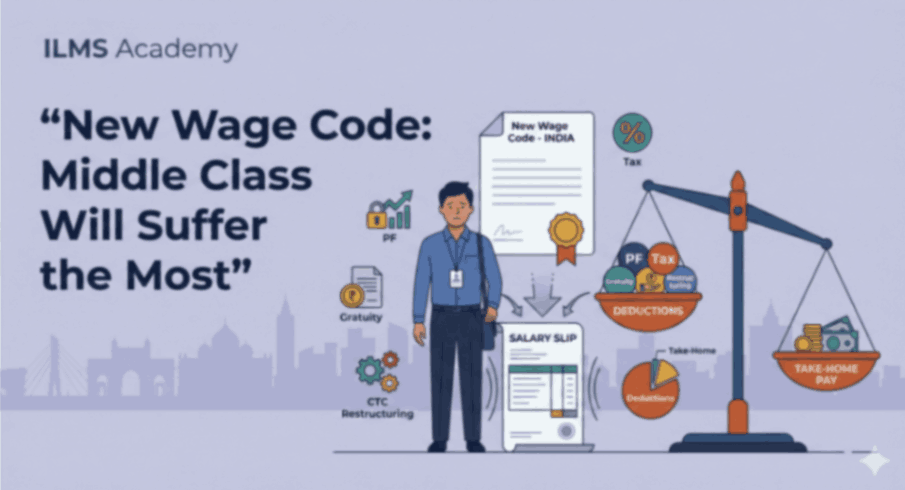
One immediate effect of the New Wage Code is a reduction in net take-home salary for middle-class employees. As allowances and perks are now included in the wage definition, higher statutory deductions—such as PF and gratuity contributions—directly reduce disposable income. Employees who previously received these benefits as part of tax-optimized salary structures may find their actual spendable salary diminished.
5.2 Higher Taxable Components in CTC
The revised definition of wages also affects the calculation of Cost-to-Company (CTC). Components previously considered non-taxable, like certain allowances and perks, may now attract income tax. Consequently, the middle class, which often relies on structured CTC packages, faces increased tax liability without a corresponding rise in overall compensation.
5.3 Potential Loss of Long-Term Benefits
With more salary components classified as wages, the calculation of long-term benefits such as PF, gratuity, and retirement contributions changes. While these benefits are technically advantageous in the long run, the immediate impact on take-home pay can strain employees’ short-term financial planning. Middle-class families, who balance daily expenses with long-term savings goals, may find this shift particularly challenging.
5.4 Discrepancy Between CTC and Real Income
The changes introduced by the New Wage Code widen the gap between CTC and actual in-hand salary. While employers may advertise attractive CTC figures, employees’ net cash flow can decline due to higher statutory contributions and taxes. This discrepancy can affect consumption patterns, lifestyle decisions, and overall financial stability, disproportionately impacting middle-class households that depend on predictable monthly income.
6. Sector-Wise Analysis
6.1 IT and IT-Enabled Services
The IT and IT-enabled services (ITES) sector in India employs millions of middle-class professionals, primarily in urban hubs like Bengaluru, Hyderabad, Pune, and Gurugram. Compensation structures in this sector typically include a combination of basic pay, performance-linked incentives, allowances for travel, HRA, and other perks. The New Wage Code affects this sector significantly because many allowances and benefits previously excluded from “wages” are now counted, increasing statutory deductions such as Provident Fund and gratuity contributions. Consequently, employees may experience a noticeable reduction in their take-home salaries. Employers may need to revisit salary structures, adjusting CTC components to maintain competitiveness while ensuring compliance. Moreover, IT firms with large numbers of mid-level professionals must carefully navigate the new overtime rules and standardized definitions of wages to avoid disputes or legal complications.
6.2 Manufacturing and Industrial Sectors
In manufacturing and industrial sectors, wage structures are often more rigid, with a focus on basic pay, allowances, overtime, and performance bonuses. The New Wage Code’s redefinition of wages and its emphasis on uniformity across states could increase compliance costs for companies, especially those operating across multiple regions. Workers in middle-management and technical roles may see an increase in deductions from take-home pay due to the inclusion of previously exempt allowances. Additionally, firms might face higher costs for statutory contributions, which could influence decisions regarding hiring, promotions, and bonus distribution. Smaller manufacturing units may find these adjustments more challenging due to tighter margins, while larger organizations may adopt systematic payroll restructuring to offset impacts.
6.3 Startups and MSMEs
Startups and micro, small, and medium enterprises (MSMEs) are particularly sensitive to changes in wage regulations because they often operate with lean budgets and flexible compensation models. The inclusion of variable allowances and perks under the new wage definition can significantly affect their cost structures. Startups that rely on incentive-heavy packages to attract talent may face a dilemma: either increase CTC to maintain net take-home salaries, which raises overall costs, or restructure pay, potentially reducing employee satisfaction. For MSMEs, compliance challenges may be more pronounced due to limited HR infrastructure, increasing the risk of penalties and legal disputes. In both cases, the middle-class workforce employed in these organizations may bear the brunt through lower disposable income or delayed benefits.
6.4 Gig Economy and Contractual Workforce
The gig economy, characterized by freelancers, contractual workers, and platform-based employment, has grown substantially in India. The New Wage Code extends wage-related regulations to workers in the informal sector, potentially bringing protections to a segment that historically lacked them. However, it also raises questions about the classification of allowances and incentives for gig workers, who often receive performance-based pay or task-specific bonuses. While the intention is to formalize and protect this workforce, in practice, it may lead to reduced flexibility or altered payment structures. Middle-class professionals engaging in gig work part-time or on contract may find that income optimization strategies previously used to reduce tax or maximize take-home pay are no longer effective.
7. Impact on Employers and HR Practices
7.1 Compliance Challenges and Reporting
The New Wage Code increases compliance obligations for employers across sectors. Companies must now ensure that all components of remuneration are accurately classified under the redefined “wages” and reported for statutory contributions. This requires significant updates to payroll systems, careful record-keeping, and regular audits. HR departments must educate employees about the changes to avoid misunderstandings regarding deductions and take-home pay. For middle-class employees, a lack of clear communication can exacerbate financial anxiety, especially when CTC figures appear higher, but net income decreases due to increased contributions.
7.2 Payroll Restructuring Across Companies
To mitigate the impact of higher statutory contributions, many employers are restructuring payroll. This may involve adjusting the composition of fixed and variable pay, revising allowances, or altering bonus structures. Some organizations may also consider capping certain perks or reclassifying components to comply with the law while attempting to maintain employee satisfaction. Payroll restructuring is especially critical in sectors with high percentages of middle-class employees, as any perceived reduction in take-home pay could affect retention, morale, and productivity.
7.3 Strategies Adopted by Organizations to Mitigate Impact
Organizations are adopting several strategies to offset the impact of the New Wage Code. These include offering non-cash benefits like insurance, flexible work arrangements, or skill development opportunities, which are not counted as wages under the Code. Employers are also using tax planning measures and revising performance-linked incentives to maintain net compensation. HR teams are proactively engaging with employees to explain changes, manage expectations, and emphasize long-term benefits such as enhanced retirement contributions and formalized wage protections. These strategies aim to balance compliance requirements with employee satisfaction, particularly for middle-class professionals who are most sensitive to changes in take-home pay.
7.4 Employee Relations and Retention Concerns
Middle-class employees are acutely aware of take-home pay reductions, and dissatisfaction can affect retention and workplace morale. Employers need to invest in transparent communication, educating employees on the reasons for payroll adjustments and the long-term benefits of statutory contributions. Employee engagement initiatives, wellness programs, and career development opportunities can help mitigate dissatisfaction. Failure to address these concerns may result in attrition, particularly among mid-level professionals in competitive sectors like IT and startups, where alternative employment options are readily available.
8. Comparative Analysis: India vs Global Standards
8.1 Wage Definitions in Developed Economies
In developed countries such as the United States, the United Kingdom, Germany, and Australia, wage definitions are standardized and include basic pay along with certain statutory allowances. However, many perks like health insurance, retirement contributions, and travel reimbursements are often excluded from the definition of wages for calculating statutory deductions. This allows employees to optimize take-home pay while ensuring compliance with minimum wage and social security laws. Overtime pay and performance bonuses are also clearly regulated, minimizing ambiguity.
8.2 Lessons for India
India can learn from these models by creating clearer distinctions between taxable wages and benefits, thereby preserving middle-class disposable income while maintaining social security contributions. Simplified reporting mechanisms, transparent payroll structures, and employee education on wage components can reduce confusion and dissatisfaction. Lessons from developed economies highlight the importance of balancing compliance with employee-centric approaches, ensuring that wage reforms do not unintentionally burden the middle class.
8.3 How Middle-Class Employees Are Protected Abroad
In countries with advanced labour frameworks, middle-class employees enjoy protections through structured wage definitions, standardized benefits, and tax-efficient compensation models. Social security contributions are clearly delineated, and allowances such as housing, transport, or medical benefits are often exempt from statutory deductions, preserving take-home pay. These protections help maintain financial stability, consumption patterns, and employee satisfaction. India’s new wage reforms, while aiming for uniformity, currently risk reducing take-home pay for the middle class, highlighting the need for careful policy calibration and stakeholder engagement to avoid similar challenges.
- Certificate Course in Labour Laws
- Certificate Course in Drafting of Pleadings
- Certificate Programme in Train The Trainer (TTT) PoSH
- Certificate course in Contract Drafting
- Certificate Course in HRM (Human Resource Management)
- Online Certificate course on RTI (English/हिंदी)
- Guide to setup Startup in India
- HR Analytics Certification Course
9. Government Perspective and Policy Intentions
9.1 Objectives Behind the New Wage Code
The government’s primary objective with the New Wage Code is to simplify and unify India’s complex wage-related laws, thereby improving compliance and promoting transparency. By consolidating four major legislations into one, policymakers aim to reduce ambiguity and ensure that employees across sectors receive fair remuneration. The Code also intends to expand coverage to previously unregulated sectors, including the informal and gig economy, while protecting workers’ rights through standardized definitions of wages, overtime, and bonuses. Another key objective is to encourage formalization of the workforce, ensuring that benefits such as Provident Fund, gratuity, and statutory bonuses reach a larger population, ultimately contributing to social security and financial inclusion.
9.2 Expected Formalization of the Workforce
Formalization of the workforce is a central goal of the New Wage Code. By bringing unorganized and contract workers under the regulatory umbrella, the government seeks to ensure timely wage payments, enforce minimum wage standards, and extend social security benefits. While this initiative strengthens worker protection, it also imposes new compliance obligations on employers. For middle-class employees, formalization may have indirect benefits, such as enhanced PF contributions and structured retirement savings. However, these benefits often come at the cost of reduced take-home pay, which has become a key concern for salaried professionals relying on flexible compensation components.
9.3 Long-Term Goals of Labour Welfare
The long-term intent of the New Wage Code is to create a more equitable, predictable, and accountable wage system across India. By standardizing wage definitions, simplifying bonus and overtime structures, and broadening statutory coverage, the government envisions a workforce that is adequately compensated and socially protected. Additionally, the reforms aim to reduce litigation arising from conflicting state and central wage laws and foster trust between employers and employees. Over time, these measures are expected to strengthen financial security for workers, contribute to organized economic growth, and encourage compliance-driven practices across industries.
10. Case Studies and Real-Life Examples
10.1 IT Professionals in Metro Cities
In metropolitan hubs such as Bengaluru, Hyderabad, and Gurugram, IT professionals often receive structured salary packages with multiple allowances, performance bonuses, and perks. Under the New Wage Code, several allowances that were previously non-contributory are now considered part of wages. This leads to higher PF contributions and tax liabilities, effectively reducing take-home pay. For example, an employee receiving a generous HRA and performance-linked incentive may notice a reduction in spendable income, even though the advertised CTC remains the same. IT companies have responded by adjusting salary components, restructuring bonus schemes, and enhancing non-monetary benefits to retain talent and maintain employee satisfaction.
10.2 Manufacturing Employees in Tier-2 Cities
In Tier-2 and Tier-3 cities, middle-class employees in manufacturing firms typically rely on a combination of fixed pay, overtime, and bonuses. The reclassification of allowances and inclusion of variable pay under the wage definition increases statutory deductions and reduces disposable income. Smaller manufacturing units often face operational challenges in implementing these changes, while employees experience financial strain due to reduced net pay. Real-life examples indicate that some companies have started capping bonuses, revising overtime policies, and renegotiating allowances to comply with the law, which can affect employee morale and productivity.
10.3 Impact on Gig and Contract Workers
The gig and contractual workforce, which includes freelancers, delivery personnel, and platform-based professionals, is particularly affected by the New Wage Code’s attempt to formalize wage regulations. While the intention is to provide protections such as timely payments and statutory contributions, many gig workers face uncertainty regarding what constitutes wages and how bonuses or incentives are calculated. Some platforms have restructured pay models, offering fixed retainers instead of performance-linked compensation to simplify compliance, which can reduce earning potential for middle-class contractual workers who rely on flexible incentives.
11. Challenges and Criticisms of the New Wage Code
11.1 Lack of Clarity in Wage Definition
One of the most significant criticisms of the New Wage Code is the ambiguity surrounding what constitutes “wages.” While the Code aims to unify and simplify multiple wage-related laws, it leaves room for interpretation, particularly regarding allowances, performance incentives, and reimbursements. Employees often find it difficult to understand which components will attract statutory deductions, and employers face challenges in designing compliant yet competitive salary structures. This uncertainty can lead to disputes, delayed payments, and reduced employee trust, especially among middle-class professionals whose compensation often includes numerous allowances and benefits.
11.2 Middle-Class Concerns Over Reduced Benefits
The redefinition of wages affects middle-class employees disproportionately because a substantial portion of their income comes from allowances and perks. Components like House Rent Allowance (HRA), travel reimbursements, and special incentives, previously partially exempt from deductions, are now included in the wage base for Provident Fund, gratuity, and bonus calculations. This leads to a reduction in take-home salary, causing financial strain for employees who manage household expenses, education fees, and other monthly commitments. Even though long-term benefits increase, the immediate reduction in disposable income is a major concern for the middle class.
11.3 Potential for Increased Inequality
While the New Wage Code strengthens protections for lower-income workers through standardized minimum wages, it may inadvertently exacerbate income disparities within the middle class. Employees who were previously able to optimize their salary components to reduce deductions now face higher contributions and taxes, reducing net income. As a result, the middle class may experience financial pressure, affecting consumption patterns, savings, and lifestyle. This unintended consequence highlights the need for careful policy calibration to balance worker protection with middle-class welfare.
11.4 Stakeholder Reactions and Public Sentiment
Reactions to the New Wage Code have been mixed across stakeholders. Employers recognize the benefits of uniformity but express concerns about increased compliance costs and administrative burden. Human Resources departments face the challenge of restructuring payroll and educating employees about the changes. Meanwhile, middle-class employees have voiced dissatisfaction over reduced take-home pay, despite stable or even higher CTC figures. Public discussions emphasize the necessity for clear communication, training programs, and transitional measures to ensure smooth implementation and mitigate negative perceptions.
12. Strategies for Middle-Class Employees
12.1 Understanding CTC and Take-Home Pay
In the post-Code era, middle-class employees must develop a precise understanding of the difference between Cost-to-Company (CTC) and net take-home pay. While CTC may appear attractive, statutory deductions such as Provident Fund, gratuity, and revised bonus contributions reduce actual disposable income. Employees should examine their salary structure in detail to identify which allowances are now included in the wage base and adjust monthly budgets accordingly to avoid surprises.
12.2 Negotiating Salary Structures
Negotiating compensation has become crucial for middle-class professionals. Employees can request restructuring of allowances, variable pay, or performance-linked incentives to optimize take-home salary while complying with statutory requirements. Clear communication with HR teams is essential to ensure that salary negotiations account for the new wage definitions and maintain a balance between immediate income and long-term benefits. Employees should focus on optimizing taxable and non-taxable components without violating the Code.
12.3 Leveraging Benefits Outside the Core Wage
Non-monetary perks and fringe benefits have become increasingly important under the New Wage Code. Health insurance, education allowances, skill development programs, flexible work arrangements, and wellness initiatives can enhance overall compensation without contributing to the redefined wage. Middle-class employees can strategically leverage these benefits to maintain lifestyle and financial security while minimizing the impact of wage-related deductions on take-home pay.
12.4 Planning for Long-Term Financial Security
- Certificate Course in Labour Laws
- Certificate Course in Drafting of Pleadings
- Certificate Programme in Train The Trainer (TTT) PoSH
- Certificate course in Contract Drafting
- Certificate Course in HRM (Human Resource Management)
- Online Certificate course on RTI (English/हिंदी)
- Guide to setup Startup in India
- HR Analytics Certification Course
Despite the reduction in immediate take-home salary, the New Wage Code strengthens long-term benefits such as Provident Fund contributions, gratuity, and retirement savings. Middle-class employees should incorporate these statutory contributions into broader financial planning strategies, including investments, insurance, and retirement planning. Understanding the long-term value of these benefits can help employees balance short-term financial pressures with sustainable wealth accumulation, ensuring stability in both career and personal finances.
13. Future Implications for India’s Economy
13.1 Labour Market Formalization vs Employee Discontent
The New Wage Code aims to formalize India’s workforce by bringing previously unregulated sectors, including the gig economy and contractual employment, under the purview of statutory wage protections. Formalization ensures timely payment, minimum wage enforcement, and social security benefits for employees. However, for middle-class professionals, this shift may lead to reduced take-home pay due to higher statutory contributions. The tension between the government’s intent to protect workers and employee dissatisfaction is a critical challenge. Companies must balance compliance with efforts to maintain employee morale, especially in sectors like IT, manufacturing, and startups, where skilled professionals have alternative employment options.
13.2 Effect on Consumption and Savings Patterns
Middle-class households form the backbone of India’s consumption-driven economy. Any reduction in disposable income, as a result of the redefinition of wages, could impact spending on goods and services, education, housing, and lifestyle choices. Lower take-home salaries may force households to cut discretionary expenditures, affecting demand across sectors. Conversely, higher statutory contributions like Provident Fund and gratuity can enhance long-term savings, creating a trade-off between immediate consumption and future financial security. Policymakers and businesses must consider these dynamics to ensure that wage reforms do not inadvertently dampen economic activity.
13.3 Startups, Entrepreneurship, and Wage Policies
Startups and MSMEs are particularly sensitive to changes in wage policies due to their lean budgets and flexible compensation structures. Increased statutory contributions and the inclusion of allowances in the wage definition may lead these organizations to reconsider hiring, salary offerings, and incentive structures. Some startups may shift towards non-monetary perks, retainers, or equity-based compensation to attract talent while remaining compliant. The Code, therefore, has implications not only for employee income but also for the growth strategies and sustainability of entrepreneurial ventures in India.
13.4 Balancing Worker Protection with Economic Growth
The New Wage Code represents an attempt to enhance worker protection while fostering economic growth. While long-term benefits such as formalization and social security are positive outcomes, there is a risk of short-term discontent among middle-class employees due to reduced take-home pay. Policymakers must strike a balance by providing clear guidance, phased implementation, and awareness programs to ensure compliance without compromising employee satisfaction. Businesses, in turn, must innovate in compensation structuring and engagement strategies to retain talent and maintain productivity.
14. Expert Opinions and Perspectives
14.1 HR Leaders’ Views
Human Resources leaders recognize the value of wage standardization and formalization but highlight significant operational challenges. Payroll restructuring, enhanced compliance, and employee communication require time, resources, and expertise. Many HR professionals express concerns about middle-class dissatisfaction due to reduced take-home salaries and emphasize the need for transparent communication regarding statutory benefits, allowances, and long-term gains. HR leaders recommend leveraging non-monetary perks and skill development initiatives to offset financial impacts.
14.2 Economists’ Analysis
Economists have offered mixed evaluations of the New Wage Code. On one hand, formalization is expected to improve financial security and labor market transparency, potentially increasing long-term economic stability. On the other hand, the immediate reduction in disposable income for middle-class households could affect consumption-driven growth. Economists argue that policymakers must monitor sectoral impacts and consider phased adjustments to ensure that wage reforms support economic growth without undermining employee welfare.
14.3 Legal Experts’ Interpretation
Legal experts highlight the potential for disputes due to ambiguities in the definition of wages, inclusion of allowances, and calculation of bonuses, overtime, and gratuity. They emphasize the importance of clear guidelines from government authorities to prevent litigation and ensure uniform interpretation across sectors and states. Legal analysts also underscore the necessity for companies to review employment contracts, payroll practices, and compliance mechanisms to avoid penalties while safeguarding employee rights.
15. Conclusion
The New Wage Code is a landmark reform in India’s labor legislation, aiming to simplify wage regulations, formalize the workforce, and provide enhanced social security. While these objectives are laudable, the redefinition of wages and inclusion of allowances under statutory contributions have significant implications for middle-class employees. Take-home salaries may decrease, leading to immediate financial concerns, although long-term benefits like Provident Fund, gratuity, and retirement security improve. The Code affects various sectors differently, from IT and manufacturing to startups and the gig economy, requiring employers to adapt payroll structures and communication strategies. Balancing worker protection with economic growth remains a central challenge. Middle-class employees can mitigate the impact by understanding CTC components, negotiating salary structures, leveraging non-monetary benefits, and planning for long-term financial security. Ultimately, successful implementation of the New Wage Code depends on collaboration between policymakers, employers, and employees, ensuring that labor reforms strengthen both workforce welfare and India’s economic resilience.
FAQ: New Wage Code – Middle Class Will Suffer the Most
Q1. What is the New Wage Code?
The New Wage Code, officially the Code on Wages, 2019, consolidates four major labor laws—the Payment of Wages Act, Minimum Wages Act, Payment of Bonus Act, and Equal Remuneration Act—into a single legislative framework. Its objective is to standardize wage definitions, ensure timely payments, and expand statutory protections to a wider workforce, including informal and contractual employees.
Q2. How does the New Wage Code redefine “wages”?
The Code defines wages broadly, including basic pay, dearness allowance, retaining allowance, and most other cash allowances. Certain reimbursements, such as travel or specific performance-linked incentives, may also be included. This redefinition affects Provident Fund contributions, gratuity, bonus calculations, and taxable income.
Q3. Why is the middle class most affected by the Code?
Middle-class employees often rely on structured salary packages with multiple allowances and perks. With these components now considered part of wages, statutory deductions increase, reducing take-home pay. While long-term benefits like PF and gratuity may improve, disposable income declines, impacting lifestyle and consumption.
Q4. Which sectors are most impacted by the New Wage Code?
Sectors employing a large middle-class workforce, such as IT, IT-enabled services, manufacturing, startups, and the gig economy, are most affected. Companies may need to restructure payroll, adjust bonus structures, and revise allowances to comply while maintaining employee satisfaction.
Q5. Can non-monetary benefits help mitigate the impact?
Yes. Health insurance, skill development programs, flexible work arrangements, and wellness initiatives can supplement overall compensation without affecting take-home pay. Strategic use of these benefits helps employees maintain lifestyle and financial security.
Q6. How does the Code affect CTC vs. take-home pay?
While CTC may remain unchanged or appear attractive, the inclusion of allowances in wages increases statutory contributions and tax liability. This creates a discrepancy between the advertised CTC and actual net income, making it essential for employees to analyze their salary components carefully.
Q7. Are startups and MSMEs able to comply easily?
Startups and MSMEs often face challenges due to lean budgets and flexible compensation models. Increased statutory contributions may require payroll restructuring, capping bonuses, or offering non-cash benefits to remain compliant without reducing employee satisfaction.
Q8. Does the Code protect gig and contractual workers?
The Code extends wage protections to gig and contractual workers, ensuring minimum wage standards, timely payment, and access to social security benefits. However, ambiguities in allowances and performance-linked incentives may require adjustments in pay structures, affecting earning potential for some workers.
Q9. What should middle-class employees do to adapt?
Employees should understand the difference between CTC and take-home pay, renegotiate salary structures where possible, leverage non-monetary benefits, and plan for long-term financial security. Awareness of the Code’s provisions helps employees optimize income while complying with statutory requirements.
Q10. What are the long-term benefits of the New Wage Code?
Despite immediate reductions in take-home pay, the Code strengthens formal employment protections, enhances PF and gratuity contributions, standardizes overtime and bonus calculations, and brings more workers under statutory safeguards. These measures improve financial security and labor market transparency over time.
- Certificate Course in Labour Laws
- Certificate Course in Drafting of Pleadings
- Certificate Programme in Train The Trainer (TTT) PoSH
- Certificate course in Contract Drafting
- Certificate Course in HRM (Human Resource Management)
- Online Certificate course on RTI (English/हिंदी)
- Guide to setup Startup in India
- HR Analytics Certification Course