
1. Introduction
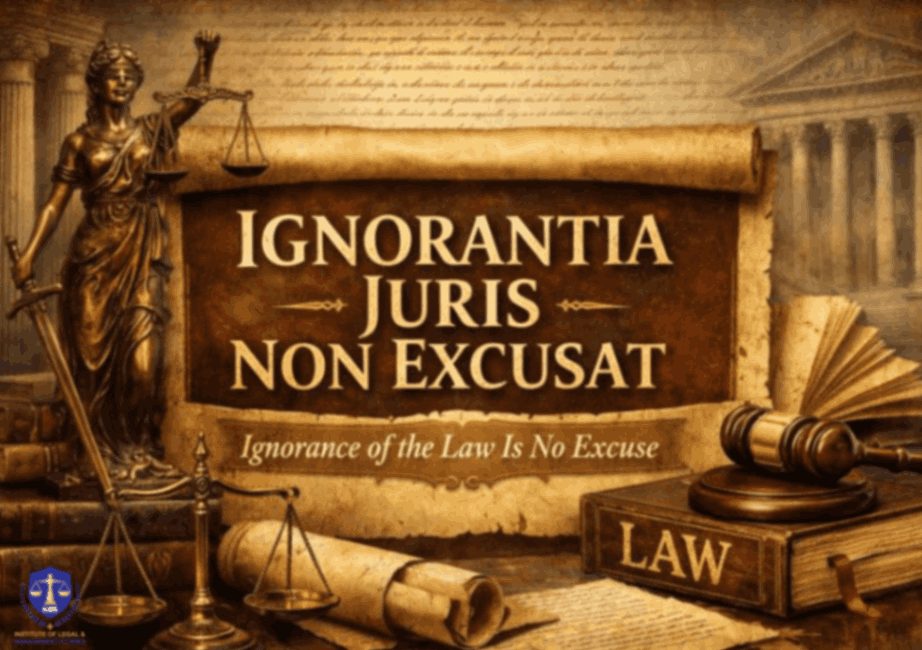
The maxim Ignorantia juris non excusat, meaning “ignorance of the law excuses no one,” is one of the most fundamental principles underpinning legal systems across the world. It reflects the idea that individuals are expected to know the law governing their conduct and cannot escape liability merely by claiming unawareness of legal rules. This principle operates as a cornerstone of both criminal and civil jurisprudence, ensuring stability, predictability, and fairness in the administration of justice. Without such a presumption, the enforcement of laws would become impractical, as every accused or defendant could evade responsibility by asserting ignorance. The maxim thus functions not only as a legal doctrine but also as a practical necessity for maintaining the rule of law in society.
1.1 Meaning and Relevance of the Maxim
The relevance of Ignorantia juris non excusat lies in its universal applicability. It establishes a standard expectation that laws, once validly enacted and promulgated, bind everyone equally. The maxim reinforces the idea that legal systems function on objective standards rather than subjective knowledge. If ignorance were accepted as a defence, the law would lose its deterrent effect, as individuals could conveniently avoid compliance by remaining uninformed. The principle therefore promotes accountability and encourages citizens to exercise reasonable diligence in understanding their legal duties. Its relevance has only increased with the expansion of regulatory frameworks governing areas such as taxation, environment, technology, and commerce.
1.2 Importance in Modern Legal Systems
In modern legal systems, the maxim plays a crucial role in ensuring legal certainty and equality before the law. Contemporary societies are governed by complex statutes and regulations, yet the law presumes that individuals are capable of knowing what is legally required of them. This presumption enables courts to apply laws uniformly without engaging in subjective inquiries into personal awareness. The maxim also supports the effective functioning of administrative and regulatory bodies by preventing non-compliance from being justified on grounds of ignorance. Despite criticisms regarding the complexity of modern law, courts continue to uphold this principle as essential for the stability and enforceability of legal systems.
1.3 Scope and Objectives of the Article
The scope of this article is to provide an in-depth examination of Ignorantia juris non excusat from historical, philosophical, and practical perspectives. It seeks to explain the meaning and evolution of the maxim, trace its origins, analyze its jurisprudential foundations, and evaluate its relevance in contemporary legal systems. The article also aims to critically assess the rationale behind the principle, highlighting both its strengths and limitations. By doing so, it intends to offer readers a comprehensive understanding of why ignorance of law is generally not accepted as a defence and how this principle continues to shape legal accountability.
2. Meaning of the Maxim Ignorantia Juris Non Excusat
The maxim Ignorantia juris non excusat embodies the principle that lack of knowledge of the law does not absolve a person from legal responsibility. It applies broadly to both criminal and civil matters, emphasizing that legal obligations arise irrespective of an individual’s awareness. The maxim does not suggest that everyone has complete knowledge of all laws; rather, it establishes a legal presumption necessary for enforcing rules consistently. This presumption ensures that the law applies equally to all, preventing selective compliance and manipulation of legal defences.
2.1 Literal Translation and Legal Interpretation
Literally translated from Latin, Ignorantia means ignorance, juris refers to law, non means not, and excusat means excuses. In legal interpretation, the phrase conveys that ignorance of legal provisions cannot be pleaded to escape liability. Courts interpret this maxim as a rule of policy rather than a factual assumption. It is understood that while actual knowledge may vary, the law treats all individuals as if they are aware of legal norms once those norms are officially enacted and accessible.
2.2 Difference Between Ignorance of Law and Ignorance of Fact
A critical distinction in law exists between ignorance of law and ignorance of fact. Ignorance of law refers to a lack of awareness about legal rules, statutes, or prohibitions, which is generally not accepted as a defence. Ignorance of fact, on the other hand, involves a misunderstanding or lack of knowledge about factual circumstances relevant to an act. In many legal systems, ignorance of fact may negate intent or mens rea and can sometimes serve as a valid defence. This distinction reinforces the rigidity of the maxim while allowing flexibility where moral culpability is genuinely absent.
2.3 Evolution of the Maxim’s Meaning Over Time
Over time, the interpretation of Ignorantia juris non excusat has evolved to accommodate changing legal realities. While earlier legal systems applied the maxim strictly, modern courts have occasionally softened its application in cases involving complex or obscure laws. Despite this evolution, the core principle remains intact. The law continues to presume knowledge as a matter of necessity, even as judicial interpretations recognize exceptional circumstances where fairness demands flexibility.
3 Historical Origins of the Maxim
The historical roots of Ignorantia juris non excusat can be traced back to ancient legal traditions, particularly Roman law. The maxim emerged as a response to the need for order and predictability in societies governed by codified rules. Its historical development demonstrates how legal systems have consistently prioritized enforceability over subjective awareness.
3.1 Roots in Roman Law
In Roman law, the principle was firmly established as part of the legal framework governing civic conduct. Roman jurists recognized that allowing ignorance as a defence would undermine the authority of law and disrupt social order. The Roman legal system, which relied heavily on written codes and public proclamations, assumed that laws were accessible to citizens. This assumption laid the foundation for the maxim’s enduring relevance.
3.2 Development Through English Common Law
English common law adopted and reinforced the maxim, integrating it into judicial reasoning and legal doctrine. Common law courts emphasized that permitting ignorance as a defence would open floodgates to false claims and weaken legal enforcement. Over time, the principle became deeply embedded in common law traditions, influencing both criminal liability and civil obligations.
3.3 Adoption in Civil Law Jurisdictions
Civil law systems, particularly those influenced by Roman legal traditions, also embraced the maxim. Codified legal systems in Europe incorporated the principle as a foundational rule, ensuring consistency in the application of laws. The emphasis on written statutes and public promulgation further strengthened the presumption that citizens are bound by law regardless of individual awareness.
3.4 Influence on Colonial and Post-Colonial Legal Systems
Colonial legal systems carried the maxim into newly governed territories, embedding it within local legal frameworks. Post-colonial states, including India, retained the principle as part of their inherited legal structures. Despite social and educational disparities, courts in these jurisdictions continue to uphold the maxim to preserve legal certainty and administrative efficiency
4. Philosophical and Jurisprudential Basis of the Maxim
The maxim Ignorantia juris non excusat is not merely a procedural rule but is deeply rooted in legal philosophy and jurisprudence. Its endurance across centuries and jurisdictions is largely due to the strong theoretical foundations that justify its existence. Different schools of legal thought—ranging from natural law to positivism and utilitarianism—offer distinct yet complementary explanations for why ignorance of law cannot be accepted as a valid excuse. Together, these perspectives demonstrate that the maxim serves both moral and practical purposes within legal systems.
4.1 Natural Law Perspective
From the standpoint of natural law theory, law is viewed as an extension of moral reasoning and universal principles of justice. Natural law philosophers argue that certain norms of conduct are inherently knowable through human reason, irrespective of formal enactment. Under this perspective, individuals are morally obligated to act in accordance with principles that promote social order and fairness. Ignorance of such norms, therefore, cannot absolve a person from responsibility, as the duty to act lawfully is inseparable from the moral agency of an individual.
In the context of Ignorantia juris non excusat, natural law theory supports the idea that individuals living within a society implicitly accept its moral and legal framework. Since law is seen as a reflection of reason and justice, claiming ignorance amounts to a failure in exercising moral responsibility. This perspective reinforces the ethical legitimacy of the maxim, particularly in cases involving acts that are universally recognized as wrongful, such as violence, theft, or fraud.
4.2 Positivist Justification
Legal positivism provides a more formal and institutional justification for the maxim. Positivist theorists emphasize that law derives its authority from proper enactment by recognized institutions rather than from moral considerations. Once a law is validly enacted and made enforceable, compliance becomes mandatory for all individuals within the jurisdiction. From this viewpoint, the subjective awareness of an individual is irrelevant to the binding nature of the law.
The positivist approach strongly supports Ignorantia juris non excusat because the effectiveness of a legal system depends on predictable and uniform enforcement. If ignorance were allowed as a defence, the certainty of law would be compromised, and enforcement would become inconsistent. Positivism thus views the maxim as a necessary legal fiction that sustains the authority and coherence of the legal order.
4.3 Utilitarian Approach
The utilitarian justification for the maxim focuses on social consequences and overall welfare. Utilitarian theorists argue that legal rules should promote the greatest good for the greatest number. Accepting ignorance of law as a defence would significantly weaken deterrence, encourage careless behavior, and increase litigation. The resulting inefficiency would impose costs not only on the legal system but also on society as a whole.
From a utilitarian perspective, Ignorantia juris non excusat incentivizes individuals to act cautiously and seek legal awareness before engaging in potentially harmful conduct. The maxim reduces administrative burdens and ensures smoother governance by discouraging non-compliance. Even if the rule appears harsh in individual cases, its overall benefit to societal order and efficiency justifies its continued application.
4.4 Moral and Ethical Dimensions
Beyond formal legal theories, the maxim also carries significant moral and ethical implications. It reflects the principle of accountability, emphasizing that individuals must bear responsibility for their actions within a regulated society. The ethical foundation of the maxim lies in the idea that enjoying the benefits of social order—such as protection of rights and access to justice—also entails the obligation to respect the law.
However, ethical concerns arise when the maxim is applied rigidly to vulnerable populations, such as the illiterate or economically disadvantaged. While courts have acknowledged these concerns, they generally maintain that relaxing the rule entirely would undermine justice. Instead, ethical considerations often influence sentencing, proportionality, or the creation of limited exceptions, rather than the abandonment of the maxim itself.
5. Rationale Behind the Maxim
The rationale behind Ignorantia juris non excusat is grounded in legal policy, administrative necessity, and societal interest. The maxim is not based on the unrealistic assumption that every individual knows every law, but rather on the practical need to ensure that laws are enforceable and uniformly applied. Without this principle, the legal system would face uncertainty, manipulation, and inefficiency.
5.1 Presumption of Knowledge of Law
At the core of the maxim lies the presumption that every person is deemed to know the law. This presumption operates as a legal fiction, essential for the functioning of any legal system. Courts cannot realistically investigate whether an individual knew a particular legal provision at the time of the act. By presuming knowledge, the law establishes an objective standard that applies equally to all individuals.
This presumption encourages citizens to exercise due diligence and caution in their actions. It shifts the burden of legal awareness onto individuals, reinforcing the idea that participation in society carries responsibilities alongside rights. While the presumption may appear harsh, it is indispensable for maintaining consistent legal accountability.
5.2 Legal Certainty and Uniformity
Legal certainty is a fundamental principle of the rule of law, requiring that laws be predictable, stable, and consistently applied. Accepting ignorance as a defence would introduce uncertainty into legal proceedings, as outcomes would vary based on subjective claims of awareness. The maxim ensures that legal consequences are determined by objective conduct rather than personal knowledge.
Uniform application of law also promotes equality before the law. If ignorance were accepted selectively, it could result in unequal treatment and discrimination. Ignorantia juris non excusat thus upholds fairness by ensuring that all individuals are subject to the same legal standards.
5.3 Prevention of Abuse and False Defences
One of the strongest practical reasons for the maxim is the prevention of abuse. Allowing ignorance as a defence would open the door to fabricated or exaggerated claims of unawareness. Since it is difficult to disprove subjective ignorance, such a defence could easily be misused, undermining the credibility of the justice system.
By categorically rejecting ignorance of law as an excuse, the legal system closes this loophole. The maxim acts as a safeguard against opportunistic behavior, ensuring that legal defences are grounded in verifiable facts rather than unverifiable mental states.
5.4 Administrative Efficiency and Judicial Economy
The maxim also serves the goal of administrative efficiency and judicial economy. Courts and enforcement agencies operate under limited resources and time constraints. Investigating individual awareness of law in every case would significantly slow down legal processes and overburden institutions.
By eliminating ignorance of law as a defence, the legal system simplifies adjudication and enforcement. This efficiency allows courts to focus on substantive issues, such as intent, harm, and proportionality of punishment, rather than engaging in speculative inquiries into personal knowledge. As a result, the maxim contributes to effective governance and timely justice.
Below is a detailed, continuous, paragraph-based explanation of the sections you listed, written in a formal legal–academic style, with clear sub-sections and minimal bullet usage, suitable for a long-form article or research paper.
6. Ignorance of Law vs Ignorance of Fact
The distinction between ignorance of law and ignorance of fact is central to understanding the scope and limitations of the maxim Ignorantia juris non excusat. While the law adopts a strict approach toward ignorance of legal provisions, it allows limited flexibility where ignorance of factual circumstances affects culpability. This distinction reflects the legal system’s attempt to balance fairness with enforceability.
6.1 Conceptual Distinction
Ignorance of law refers to a lack of awareness or misunderstanding of legal rules, statutes, or legal consequences governing an act. In contrast, ignorance of fact involves a mistaken belief or lack of knowledge regarding factual circumstances surrounding an act. The law treats these two forms of ignorance differently because ignorance of fact may negate intention or knowledge, whereas ignorance of law challenges the enforceability of the legal system itself.
This distinction is rooted in policy considerations. While facts may be unknowable despite reasonable diligence, laws are presumed to be publicly accessible and uniformly applicable. Accepting ignorance of law would undermine legal certainty, whereas recognizing ignorance of fact allows courts to assess moral blameworthiness more accurately.
6.2 Legal Treatment in Criminal Law
In criminal law, ignorance of law is generally not a defence. A person who commits an offence cannot claim exemption merely because they were unaware that the act was illegal. This rule ensures that criminal liability is not avoided through claims of legal ignorance, which are difficult to verify.
Ignorance of fact, however, may serve as a valid defence if it negates the mental element required for the offence. If an accused honestly and reasonably believed in a factual circumstance that would render the act lawful, criminal liability may be excluded. This approach preserves the importance of mens rea while maintaining the authority of the law.
6.3 Legal Treatment in Civil Law
In civil law, ignorance of law similarly does not excuse liability. Parties are expected to understand the legal consequences of their actions, especially in contractual and commercial dealings. A mistaken belief about legal rights or obligations rarely relieves a party from civil liability.
Ignorance of fact, on the other hand, can affect consent, validity of agreements, or the extent of liability. Courts often consider factual mistakes when determining whether a contract was formed freely or whether damages should be imposed. This distinction ensures fairness without compromising legal stability.
6.4 Illustrative Examples and Case Scenarios
For instance, if a person imports prohibited goods claiming ignorance of customs regulations, the defence will fail because it involves ignorance of law. However, if a person purchases stolen property believing it to be lawfully owned due to false factual representations, ignorance of fact may be relevant in determining liability.
Such examples demonstrate how the law differentiates between ignorance that threatens legal order and ignorance that affects moral culpability. The distinction allows courts to impose liability where necessary while avoiding unjust punishment.
7. Application of the Maxim in Criminal Law
- Certificate Course in Labour Laws
- Certificate Course in Drafting of Pleadings
- Certificate Programme in Train The Trainer (TTT) PoSH
- Certificate course in Contract Drafting
- Certificate Course in HRM (Human Resource Management)
- Online Certificate course on RTI (English/हिंदी)
- Guide to setup Startup in India
- HR Analytics Certification Course
The maxim Ignorantia juris non excusat finds its most rigorous application in criminal law, where public interest and deterrence are paramount. Criminal liability is imposed to punish wrongdoing and discourage unlawful conduct, making the rejection of ignorance as a defence essential.
7.1 Role in Establishing Mens Rea
Mens rea, or the guilty mind, is a key component of most criminal offences. However, ignorance of law does not negate mens rea. An accused may intentionally commit an act while being unaware that the act is illegal, yet still be held criminally liable.
The law distinguishes between intent to commit the act and knowledge of its illegality. Mens rea concerns the former, not the latter. This distinction ensures that individuals cannot evade responsibility simply by claiming they did not know the legal consequences of their actions.
7.2 Strict Liability Offences
In strict liability offences, the role of the maxim becomes even more pronounced. These offences do not require proof of mens rea; the mere commission of the prohibited act is sufficient to establish liability. Ignorance of law is entirely irrelevant in such cases.
Strict liability is commonly applied in areas involving public safety, health, and welfare. The objective is to ensure compliance rather than assess moral blameworthiness. The maxim thus reinforces regulatory effectiveness by placing a high burden of responsibility on individuals.
7.3 Regulatory and Economic Offences
Modern criminal law includes a wide range of regulatory and economic offences, such as tax evasion, environmental violations, and corporate misconduct. These laws are often complex, yet ignorance is rarely accepted as a defence.
Courts justify this strict approach by emphasizing the need for due diligence. Individuals and corporations engaged in regulated activities are expected to be aware of applicable laws. Allowing ignorance as a defence in such cases would weaken enforcement and encourage negligence.
7.4 Exceptions and Judicial Discretion
While the maxim is generally rigid, courts occasionally exercise judicial discretion in exceptional circumstances. Where laws are obscure, ambiguous, or not properly publicized, courts may take ignorance into account while determining liability or sentencing.
Such discretion does not undermine the maxim itself but reflects a humane and equitable application of justice. Courts balance the need for enforcement with considerations of fairness, particularly where strict application would lead to manifest injustice.
8. Application of the Maxim in Civil Law
In civil law, the maxim operates to ensure that private rights and obligations are enforced consistently. Civil liability often arises from voluntary relationships such as contracts or from duties imposed by law, making legal awareness particularly important.
8.1 Contractual Obligations
In contractual matters, ignorance of law does not excuse non-performance. Parties are presumed to understand the legal implications of agreements they enter into. A mistaken belief about the legality or enforceability of a contract generally does not invalidate it.
This approach promotes certainty in commercial transactions. If parties were allowed to escape contractual liability by claiming ignorance, contractual stability would be severely undermined. Courts therefore emphasize due diligence and informed consent.
8.2 Property and Ownership Disputes
Property law also reflects strict application of the maxim. Individuals cannot claim ownership or resist eviction on the ground that they were unaware of legal requirements related to title or transfer. Legal rights in property are determined by law, not personal understanding.
However, factual mistakes, such as misidentification of property boundaries, may influence remedies. This distinction preserves the integrity of property rights while allowing equitable relief where appropriate.
8.3 Tortious Liability
In tort law, ignorance of law does not absolve a person from liability for causing harm. A person cannot avoid responsibility for negligence or nuisance by claiming unawareness of legal duties.
The focus in tort law is on breach of duty and resulting harm, not legal knowledge. The maxim ensures that victims are compensated and that individuals act with reasonable care, irrespective of their understanding of legal doctrines.
8.4 Consumer and Commercial Transactions
In consumer and commercial contexts, the maxim protects market integrity. Businesses cannot escape liability for unfair practices by pleading ignorance of consumer protection laws. Similarly, consumers are expected to understand basic legal obligations arising from transactions.
This application promotes trust and accountability in economic relations. The maxim thus plays a vital role in regulating modern commerce and protecting stakeholders.
9. Ignorantia Juris Non Excusat in the Indian Legal System
The principle of Ignorantia juris non excusat has been firmly embedded in the Indian legal system, reflecting both the country’s common law heritage and the practical necessity of enforcing laws uniformly. While the maxim itself is Latin and was inherited through English common law during colonial times, it has been assimilated into Indian statutes, judicial reasoning, and constitutional principles. Its application spans criminal law, civil law, contractual obligations, property disputes, and regulatory frameworks. The Indian legal system recognizes the maxim as indispensable for maintaining legal certainty, public accountability, and fairness in governance, while allowing limited discretion in exceptional circumstances where strict enforcement would be unjust.
9.1 Constitutional Context
Although the maxim is not expressly stated in the Indian Constitution, it operates implicitly under the broad framework of the rule of law, which is a fundamental principle of governance in India. Articles such as Article 14, which guarantees equality before the law and equal protection of laws, reinforce the notion that laws must apply uniformly to all citizens regardless of personal knowledge or awareness. Accepting ignorance of law as a valid defence would directly undermine these constitutional values, as it would introduce subjectivity and unpredictability into the enforcement of legal norms.
Furthermore, the Constitution envisions a system of governance where laws are publicly promulgated and accessible, creating a reasonable expectation that citizens are aware of the rules governing their conduct. This expectation aligns closely with the maxim, as it ensures that legal obligations are predictable and enforceable, thereby sustaining both administrative efficiency and public trust in the justice system. While the Indian legal system recognizes that literacy, access to law, and social disparities may affect legal awareness, the Constitution still supports the principle that ignorance does not excuse liability, reinforcing the foundational balance between individual rights and societal obligation
9.2 Application Under the Indian Penal Code (IPC)
The Indian Penal Code explicitly acknowledges the distinction between ignorance of law and ignorance of fact, thereby operationalizing the principle of Ignorantia juris non excusat. Provisions such as Section 76 and Section 79 of the IPC address exceptions where actions taken under a genuine mistake of fact can mitigate or negate criminal liability. Section 76 recognizes that an act done by a child under the age of seven is not an offence, reflecting the understanding that young children cannot be reasonably expected to know the law. Section 79 provides for situations where acts are committed by persons bound to obey orders in good faith or in situations where legal knowledge cannot be reasonably expected.
Even in complex regulatory offences, such as violations of environmental laws, tax evasion, or corporate misconduct, Indian courts have maintained that due diligence is expected and ignorance of legal obligations does not absolve responsibility.
9.3 Role Under Contract Law and Civil Liability
In civil law, including the domain of contracts and commercial transactions, Ignorantia juris non excusat plays an equally critical role. The Indian Contract Act, 1872, governs contractual relationships and explicitly presumes that parties understand the legal implications of the agreements they enter into. A claim of ignorance of legal consequences generally does not render a contract void or unenforceable.
Civil liability in areas such as tort law, property disputes, and consumer protection also reflects strict adherence to this principle. Individuals cannot evade responsibility for harm caused to another party simply by asserting that they did not know the act was legally prohibited. Similarly, in property law, individuals are expected to know and comply with statutory provisions regarding land registration, transfer of title, and possession. While courts may consider factual mistakes, ignorance of legal rules rarely excuses non-compliance, thereby reinforcing the uniform application of law in civil disputes.
9.4 Interpretation by Indian Courts
Indian courts have consistently upheld the principle of Ignorantia juris non excusat as a cornerstone of the legal system, while also demonstrating sensitivity to fairness in exceptional circumstances. Judicial pronouncements repeatedly emphasize that allowing ignorance as a defence would erode legal certainty and enable misuse of the justice system. Courts rely on this maxim to establish liability in both criminal and civil matters, ensuring that laws serve their intended purpose of regulating conduct and maintaining social order.
However, Indian courts have also recognized that strict application must sometimes be tempered with equity. In rare cases where laws are not properly promulgated, are ambiguous, or involve highly technical regulations, courts have exercised discretion to reduce penalties or provide relief. For instance, if a regulatory statute is newly enacted and poorly communicated, or if a layperson cannot reasonably be expected to understand its provisions, judicial mitigation may occur. Such exceptions do not nullify the maxim but reflect the courts’ role in balancing justice, fairness, and societal expectations.
Through these interpretations, Indian jurisprudence demonstrates that while the maxim is rigid in principle, its application is nuanced, accommodating both the need for enforceability and the moral and social realities of the population. This careful calibration has allowed the maxim to remain relevant in a modern legal system that is complex, diverse, and continuously evolving.
10. Landmark Judicial Pronouncements in India
Judicial interpretation has played a decisive role in shaping the application and scope of Ignorantia juris non excusat in India. Indian courts, particularly the Supreme Court and various High Courts, have repeatedly emphasized that the maxim is indispensable for the effective administration of justice. At the same time, judicial reasoning has evolved to acknowledge fairness, proportionality, and exceptional circumstances, thereby preventing mechanical application of the principle.
10.1 Supreme Court Judgments
The Supreme Court of India has consistently reaffirmed that ignorance of law cannot be pleaded as a defence. In multiple decisions, the Court has emphasized that permitting such a defence would undermine legal certainty and open floodgates for abuse. The Supreme Court has clarified that once a law is validly enacted and brought into force, every person is bound by it, irrespective of whether they were personally aware of its existence.
In criminal jurisprudence, the Court has drawn a clear line between ignorance of law and mistake of fact, holding that only the latter may excuse liability under limited circumstances. The Supreme Court has also stressed that the burden of legal awareness becomes even heavier in cases involving regulated activities such as taxation, finance, and environmental protection, where individuals and corporations are expected to exercise higher standards of diligence.
10.2 High Court Rulings
High Courts across India have reinforced the Supreme Court’s position while dealing with fact-specific situations. In cases involving regulatory violations, licensing requirements, and statutory compliance, High Courts have consistently rejected ignorance-based defences. These courts have emphasized that the legal system cannot function if compliance depends on subjective knowledge.
However, High Courts have also demonstrated sensitivity in exceptional cases, particularly where laws were poorly communicated or where individuals acted in good faith under official directions. Such rulings reflect judicial pragmatism rather than dilution of the maxim.
10.3 Analysis of Judicial Reasoning
Indian judicial reasoning on this maxim is rooted in three dominant considerations: enforceability of law, prevention of misuse, and maintenance of public order. Courts recognize that legal systems operate on objective standards, not subjective understanding. Allowing ignorance as a defence would introduce arbitrariness and inconsistency.
At the same time, courts acknowledge the moral dimension of justice. Judicial reasoning often reflects a balance between strict legal principle and equitable relief, particularly at the stage of sentencing or imposition of penalties. This nuanced approach preserves the authority of the maxim while preventing injustice.
10.4 Trends in Indian Jurisprudence
Recent trends indicate a firm adherence to Ignorantia juris non excusat, especially in economic, environmental, and corporate offences. Courts increasingly emphasize due diligence, compliance mechanisms, and professional responsibility. While sympathy may be shown in cases involving marginalized individuals, the core principle remains non-negotiable, underscoring its enduring relevance in Indian jurisprudence.
11. Comparative Perspective
Examining the maxim through a comparative lens highlights its near-universal acceptance across legal systems, albeit with contextual variations. Different jurisdictions apply the principle in ways that reflect their legal traditions, governance structures, and societal expectations.
11.1 United Kingdom
In the United Kingdom, the maxim forms a fundamental part of common law. English courts have long held that ignorance of law is no defence, emphasizing that public order depends on predictable legal enforcement. UK jurisprudence treats the maxim as essential for criminal accountability and regulatory compliance.
However, English courts have occasionally softened its application where statutory provisions are ambiguous or where official guidance misled individuals. These exceptions reflect judicial fairness rather than rejection of the principle.
11.2 United States
The United States follows the same general principle, with the Supreme Court repeatedly affirming that ignorance of law does not excuse criminal conduct. American jurisprudence distinguishes sharply between ignorance of law and mistake of fact, allowing relief only in the latter case.
That said, U.S. courts recognize limited exceptions, particularly where a statute requires specific intent or knowledge of illegality. Regulatory offences, however, often impose strict liability, reflecting a strong commitment to enforcement and deterrence.
11.3 European Union
In the European Union, the maxim operates within a framework of proportionality and fundamental rights. EU law presumes knowledge of regulations once they are officially published. The European Court of Justice has emphasized that legal certainty requires laws to be clear, accessible, and foreseeable.
Where laws are excessively complex or poorly communicated, courts may consider mitigating factors. Nonetheless, ignorance of law rarely absolves liability, especially in economic and regulatory matters.
11.4 Other Common Law and Civil Law Jurisdictions
Civil law countries, such as France and Germany, strongly uphold the maxim, reflecting their Roman law heritage. Codified legal systems presume knowledge of law once it is promulgated. Common law jurisdictions such as Canada and Australia also adhere strictly to the principle, allowing exceptions only in narrowly defined circumstances. This global consensus underscores the maxim’s foundational role in legal systems worldwide.
12. Exceptions to the Maxim Ignorantia Juris Non Excusat
- Certificate Course in Labour Laws
- Certificate Course in Drafting of Pleadings
- Certificate Programme in Train The Trainer (TTT) PoSH
- Certificate course in Contract Drafting
- Certificate Course in HRM (Human Resource Management)
- Online Certificate course on RTI (English/हिंदी)
- Guide to setup Startup in India
- HR Analytics Certification Course
Although Ignorantia juris non excusat remains a foundational rule of law, modern legal systems, including India’s, recognize that its rigid application may sometimes result in injustice. Courts therefore acknowledge limited and carefully defined exceptions, not to undermine the maxim, but to ensure fairness, proportionality, and reasonableness in exceptional circumstances. These exceptions are grounded in equity, legitimate expectations, and the evolving complexity of modern governance.
12.1 Mistake of Law Induced by Authorities
One of the most widely recognized exceptions to the maxim arises when a person is misled by a competent public authority. When an individual acts in reliance on an official instruction, notification, or assurance that later turns out to be legally incorrect, holding the individual liable may violate principles of fairness and natural justice. Courts reason that citizens should be able to trust official representations made by government authorities tasked with administering the law.
In such cases, the defence is not based on ignorance per se, but on the doctrine of legitimate expectation and good faith reliance. Indian courts have occasionally granted relief where the accused acted strictly in accordance with official guidance or directions, particularly in administrative and regulatory contexts. However, this exception is applied narrowly, and the authority must be competent, the reliance must be reasonable, and the conduct must be bona fide.
12.2 Unpublished or Ambiguous Laws
Another significant exception arises where laws have not been properly promulgated or are so ambiguous that a reasonable person cannot ascertain their meaning. The presumption of knowledge of law depends on the availability, clarity, and accessibility of legal rules. If a law is unpublished, inadequately notified, or drafted in vague terms, the foundation of the maxim becomes weakened.
Courts have held that penal consequences cannot be imposed under laws that fail to meet standards of clarity and certainty. In such situations, ignorance of law may be considered legitimate, not because ignorance is excusable in itself, but because the State has failed in its duty to make the law known. This exception reflects the constitutional principle that laws must be fair, just, and reasonable in both substance and procedure.
12.3 Complex Regulatory Frameworks
The rise of complex regulatory regimes has posed significant challenges to the strict application of Ignorantia juris non excusat. Laws governing taxation, securities, environmental protection, and digital compliance often involve intricate procedures, technical language, and frequent amendments. Expecting complete legal knowledge in such contexts may be unrealistic, especially for individuals and small enterprises.
Courts have responded by evaluating whether reasonable diligence was exercised rather than accepting ignorance outright. While the maxim is not relaxed, complexity is often considered during sentencing or penalty determination. This approach preserves regulatory enforcement while recognizing the practical difficulties of compliance in highly technical legal environments.
12.4 Bona Fide Belief and Due Diligence
Courts occasionally recognize bona fide belief combined with due diligence as a mitigating factor. If an individual has taken reasonable steps to understand and comply with the law—such as seeking professional advice or relying on authoritative interpretations—but still commits a violation, courts may reduce penalties or grant limited relief.
This exception reflects a shift from strict liability toward responsibility-based accountability. It does not excuse ignorance but acknowledges good-faith efforts to comply with legal obligations. The emphasis remains on encouraging proactive legal awareness rather than passive ignorance.
13. Role of the Maxim in Administrative and Regulatory Law
Administrative and regulatory law represents the most critical domain for the application of Ignorantia juris non excusat. Modern governance relies heavily on compliance with administrative rules, delegated legislation, and statutory regulations. Allowing ignorance as a defence in this area would severely undermine state capacity, regulatory effectiveness, and public welfare.
13.1 Taxation Laws
In taxation law, the maxim operates with exceptional strictness. Taxpayers are presumed to know their obligations regarding registration, filing of returns, payment of taxes, and disclosure of income. Courts consistently reject ignorance-based defences in tax matters, emphasizing that public revenue is the backbone of governance and public welfare.
The rationale for strict enforcement lies in deterrence and administrative feasibility. Given the volume of tax cases, allowing ignorance as a defence would paralyze tax administration. While courts may consider hardship or procedural lapses, ignorance of tax law itself rarely provides relief.
13.2 Environmental Regulations
Environmental laws are often enforced under principles of strict or absolute liability, reflecting the urgency of environmental protection. Ignorance of environmental standards, licensing requirements, or pollution norms does not excuse violations. Courts prioritize ecological preservation and public health over individual claims of unawareness.
This strict approach is justified on precautionary principles. Environmental harm is often irreversible, and requiring proof of knowledge would weaken regulatory enforcement. The maxim thus serves as a tool for environmental accountability rather than moral judgment.
13.3 Corporate and Securities Law
In corporate governance and securities regulation, Ignorantia juris non excusat plays a central role in ensuring market discipline and investor protection. Directors, officers, auditors, and professionals are held to elevated standards of legal knowledge due to the nature of their responsibilities.
Courts treat ignorance of statutory duties as negligence rather than innocence. Compliance failures are often interpreted as governance lapses, attracting civil penalties, disqualifications, or criminal liability. This approach reinforces the expectation that those operating in regulated markets must proactively ensure legal compliance.
13.4 Compliance and Enforcement Challenges
Despite its necessity, strict application of the maxim in administrative law presents enforcement challenges. Small businesses, startups, and individuals often struggle with regulatory overload and frequent legislative changes. Courts acknowledge these challenges but address them through proportional penalties, phased compliance mechanisms, and regulatory guidance rather than relaxing the maxim itself.
This balanced approach preserves the authority of law while encouraging voluntary compliance. The maxim remains intact, but its enforcement is calibrated to ensure fairness, efficiency, and sustainable governance.
14. Criticism of the Maxim Ignorantia Juris Non Excusat
Despite its foundational role in legal systems, the maxim Ignorantia juris non excusat has been the subject of sustained criticism from legal scholars, jurists, sociologists, and human rights advocates. Critics argue that while the maxim may have been justified in simpler legal societies, its rigid application in modern, highly complex legal systems raises serious concerns regarding fairness, accessibility, and substantive justice. These criticisms do not merely question the practicality of the maxim but challenge its moral legitimacy in contemporary governance.
14.1 Unrealistic Presumption of Legal Knowledge
One of the most persistent criticisms of the maxim is its reliance on an unrealistic presumption that individuals are aware of the law. Modern legal systems comprise thousands of statutes, subordinate legislation, administrative rules, circulars, and judicial interpretations that evolve continuously. Expecting ordinary citizens to know and understand this vast body of law is widely regarded as impractical and detached from social realities.
Critics argue that the presumption of knowledge is a legal fiction that no longer aligns with the lived experiences of individuals. While legal professionals may reasonably be expected to possess specialized knowledge, extending the same expectation to laypersons places an excessive burden on citizens. This critique highlights the growing gap between legal theory and social practice, questioning whether a principle rooted in necessity has outlived its fairness.
14.2 Impact on Marginalized and Illiterate Populations
The maxim has been particularly criticized for its disproportionate impact on marginalized, illiterate, and economically disadvantaged populations. In societies marked by unequal access to education and legal resources, the presumption of legal knowledge tends to operate harshly against those who lack the means to understand or access the law.
Critics contend that strict application of the maxim perpetuates systemic inequality by penalizing individuals for conditions beyond their control. Rural populations, informal workers, and vulnerable communities often encounter legal consequences without having meaningful exposure to legal information. From this perspective, the maxim risks reinforcing social exclusion rather than promoting justice, raising concerns about substantive equality under the law.
14.3 Complexity of Modern Legal Systems
Another significant critique focuses on the increasing complexity of modern legal systems. The proliferation of regulatory laws governing finance, environment, technology, data protection, and corporate activity has resulted in highly technical legal frameworks that are difficult to navigate even for experts.
This complexity undermines the moral basis of the maxim. When laws are intricate, frequently amended, and inconsistently interpreted, the assumption that individuals can comply without specialized assistance becomes questionable. Critics argue that the maxim fails to account for regulatory overreach and legislative opacity, shifting the burden of complexity unfairly onto citizens.
14.4 Fairness and Equity Concerns
From a fairness perspective, critics argue that Ignorantia juris non excusat prioritizes administrative convenience over justice. While the maxim promotes efficiency and certainty, it may produce outcomes that conflict with moral culpability. Individuals may face severe legal consequences for conduct they could not reasonably have known was unlawful.
Equity-based critiques emphasize that justice should consider intent, awareness, and circumstances. A rigid rule that disregards these factors risks undermining public confidence in the legal system. According to critics, a legal order perceived as harsh or indifferent to individual realities may weaken voluntary compliance and respect for law.
15. Judicial Responses to Criticism
In response to these criticisms, courts have not abandoned the maxim but have adapted its application through interpretative strategies. Judicial responses reflect an attempt to balance the necessity of the principle with evolving standards of fairness and proportionality.
15.1 Liberal Interpretation by Courts
Courts have increasingly adopted liberal interpretations in cases where strict application of the maxim would result in manifest injustice. While ignorance of law remains inadmissible as a defence, courts have shown willingness to interpret statutory provisions purposively rather than mechanically.
This liberal approach allows courts to consider context, intent, and consequences without formally diluting the maxim. Such interpretations often arise in regulatory and administrative cases, where technical non-compliance may not reflect deliberate wrongdoing.
15.2 Use of Proportionality and Reasonableness
The doctrines of proportionality and reasonableness have emerged as important tools in moderating the impact of the maxim. Courts assess whether penalties imposed for legal violations are proportionate to the harm caused and whether enforcement actions are reasonable under the circumstances.
By applying these principles, courts mitigate the harshness of strict liability without compromising legal certainty. This approach ensures that punishment aligns with culpability, preserving both justice and deterrence.
15.3 Judicial Carve-Outs and Softening of the Rule
Judicial carve-outs represent another method of softening the rule without formally rejecting it. Courts have recognized limited exceptions in cases involving misleading official conduct, lack of proper promulgation of laws, or bona fide efforts to comply.
These carve-outs demonstrate judicial sensitivity to fairness while reaffirming the general applicability of the maxim. Rather than weakening the principle, they refine its application, ensuring that it serves justice rather than mere formalism.
16. Ignorantia Juris Non Excusat in the Digital Age
The digital age has transformed both the nature of law and access to legal information. While technological advancements have enhanced legal accessibility, they have also intensified challenges associated with the maxim.
16.1 Explosion of Laws and Regulations
Digitization has accelerated legislative and regulatory activity, resulting in an unprecedented expansion of laws and compliance requirements. New domains such as data protection, cyber security, and digital commerce are governed by rapidly evolving legal frameworks.
This explosion of law complicates the presumption of knowledge. The speed at which regulations change often outpaces public awareness, raising questions about the continued viability of the maxim in its traditional form.
16.2 Role of Technology in Legal Awareness
Technology has significantly improved access to legal information through online databases, government portals, and legal awareness platforms. Citizens can now access statutes, judgments, and regulatory updates with relative ease.
Supporters of the maxim argue that increased accessibility strengthens its justification. However, critics counter that access does not equate to understanding, particularly when legal texts remain complex and technical.
16.3 E-Governance and Access to Law
E-governance initiatives have enhanced transparency and dissemination of legal information. Online notifications, digital filings, and automated compliance systems have reduced informational barriers.
At the same time, the digital divide remains a serious concern. Not all citizens have equal access to technology or digital literacy, making reliance on e-governance insufficient to justify strict application of the maxim across all populations.
16.4 Challenges of Information Overload
Paradoxically, the abundance of legal information has created information overload. Individuals and businesses are often overwhelmed by continuous updates, amendments, and regulatory advisories.
This overload diminishes meaningful legal awareness, turning compliance into a reactive rather than informed process. Critics argue that in such an environment, strict adherence to Ignorantia juris non excusat risks becoming punitive rather than preventive.
17. Practical Implications for Citizens and Businesses
The maxim Ignorantia juris non excusat has profound practical implications for both individuals and commercial entities. Its operation extends beyond theoretical jurisprudence into everyday decision-making, shaping how citizens interact with the legal system and how businesses structure compliance frameworks. The principle effectively places the responsibility of legal awareness on those who participate in social, economic, and professional activities.
- Certificate Course in Labour Laws
- Certificate Course in Drafting of Pleadings
- Certificate Programme in Train The Trainer (TTT) PoSH
- Certificate course in Contract Drafting
- Certificate Course in HRM (Human Resource Management)
- Online Certificate course on RTI (English/हिंदी)
- Guide to setup Startup in India
- HR Analytics Certification Course
17.1 Legal Compliance Responsibilities
For ordinary citizens, the maxim establishes a baseline obligation to comply with laws governing daily conduct, including criminal prohibitions, civil duties, and regulatory requirements. Individuals cannot rely on lack of awareness to justify violations such as traffic offences, contractual breaches, or statutory non-compliance. This responsibility underscores the expectation that citizens act with reasonable caution and respect for legal norms.
For businesses, compliance responsibilities are significantly heightened. Commercial entities operate within dense regulatory environments that require adherence to labour laws, tax statutes, environmental norms, consumer protection regulations, and corporate governance standards. Ignorance of these obligations is treated not merely as a lapse but as negligence. The maxim therefore functions as a powerful driver of corporate accountability and governance discipline.
17.2 Due Diligence Obligations
Due diligence emerges as a direct consequence of the maxim. Individuals engaging in legally significant actions—such as property transactions, financial investments, or contractual agreements—are expected to take reasonable steps to understand applicable legal requirements. Failure to do so does not excuse liability.
In the business context, due diligence becomes an institutional obligation. Companies are expected to implement compliance checks, internal audits, and legal vetting mechanisms. Courts and regulators increasingly view failure to conduct due diligence as evidence of willful blindness rather than innocent oversight. The maxim thus transforms legal awareness from a passive expectation into an active duty.
17.3 Risk Management and Legal Advice
Risk management is another critical implication of Ignorantia juris non excusat. Since ignorance offers no protection, individuals and businesses must anticipate legal risks and seek appropriate guidance. This has led to an increased reliance on legal professionals, compliance officers, and regulatory consultants.
For businesses, legal advice is no longer optional but integral to operational strategy. Proactive legal planning helps mitigate risks associated with non-compliance, penalties, and reputational damage. The maxim thereby reinforces the importance of preventive legal governance rather than reactive litigation.
17.4 Role of Legal Literacy
Legal literacy plays a central role in enabling compliance under the maxim. An informed citizenry is better equipped to understand rights, obligations, and consequences. Legal literacy empowers individuals to make lawful choices and reduces unintentional violations.
For businesses, legal literacy extends beyond senior management to employees, vendors, and stakeholders. Training programs and compliance awareness initiatives reflect an acknowledgment that ignorance at any level can expose the organization to liability. The maxim thus indirectly promotes a culture of legal consciousness across society.
18. Educational and Policy Perspectives
The continued legitimacy of Ignorantia juris non excusat depends significantly on the State’s efforts to ensure that laws are accessible, understandable, and effectively communicated. Education and policy initiatives play a vital role in bridging the gap between legal expectations and public awareness.
18.1 Importance of Legal Awareness Programs
Legal awareness programs are essential to making the maxim ethically defensible. Such initiatives aim to educate citizens about basic legal rights, duties, and procedures. Awareness campaigns related to consumer rights, labour protections, and criminal law contribute to informed compliance.
By promoting legal literacy, these programs reduce the risk of unintentional violations and enhance public confidence in the legal system. They also address criticisms that the maxim disproportionately burdens the uninformed.
18.2 Role of the State in Dissemination of Law
The State bears a constitutional and moral responsibility to ensure that laws are adequately disseminated. Mere enactment of legislation is insufficient; effective communication through official gazettes, digital portals, and public notifications is essential.
In the digital age, e-governance platforms have improved access to legal information, but accessibility must be accompanied by clarity. The maxim presupposes that laws are reasonably knowable, placing a corresponding obligation on the State to simplify and publicize legal norms.
18.3 Legal Education and Public Outreach
Formal legal education is no longer confined to law schools. Public outreach initiatives, simplified legal resources, and community-based programs contribute to broader legal understanding. Educational reforms that integrate basic legal knowledge into school curricula further support the ethical foundation of the maxim.
Public outreach strengthens democratic participation by enabling citizens to engage with law not as an abstract authority but as a practical guide to conduct. In this sense, legal education complements enforcement, making compliance a shared responsibility.
19. Future of the Maxim
As societies evolve and legal systems become increasingly complex, the future of Ignorantia juris non excusat depends on its ability to adapt without losing its core function. The maxim remains relevant, but its application must reflect contemporary realities.
19.1 Relevance in Contemporary Society
Despite widespread criticism, the maxim continues to be indispensable for maintaining legal order. Without it, enforcement would become arbitrary and susceptible to manipulation. In an interconnected and regulated world, the principle ensures that legal obligations remain binding and predictable.
However, its relevance now depends on contextual application rather than rigid enforcement. Courts and policymakers increasingly recognize that legitimacy requires fairness as well as certainty.
19.2 Possible Reforms and Adaptations
Reforms may include clearer drafting of laws, improved notification mechanisms, and greater reliance on warnings or corrective measures for first-time or technical violations. Adaptive enforcement models emphasize education and compliance over punishment, particularly in regulatory domains.
Such reforms do not undermine the maxim but modernize its application. They reflect an understanding that justice is best served when enforcement aligns with social realities.
19.3 Balancing Justice with Legal Certainty
The central challenge for the future lies in balancing justice with legal certainty. Legal certainty requires uniform application of law, while justice demands sensitivity to context and capability. Courts play a crucial role in maintaining this balance through interpretative flexibility and proportional remedies.
By calibrating enforcement rather than abandoning the principle, legal systems can preserve the maxim’s utility while addressing its ethical shortcomings.
Conclusion
Ignorantia juris non excusat remains one of the most enduring principles of law, essential for the functioning of any legal system. Its historical roots, philosophical foundations, and practical necessity justify its continued application. At the same time, modern complexities, social inequalities, and digital transformations demand a nuanced and humane approach.
The maxim should not be viewed as a rigid command but as a guiding principle that operates alongside fairness, proportionality, and access to justice. Through judicial interpretation, policy reform, and legal education, the law can uphold the maxim while ensuring that it serves justice rather than mere formalism. In doing so, legal systems can reaffirm both accountability and compassion, preserving the rule of law in a rapidly changing world.
Frequently Asked Questions (FAQs)
1. What does the maxim Ignorantia juris non excusat mean?
The maxim Ignorantia juris non excusat means that ignorance of the law is not a valid excuse for violating it. In legal terms, a person cannot escape liability by claiming that they were unaware of the existence, meaning, or applicability of a law. The principle applies across criminal, civil, and regulatory domains and is fundamental to maintaining consistency and enforceability within the legal system.
2. Why does the law presume that everyone knows the law?
The law presumes knowledge of the law to ensure certainty, uniformity, and fairness in its application. If ignorance were accepted as a defence, legal enforcement would become arbitrary, as individuals could easily claim lack of awareness to avoid responsibility. The presumption is not based on the belief that everyone actually knows all laws, but on the necessity of treating laws as universally binding once they are validly enacted and published.
3. Is ignorance of law ever accepted as a defence?
As a general rule, ignorance of law is not accepted as a defence. However, courts may recognize limited exceptions in exceptional circumstances, such as when a person acts based on incorrect legal advice given by a competent public authority, when laws are unpublished or ambiguous, or when compliance is objectively impossible. These exceptions do not negate the maxim but represent judicial efforts to prevent manifest injustice.
4. What is the difference between ignorance of law and ignorance of fact?
Ignorance of law refers to a lack of awareness or misunderstanding of legal rules, which is generally not excusable. Ignorance of fact, on the other hand, involves a mistaken belief about factual circumstances and may, in certain cases, negate liability. For example, a genuine mistake of fact may affect intent in criminal law, whereas a mistake of law typically does not.
5. How does this maxim apply in criminal law?
In criminal law, the maxim ensures that individuals cannot avoid punishment by claiming they did not know an act was illegal. While mens rea remains an essential element for many offences, ignorance of the law defining the offence does not negate criminal liability. The principle is particularly significant in strict liability and regulatory offences, where intention is not required for conviction.
6. Does the maxim apply equally in civil law matters?
Yes, the maxim applies in civil law, particularly in matters involving contracts, property rights, tortious liability, and statutory obligations. Parties cannot avoid civil liability by claiming they were unaware of legal requirements. However, courts may consider equitable factors such as fairness, reasonableness, and good faith while determining remedies.
7. How is Ignorantia juris non excusat applied in the Indian legal system?
In India, the maxim is firmly embedded in statutory and judicial practice. Section 76 and 79 of the Indian Penal Code recognize limited exceptions where acts are done under a mistake of fact or lawful authority, but ignorance of law itself is not excused. Indian courts have consistently upheld the maxim while also using constitutional principles like fairness and proportionality to prevent harsh outcomes.
8. Are businesses held to a higher standard under this principle?
Yes, businesses are generally held to a higher standard of legal awareness due to their access to professional advice and their impact on society. Courts and regulators expect businesses to exercise due diligence and implement compliance mechanisms. Ignorance of regulatory or statutory requirements is often treated as negligence rather than an innocent mistake.
9. What role does legal literacy play in the context of this maxim?
Legal literacy is essential to making the maxim fair and effective. While the law presumes knowledge, increased legal awareness helps individuals and businesses comply with legal obligations and exercise their rights responsibly. Legal literacy initiatives reduce unintentional violations and strengthen trust in the legal system.
10. Has the digital age changed the relevance of this maxim?
The digital age has increased both access to legal information and the complexity of laws. While technology has made statutes and judgments more accessible, information overload and frequent legal changes pose new challenges. Courts increasingly recognize these realities and apply the maxim with contextual sensitivity, particularly in regulatory and technical matters.
11. What are the main criticisms of Ignorantia juris non excusat?
The primary criticisms include the unrealistic assumption that all individuals can know the law, the disproportionate impact on marginalized and illiterate populations, and the complexity of modern legal systems. Critics argue that rigid application can undermine fairness and substantive justice.
12. How do courts address the harshness of this principle?
Courts mitigate the harshness of the maxim through liberal interpretation, proportional penalties, and recognition of exceptional circumstances. Judicial discretion allows courts to balance legal certainty with equity, ensuring that the principle serves justice rather than mechanical enforcement.
13. Is the maxim likely to be abolished in the future?
The maxim is unlikely to be abolished due to its foundational role in maintaining legal order. However, its application is evolving. Future reforms are more likely to focus on improved dissemination of laws, simplified drafting, and context-sensitive enforcement rather than abandoning the principle altogether.
14. What is the practical takeaway for ordinary citizens?
The key takeaway is that individuals should act with reasonable caution, seek information when engaging in legally significant activities, and understand that ignorance will not protect them from liability. Legal awareness and responsible conduct are essential in a system governed by the rule of law.
15. Why is Ignorantia juris non excusat still important today?
Despite its challenges, the maxim remains crucial for ensuring predictability, accountability, and uniform application of law. When applied with fairness and supported by legal education and accessible laws, it continues to uphold the integrity of modern legal systems.
- Certificate Course in Labour Laws
- Certificate Course in Drafting of Pleadings
- Certificate Programme in Train The Trainer (TTT) PoSH
- Certificate course in Contract Drafting
- Certificate Course in HRM (Human Resource Management)
- Online Certificate course on RTI (English/हिंदी)
- Guide to setup Startup in India
- HR Analytics Certification Course