
Introduction
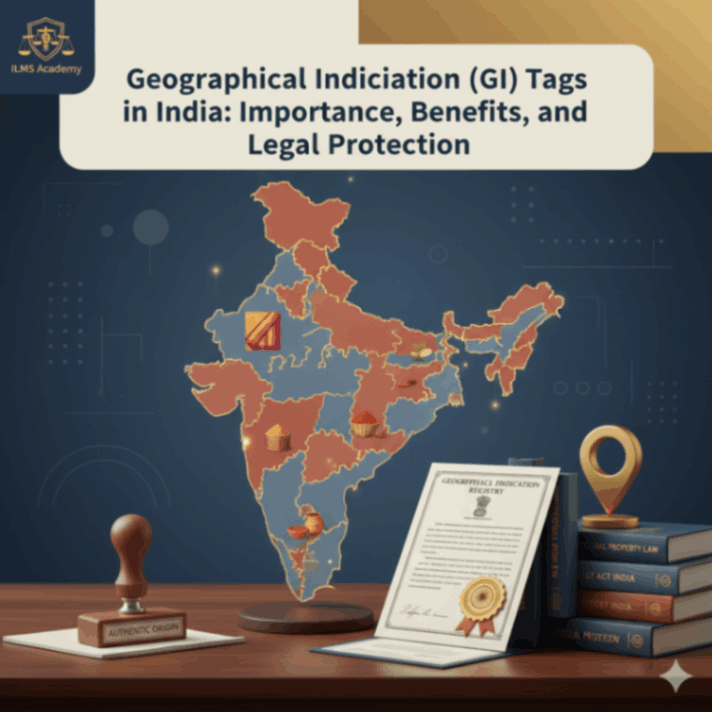
India is a land of diverse cultures, climates, and crafts—each region producing goods that are distinct in quality, reputation, and characteristics. These unique goods—like Darjeeling tea, Kanchipuram silk, and Pashmina wool—often owe their excellence to the place they originate from. To protect such region-specific products from imitation and to ensure authenticity, India uses the system of Geographical Indications (GIs).
What is a Geographical Indication (GI)?
A Geographical Indication (GI) is a mark used on products that have a specific geographical origin and exhibit qualities, reputation, or attributes linked to that origin. It serves as a certification that the product possesses characteristics inherently tied to its location, such as climate, traditional skills, or raw materials used.
Historical Background and International Roots
The idea of protecting geographical uniqueness began internationally in the early 20th century. Iconic European goods like Champagne and Parmesan cheese prompted the need for global recognition of location-based quality. This movement gained legal footing with the World Trade Organization’s TRIPS Agreement (1994), which mandated protection of GIs globally.
In response, India enacted the Geographical Indications of Goods (Registration and Protection) Act in 1999, which came into force in 2003. Since then, the country has used GI tags to preserve its cultural heritage, promote rural development, and safeguard producers’ rights against misuse or misrepresentation of native products.
Legal Framework in India
India’s commitment to protecting Geographical Indications is grounded in both domestic legislation and international obligations. The legal framework ensures that producers receive exclusive rights, promotes economic development, and helps preserve cultural heritage.
The Geographical Indications of Goods (Registration and Protection) Act, 1999
The primary legislation governing GIs in India is the Geographical Indications of Goods (Registration and Protection) Act, 1999, which came into effect on September 15, 2003. This Act provides comprehensive procedures for the registration, protection, and enforcement of
GI rights in India. Key features include:
- Registration of GIs for goods originating in a specific territory.
- Legal protection to registered GIs, prohibiting unauthorized use by others.
- Provision for penalties and remedies in case of infringement.
- Duration of registration is 10 years, renewable indefinitely.
This law is vital in ensuring that only those authorized, such as producers from the region, can use the registered GI.
Role of the GI Registry and Controller General
The GI Registry, located in Chennai, is the official body responsible for the registration and maintenance of GI records. It operates under the supervision of the Controller General of Patents, Designs, and Trademarks.
Responsibilities include:
- Scrutinizing and approving GI applications.
- Publishing GI applications in the GI Journal.
- Addressing objections and granting certificates of registration.
- Maintaining the GI register and handling renewals.
This registry plays a crucial role in formalizing protection and making GI data accessible to the public and enforcement agencies.
TRIPS Agreement and India’s Compliance
India is a signatory to the World Trade Organization’s Agreement on Trade-Related Aspects of Intellectual Property Rights (TRIPS), which mandates the protection of GIs as an intellectual property right.
Under TRIPS:
- GIs must be protected to prevent misuse and unfair competition.
- Members are obligated to provide legal means for interested parties to prevent the use of any GI that misleads the public.
India’s 1999 Act is fully compliant with TRIPS, enabling it to register both domestic and foreign GIs, and to seek reciprocal protection in other WTO member countries.
Criteria and Process for GI Registration
The registration of a Geographical Indication (GI) in India is a structured legal process governed by the Geographical Indications of Goods (Registration and Protection) Act, 1999. It ensures that only genuine producers or authorized users from a specific geographical region can benefit from the exclusivity and identity associated with a GI tag.
Eligibility and Who Can Apply
- Certificate Course in Labour Laws
- Certificate Course in Drafting of Pleadings
- Certificate Programme in Train The Trainer (TTT) PoSH
- Certificate course in Contract Drafting
- Certificate Course in HRM (Human Resource Management)
- Online Certificate course on RTI (English/हिंदी)
- Guide to setup Startup in India
- HR Analytics Certification Course
According to Section 11 of the Act, the following entities are eligible to apply for GI registration:
- Any association of persons or producers
- Any organization or authority established by or under the law representing the interest of producers of the concerned goods
Essentially, the applicant must represent the interests of producers who produce the goods using traditional knowledge or specific geographical characteristics. Individual producers alone are not eligible to apply unless they are part of a registered association or organization.
Application Procedure and Required Documentation
The GI registration process involves several important steps:
a) Filing of Application: The application must be filed using Form GI-1 at the GI Registry in Chennai. It must include:
- A detailed statement of the goods and their geographical origin
- Proof of uniqueness and reputation of the product
- Method of production and historical records
- A map of the region
- List of producers and stakeholders
- A graphic representation (logo or packaging style, if any)
b) Preliminary Scrutiny and Examination: The Registrar examines the application for completeness and authenticity. If objections or deficiencies are found, the applicant is given a chance to respond.
c) Publication in the GI Journal: Once accepted, the application is published in the Geographical Indications Journal for public scrutiny for a period of 3 months.
d) Opposition (if any): During this period, any person may file an opposition to the registration. If opposed, a hearing is conducted and both sides are heard before a decision is made.
e) Registration and Certification: If no opposition is received or if it is resolved in favor of the applicant, the GI is officially registered, and a certificate of registration is issued.
Duration and Renewal of GI Tags
- A GI registration is valid for 10 years from the date of registration.
- It can be renewed indefinitely for successive periods of 10 years each by filing the prescribed renewal form along with the requisite fee.
- Failure to renew can result in removal from the GI Register, but restoration is possible under certain conditions.
This procedural framework ensures the legitimacy, authenticity, and sustainability of GI protection in India.
Importance of GI Tags
Geographical Indications (GI) play a crucial role in recognizing, protecting, and promoting products that originate from a specific region and possess unique qualities due to their geographical origin. Their importance extends across legal, cultural, economic, and social dimensions.
Preservation of Cultural and Traditional Heritage
GI tags help safeguard traditional knowledge, skills, and cultural expressions that have been passed down through generations. Many GI-registered products—such as Kanjeevaram sarees, Pashmina shawls, and Warli paintings—embody centuries-old craftsmanship that is deeply rooted in a community’s cultural identity. GI protection ensures that these traditions are not lost to mass production or imitation, thereby preserving intangible cultural heritage.
Promotion of Indigenous Knowledge and Skills
GI registration encourages the recognition of indigenous communities and their specialized knowledge systems. It legitimizes and rewards the efforts of artisans, farmers, and producers who maintain traditional practices. For instance, GI tags for products like Darjeeling Tea or Mysore Sandalwood highlight the value of native expertise, empowering local communities and encouraging sustainable livelihoods.
Branding and Recognition of Local Products
A GI tag acts as a powerful branding tool that enhances the marketability and consumer recognition of regional products. It assures buyers of authenticity, quality, and a specific geographical origin, much like a seal of trust. This often leads to increased demand, premium pricing, and export opportunities for registered products, benefiting both producers and regional economies.
Together, these aspects make GI tags not only tools of economic development but also instruments of identity, cultural preservation, and legal empowerment.
Benefits of GI Tags
Geographical Indication (GI) tags offer a wide range of benefits to producers, consumers, and the economy as a whole. These benefits extend beyond mere legal recognition, fostering economic development, quality assurance, and international trade.
Economic Upliftment of Producers and Artisans
- Certificate Course in Labour Laws
- Certificate Course in Drafting of Pleadings
- Certificate Programme in Train The Trainer (TTT) PoSH
- Certificate course in Contract Drafting
- Certificate Course in HRM (Human Resource Management)
- Online Certificate course on RTI (English/हिंदी)
- Guide to setup Startup in India
- HR Analytics Certification Course
GI tags play a significant role in the economic empowerment of farmers, artisans, and small-scale producers. By ensuring exclusivity and protection from counterfeit goods, GI recognition allows genuine producers to command better prices. It also encourages rural entrepreneurship and job creation by promoting local industries. For example, the GI status of Basmati rice, Channapatna toys, and Phulkari embroidery has helped uplift entire communities dependent on these traditional occupations.
Consumer Trust and Product Authenticity
Products bearing a GI tag are perceived to be of superior quality and authenticity. Consumers are more likely to trust products that are certified to originate from a particular region with a recognized reputation. This assurance of quality not only influences purchasing decisions but also builds brand loyalty over time. GI tagging acts as a tool for quality control, preserving the integrity of regional products.
Export Promotion and Global Recognition
GI-tagged products often enjoy greater visibility and acceptance in international markets. Countries with strong GI portfolios tend to benefit from increased exports of niche and high-value goods. For instance, Darjeeling Tea was the first Indian product to receive GI recognition globally and has since become a symbol of premium quality worldwide. GI protection also helps safeguard against misuse and exploitation of regional names in global trade.
Collectively, these benefits contribute to a sustainable ecosystem where traditional knowledge is rewarded, consumers receive genuine goods, and regional economies flourish.
Legal Protection and Enforcement
Geographical Indications (GIs), once registered, are granted legal protection under the Geographical Indications of Goods (Registration and Protection) Act, 1999. The legal framework empowers authorized users and registered proprietors to take effective action against unauthorized use and infringement of GI tags, thus preserving the authenticity and value of the product.
Rights of Registered Proprietors and Users
Once a GI is registered, the registered proprietor (usually an association of producers or an organization representing them) gains the right to protect and promote the GI. Authorized users, typically individual producers or artisans, can use the GI label on their products. These rights are non-transferable and region-specific, meaning only producers from the designated geographical area can use the GI. The registration grants:
- Exclusive rights to use the GI tag;
- The ability to prevent others from unlawfully using the tag;
- The right to initiate legal action in case of infringement.
Remedies for Infringement and Passing Off
The Act provides both civil and criminal remedies for infringement. Infringement occurs when a product falsely claims to be from a GI-registered region or misleads consumers about its origin. Legal remedies include:
- Injunctions (temporary or permanent) against the infringing party;
- Damages or compensation for loss suffered by the genuine producers;
- Seizure and destruction of counterfeit goods.
In cases of passing off (i.e., misrepresenting goods as those of a GI-protected origin without direct copying), courts may provide equitable relief even in the absence of registration. The burden of proof lies on the claimant to demonstrate the reputation and distinctiveness of the GI-tagged product.
Case Studies on Legal Action and Disputes
- Darjeeling Tea vs. Global Imitations: The Tea Board of India has taken several legal actions in international jurisdictions to prevent misuse of the Darjeeling name. These efforts led to the recognition of Darjeeling Tea as a protected GI in the EU and other markets.
- Basmati Rice Dispute: India has consistently defended its claim over Basmati rice against countries like Pakistan and various companies that have tried to patent or market similar products under the same name in foreign markets.
- Tirupati Laddu: The Tirumala Tirupati Devasthanams (TTD) secured GI registration for its famous Tirupati Laddu and actively monitors unauthorized use of the name by vendors.
These examples highlight the importance of robust legal enforcement mechanisms in protecting the integrity of GI products both in India and abroad.
Prominent GI Tagged Products in India
India, known for its diverse culture and rich heritage, boasts a vast array of products protected under the Geographical Indications (GI) framework. These products range from exquisite handicrafts to unique agricultural commodities and traditional food items, each reflecting the distinct identity and skills of their regions.
Handicrafts
India’s handicrafts are celebrated globally for their intricate designs and traditional craftsmanship. Several handicrafts have received GI tags, which help preserve their authenticity and support the artisans who create them.
- Pochampally Ikat (Telangana): Known for its unique tie-and-dye textile technique, this cotton and silk fabric features geometric patterns made through resist dyeing. The GI tag protects the distinct weaving style native to Pochampally.
- Madhubani Paintings (Bihar): Originating from the Mithila region, these vibrant folk paintings are characterized by eye-catching geometric patterns and mythological themes. GI recognition has helped promote this art form internationally and secure livelihood for local artists.
Agricultural Products
India’s varied climatic zones produce several agricultural products known worldwide for their superior quality and unique characteristics. GI tags protect these items by linking their quality and reputation to their place of origin.
- Darjeeling Tea (West Bengal): Often referred to as the ‘Champagne of Teas,’ Darjeeling tea’s distinctive flavor and aroma are a result of the region’s specific altitude, climate, and soil. The GI tag ensures only tea grown in the designated region can use this name.
- Basmati Rice (Haryana, Punjab, Uttarakhand, and parts of Jammu & Kashmir): Renowned for its fragrance and long grains, Basmati rice is a major export product. The GI tag prevents misuse of the name by producers outside the region, safeguarding its premium market status.
Food Items
- Certificate Course in Labour Laws
- Certificate Course in Drafting of Pleadings
- Certificate Programme in Train The Trainer (TTT) PoSH
- Certificate course in Contract Drafting
- Certificate Course in HRM (Human Resource Management)
- Online Certificate course on RTI (English/हिंदी)
- Guide to setup Startup in India
- HR Analytics Certification Course
Traditional Indian cuisine offers several regional delicacies that have gained GI protection to preserve their heritage and culinary uniqueness.
- Tirupati Laddu (Andhra Pradesh): The famous prasadam offered at the Tirumala temple, Tirupati Laddu has been awarded a GI tag recognizing its unique recipe and spiritual significance.
- Hyderabadi Haleem (Telangana): A rich, slow-cooked meat stew prepared during Ramadan, this dish’s preparation method and taste are closely tied to Hyderabad’s culinary traditions. GI status helps protect the authenticity of the dish and promotes local vendors.
These GI-tagged products exemplify India’s cultural and agricultural diversity and showcase the significance of GI protection in promoting regional specialties on national and international platforms.
Challenges and Limitations
While Geographical Indication (GI) tags have brought significant benefits to Indian producers and the economy, there remain several challenges and limitations that impact their effectiveness and full potential.
Lack of Awareness Among Producers
A major hurdle in the effective use of GI tags is the limited awareness among grassroots producers and artisans about the benefits and procedures of GI registration. Many traditional producers remain unaware of their rights, resulting in underutilization of the GI system. This gap in knowledge limits their ability to protect and market their products effectively, thereby restricting economic upliftment.
Enforcement Issues and Fake Imitations
Despite legal protections, enforcement of GI rights remains weak in many cases. The market is flooded with counterfeit and imitation products that fraudulently use GI names to gain consumer trust. This dilutes the brand value of authentic GI products and causes financial losses to genuine producers. Enforcement challenges include inadequate monitoring, lengthy legal processes, and limited resources for action against infringers.
Marketing and Global Competitiveness
For many GI-tagged products, especially from rural or underdeveloped regions, poor marketing infrastructure and lack of access to international markets hinder their competitiveness globally. Producers often lack the capacity to brand, package, and promote their products effectively to fetch premium prices abroad. Furthermore, navigating complex export regulations and international standards poses additional barriers.
Addressing these challenges requires concerted efforts from government bodies, industry associations, and civil society to increase awareness, strengthen enforcement mechanisms, and enhance marketing support to fully realize the potential of GI tags in India.
Government Initiatives and Support
The Indian government has recognized the importance of Geographical Indications (GI) in preserving cultural heritage and boosting economic growth. Several initiatives and schemes have been launched to support producers, enhance awareness, and promote GI-tagged products domestically and internationally.
GI Promotion Schemes and Financial Assistance
To encourage registration and commercialization of GI products, the government, through the Ministry of Commerce and Industry, implements various schemes that provide financial assistance for the registration process, marketing, and capacity building. These schemes often cover expenses related to legal fees, packaging, branding, and participation in trade fairs. The government also collaborates with state governments to organize training programs and workshops that educate producers about GI rights and their benefits. These initiatives aim to empower artisans and farmers, especially in rural areas, to leverage GI tags for better income generation.
International Promotion of Indian GI Products
The government actively promotes Indian GI products on global platforms to enhance their visibility and market access. Efforts include participation in international trade fairs, expos, and bilateral trade agreements where GI products are highlighted as unique cultural exports. India has also sought to protect its GI products under international frameworks like the TRIPS Agreement to prevent unauthorized use abroad. Special campaigns and branding exercises, such as “Incredible India” and “Make in India,” integrate GI products to showcase India's rich heritage and quality craftsmanship worldwide.
Conclusion
The Way Forward for GI Tag Development in India
Geographical Indication tags in India hold immense potential to preserve the country’s rich cultural and traditional heritage while offering significant economic benefits to local producers and artisans. Moving forward, there is a pressing need to enhance awareness among stakeholders about the value of GI registration and protection. Streamlining the registration process, strengthening enforcement mechanisms against infringements, and promoting innovative marketing strategies will be crucial to fully harness the benefits of GI tags. Collaboration between the government, industry bodies, and grassroots producers will play a vital role in expanding the reach and recognition of GI products both domestically and internationally.
Sustainable and Equitable Growth through GI Protection
Sustainable development of GI-tagged products involves not only economic growth but also social equity and environmental responsibility. Protecting the unique identity of products ensures that traditional knowledge and local skills are preserved for future generations. Equally important is ensuring that the benefits of GI recognition reach the primary producers, especially marginalized communities, by facilitating fair trade practices and capacity building. By balancing commercialization with cultural sensitivity, GI protection can drive inclusive growth and foster pride in India’s diverse heritage, contributing meaningfully to rural development and the global economy.
- Certificate Course in Labour Laws
- Certificate Course in Drafting of Pleadings
- Certificate Programme in Train The Trainer (TTT) PoSH
- Certificate course in Contract Drafting
- Certificate Course in HRM (Human Resource Management)
- Online Certificate course on RTI (English/हिंदी)
- Guide to setup Startup in India
- HR Analytics Certification Course