
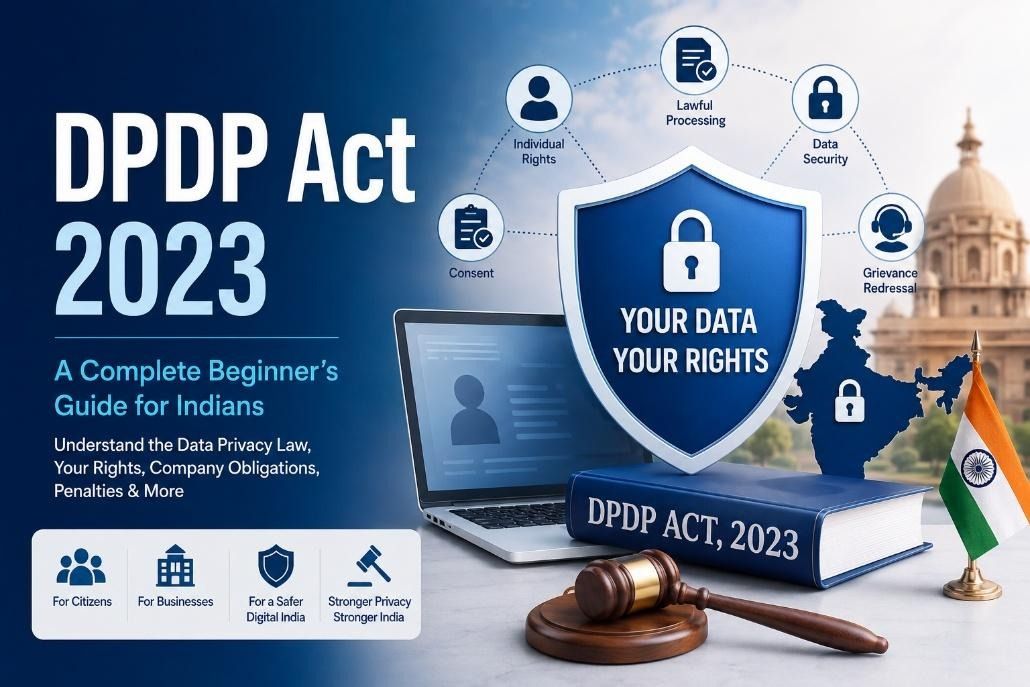
Introduction
India’s Rapid Digital Growth
India has undergone a massive digital transformation over the last decade. The rapid growth of smartphones, internet access, digital payments, e-commerce platforms, online education, and AI-driven technologies has completely changed how people interact with businesses and government services. Millions of Indians now share personal information daily through banking applications, healthcare portals, social media platforms, food-delivery apps, online marketplaces, and digital governance systems.
Government initiatives such as Digital India, Aadhaar integration, and UPI-based payment systems have accelerated the country’s transition toward a data-driven economy. As businesses increasingly depend on customer information for analytics, advertising, fraud detection, and artificial intelligence systems, personal data has become one of the most valuable resources in the modern digital ecosystem.
Why Data Privacy Matters Today
The rapid expansion of digital platforms has also increased concerns regarding privacy and misuse of personal information. Most individuals regularly share sensitive data online without fully understanding how their information is collected, stored, shared, or used. Companies often process large amounts of user information for advertising, analytics, behavioural profiling, and business optimisation.
In the digital age, misuse of personal information can affect financial security, reputation, personal autonomy, and online safety. Data privacy has therefore become an important legal and governance issue because personal information can easily be exploited if organisations fail to maintain responsible data-handling practices. The growing use of artificial intelligence and advanced analytics has further intensified concerns regarding surveillance, profiling, and excessive data collection. Consequently, governments across the world have started recognising that strong privacy laws are essential for protecting citizens within digital economies.
Rise of Cybersecurity and Data Misuse Concerns
The increasing number of cybersecurity incidents and data breaches has significantly increased public concern regarding digital privacy. Many organisations across the world have experienced hacking incidents, ransomware attacks, unauthorised disclosures, and large-scale leaks of customer information. India has also witnessed increasing concerns relating to financial fraud, phishing attacks, and insecure digital systems.
Many companies collect enormous amounts of personal information but may not always maintain adequate cybersecurity safeguards. Weak security systems can expose individuals to identity theft, financial fraud, reputational harm, and other serious risks. As digital ecosystems expanded rapidly, it became increasingly clear that India required a comprehensive legal framework capable of regulating personal-data processing, organisational accountability, cybersecurity obligations and privacy rights.
Need for a Dedicated Privacy Law in India
Before the DPDP Act, India did not have a single comprehensive law specifically focused on digital personal-data protection. Certain privacy-related provisions existed under the Information Technology Act, 2000 and some sector-specific regulations, but these frameworks were fragmented and insufficient for addressing modern digital-governance challenges. The absence of a dedicated privacy framework created uncertainty regarding data collection practices, user rights, organisational responsibilities and accountability mechanisms.
India’s Digital Personal Data Protection Act, 2023 is the country’s first comprehensive law specifically focused on digital personal data and privacy rights. The law establishes a framework regulating how organisations collect, process, store, and use digital personal data while also recognising the rights of individuals over their information. The DPDP framework represents a major step in India’s evolving digital-governance ecosystem because it attempts to balance technological innovation, economic growth, and protection of individual privacy rights.
What is the DPDP Act, 2023?
Meaning of the Digital Personal Data Protection Act
The Digital Personal Data Protection Act, 2023, commonly known as the DPDP Act, is India’s primary legislation governing the processing of digital personal data. The law establishes rules regarding collection, storage, use, sharing, retention, and protection of personal information processed by organisations and digital platforms.
The framework creates a legal relationship between individuals whose data is processed and organisations handling such information. Under the Act, individuals are referred to as “Data Principals,” while entities processing personal data are called “Data Fiduciaries.” The law seeks to ensure that organisations process personal data responsibly while respecting the privacy rights of individuals.
Purpose of the Law
The primary purpose of the DPDP Act is to regulate how personal data is processed within India’s digital ecosystem. The law aims to ensure that organisations maintain transparency, obtain lawful consent, implement security safeguards, and remain accountable for protecting user information.
The framework also grants individuals important rights relating to access to information, correction of inaccurate data, withdrawal of consent, grievance redressal, and erasure of personal information. The DPDP Act establishes rules for lawful processing of digital personal data while protecting individual privacy rights.
Why the Act Was Introduced
The introduction of the DPDP Act was largely driven by rapid digitalisation and increasing concerns regarding privacy and cybersecurity. As businesses and digital platforms began collecting enormous amounts of personal information, policymakers recognised the need for a modern legal framework capable of addressing data misuse, online surveillance, cybersecurity vulnerabilities and lack of accountability. Global privacy developments such as the European Union’s GDPR also influenced India’s approach toward privacy governance.
Objectives of the DPDP Framework
One of the major objectives of the DPDP framework is protecting individuals from irresponsible processing of personal data. The law seeks to ensure that organisations process information only for lawful and transparent purposes.
Another important objective is improving organisational accountability. Businesses collecting personal information are expected to implement security safeguards, maintain privacy notices, and respond effectively to user grievances and compliance obligations. The framework also aims to strengthen public trust within the digital economy by promoting responsible data-governance practices.
Balancing Privacy and Innovation
One of the most important aspects of the DPDP Act is its attempt to balance privacy rights with technological innovation and economic growth. Modern businesses increasingly depend on data for analytics, personalised services, AI systems, fraud prevention and operational efficiency.
At the same time, unrestricted collection and misuse of personal information can undermine privacy and public trust. The DPDP framework therefore attempts to create a balance where organisations can continue using data for legitimate business purposes while individuals retain meaningful control over their personal information.
Why Was the DPDP Act Needed in India?
Growing Digital Economy
India’s digital economy has expanded rapidly due to widespread internet access, affordable smartphones, online banking, e-commerce growth, and digital-payment systems. Millions of individuals now rely daily on social media platforms, fintech applications, healthcare portals, online education systems, and cloud-based services.
This digital transformation generated massive quantities of personal information being collected and processed by both private companies and public authorities. As organisations increasingly depended on data-driven systems, concerns regarding privacy and accountability became significantly more important.
Rise of Online Platforms and Apps
The explosive growth of mobile applications and digital platforms significantly increased the need for comprehensive privacy regulation. Modern applications frequently collect location data, financial information, browsing activity, biometric information and behavioural patterns.
Many users share such information without fully understanding the extent of data collection or how their information may be used in the future. As digital platforms became deeply integrated into everyday life, lawmakers recognised the need for stronger transparency and accountability standards.
Data Breaches and Privacy Risks
The increasing frequency of cybersecurity incidents and data breaches further highlighted the need for stronger privacy regulation. Large-scale data leaks can expose individuals to identity theft, financial fraud, phishing attacks, reputational harm, and unauthorised surveillance.
In many situations, users previously had limited legal protection when organisations mishandled personal information. The growing scale of privacy risks demonstrated the need for stronger obligations relating to cybersecurity safeguards, breach reporting, and responsible data governance.
Lack of Earlier Comprehensive Privacy Law
Before the DPDP Act, India mainly relied on fragmented legal provisions for privacy and cybersecurity regulation. Certain protections existed under the Information Technology Act, 2000 and related rules, but these mechanisms were insufficient for modern digital ecosystems.
The earlier framework lacked:
- comprehensive user rights,
- structured consent requirements,
- strong accountability mechanisms,
- and modern governance obligations.
As India’s digital economy became increasingly sophisticated, policymakers recognised the need for a dedicated privacy law.
Influence of the Puttaswamy Judgment
One of the most important developments influencing India’s privacy framework was the landmark Supreme Court judgment in Justice K.S. Puttaswamy v. Union of India. In this case, the Supreme Court recognised privacy as a fundamental right protected under Article 21 of the Constitution.
The Supreme Court’s recognition of privacy as a fundamental right significantly influenced India’s privacy-law framework. The judgment played a major role in accelerating India’s movement toward a dedicated data-protection framework.
Global Influence of GDPR and International Privacy Laws
Global privacy developments also influenced India’s approach toward data protection. International frameworks such as the European Union’s GDPR demonstrated the increasing importance of structured privacy governance and user rights. India’s growing role in the global digital economy created pressure to align with broader international privacy standards while also developing a framework suited to India’s own governance and economic conditions.
Scope and Applicability of the DPDP Act
Who Does the Act Apply To?
The DPDP Act applies to entities involved in processing digital personal data. The framework governs how organisations collect, use, store, share, and manage personal information relating to identifiable individuals. The law primarily applies where personal data exists in digital form or where offline data is later digitised for processing purposes.
This includes information processed through:
- websites,
- mobile applications,
- cloud platforms,
- online databases,
- and digital business systems.
Applicability to Indian Organisations
The DPDP framework applies broadly to Indian organisations processing digital personal data. This includes:
- technology companies,
- fintech platforms,
- healthcare providers,
- educational institutions,
- e-commerce businesses,
- employers,
- and online service providers.
Any organisation collecting or processing digital personal information may potentially fall within the scope of the framework depending upon the nature of its activities.
Applicability to Foreign Companies
The Act can also apply to foreign organisations in certain situations. If a foreign company processes personal data relating to individuals in India while offering goods or services to Indian users, the framework may extend to such entities. The DPDP Act applies to digital personal data processed within India and, in certain cases, outside India when goods or services are offered to individuals in India.
What is Excluded from the Act?
Although the Act has broad applicability, certain categories remain outside its scope, including some personal or domestic activities and certain exemptions provided by law. The existence of specific exemptions has also generated debate regarding the balance between privacy protection, governance flexibility, and regulatory enforcement within India’s evolving digital ecosystem.
Important Definitions Under the DPDP Act
Why Definitions are Important
Understanding the terminology used in the DPDP framework is essential because the entire law operates through specific legal relationships and responsibilities. The Act uses several important legal concepts such as:
- personal data,
- Data Principals,
- Data Fiduciaries,
- Data Processors,
- Consent Managers,
- and Significant Data Fiduciaries.
Understanding these definitions is essential because the entire DPDP framework revolves around the relationship between Data Principals and Data Fiduciaries.
Digital Personal Data
Digital personal data refers to personal information available in digital form, including data collected online or offline data later digitised for processing. The DPDP Act primarily applies to digital personal data processed through digital systems and platforms.
Personal Data
Personal data generally refers to information relating to an identifiable individual. This may include:
- Certificate Course in Labour Laws
- Certificate Course in Drafting of Pleadings
- Certificate Programme in Train The Trainer (TTT) PoSH
- Certificate course in Contract Drafting
- Certificate Course in HRM (Human Resource Management)
- Online Certificate course on RTI (English/हिंदी)
- Guide to setup Startup in India
- HR Analytics Certification Course
- names,
- financial information,
- biometric data,
- online identifiers,
- and contact details.
If an individual can be identified directly or indirectly through specific information, such information may qualify as personal data under the framework.
Data Principal
A Data Principal is the individual to whom the personal data relates. In simple terms, the Data Principal is the person whose information is being processed by an organisation or platform. The framework grants Data Principals several rights relating to:
- access,
- correction,
- consent,
- grievance redressal,
- and erasure of personal information.
Data Fiduciary and Data Processor
A Data Fiduciary is the entity determining the purpose and means of processing personal information. This may include:
- companies,
- employers,
- online platforms,
- fintech systems,
- and digital-service providers.
A Data Processor, on the other hand, processes personal data on behalf of a Data Fiduciary. Examples may include:
- cloud-service providers,
- IT vendors,
- analytics firms,
- and outsourced operational providers.
Consent Managers
The framework also introduces the concept of Consent Managers, which are specialised entities designed to help individuals manage, review, provide, and withdraw consent relating to personal-data processing. Consent Managers are intended to strengthen:
- transparency,
- user autonomy,
- and operational accountability within digital ecosystems.
Significant Data Fiduciaries (SDFs)
Another important category is the Significant Data Fiduciary (SDF). These are organisations identified by the Central Government based on factors such as:
- scale of data processing,
- sensitivity of information,
- risks to individual rights,
- and potential impact on national interests.
Because such organisations may create greater privacy and governance risks, SDFs are subject to additional obligations under Section 10 of the Act.
Rights of Individuals Under the DPDP Act
Importance of Individual Rights
One of the central objectives of the DPDP framework is strengthening individual control over personal information. The Act grants several important rights to Data Principals in order to improve transparency, accountability, and user autonomy. The DPDP framework gives individuals greater control over how their personal data is collected, processed, and stored.
Right to Access Information
Individuals have the right to access certain information regarding processing of their personal data. This may include details regarding categories of data processed, processing activities and organisations handling such information. The objective behind this right is improving transparency and ensuring that individuals remain informed about how their information is used within digital systems.
Right to Correction and Erasure
The framework also grants the right to correction and erasure of inaccurate or unnecessary personal data under certain circumstances. This is particularly important because inaccurate personal information can negatively affect financial services, employment opportunities, digital profiling and access to online services.
Right to Withdraw Consent
Another important right is the right to withdraw consent. Since the DPDP framework emphasises consent-based processing in many situations, individuals generally retain the ability to withdraw previously granted consent and stop organisations from processing personal information for certain purposes. This strengthens user autonomy, privacy control and accountability within digital ecosystems.
Right to Grievance Redressal
The law additionally provides grievance-redressal mechanisms enabling individuals to raise complaints regarding misuse of data, non-compliance, or inadequate response by organisations. Organisations are expected to maintain systems for responding to user grievances within reasonable timeframes.
Right to Nominate Another Person
The framework also allows individuals to nominate another person who may exercise certain rights on their behalf in situations involving death or incapacity. This provision reflects the growing importance of digital rights and personal-data management within modern digital societies.
Obligations of Companies and Organisations
Organisational Responsibility under the DPDP Framework
The DPDP framework imposes several important obligations on organisations processing personal data. The objective is ensuring that entities handling personal information operate responsibly and maintain adequate safeguards for protecting privacy rights. Organisations processing personal data must implement reasonable security safeguards and maintain transparency regarding data usage.
Consent and Privacy Notices
One of the core principles of the framework is lawful and informed consent. Organisations are generally expected to obtain valid consent and provide clear notices explaining what data is collected, why it is collected and how it will be used. Clear privacy notices are important for improving transparency and helping users make informed decisions regarding their personal information.
Data Security Safeguards
The law also requires organisations to maintain appropriate technical and organisational safeguards to protect information from cyberattacks, unauthorised access, accidental disclosures and misuse. This includes broader cybersecurity responsibilities involving secure infrastructure, access controls, encryption systems and operational risk management.
Data Breach Reporting
The DPDP framework additionally introduces obligations relating to reporting serious personal-data breaches. Organisations may be required to notify affected individuals and authorities in specified situations involving significant security incidents. The objective behind breach reporting is improving transparency, accountability and user protection.
Data Retention and Deletion
Another important principle is data minimisation and responsible retention. Organisations are expected to delete personal information when the purpose for processing is completed, consent is withdrawn or retention is no longer legally required. This principle seeks to reduce long-term privacy risks associated with unnecessary storage of personal information.
Accountability and Governance
The framework also increasingly emphasises organisational accountability through governance systems, operational safeguards, audits and documented compliance mechanisms. Large organisations processing significant volumes of personal data may face enhanced governance expectations due to greater operational and privacy-related risks.
What are Significant Data Fiduciaries (SDFs)?
Meaning of Significant Data Fiduciaries
Significant Data Fiduciaries, commonly referred to as SDFs, are certain organisations identified by the Central Government due to the scale, sensitivity, or potential impact of their data-processing activities. The government may evaluate factors such as:
- volume of personal data processed,
- sensitivity of information,
- risk to individual rights,
- impact on national interests,
- and potential harm arising from processing activities.
Why SDFs Have Additional Obligations
Because Organisations processing large volumes of personal data may create greater risks to privacy and individual rights, they are subject to enhanced compliance obligations under Section 10 of the Act. These additional obligations reflect the understanding that organisations processing large volumes of sensitive or high-impact data require stronger governance and accountability mechanisms.
Mandatory Appointment of Data Protection Officers
One of the most important obligations imposed on SDFs is the mandatory appointment of a Data Protection Officer (DPO) based in India. The DPO is responsible for:
- monitoring compliance,
- handling grievances,
- coordinating governance activities,
- and assisting with privacy accountability obligations.
The appointment of DPOs reflects the increasing professionalisation of privacy governance within India’s digital economy.
Compliance Assessments and Audits
SDFs may also be required to conduct:
- periodic audits,
- compliance assessments,
- and Data Protection Impact Assessments (DPIAs).
Section 10 imposes additional obligations on Significant Data Fiduciaries, including appointment of Data Protection Officers and periodic compliance assessments. These enhanced obligations demonstrate the framework’s focus on:
- risk-based governance,
- operational accountability,
- and proactive privacy management.
What are Consent Managers?
Meaning and Purpose of Consent Managers
Consent Managers are one of the unique features introduced within India’s DPDP framework. They are designed as user-centric entities helping individuals manage consent relating to processing of personal data across digital services. The concept aims to strengthen:
- transparency,
- user autonomy,
- and control over personal information.
Role of Consent Managers
Consent Managers act as user-centric platforms helping individuals manage, review, and withdraw consent across services. These entities are expected to function through interoperable digital systems enabling users to:
- track permissions,
- modify consent preferences,
- and manage data-sharing choices more efficiently.
The broader objective is simplifying privacy governance for ordinary users who may otherwise struggle with complex consent settings across multiple digital platforms.
Governance and Operational Expectations
Because Consent Managers may handle highly sensitive privacy preferences, they are expected to maintain:
- operational reliability,
- technical safeguards,
- and strong governance standards.
Their long-term success will likely depend upon:
- implementation quality,
- technical interoperability,
- industry adoption,
- and user trust.
Children’s Data Protection Under the DPDP Act
Importance of Children’s Privacy Protection
One of the most sensitive areas within modern privacy governance involves processing personal data relating to children. Digital platforms increasingly interact with children through:
- gaming platforms,
- online education systems,
- social media,
- streaming services,
- and AI-driven applications.
Children may be more vulnerable to:
- manipulation,
- profiling,
- excessive data collection,
- and harmful online practices.
The DPDP framework therefore provides additional safeguards for processing children’s personal data.
Parental Consent Requirements
The framework emphasises parental involvement in processing children’s information. In many situations, organisations may require verifiable parental consent before processing personal data relating to children. This reflects broader concerns regarding:
- informed consent,
- child safety,
- and responsible digital governance.
Restrictions on Harmful Processing
The law also seeks to restrict potentially harmful processing activities involving:
- Certificate Course in Labour Laws
- Certificate Course in Drafting of Pleadings
- Certificate Programme in Train The Trainer (TTT) PoSH
- Certificate course in Contract Drafting
- Certificate Course in HRM (Human Resource Management)
- Online Certificate course on RTI (English/हिंदी)
- Guide to setup Startup in India
- HR Analytics Certification Course
- behavioural tracking,
- targeted advertising,
- manipulative profiling,
- and addictive digital design practices.
These safeguards aim to reduce privacy and psychological risks associated with children’s interaction with digital platforms.
Growing Concerns Around Child Safety and Digital Governance
The framework’s child-protection provisions reflect growing global concerns regarding:
- child safety,
- ethical data usage,
- responsible digital governance,
- and AI-driven profiling systems.
As digital platforms become increasingly integrated into children’s lives, privacy protection for minors is likely to become an even more important governance issue in the future.
Data Breaches and Penalties
What is a Personal Data Breach?
One of the most important objectives of the Digital Personal Data Protection (DPDP) framework is protecting individuals from unauthorised access, misuse, disclosure, or loss of personal information. As businesses increasingly depend on cloud infrastructure, digital platforms, AI systems, and large-scale online databases, cybersecurity incidents and personal-data breaches have become major governance concerns across the world.
A personal-data breach generally refers to any unauthorised processing, disclosure, loss, destruction, or compromise of personal information. Such breaches may occur because of hacking incidents, ransomware attacks, insider misuse, weak cybersecurity systems, accidental disclosures, or poor operational practices. In modern digital ecosystems, a single breach can potentially expose sensitive information relating to millions of users.
Data breaches can create serious consequences for individuals, including identity theft, financial fraud, phishing attacks, reputational harm, and privacy violations. Because of these risks, the DPDP framework places significant responsibility on organisations to maintain reasonable security safeguards and protect personal information from unauthorised access or misuse.
Mandatory Breach Notification
The DPDP framework also introduces obligations relating to breach notification. In certain situations involving significant cybersecurity incidents, organisations may be required to notify affected individuals as well as relevant authorities.
The objective behind breach reporting is improving transparency, accountability, and user protection. Timely notification allows individuals to take precautionary measures such as securing accounts, changing passwords, monitoring financial activity, or protecting themselves from fraudulent misuse of information. The breach-reporting framework also encourages organisations to strengthen cybersecurity preparedness and operational governance systems.
Penalties Under Section 33
Section 33 of the DPDP Act empowers authorities to impose financial penalties for specified violations under the framework. The penalty structure reflects the government’s intention to encourage stronger compliance and organisational accountability. Penalties may arise in situations involving:
- failure to maintain reasonable security safeguards,
- violation of obligations relating to children’s data,
- non-compliance with consent-related requirements,
- failure to report breaches,
- or other major governance failures.
The amount of penalty may depend upon factors such as the seriousness of the violation, duration of non-compliance, nature of the breach, and impact on affected individuals.
Maximum Financial Penalties
One of the most discussed aspects of the DPDP framework is its potentially significant financial penalties for serious non-compliance involving personal-data protection and cybersecurity obligations. The framework reflects a broader global trend where governments increasingly expect organisations to maintain strong privacy-governance and cybersecurity systems.
Large organisations processing enormous volumes of personal data may face particularly serious financial consequences if they fail to maintain adequate operational safeguards and governance systems.
Consequences of Non-Compliance
Apart from legal penalties, non-compliance can also result in:
- reputational damage,
- operational disruption,
- regulatory scrutiny,
- and loss of customer trust.
Consequently, many businesses are increasingly investing in cybersecurity infrastructure, governance frameworks, breach-response systems, and operational privacy programmes. The DPDP framework allows significant financial penalties for serious violations involving personal data and security safeguards.
Data Protection Board of India
Role of the Data Protection Board
The DPDP framework establishes the Data Protection Board of India as an important regulatory and adjudicatory body within India’s privacy-governance ecosystem. The Board is intended to function as a digital-first institution responsible for grievance redressal, enforcement, and regulatory oversight under the framework.
The establishment of a specialised data-protection authority reflects the increasing importance of privacy governance within India’s digital economy. As businesses, digital platforms, and public systems process enormous quantities of personal information, there is a growing need for institutional mechanisms capable of addressing privacy-related disputes and ensuring organisational accountability.
The primary role of the Data Protection Board is dealing with issues relating to non-compliance with the DPDP framework. The Board may examine complaints, breach-related matters, governance failures, and violations of statutory obligations under the Act.
Digital Complaint Mechanism
The DPDP framework adopts a digital-first approach toward complaint management and grievance redressal. Individuals may be able to submit complaints and participate in proceedings through digital systems rather than relying entirely on traditional physical processes.
This approach aligns with India’s broader digital-governance initiatives and aims to improve accessibility, efficiency, and administrative convenience. Digital complaint mechanisms may also make privacy enforcement more practical for ordinary users across different parts of the country.
Enforcement Powers
The Data Protection Board may possess powers relating to inquiry, investigation, compliance review, and imposition of penalties in specified situations under the framework. Its enforcement role is intended to strengthen accountability and encourage businesses to maintain responsible privacy-governance systems. As the DPDP ecosystem evolves further, the practical functioning and enforcement approach of the Board will likely become increasingly important.
Appeals and Adjudication
The DPDP framework additionally provides mechanisms relating to adjudication and appeals in matters involving privacy disputes and penalties. As India’s privacy ecosystem continues evolving, judicial interpretation and regulatory decisions may significantly influence the future development of compliance standards and operational governance practices. The DPDP Rules establish a digital-first Data Protection Board for grievance redressal and enforcement.
DPDP Rules, 2025 Explained
Why the Rules Were Introduced
The Digital Personal Data Protection Act, 2023 established the broad legal framework for privacy governance in India. However, several operational and procedural aspects required additional clarification for practical implementation. This led to the introduction of the DPDP Rules, 2025.
The Rules provide greater clarity regarding:
- compliance procedures,
- governance expectations,
- breach reporting,
- consent-management systems,
- and implementation mechanisms.
Without operational rules, many organisations would face uncertainty regarding how privacy obligations should function in practice.
Operationalisation of the Act
The DPDP Rules play an important role in operationalising the framework by transforming the law from a broad legal statute into a practical governance system. Privacy governance is not limited only to legal compliance; it also requires operational implementation involving:
- cybersecurity safeguards,
- governance systems,
- employee awareness,
- and breach-response mechanisms.
The DPDP Rules, 2025 operationalise the Act by introducing procedural and operational compliance requirements.
Phased Compliance Implementation
The implementation of the framework is expected to occur gradually rather than through immediate universal enforcement. Different sectors and organisations may require time to redesign governance systems, strengthen cybersecurity infrastructure, modify consent mechanisms, and update operational practices. This phased approach reflects the complexity of implementing large-scale privacy governance across India’s rapidly expanding digital economy.
Key Highlights of the Rules
The Rules provide greater operational clarity regarding:
- breach-notification procedures,
- obligations relating to Significant Data Fiduciaries,
- governance expectations,
- and accountability mechanisms.
They also strengthen the implementation structure relating to privacy compliance and operational governance practices.
Practical Compliance Expectations
The DPDP framework increasingly expects organisations to treat privacy compliance as an important governance function rather than merely a legal formality. Businesses may therefore need to strengthen:
- cybersecurity safeguards,
- internal governance systems,
- employee awareness,
- vendor-management practices,
- and operational accountability mechanisms.
Consequently, privacy governance is gradually becoming a long-term operational function within modern organisations.
How the DPDP Act Affects Ordinary Indians
Social Media Apps
The DPDP framework directly affects ordinary individuals because personal information is now routinely collected through social-media platforms, digital applications, and online services.
Social-media platforms collect enormous quantities of behavioural and personal information relating to user activity, preferences, interactions, and browsing patterns. The DPDP framework seeks to increase transparency regarding how such platforms collect, process, and use personal information. Users may gradually gain greater awareness regarding privacy settings, consent mechanisms and data-sharing practices. The DPDP framework directly impacts how companies collect and use personal data through apps, websites, and digital services.
Banking and FinTech
Digital banking and fintech systems process highly sensitive financial information relating to transactions, payment systems, identity verification and financial behaviour. The DPDP framework therefore increases expectations regarding cybersecurity safeguards, responsible governance, breach reporting, and operational accountability within digital financial ecosystems.
E-Commerce Platforms
E-commerce businesses routinely collect addresses, payment details, purchase history and behavioural analytics. The framework may influence how online businesses obtain consent, maintain transparency, store information, and conduct targeted advertising activities.
Healthcare Data
Healthcare information represents one of the most sensitive categories of personal data because it may include medical history, biometric information, insurance details and diagnostic records. The DPDP framework therefore increases the importance of responsible governance and cybersecurity safeguards within hospitals, healthcare platforms, and telemedicine systems.
Mobile Applications
Many mobile applications collect extensive user information involving location access, contact permissions, camera access and behavioural usage patterns. The DPDP framework may gradually encourage stronger transparency regarding how such permissions are requested and how personal information is processed within mobile ecosystems.
Everyday Privacy Rights
For ordinary users, the framework primarily aims to provide greater transparency, accountability, and control regarding personal information. Although India’s privacy ecosystem is still evolving, the DPDP framework represents an important step toward strengthening digital rights and privacy awareness within the country’s expanding online environment.
How Businesses Are Preparing for DPDP Compliance
Privacy Governance Systems
- Certificate Course in Labour Laws
- Certificate Course in Drafting of Pleadings
- Certificate Programme in Train The Trainer (TTT) PoSH
- Certificate course in Contract Drafting
- Certificate Course in HRM (Human Resource Management)
- Online Certificate course on RTI (English/हिंदी)
- Guide to setup Startup in India
- HR Analytics Certification Course
The introduction of the DPDP framework has significantly increased governance and compliance responsibilities for businesses operating within India’s digital economy. Many organisations are now developing structured privacy-governance systems involving:
- internal policies,
- accountability mechanisms,
- operational safeguards,
- and risk-management frameworks.
These systems help organisations monitor compliance, reduce operational vulnerabilities, and improve accountability. Organisations are increasingly investing in operational privacy and governance frameworks due to evolving compliance requirements.
Consent Management Mechanisms
Many businesses are redesigning privacy notices, consent systems, and user-permission frameworks in order to align with evolving regulatory expectations. Clearer and more transparent consent-management practices are becoming increasingly important within:
- fintech,
- healthcare,
- e-commerce,
- and AI-driven digital platforms.
Cybersecurity Upgrades
Businesses are also investing heavily in:
- cybersecurity infrastructure,
- encryption systems,
- access controls,
- and incident-response mechanisms.
The growing risk of data breaches and financial penalties has increased pressure on organisations to strengthen operational security safeguards.
Compliance Audits
Many companies are conducting:
- governance reviews,
- compliance assessments,
- privacy audits,
- and risk-management exercises
to identify operational vulnerabilities and governance gaps.
Such assessments may become increasingly important as privacy enforcement evolves further.
Employee Training
Privacy governance increasingly requires awareness across:
- legal teams,
- HR divisions,
- cybersecurity units,
- compliance departments,
- and operational management systems.
Consequently, organisations are investing in employee-training programmes aimed at improving privacy awareness and operational compliance understanding.
DPDP Act vs GDPR – Key Differences
India vs European Privacy Framework
The DPDP framework is often compared with the European Union’s General Data Protection Regulation (GDPR) because both laws focus on privacy governance and protection of personal information.
Although the two frameworks share certain similarities, they also differ significantly in structure, implementation approach, and regulatory philosophy.
The DPDP framework shares similarities with GDPR while retaining India-specific governance approaches. GDPR forms part of the European Union’s broader human-rights framework, whereas the DPDP Act reflects India’s own governance priorities and digital-economy considerations.
Consent Standards
Both GDPR and DPDP emphasise consent in many situations involving personal-data processing. However, the operational structure and terminology used within the two frameworks differ in several respects. Unlike a purely consent-based framework, the DPDP Act also recognises certain “legitimate uses” where consent may not always be required.
Although consent is a major basis for processing personal data under the DPDP framework, Section 7 of the Act also recognises certain “legitimate uses” where processing may occur without explicit consent in specified situations such as legal obligations, employment purposes, medical emergencies, and public-interest functions.
Regulatory Structure
GDPR operates through multiple European data-protection authorities across member states, whereas the DPDP framework establishes the Data Protection Board of India as the primary enforcement body. India’s regulatory ecosystem is still evolving and may continue developing through future rules, guidance, and adjudicatory decisions.
Data Localisation and Cross-Border Transfers
The approaches toward cross-border data transfers differ between GDPR and the DPDP framework. GDPR contains detailed mechanisms regulating international transfers of personal data, whereas the Indian framework adopts a comparatively different and evolving approach involving government restrictions relating to specified jurisdictions.
Penalty Structure
Both frameworks permit significant financial penalties for serious privacy violations. However, GDPR penalties are often calculated using percentages of global turnover, whereas the DPDP framework primarily relies on statutory financial penalties under Indian law.
Criticisms and Challenges of the DPDP Act
Government Exemptions
Although the DPDP framework represents a major development in India’s privacy-governance ecosystem, it has also generated debate among legal experts, privacy advocates, businesses, and policy commentators. One of the most debated aspects of the framework involves certain government-related exemptions and state powers under specified circumstances.
Critics argue that broad exemptions may raise concerns regarding:
- accountability,
- surveillance,
- and balance between privacy rights and governance flexibility.
Several experts and commentators have raised debates regarding the balance between privacy protection and regulatory flexibility.
Compliance Burden on Businesses
Many organisations, particularly startups and smaller businesses, may face operational difficulties while implementing:
- cybersecurity safeguards,
- governance systems,
- consent mechanisms,
- and compliance procedures.
Building comprehensive privacy infrastructure often requires significant financial investment, technical expertise, and organisational restructuring.
Enforcement Challenges
The practical success of the DPDP framework may depend heavily upon:
- regulatory efficiency,
- institutional capacity,
- technological preparedness,
- and consistent enforcement practices.
Because India’s digital ecosystem is extremely large and technologically complex, effective implementation may remain challenging.
Operational Complexity
Privacy governance often requires coordination between:
- legal teams,
- cybersecurity professionals,
- compliance officers,
- operational managers,
- and technology departments.
Consequently, implementing large-scale privacy systems can become operationally complex, particularly for organisations lacking mature governance structures.
Concerns Around Surveillance and Accountability
Some commentators have additionally raised broader concerns relating to:
- digital surveillance,
- state access to information,
- and long-term accountability mechanisms.
As India’s digital ecosystem continues evolving, debates surrounding privacy governance and individual rights are also likely to continue developing.
Future of Privacy Law in India
Expansion of Privacy Governance
India’s privacy-governance ecosystem is expected to evolve significantly over the coming years due to rapid digitalisation, expansion of AI technologies, increasing cybersecurity risks, and growing global focus on responsible data governance. Privacy governance is gradually becoming a long-term operational function within businesses rather than merely a legal requirement. The DPDP ecosystem is expected to evolve further alongside AI regulation, cybersecurity governance, and digital-economy expansion.
AI and Data Regulation
Artificial intelligence systems increasingly depend upon large quantities of personal and behavioural data.
As AI technologies continue expanding, governments across the world are examining issues relating to: algorithmic accountability, profiling risks, ethical AI, and responsible data usage. India’s future privacy ecosystem will likely evolve alongside broader discussions relating to AI governance and digital ethics.
Growth of Compliance Careers
The DPDP framework has also increased demand for professionals specialising in privacy governance, cybersecurity, compliance, risk management and data protection. Privacy law and governance are gradually emerging as important professional fields within India’s digital economy.
Future Amendments and Regulatory Developments
Because digital technologies evolve rapidly, the privacy-governance ecosystem is also expected to continue developing through future rules, regulatory guidance, judicial interpretation and possible legislative amendments. The DPDP framework should therefore be viewed as an evolving governance system rather than a completely static legal structure.
India’s Emerging Digital Governance Framework
The DPDP framework represents an important part of India’s broader digital-governance strategy involving cybersecurity, AI regulation, digital infrastructure and online accountability. As India continues expanding its digital economy, privacy governance will likely become increasingly important for businesses, regulators, policymakers, and ordinary citizens.
Conclusion
Why the DPDP Act Matters
The Digital Personal Data Protection Act, 2023 represents one of the most significant developments in India’s digital-governance and privacy ecosystem. As the country becomes increasingly dependent on digital services, AI systems, fintech platforms, cloud infrastructure and online governance mechanisms, protection of personal information is becoming more important than ever before. The framework attempts to create a balance between technological innovation, economic growth, organisational accountability, and protection of individual privacy rights.
Impact on Citizens and Businesses
For ordinary citizens, the DPDP framework aims to provide greater transparency and control regarding how personal information is collected and used. For businesses, it introduces stronger expectations relating to cybersecurity, governance systems, consent management and operational compliance. Although the framework still faces implementation challenges and evolving regulatory questions, it nevertheless represents a major step toward building a more structured privacy-governance ecosystem in India.
Importance of Privacy Awareness
As India’s digital economy continues expanding, privacy awareness and responsible data governance will likely become increasingly important for citizens, organisations, policymakers and the broader digital ecosystem. The long-term success of the DPDP framework will depend not only upon legal enforcement but also upon greater public awareness, organisational accountability, and responsible digital-governance practices.
- Certificate Course in Labour Laws
- Certificate Course in Drafting of Pleadings
- Certificate Programme in Train The Trainer (TTT) PoSH
- Certificate course in Contract Drafting
- Certificate Course in HRM (Human Resource Management)
- Online Certificate course on RTI (English/हिंदी)
- Guide to setup Startup in India
- HR Analytics Certification Course