
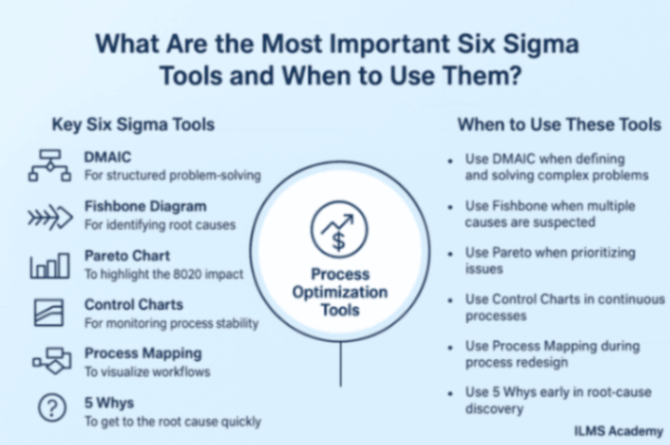
Introduction to Six Sigma Tools
Six Sigma tools are the practical instruments, techniques, and structured approaches practitioners use to discover, measure, analyze, improve, and control processes so they deliver predictable, high-quality results. At their core these tools translate data, observations, and stakeholder needs into actionable insight. Without tools, Six Sigma is merely a philosophy; with the right tools it becomes an engineering discipline for continuous improvement. Tools provide a common language for teams, reduce ambiguity in problem statements, convert subjective opinions into objective evidence, and allow for repeatable problem solving across functions and industries. They range from simple visual maps and checklists to advanced statistical analyses and experiment designs, and they are applied not as dogma but as situational instruments selected to match the problem, available data, resources, and stage of the project.
1.1 Understanding the Purpose of Six Sigma Tools
The primary purpose of Six Sigma tools is to enable structured problem solving so organizations can reduce variation, eliminate defects, and improve process capability. Each tool has a precise role: some make the voice of the customer explicit and measurable, others quantify current performance, some uncover root causes in a systematic way, while others help validate and sustain improvements. Beyond diagnosis and solution design, tools support decision-making under uncertainty by providing statistically sound evidence, ensure alignment across stakeholders by visualizing complex ideas simply, and guard against regression by embedding controls into daily work. Practically, these tools turn vague improvement goals—such as “reduce errors” or “improve turnaround time”—into testable hypotheses, measurable metrics, and verifiable outcomes. They also make improvement efforts scalable: a small team in manufacturing and a cross-functional team in services can share the same toolset and methodology, enabling organizational learning and the cumulative build-up of best practices.
1.2 How Tools Support the DMAIC and DMADV Methodologies
DMAIC (Define–Measure–Analyze–Improve–Control) and DMADV (Define–Measure–Analyze–Design–Verify) are the two Six Sigma process frameworks. Tools are not evenly distributed; some are specifically strong in early-phase problem definition and stakeholder alignment, others are designed for statistical rigor during measurement and analysis, while a different subset supports design and validation for new processes or products. In the Define phase, tools such as SIPOC, VOC, and project charters focus teams on scope, customers, and expected outcomes. In Measure, tools ensure data is collected reliably and processes are characterized accurately (process maps, MSA, capability indices). Analyze-phase tools—hypothesis testing, regression, Pareto charts, root-cause techniques—convert data into insight and identify the few vital drivers of poor performance. Improve-phase tools (DOE, Kaizen, mistake-proofing, lean methods) create, test, and refine changes. Finally, Control-phase tools such as control charts, SOPs and visual management lock gains into the routine. In DMADV the emphasis shifts more toward design tools—QFD, design scorecards, Taguchi methods—that translate customer requirements into robust designs. In every phase and in both methodologies, tool choice governs the rigor of decision-making, the defensibility of solutions, and the speed at which benefits can be realized.
1.3 Why Tool Selection Determines Project Success
Choice of tool matters because the right tool compresses time-to-insight and reduces the risk of implementing ineffective or harmful changes; the wrong tool wastes time, misleads teams, or produces spurious conclusions. Several practical reasons make selection critical. First, tools vary by data requirements—some demand large, precise datasets and fail if the measurement system is poor; others are qualitative and better when customer input is scarce. Second, tools differ in complexity and required expertise; using DOE without sufficient statistical understanding can produce misleading interactions, while overly simplistic approaches can miss important systemic causes. Third, organizational context—available software, cultural willingness to experiment, regulatory constraints—affects what tools are feasible. Finally, timing matters: premature advanced analysis before stabilizing measurement systems is futile. Good practitioners therefore ask a short checklist before selecting a tool: what question must we answer, what data exists or can we collect, what level of rigor is required for stakeholder buy-in, and what skills/tools are available to interpret results. Tool selection is therefore not a technicality; it is a strategic choice that steers the project, shapes stakeholder trust, and ultimately determines whether improvements are real, repeatable, and sustained.
2. Classification of Six Sigma Tools
Understanding tools by category helps teams pick the right instrument for the job. The major categories are statistical tools, process analysis and visualization tools, root cause analysis tools, improvement and optimization tools, and control and monitoring tools. Each group plays complementary roles across DMAIC/DMADV, and within each group tools range from quick, low-cost techniques to intensive, high-rigor approaches.
2.1 Statistical Tools
Statistical tools are the backbone of Six Sigma’s claim to rigor. They convert noisy process outputs into interpretable measures that support hypothesis testing and quantification of uncertainty. Descriptive statistics (mean, median, standard deviation), distribution fitting, confidence intervals, and capability indices (Cp, Cpk, Pp, Ppk) describe current performance and ability to meet specifications. Inferential tools—t-tests, chi-square, ANOVA, regression, nonparametric tests—allow teams to test hypotheses about causes, relationships, and differences with a known probability of error. Multivariate methods (multiple regression, principal components, cluster analysis) and time-series analyses help when multiple factors interact or when data are autocorrelated. Experimental-design tools such as full and fractional factorial designs let teams systematically probe cause-and-effect and optimize factors with minimal runs. Statistical tools require care: assumptions about normality, independence, and homoscedasticity should be checked; measurement system adequacy must be ensured; and practical significance should always be weighed with statistical significance.
2.2 Process Analysis and Visualization Tools
These are the tools teams use to see processes, handoffs, wastes, and delays. Flowcharts and swimlane diagrams depict the sequence of activities and responsibilities. Value stream mapping extends this by capturing information flow, lead time, and value-added time, revealing sources of delay and accumulation. SIPOC provides an executive-level snapshot of suppliers, inputs, process steps, outputs, and customers. Process capability and histograms visualize output distribution relative to specifications. Process maps combined with takt time and cycle time data surface imbalances. Visualization tools translate complex, cross-functional processes into shared mental models; they are indispensable for aligning stakeholders and for identifying non-obvious process relationships that raw data alone may not show.
2.3 Root Cause Analysis Tools
Root cause tools help teams move past symptoms to the underlying systemic problems. The Fishbone (Ishikawa) diagram organizes potential causes by categories (commonly People, Process, Machine, Materials, Measurement, Environment) to ensure thorough exploration. The “5 Whys” is a simple iterative questioning technique that peels back layers of cause and is best used in facilitated sessions with domain experts. Fault tree analysis provides a logical, often quantitative framework for safety-critical systems, showing how basic failures combine to produce top-level events. Pareto analysis—ranking causes by frequency or impact—focuses effort on the vital few. Good root-cause work triangulates across methods: brainstorming and cause mapping produce hypotheses, which are then tested statistically or experimentally.
2.4 Improvement and Optimization Tools
Once root causes are known, improvement tools create and validate solutions. Brainstorming, TRIZ, SCAMPER, and other ideation techniques generate candidate countermeasures. Lean tools—5S, Kaizen, kanban, mistake-proofing—remove waste and improve flow. Design of Experiments (DOE) provides a structured way to test factor settings and find optimal combinations. Simulation (discrete-event, Monte Carlo) evaluates changes in a virtual environment when real experiments are impractical or costly. Business case tools such as cost-benefit analysis and value-at-stake quantification translate technical improvements into financial terms for decision-makers. These tools vary in speed, cost, and required expertise; pragmatic teams often combine quick kaizen events with later DOE or simulation for robustness.
2.5 Control and Monitoring Tools
Sustaining gains demands control. Control charts (Shewhart, EWMA, CUSUM) detect special-cause variation quickly so corrective actions can be taken before defects proliferate. Control plans and SOPs embed the new process as the standard, and visual management (dashboards, scorecards, and floorboards) makes performance visible to those doing the work. Audits, Gemba walks, and periodic process reviews ensure compliance and foster continuous improvement. Poka-yoke (mistake-proofing) mechanisms prevent or detect errors at the point of occurrence. In addition, automated monitoring via dashboards and alerts (often supported by RPA or BI platforms) enables real-time, scaleable control, especially in complex or high-volume processes.
3. DMAIC Framework and its Toolset
DMAIC is a phase-driven structure and each phase has a collection of recommended tools. The toolset is not prescriptive; rather it is a toolkit from which teams choose instruments appropriate to the problem’s complexity, risk, and available data.
3.1 Define Phase Tools
Define-phase tools clarify what the project is about, who cares, and what success looks like. SIPOC, VOC analyses, CTQ trees, project charters, stakeholder maps, and voice-to-metrics translations are core. The objective of Define is to bound the problem properly and secure stakeholder agreement on scope, timeline, and expected benefits. These tools reduce scope creep later by making deliverables explicit and measurable and by aligning the team on who the customers are and which requirements are critical-to-quality.
3.2 Measure Phase Tools
Measure-phase tools ensure teams are measuring the right things in the right way. Process maps, data collection plans, check sheets, operational definitions, sampling strategies, and Measurement System Analysis (Gage R&R) are staples. Capability indices and baseline control charts quantify the “before” performance. The Measure phase often consumes a disproportionate fraction of project time because without reliable data the entire analysis is shaky. The guiding principle is: if you cannot measure it reliably, you cannot improve it credibly.
3.3 Analyze Phase Tools
Analyze-phase tools take measured data and test hypotheses about root cause. Pareto charts, scatterplots, regression analysis, ANOVA, hypothesis tests, process mining, failure mode analysis, fishbone diagrams, and time-series decomposition are common. The goal is to identify the key drivers of variation and to prioritize them for improvement. Analysis should be iterative: qualitative root-cause tools generate hypotheses that are then tested quantitatively; the results feed further focused analysis until a small set of actionable causes remains.
3.4 Improve Phase Tools
Improve-phase tools design, pilot, and optimize solutions. Brainstorming, idea selection matrices, pilot run plans, DOE, simulation, mistake-proofing, value stream redesign, and lean kaizen events are methods used here. Improvements should be tested under controlled conditions, using pilot or experimental designs whenever feasible, and validated against both statistical metrics and customer requirements. The Improve phase also documents process changes and prepares the organization for transition to the Control phase.
3.5 Control Phase Tools
Control-phase tools institutionalize improvements. Control charts monitor ongoing process stability; control plans and SOPs define responsibilities; training materials and visual controls ensure people follow new procedures; audit checklists and mistake-proofing reduce the chance of backsliding. A robust handover to process owners includes documented acceptance criteria, escalation paths, and a plan for periodic review. Effective controls are lightweight, integrated into daily work, and provide meaningful triggers for action rather than noise that discourages use.
PART I — DEFINE PHASE TOOLS
The Define phase is foundational. The rigor and clarity achieved here largely determine how efficiently the project will progress. Two of the most important Define-phase tools are SIPOC and Voice of the Customer (VOC) methods, including CTQ trees and Kano analysis. Below, each is covered in depth.
4. SIPOC Diagram
4.1 What It Is
SIPOC is a high-level process view that stands for Suppliers, Inputs, Process, Outputs, Customers. It is typically a one-page table or diagram that captures the essential elements of a process from end to end but at a level of detail appropriate for project scoping rather than execution. SIPOC is intentionally abstract: it focuses on the macro-level handoffs and the core transformations rather than step-by-step activities. The power of SIPOC lies in its ability to align stakeholders quickly on what the process does, who provides inputs, what the output is, and who consumes the output. It is often the first artifact created in a Six Sigma project because it compels participants to state assumptions and define boundaries.
SIPOC serves multiple purposes: it clarifies scope (where does the project start and end), it surfaces hidden suppliers (internal or external), it helps identify critical inputs that may need measurement or control, and it links outputs to customers and therefore to customer requirements. In regulated or outsourced environments, mapping suppliers and inputs through SIPOC is crucial for tracing responsibility and for risk assessments.
4.2 How to Build a SIPOC
Building a SIPOC is a straightforward, collaborative exercise best performed in a facilitated workshop with process owners and frontline participants. A minimal step-by-step approach is:
- Begin by defining the high-level Process steps (typically 4–7 macro steps) in plain language.
- Identify the Outputs of the process that the customer receives—these should be measurable or observable.
- Specify the Customers (internal or external) for each Output and clarify their expectations.
- List the Inputs required to produce the Outputs and ensure each Input maps to a Supplier.
- Identify Suppliers for each Input, and note whether suppliers are internal teams, external vendors, or systems.
Although the steps above can be captured in a few minutes, the real value comes from discussion. Facilitators should press for clarity on ambiguous terms, insist on objective output definitions (not aspirations), and document known issues or assumptions directly on the SIPOC. Common pitfalls include making the process too granular (which defeats the purpose), failing to identify downstream customers, and ignoring upstream suppliers who introduce key variation.
4.3 When and Why to Use It
Use SIPOC at project initiation whenever scope ambiguity exists, when cross-functional handoffs are significant, or when stakeholders come from disparate parts of the organization. It is especially valuable in complex service processes, multi-departmental workflows, and outsourced arrangements where responsibilities blur. SIPOC is less useful for micro-level optimization of already clearly scoped subprocesses; in those cases a detailed process map or value-stream map is more appropriate. The “why” is simple: SIPOC quickly builds shared understanding, shortens the alignment phase, and reduces costly rework from misunderstood boundaries later in the project.
5. Voice of Customer (VOC) Tools
Voice of the Customer methods translate customer needs, preferences, and perceptions into the metrics and requirements that drive process improvement. VOC is not a single tool but a set of methods—interviews, surveys, complaints analysis, customer journey mapping, focus groups, and observational studies—paired with translation mechanisms like CTQ trees and the Kano model to prioritize and operationalize customer needs.
5.1 Types of VOC Collection Methods
VOC collection methods vary by cost, depth, and the type of insight they deliver. Interviews (structured or semi-structured) provide deep qualitative insight and reveal the language customers use to describe problems; they are powerful for exploratory discovery. Surveys scale reach and allow quantification of priorities but require careful question design to avoid bias. Complaints and call-center transcripts are rich secondary data that can reveal recurring failure modes and sentiment trends. Observational methods and ethnography—watching customers use a product or service—expose unarticulated needs and workarounds. Customer journey mapping synthesizes multiple VOC inputs into the end-to-end experience, highlighting moments of truth where satisfaction is gained or lost. Social media and online reviews are supplemental VOC channels that surface emergent themes, though they require filtering for representativeness.
When choosing methods, consider: whether you need depth or breadth, how candid customers will be, whether behavior or stated preference matters more, and what timeline and resources are available. Often a mixed-methods approach is best: use interviews to craft a survey, analyze complaints for hypothesis generation, and validate with quantitative data.
5.2 CTQ Tree (Critical-to-Quality)
A CTQ tree converts vague customer statements into measurable performance requirements. The CTQ process starts with a high-level customer need—expressed in the customer’s words—and drills down to measurable characteristics and acceptable tolerance levels. For example a customer statement like “deliver on time” is translated into a CTQ characteristic such as delivery lead time, with a measurable metric (hours/days) and a target or specification. The CTQ tree has three levels: customer need, CTQ characteristic, and measurable requirement or tolerance.
Effective CTQs are SMART: specific, measurable, agreed upon, realistic, and time-bound. Building CTQs requires triangulating VOC input with operational constraints and current process capability; a CTQ whose target lies far outside current capability without a credible improvement plan risks being ignored. CTQ trees anchor improvement work to the voice of the customer and provide clear acceptance criteria for validating whether improvement efforts succeeded.
5.3 Kano Model
The Kano model is a way to prioritize features or service elements by how they influence customer satisfaction. It categorizes attributes into four main types: must-be (basic expectations that if absent cause dissatisfaction but when present do not increase satisfaction), performance (customer satisfaction increases proportionally with performance), excitement (unexpected delights that create disproportionate satisfaction), and indifferent (attributes that do not impact satisfaction). There are also reverse attributes where more of the attribute can reduce satisfaction for some customers.
Kano analysis typically involves asking customers two questions for each attribute: one about functional performance (how they feel if the feature is present) and one about dysfunctional performance (how they feel if the feature is absent). The paired responses map attributes into Kano categories. Practically, Kano helps prioritize investments: must-be attributes must be fixed and maintained, performance attributes can be optimized to improve market position, and excitement attributes are candidates for differentiation, not basic compliance. Kano is particularly valuable in product design and in service contexts where resource allocation must balance baseline reliability with features that drive loyalty.
5.4 When to Use VOC Tools
VOC tools should be used at the very start of projects that aim to change customer-facing outputs or to improve internal processes that have customer impact. If the improvement target is ambiguous, yields contested priorities among stakeholders, or risks misalignment with what customers actually value, VOC is mandatory. VOC is also essential when entering new markets or redesigning service flows—situations where customer expectations are not well understood. Conversely, VOC can be deprioritized when the project targets purely internal compliance metrics with no external customer impact, though even internal stakeholders are “customers” for many processes and benefit from VOC thinking.
In short, VOC methods are the bridge between abstract organizational goals and the actual experiences of those who consume outputs. They ensure that resources are invested in changes that will be noticed and valued, and that improvement metrics reflect what truly matters to end users.
6. Project Charter
The project charter is one of the foundational documents in Six Sigma because it defines the purpose, scope, expected outcomes, stakeholders, and high-level plan of the improvement effort. More than a formality, it is a strategic agreement that binds leadership, sponsors, teams, and customers to a common understanding of what the project intends to achieve and how success will be evaluated. A well-constructed charter prevents confusion later, especially during root-cause identification and prioritization, when teams might otherwise engage in debates about what is or is not within scope. It also sets expectations for resource allocation, timelines, and performance metrics so the project receives the support it requires to deliver results. When written with clarity and precision, the charter becomes the project’s north star—guiding all decisions, clarifying boundaries, and protecting teams from distractions, scope creep, or politically motivated changes in direction.
6.1 Key Components
A comprehensive project charter typically includes several essential elements that collectively define the project’s purpose and operating parameters. The problem statement articulates the issue in objective, measurable terms without assigning blame; it frames the gap between current performance and desired performance. The business case describes the economic, strategic, or customer-driven rationale for undertaking the project, quantifying the potential benefits in terms of quality, cost, delivery, or customer satisfaction. The goal statement declares the measurable target the team aims to achieve, which must be specific and realistic. The scope section defines what is included and excluded so the team avoids spending time on areas that will not contribute to the stated goal. Roles and responsibilities identify the sponsor, project leader, team members, and supporting functions. The timeline outlines key milestones across the DMAIC phases. Lastly, the charter often includes preliminary risks and constraints so the team can plan proactively for challenges. Each component complements the others and ensures that all stakeholders understand both the ambition and the practical realities of the project.
6.2 Defining Scope, Goals, and Boundaries
Scope definition is often the most challenging aspect of a Six Sigma project because processes frequently span multiple departments, technologies, and decision-makers. Clear boundaries protect the team from trying to fix everything at once, which dilutes focus and leads to frustration. The scope must reflect the segment of the process where the majority of customer impact or waste occurs, rather than politically convenient boundaries or legacy organizational structures. Goals must be expressed through quantifiable and time-bound metrics. For example, a vague goal like “reduce delays” must be transformed into “reduce order processing cycle time from 4 days to 2 days within six months.” Boundaries should also clarify what the team will not address—such as upstream legal constraints, downstream supplier lead times, or IT system redesign—when those areas are beyond the team’s influence. Defining scope, goals, and boundaries with discipline ensures alignment and gives the project legitimacy in the eyes of both leadership and frontline employees.
6.3 When to Use a Project Charter
A project charter should always be created at the very beginning of any Six Sigma initiative, regardless of size or domain. It is particularly crucial in cross-functional projects where disagreements about ownership and responsibility are common. The charter can also be used as a decision filter whenever new information emerges; if proposed changes do not align with the charter’s objectives and boundaries, the team can defer them or escalate for re-scoping. Charters are needed not only for large DMAIC projects but also for DMADV efforts and process redesign initiatives where long-term investments and high-impact changes require clarity and sponsorship. Projects without charters tend to suffer from unclear goals, misaligned expectations, and stakeholder disengagement—issues that erode credibility and reduce the likelihood of measurable improvements.
PART II — MEASURE PHASE TOOLS
The Measure phase transitions the team from conceptual understanding to quantitative reality. The central question shifts from “what is the problem?” to “how do we accurately measure it?” This phase builds the factual foundation on which all analytical and improvement decisions rely. Without high-quality measurement systems, well-defined processes, and reliable data, analysis will be flawed and improvements will be misguided. Measure-phase tools therefore ensure clarity, accuracy, and consistency in documenting what the process truly looks like and how it behaves.
7. Process Mapping Tools
Process mapping tools visually represent how work flows through a system, who performs each step, and where variation or waste may occur. They translate operational knowledge into structured diagrams that reveal inefficiencies, ambiguities, rework, bottlenecks, and non-value-added activities that might not be obvious during regular operations. By making the invisible visible, process maps provide a baseline understanding of current reality and set the stage for meaningful improvement.
7.1 Flowcharts
Flowcharts are the most basic form of process mapping, offering a sequential, step-by-step representation of a process using standard symbols such as rectangles for tasks, diamonds for decisions, and ovals for starting or ending points. Their simplicity makes them accessible across all levels of the organization, enabling teams to communicate complex workflows in a language everyone understands. Flowcharts are ideal for documenting straightforward linear processes or identifying unnecessary steps, redundant approvals, and simple decision paths. They help reveal whether process documentation aligns with how work is actually performed, highlighting deviations between standard procedures and real-world behavior. Although flowcharts do not typically capture time, variability, or cross-functional responsibilities, they serve as an excellent starting point for deeper analysis.
7.2 Swimlane Diagrams
Swimlane diagrams introduce structure by organizing process steps into lanes representing departments, teams, roles, or systems. This structure emphasizes cross-functional interactions and clarifies who is responsible for what. In many processes, inefficiency arises not from the individual steps themselves but from poorly managed handoffs, unclear ownership, and communication gaps; swimlane diagrams make these issues explicit. They help expose delays between departments, duplicated efforts caused by misalignment, and areas where accountability is ambiguous. Swimlanes are therefore indispensable in service industries, administrative workflows, shared-services environments, and any process where collaboration spans functions.
7.3 Value Stream Mapping
- Certificate Course in Labour Laws
- Certificate Course in Drafting of Pleadings
- Certificate Programme in Train The Trainer (TTT) PoSH
- Certificate course in Contract Drafting
- Certificate Course in HRM (Human Resource Management)
- Online Certificate course on RTI (English/हिंदी)
- Guide to setup Startup in India
- HR Analytics Certification Course
Value Stream Mapping (VSM) is a more advanced mapping technique rooted in lean methodology. It visualizes both material and information flows, capturing cycle times, lead times, waiting times, work-in-process inventory, and value-added versus non-value-added activities. Unlike flowcharts or swimlanes, VSM emphasizes end-to-end efficiency and helps teams quantify waste in terms of time, cost, and resource utilization. A value stream map provides a holistic picture of how value is created (or lost) and highlights bottlenecks, imbalances, and constraints with data. It is particularly valuable in manufacturing, logistics, order-to-delivery processes, and high-volume service environments where throughput and flow matter.
7.4 When to Use Each Mapping Tool
Flowcharts are best suited for simple or early-stage documentation, especially when the goal is to familiarize the team with basic process steps. Swimlane diagrams should be used whenever multiple functions are involved or when process ownership is unclear. Value Stream Mapping is most effective when teams need a quantitative, end-to-end view of waste, lead time, and flow, especially before major improvement or optimization efforts. In many projects, teams begin with a flowchart, refine their understanding with a swimlane diagram, and ultimately create a value stream map to quantify performance and set improvement priorities.
8. Data Collection and Measurement Tools
Data collection tools ensure that the information gathered during the Measure phase is accurate, consistent, and relevant to the project goals. Poor data leads to incorrect conclusions, which in turn leads to wasted effort and mistrust in the project. Effective data collection requires clear definitions, disciplined methods, and an understanding of statistical principles such as sampling and measurement variation.
8.1 Check Sheets
Check sheets are simple yet powerful tools used to collect data at the point of occurrence. They provide predefined categories or time intervals in which observers record events, errors, defects, or occurrences. Their structured nature ensures consistency across observers and across data-collection periods. The simplicity of check sheets makes them ideal for tallying frequencies, identifying patterns, and preparing data for later visualizations such as Pareto charts or histograms. They are most valuable when used close to the source of the process, enabling real-time accuracy rather than retrospective guesswork.
8.2 Operational Definitions
Operational definitions ensure that all team members measure variables consistently. They remove ambiguity by clearly stating what is being measured, how it is being measured, the acceptable measurement method, and how to classify outcomes. Without operational definitions, two people might record the same event differently, creating noise in the dataset. For example, an “on-time delivery” must specify whether time is measured at dispatch, at customer receipt, or after a grace period. Strong operational definitions create reliability and enable valid comparisons across time, locations, or observers. They are indispensable in organizations with decentralized teams or where processes lack standardized documentation.
8.3 Sampling Strategies
Sampling strategies determine how much data is needed, when it should be collected, and how representative the sample will be of the entire population. Sampling is crucial because collecting data for every unit is often impractical or costly. Good sampling ensures that decisions based on samples are statistically valid and generalizable. Random sampling avoids intentional or unintentional bias. Stratified sampling improves precision by ensuring representation of different groups or conditions. Systematic sampling simplifies data collection by selecting units at regular intervals. The choice of strategy depends on process volume, variability, resource availability, and project objectives. Inadequate sampling can lead to false conclusions, such as missing rare but critical defects or overestimating process stability.
8.4 When Accurate Data Collection Matters Most
Accurate data collection is most critical in projects where small variations have major consequences, such as safety, compliance, financial accuracy, or customer-facing performance. It is also essential when processes exhibit high variability or when decisions depend on subtle statistical differences. The earlier data accuracy is ensured, the fewer delays occur in later phases; flawed data discovered during analysis often forces a return to the Measure phase, prolonging timelines and undermining confidence. Ultimately, the integrity of the entire DMAIC effort depends on disciplined data collection.
9. Measurement System Analysis (MSA)
Measurement System Analysis assesses whether the data-collection process itself is reliable and capable of producing valid, repeatable, and reproducible results. Even if the process is well understood and data is collected carefully, the measurement system—tools, methods, people—can introduce significant variation. MSA exposes how much of the observed variation is due to actual process changes versus error in the measurement system.
9.1 Gage R&R
Gage Repeatability and Reproducibility (Gage R&R) is the primary MSA tool used for continuous data. Repeatability measures variation when the same operator measures the same item multiple times with the same instrument. Reproducibility measures variation introduced by different operators using the same measurement system. A Gage R&R study quantifies whether most of the observed variation arises from the process or from the measurement system. If measurement error is too high—typically more than 10 percent of total variation—process capability calculations and hypothesis tests become unreliable. Gage R&R therefore protects the integrity of downstream analysis and prevents teams from chasing false causes.
9.2 Attribute Agreement Analysis
For attribute or categorical data—such as pass/fail, yes/no, defect/no defect—Attribute Agreement Analysis assesses the consistency of inspectors or evaluators. It measures how often different evaluators agree with each other and with a known reference standard. Attribute data is particularly susceptible to human judgment errors, such as leniency, strictness, or inconsistency under fatigue. Attribute Agreement Analysis ensures that observed defect rates reflect actual process performance, not differences in interpretation among evaluators. It is essential for processes involving visual inspection, decision-based classification, safety assessments, or compliance checks.
9.3 When to Use MSA
MSA should be performed whenever new data is collected for a Six Sigma project or when the reliability of the existing measurement system is uncertain. It is especially important before calculating capability indices, running hypothesis tests, or performing DOE—any analysis where measurement error could distort conclusions. MSA is also required when operators rotate frequently, when equipment calibration is questionable, or when prior audits have reported inconsistencies. Simply put, MSA is the gatekeeper that determines whether the team can trust its data enough to proceed to meaningful analysis.
10. Process Capability Tools
Process capability tools quantify how well a process can meet customer specifications. Rather than providing a subjective sense of performance, capability indices translate process variation into standardized measures that reflect the probability of producing defects. Capability analysis is essential for benchmarking, decision-making, and prioritizing whether process improvement or process redesign is required.
10.1 Cp, Cpk, Pp, Ppk
Cp and Cpk are short-term capability indices calculated using within-subgroup variation, whereas Pp and Ppk are long-term indices calculated using overall variation. Cp measures potential capability under the assumption that the process is centered; Cpk accounts for both variation and process centering. Similarly, Pp and Ppk evaluate performance over longer time horizons, capturing natural shifts and drifts. A higher index indicates better capability, with values above 1.33 typically considered acceptable and values above 1.67 considered good for critical processes. Capability indices help teams compare processes, determine whether the process is capable of meeting specifications, and decide whether improvement should focus on reducing variation, shifting the mean, or both.
10.2 Understanding Sigma Levels
Sigma level represents how many standard deviations fit between the process mean and the nearest specification limit. A higher sigma level indicates fewer defects. The Six Sigma benchmark corresponds to 3.4 defects per million opportunities after accounting for long-term shift. Sigma levels help teams communicate performance in a universally understood scale and compare processes across different units, locations, or industries. Converting defect rates and capability indices into sigma levels simplifies decision-making, benchmarking, and prioritization.
10.3 When to Use Capability Analysis
Capability analysis should be performed whenever a process has measurable outputs and defined specification limits. It is critical during the Measure and Analyze phases to establish baseline performance and during the Improve and Control phases to validate the impact of changes. Capability analysis is also valuable when customers revise specifications, when new equipment or materials are introduced, or when performance drifts over time. Without capability analysis, decisions about resource allocation, design modifications, or control limits lack quantitative grounding.
11. Root Cause Analysis Tools
Root cause analysis (RCA) tools are designed to help teams move beyond symptoms and identify the underlying causes of problems in a process. While measures and observations reveal that defects or inefficiencies exist, root cause analysis ensures that improvement efforts address the true drivers rather than superficial issues. Effective RCA is structured, evidence-based, and collaborative, preventing repeated problems and ensuring sustainable solutions. Common tools include the Fishbone diagram, 5 Whys, and Fault Tree Analysis.
11.1 Fishbone (Ishikawa) Diagram
The Fishbone diagram, also called the Ishikawa diagram or cause-and-effect diagram, provides a visual framework for systematically exploring potential causes of a problem. It resembles a fish skeleton, with the main problem at the head and primary categories of causes branching off as “bones.” Standard categories often include People, Process, Machine, Materials, Measurement, and Environment, though they can be adapted to suit the context. By brainstorming potential causes under each category, teams can ensure they explore all plausible contributors. Fishbone diagrams facilitate group discussion, provide a structured approach to problem-solving, and serve as a precursor to more quantitative analysis. They are particularly useful when the problem is complex or when multiple factors might interact to produce undesirable outcomes.
11.2 5 Whys
The 5 Whys technique is a simple iterative method that asks “why” repeatedly—usually five times—until the fundamental cause of a problem is revealed. Each answer becomes the basis for the next question, peeling away layers of symptoms. The power of 5 Whys lies in its simplicity and ability to encourage deep thinking without needing complex statistical tools. It works best in facilitated sessions with subject matter experts, where experiential knowledge complements structured reasoning. While quick and effective, it is important to validate the root cause identified with data or observation to ensure the correct intervention is applied.
11.3 Fault Tree Analysis
Fault Tree Analysis (FTA) is a top-down, deductive approach used to analyze how combinations of basic failures can lead to a system-level problem or critical event. It uses logic symbols—AND, OR gates—to connect failures, creating a tree that shows how various subsystems, components, or human errors contribute to the final undesirable event. FTA is particularly valuable in high-risk industries such as aerospace, automotive, healthcare, and nuclear power, where understanding complex interactions is crucial. Unlike Fishbone or 5 Whys, FTA is often quantitative, allowing teams to estimate probabilities of failure and prioritize mitigation strategies based on risk.
11.4 When to Use Root Cause Tools
Root cause tools are essential whenever a process defect or failure occurs and the objective is to prevent recurrence rather than merely correct symptoms. Fishbone diagrams and 5 Whys are ideal for early-stage exploration, team alignment, and complex but manageable problems. Fault Tree Analysis is suited for critical systems with high-consequence failures or multiple interacting variables. Using RCA tools ensures improvements are not superficial, reduces wasted effort, and strengthens the team’s ability to sustain gains.
12. Statistical Analysis Tools
Statistical tools are central to Six Sigma’s data-driven approach. They allow teams to quantify relationships, test hypotheses, and make decisions with a defined level of confidence. While qualitative methods provide insight, statistical analysis transforms data into actionable evidence, reducing reliance on intuition or anecdotal observation.
12.1 Hypothesis Testing
Hypothesis testing provides a structured method for evaluating whether observed differences, trends, or relationships are likely due to chance or represent a real effect in the process. Teams formulate null and alternative hypotheses, collect data, and calculate test statistics and p-values to make decisions. Hypothesis testing can address questions such as whether a new process step reduces defects, whether performance differs between shifts, or whether a material supplier affects output quality. By quantifying the probability of Type I (false positive) and Type II (false negative) errors, hypothesis testing ensures decision-making is rigorous and defensible.
12.2 ANOVA
Analysis of Variance (ANOVA) extends hypothesis testing to compare means across multiple groups simultaneously. ANOVA identifies whether differences among groups—such as production lines, operators, or machines—are statistically significant, without inflating the risk of error through multiple pairwise comparisons. It is particularly valuable in multi-factor experiments and when teams need to understand the impact of categorical variables on a continuous output. ANOVA provides insight into variability sources and helps prioritize which factors warrant improvement efforts.
12.3 Regression and Correlation
Regression analysis models the relationship between dependent and independent variables, enabling prediction, explanation, and optimization. Correlation measures the strength and direction of association between variables. In Six Sigma, regression is used to quantify how factors such as temperature, speed, or material properties influence output quality or defect rates. Correlation provides a preliminary view of which variables may matter, while regression allows quantification of effect size and adjustment for confounding variables. Proper use of regression supports process optimization and predictive modeling.
12.4 When to Use Statistical Tools
Statistical tools are used when decisions require rigorous evidence rather than intuition, particularly in complex processes with multiple factors or inherent variability. They are appropriate when sample sizes are sufficient to detect meaningful differences, when quantitative data is available, and when decisions impact cost, safety, or customer satisfaction. Choosing the correct statistical method is critical; misapplied analysis can lead to false conclusions and misguided improvement efforts.
13. Pareto Analysis
Pareto analysis leverages the 80/20 principle, which suggests that roughly 80 percent of problems are caused by 20 percent of causes. By identifying the “vital few” contributors to defects or inefficiencies, Pareto analysis focuses improvement efforts where they will yield the greatest impact.
13.1 Understanding the 80/20 Rule
The 80/20 rule emphasizes prioritization: not all problems are equal, and disproportionate benefits can be achieved by addressing the most significant sources of variation or defects. Applying this principle helps teams allocate limited resources efficiently, resolve the most pressing issues first, and demonstrate early wins that build stakeholder confidence.
13.2 Building a Pareto Chart
A Pareto chart combines a bar graph showing the frequency or impact of individual causes with a cumulative line indicating the total contribution. Causes are sorted in descending order of frequency or impact. The visual representation immediately highlights the small number of causes that generate the largest portion of problems. Constructing a Pareto chart requires accurate data collection and proper categorization of defects or issues, which ensures prioritization reflects reality rather than perception.
13.3 When to Use Pareto Analysis
Pareto analysis is appropriate whenever multiple defects, failures, or inefficiencies exist and prioritization is necessary. It is used in manufacturing, service delivery, healthcare, software, and any process where resources are limited and high-impact causes need to be addressed first. By combining Pareto analysis with root cause investigation, teams focus on changes that produce the greatest improvement with minimal effort.
14. Failure Modes and Effects Analysis (FMEA)
FMEA is a proactive risk management tool that identifies potential failure modes, their causes and effects, and prioritizes them for mitigation. By systematically evaluating what could go wrong before it occurs, FMEA helps prevent defects, reduce risk, and improve reliability.
14.1 RPN, Severity, Occurrence, Detection
In FMEA, each potential failure is evaluated across three dimensions: Severity (impact of failure), Occurrence (likelihood of failure happening), and Detection (probability of detecting the failure before it reaches the customer). These three ratings are multiplied to produce a Risk Priority Number (RPN), which helps prioritize which failure modes require immediate attention. FMEA quantifies risk in a structured way, turning subjective assessments into objective prioritization.
14.2 Design vs Process FMEA
Design FMEA focuses on potential failures in new product or service designs, ensuring that specifications, materials, and intended workflows minimize risk. Process FMEA analyzes operational processes, identifying where execution errors, equipment failures, or human errors could cause defects. Both types emphasize proactive prevention rather than reactive correction, though they apply to different stages of development and operational cycles.
14.3 When to Use FMEA
FMEA is used during the design of new processes or products, during major process changes, or when failure has serious customer, financial, or safety consequences. It is most valuable when risks are complex, failures are costly, or regulatory compliance requires documented risk mitigation. By embedding FMEA in planning and early improvement efforts, organizations reduce the likelihood of defects and enhance reliability before problems occur.
PART III — IMPROVE PHASE TOOLS
The Improve phase translates insights from measurement and analysis into actionable changes. It is here that creativity meets data-driven decision-making. Improvement tools focus on generating ideas, testing hypotheses, and designing solutions that enhance quality, efficiency, and customer satisfaction. These tools encourage structured creativity while ensuring that solutions are feasible, effective, and aligned with customer needs.
15. Brainstorming and Innovation Tools
Creative problem-solving techniques allow teams to generate a diverse set of solutions rapidly. While data identifies root causes and priorities, improvement ideas often arise from collaborative ideation. Brainstorming, SCAMPER, mind mapping, and structured methods like the 6-3-5 technique foster innovation, ensure broad participation, and prevent cognitive biases from limiting solution space.
15.1 SCAMPER
SCAMPER is a mnemonic for Substitute, Combine, Adapt, Modify, Put to another use, Eliminate, and Reverse. Each prompt encourages thinking about existing processes or products in unconventional ways. SCAMPER is particularly effective for process redesign, product enhancement, or service improvement where incremental or radical innovation is desired. By systematically applying each lens, teams uncover opportunities that may not be evident in standard analysis.
15.2 Mind Mapping
Mind mapping visually organizes ideas, showing relationships between concepts, problems, and potential solutions. It promotes free thinking while maintaining a structure that can later guide prioritization and action planning. Mind maps are particularly useful for complex, interrelated problems where ideas must be captured and linked in a coherent manner, enabling both creativity and clarity.
- Certificate Course in Labour Laws
- Certificate Course in Drafting of Pleadings
- Certificate Programme in Train The Trainer (TTT) PoSH
- Certificate course in Contract Drafting
- Certificate Course in HRM (Human Resource Management)
- Online Certificate course on RTI (English/हिंदी)
- Guide to setup Startup in India
- HR Analytics Certification Course
15.3 6-3-5 Method
The 6-3-5 method involves six participants generating three ideas each over five rounds, producing a total of 90 ideas in a short period. The structured rotation ensures equitable participation, reduces dominance of outspoken members, and promotes cross-pollination of ideas. It is effective in fast-paced workshops where generating a large pool of potential solutions is critical before narrowing focus based on feasibility or impact.
15.4 When to Use Creative Tools
Creative tools are used when improvement solutions are not obvious from data alone, when innovation is needed to meet customer expectations, or when processes have multiple possible interventions. They are also valuable when stakeholder engagement and ownership are essential, as participatory ideation strengthens commitment to implementation. Combining creative methods with data-driven prioritization ensures solutions are both imaginative and effective.
16. Design of Experiments (DOE)
Design of Experiments (DOE) is a structured, systematic approach for determining the relationship between factors affecting a process and the output of that process. Unlike one-factor-at-a-time experiments, DOE allows simultaneous variation of multiple inputs, making it far more efficient in identifying significant factors, interactions, and optimal conditions. By using DOE, teams can move from trial-and-error improvements to statistically grounded process optimization.
16.1 Full Factorial Designs
Full factorial designs explore all possible combinations of factors and levels, providing complete information about main effects and interactions. While powerful, they require a large number of experiments as the number of factors increases, making them best suited for processes with a manageable number of variables. Full factorial DOE is ideal when understanding every interaction is critical and when resources and time permit a comprehensive study. The resulting data enables teams to build accurate models, identify optimal settings, and predict process behavior under various conditions.
16.2 Fractional Factorial Designs
Fractional factorial designs reduce the number of experimental runs by strategically selecting a subset of factor combinations. While not capturing all interactions, these designs are highly efficient and often sufficient for identifying the most influential factors. They are especially valuable when processes involve many variables and resources are limited. Fractional factorial DOE allows rapid screening of critical factors, which can then be examined in more detail through follow-up experiments.
16.3 Response Surface Methodology
Response Surface Methodology (RSM) is an advanced DOE technique used to model and optimize processes with continuous variables. It involves fitting a mathematical model to experimental data to identify the combination of input factors that maximize or minimize a desired output. RSM is particularly useful for fine-tuning processes once the critical factors are known, enabling teams to find optimal operating conditions, predict responses under new settings, and understand nonlinear effects or interactions that simpler designs might miss.
16.4 When to Use DOE
DOE is most appropriate when multiple input variables influence process performance and when interactions between variables are expected. It is valuable during process development, process improvement, and optimization efforts where systematic experimentation is feasible and where data-driven decisions are critical. DOE reduces wasted effort from trial-and-error experimentation and accelerates the identification of high-impact changes.
17. Kaizen and Lean Tools
Kaizen and Lean tools complement Six Sigma by focusing on continuous improvement, waste reduction, and process flow. While Six Sigma emphasizes defect reduction and variation control, Lean and Kaizen accelerate improvements through rapid implementation and simplification. Together, they create a balanced approach where quality, efficiency, and speed are addressed simultaneously.
17.1 5S
5S is a workplace organization methodology that stands for Sort, Set in order, Shine, Standardize, and Sustain. It focuses on creating a clean, organized, and standardized environment, which reduces waste, errors, and inefficiencies. By maintaining order and visual control, 5S facilitates problem detection, improves safety, and supports higher productivity. While simple, 5S creates the foundation for sustained process improvements and enhances employee engagement by making the workplace more structured and intuitive.
17.2 Kaizen Blitz
A Kaizen Blitz is an intensive, short-term improvement workshop that brings together cross-functional teams to identify and implement rapid process enhancements. Unlike traditional improvement projects that unfold over months, a Kaizen Blitz focuses on immediate, visible results, often within a few days. It encourages collaborative problem-solving, quick decision-making, and hands-on experimentation. Kaizen Blitz is particularly effective for processes with high visibility, recurring issues, or areas where rapid results can generate momentum for broader change initiatives.
17.3 Waste Identification (Muda)
Waste identification, or Muda elimination, is central to Lean thinking. Waste can take many forms: overproduction, waiting, defects, excess motion, unnecessary processing, inventory, and unused talent. By systematically identifying and eliminating these non-value-added activities, teams streamline workflows, reduce lead times, and free resources for value-generating tasks. When combined with Six Sigma, waste identification ensures that quality improvements do not come at the expense of efficiency, and vice versa.
17.4 When Lean Tools Strengthen Six Sigma
Lean tools are most effective when processes are stable and defects are under control but flow, efficiency, or waste remains a concern. Integrating Lean principles into Six Sigma projects allows teams to simultaneously reduce variation and improve throughput. Lean tools also accelerate the implementation of Six Sigma solutions by simplifying processes and ensuring that improvements are sustainable, visible, and culturally embedded.
18. Process Simulation Tools
Process simulation uses computer models to replicate real-world processes, enabling teams to experiment virtually before implementing changes on the shop floor or in service operations. Simulation provides insights into system behavior, identifies bottlenecks, and predicts the impact of process modifications without disrupting actual operations. It bridges the gap between theoretical analysis and practical implementation, supporting risk-free testing of improvement ideas.
18.1 What Simulation Helps Analyze
Simulation helps analyze complex systems with multiple interacting variables, stochastic variability, and dynamic flows. It can model production lines, supply chains, service workflows, or customer interactions, showing how resources, capacity, scheduling, and variability affect performance. Teams can observe the effects of changes in staffing, equipment, process sequence, or buffer sizes, allowing informed decisions without trial-and-error in the real system.
18.2 Using Monte Carlo Simulations
Monte Carlo simulation uses random sampling to model uncertainty and variability in processes. By running thousands or millions of virtual scenarios, it provides probabilistic distributions of outcomes, helping teams understand the likelihood of defects, delays, or bottlenecks. Monte Carlo simulations are particularly valuable when processes have inherent randomness or when the impact of variability on performance is not easily predicted through analytical methods. They support risk assessment, optimization, and scenario planning in both manufacturing and service industries.
18.3 When Simulation Is Necessary
Simulation is necessary when processes are complex, high-risk, or expensive to experiment with directly. It is ideal for evaluating the impact of proposed changes, testing alternative layouts, predicting performance under varying conditions, and validating improvement strategies before implementation. Simulation enhances confidence in decision-making, reduces costly mistakes, and accelerates process optimization.
PART IV — CONTROL PHASE TOOLS
The Control phase ensures that improvements achieved during the Improve phase are maintained over time. While the first three phases identify and address the root causes of defects, Control tools establish ongoing monitoring, feedback, and correction mechanisms to prevent regression. This phase ensures sustainability, protects gains, and embeds a culture of continuous improvement within the organization.
19. Control Charts
Control charts are the backbone of process monitoring in Six Sigma. They track process performance over time, distinguishing between common cause variation inherent to the system and special cause variation due to specific, identifiable events. By visualizing trends, shifts, or unusual patterns, control charts allow timely intervention before defects escalate, ensuring processes remain stable and predictable.
19.1 Types: X̅-R, X̅-S, I-MR, P, NP, C, U
Control charts vary based on data type and sampling method. X̅-R and X̅-S charts monitor continuous data for subgroup means and variation. Individual-Moving Range (I-MR) charts are used when data is collected one point at a time. P and NP charts track the proportion of defective items in a sample, while C and U charts measure the count of defects per unit or per opportunity. Choosing the correct chart depends on whether data is continuous or attribute-based, subgrouped or individual, and whether the objective is defect count or process measurement.
19.2 Interpreting Signals and Patterns
Control charts reveal signals of process instability, including points outside control limits, runs of consecutive points above or below the mean, and trends indicating shifts or cycles. Interpreting these patterns allows teams to distinguish between routine variation and assignable causes, guiding corrective action before defects or inefficiencies escalate. Effective interpretation requires statistical understanding and contextual knowledge of the process.
19.3 When to Use Control Charts
Control charts should be used for any ongoing process where consistency is critical, and outputs are measurable. They are essential after implementing improvements, to ensure gains are maintained. Control charts are particularly valuable in high-volume production, service operations, and administrative processes where early detection of deviations prevents costly errors, delays, or customer dissatisfaction.
20. Standard Operating Procedures (SOPs)
Standard Operating Procedures (SOPs) are formal, documented instructions that describe how to perform tasks or processes consistently and correctly. They serve as a bridge between training and performance, ensuring that employees understand expectations and can reproduce high-quality results consistently. SOPs are not merely administrative paperwork; they are strategic instruments that preserve institutional knowledge, reduce variability, and embed best practices into daily operations. Within Six Sigma, SOPs are often the vehicle for sustaining improvements achieved through DMAIC or DMADV initiatives, translating theoretical or experimental solutions into repeatable processes that maintain quality gains over time.
20.1 Why Documentation Matters
Documentation provides a reliable reference that ensures all team members perform work the same way, even across shifts, locations, or new hires. It prevents knowledge loss when employees leave and reduces dependence on memory or subjective interpretation. Within Six Sigma projects, without proper documentation, process improvements risk being temporary because employees may revert to old habits. Well-crafted SOPs also serve as evidence of compliance with regulatory, safety, and quality standards, facilitating audits, certifications, and customer confidence. They enhance accountability by defining responsibilities and providing measurable expectations for each task.
20.2 How to Create Effective SOPs
Creating effective SOPs requires clarity, accessibility, and alignment with process goals. The procedure should be written in simple, actionable language, detailing each step in chronological order. Visual aids such as flowcharts, diagrams, and photographs can reinforce understanding, particularly for complex tasks. SOPs must include critical parameters, safety considerations, expected outcomes, and troubleshooting guidance. Collaboration with frontline employees during SOP creation ensures practicality and buy-in, while iterative reviews and updates maintain relevance over time. Version control and a structured approval process ensure that only validated procedures are in use.
20.3 When to Use SOPs
SOPs should be implemented whenever consistency, quality, and compliance are critical. They are essential for high-risk processes, repetitive tasks, or workflows with multiple stakeholders. SOPs become particularly important after Six Sigma improvement projects to institutionalize changes, ensuring that gains achieved through process optimization, waste reduction, or defect elimination are preserved. They also serve as training tools for onboarding new employees and as reference materials for cross-functional teams.
21. Visual Management Tools
Visual management tools make process performance, standards, and anomalies immediately visible to everyone involved. They translate abstract metrics into intuitive visuals, enabling faster understanding, quicker responses, and heightened accountability. In Six Sigma, visual tools reinforce control measures, guide daily decision-making, and support continuous improvement culture.
21.1 Dashboards
Dashboards aggregate key performance indicators (KPIs), process metrics, and quality data into a single, real-time visual display. They allow managers and operators to track performance at a glance, monitor trends, and identify deviations from targets. Dashboards can display statistical process control results, throughput data, defect rates, or customer satisfaction metrics. Interactive dashboards further allow drilling down into specific areas for root cause exploration. The immediacy of information ensures that corrective actions can be taken before minor variations escalate into significant problems.
21.2 Control Plans
Control plans define the monitoring and measurement strategy for critical process parameters. They specify what to measure, the frequency of measurement, acceptable limits, and corrective actions if deviations occur. By documenting and communicating monitoring requirements, control plans maintain process stability and ensure that improvements remain consistent over time. They are particularly valuable in manufacturing, high-volume service operations, and processes where slight variations can lead to defects or safety risks.
21.3 Kanban
Kanban is a visual scheduling system that manages workflow and inventory by signaling when new work or materials are needed. Using cards, bins, or digital equivalents, Kanban ensures that production and service processes are synchronized with demand. In Six Sigma, Kanban helps maintain flow, reduce overproduction, and highlight bottlenecks. It provides immediate visual cues for action, allowing teams to respond proactively to variability rather than reactively addressing downstream problems.
21.4 When to Use Visual Controls
Visual controls are effective whenever process transparency, accountability, and real-time awareness are critical. They are especially valuable in environments with high operational complexity, multiple stakeholders, or rapid production cycles. By making deviations and performance gaps immediately visible, visual tools reduce reliance on memory, meetings, or reports, supporting faster corrective action and stronger adherence to standards.
22. Sustaining Improvements
Sustaining improvements ensures that the benefits of Six Sigma initiatives are not temporary. Without mechanisms to maintain gains, processes can revert to prior performance levels. Sustainability tools focus on embedding control measures, preventing recurrence of defects, and maintaining process discipline.
22.1 Mistake-Proofing (Poka-Yoke)
Poka-Yoke refers to error-proofing techniques that prevent mistakes before they occur or make them immediately detectable. Examples include sensors, guides, color-coding, jigs, or automated alerts that prevent incorrect assembly, data entry errors, or process deviations. Mistake-proofing ensures that human error does not compromise process outcomes and enhances confidence in the reliability of improvements. By embedding safeguards directly into the process, Poka-Yoke reduces reliance on inspection and manual oversight.
22.2 Audit Checklists
Audit checklists provide structured methods to verify compliance with SOPs, control plans, and improvement standards. Regular audits detect deviations, identify potential risks, and reinforce accountability. They can be used internally or externally to ensure processes remain aligned with quality expectations. Checklists are particularly effective for complex workflows, regulatory compliance, or high-stakes operations where sustained performance is critical.
22.3 Ongoing Monitoring Strategies
Ongoing monitoring involves continuous observation and measurement of process performance to detect drift or degradation. Techniques include statistical process control, automated alerts, periodic reviews, and KPI tracking. Monitoring strategies ensure that improvements remain effective, provide early warnings of emerging issues, and enable proactive intervention. Combining monitoring with visual management tools, dashboards, and control plans creates a robust framework for maintaining process excellence.
22.4 When to Use Sustainability Tools
Sustainability tools are used whenever improvements impact critical processes, involve significant resource investment, or are expected to produce long-term benefits. They are essential in manufacturing, healthcare, financial services, and any operational environment where consistency, reliability, and quality are paramount. Sustaining improvements ensures that Six Sigma projects deliver lasting value rather than temporary gains.
23. Tools for DMADV / DFSS
While DMAIC focuses on improving existing processes, DMADV (Define, Measure, Analyze, Design, Verify) or DFSS (Design for Six Sigma) focuses on designing new processes or products to meet customer requirements with minimal defects. Specialized tools in this domain emphasize customer-driven design, performance modeling, and robust validation.
- Certificate Course in Labour Laws
- Certificate Course in Drafting of Pleadings
- Certificate Programme in Train The Trainer (TTT) PoSH
- Certificate course in Contract Drafting
- Certificate Course in HRM (Human Resource Management)
- Online Certificate course on RTI (English/हिंदी)
- Guide to setup Startup in India
- HR Analytics Certification Course
23.1 Quality Function Deployment (QFD)
QFD translates customer requirements into engineering specifications and process criteria. Often visualized as a “House of Quality,” it connects voice-of-customer inputs to design characteristics, ensuring alignment between customer needs, product features, and process capabilities. QFD helps prioritize design elements, manage trade-offs, and facilitate cross-functional collaboration between marketing, engineering, and operations.
23.2 Design Scorecards
Design scorecards provide a structured method to evaluate new designs against defined criteria such as cost, performance, reliability, and compliance. They quantify trade-offs, identify areas needing refinement, and enable objective decision-making. Scorecards allow teams to track design progress, assess risks, and ensure that final outputs meet both customer expectations and internal standards.
23.3 Robust Design (Taguchi Methods)
Robust design focuses on minimizing the impact of variability in materials, environment, or usage conditions. Taguchi methods employ experimental designs, signal-to-noise ratios, and orthogonal arrays to optimize product or process parameters, ensuring consistent performance under diverse conditions. Robust design reduces sensitivity to uncontrollable factors, improving quality, reliability, and customer satisfaction.
23.4 When to Use DFSS Tools
DFSS tools are used when developing new products, services, or processes where customer requirements are critical, defects are costly, and existing process templates are insufficient. They are essential during concept development, prototype testing, and pre-launch validation, ensuring that new offerings are designed correctly the first time, minimizing rework and ensuring customer satisfaction.
24. Digital and AI-Driven Six Sigma Tools
Digital and AI-driven tools enhance traditional Six Sigma capabilities by enabling real-time monitoring, predictive insights, automation, and advanced analytics. These tools accelerate problem-solving, enhance decision-making, and increase scalability across complex processes.
24.1 Predictive Analytics
Predictive analytics uses historical data and statistical models to forecast process outcomes, identify emerging risks, and anticipate customer needs. Machine learning models can detect subtle patterns or correlations that are difficult to observe through conventional analysis. By predicting defects, downtime, or demand fluctuations, predictive analytics allows preemptive interventions and proactive process management.
24.2 RPA and Automation for Data Capture
Robotic Process Automation (RPA) streamlines data collection, cleansing, and integration across multiple systems, reducing manual effort, errors, and latency. Automated data capture ensures timely, accurate, and consistent inputs for Six Sigma projects, enabling real-time dashboards, continuous monitoring, and rapid decision-making.
24.3 AI-Based Root Cause Tools
AI-driven root cause tools apply algorithms, pattern recognition, and anomaly detection to uncover underlying causes of defects or inefficiencies. These tools can analyze large datasets, correlate multiple variables, and identify interactions that may be invisible to human analysts. AI tools augment traditional RCA by accelerating investigation, improving accuracy, and supporting continuous improvement at scale.
24.4 When Digital Tools Accelerate Quality
Digital and AI-driven tools are most effective when processes are complex, high-volume, or generate large amounts of data. They are particularly valuable in manufacturing, logistics, healthcare, IT operations, and service industries where timely insights, automation, and predictive capability can significantly enhance quality, efficiency, and responsiveness. By integrating digital tools with Six Sigma methodologies, organizations can scale improvements, sustain gains, and drive innovation in a rapidly changing environment.
25. Selecting the Right Six Sigma Tool
Choosing the right Six Sigma tool is as critical as applying it correctly. Using an inappropriate tool can waste time, produce misleading results, and jeopardize project success. Tool selection requires careful consideration of the project phase, data type, process complexity, and desired outcome. A thoughtful approach ensures that efforts are focused, solutions are accurate, and improvements are sustainable.
25.1 Questions to Ask Before Selecting a Tool
Before selecting a Six Sigma tool, teams should ask several guiding questions. What is the primary objective: identifying root causes, optimizing a process, or monitoring results? Is the process already stable or in need of improvement? What type of data is available—continuous, attribute, qualitative, or quantitative? How complex is the process, and how many variables influence outcomes? Is rapid feedback required, or is long-term analysis more important? By clarifying the purpose, constraints, and context, teams can eliminate unsuitable tools and focus on those most likely to deliver meaningful results.
25.2 Tool Selection Matrix
A tool selection matrix provides a structured framework to match Six Sigma tools to project objectives, process phases, and data types. It typically lists potential tools on one axis and project requirements or criteria on the other, with scores or ratings reflecting suitability. Factors in the matrix may include ease of use, statistical rigor, required data, implementation speed, and impact potential. Using such a matrix allows teams to objectively compare options, justify decisions to stakeholders, and standardize tool selection across projects.
25.3 Situational Examples
Practical examples clarify tool selection. For instance, when investigating a spike in customer complaints, a Fishbone diagram paired with Pareto analysis may be most appropriate. For process optimization involving multiple factors, Design of Experiments (DOE) or regression analysis could yield actionable insights. If ongoing stability and variation monitoring are required, control charts and dashboards are preferable. By aligning tool choice with project goals, teams avoid misapplication and maximize the return on improvement efforts.
26. Real-World Case Studies
Case studies illustrate the practical application of Six Sigma tools across industries, highlighting challenges, successes, and lessons learned. They demonstrate that while tools provide structure and guidance, thoughtful adaptation to context determines effectiveness.
26.1 Manufacturing
In a manufacturing environment, Six Sigma tools are frequently applied to reduce defects, improve throughput, and enhance yield. For example, an automotive plant used DMAIC with control charts, FMEA, and DOE to reduce assembly line defects. By systematically identifying critical variables and optimizing process parameters, the plant achieved a significant reduction in rework and warranty claims. The case highlights how combining statistical, root cause, and process improvement tools drives measurable operational gains.
26.2 Healthcare
Healthcare organizations leverage Six Sigma to improve patient outcomes, reduce errors, and optimize operational efficiency. A hospital applied Six Sigma using process mapping, Pareto analysis, and 5 Whys to streamline patient admissions. Bottlenecks were identified, staffing adjustments made, and standard operating procedures implemented, resulting in shorter wait times and higher patient satisfaction. This example demonstrates that Six Sigma tools can translate directly into tangible improvements in service quality and patient experience.
26.3 IT & Software
In IT and software development, Six Sigma tools enhance defect detection, reduce bugs, and improve process delivery. A software firm used DMAIC, root cause analysis, and control charts to reduce recurring errors in a critical application. By monitoring metrics in real time and prioritizing high-impact issues through Pareto analysis, the firm improved system reliability and customer satisfaction. The case underscores the applicability of Six Sigma tools in knowledge-driven environments, not just manufacturing.
26.4 Banking & Services
Service industries such as banking apply Six Sigma to optimize transaction processing, reduce customer complaints, and improve operational efficiency. One bank implemented process mapping, VOC analysis, and control plans to streamline loan processing. Redundant steps were eliminated, critical controls standardized, and dashboards established for ongoing monitoring. Customers experienced faster approvals, and the bank achieved cost savings, highlighting the versatility of Six Sigma tools in service contexts.
26.5 What Each Case Teaches About Tool Usage
Across industries, case studies reveal that effective tool usage requires understanding both process context and the objective of improvement. Tools must be applied thoughtfully, combined strategically, and adapted to organizational culture. Data accuracy, cross-functional collaboration, and management commitment are as crucial as the tools themselves. Successful outcomes are rarely due to tools alone—they result from disciplined application, iterative learning, and continuous monitoring.
27. Common Mistakes in Using Six Sigma Tools
Even seasoned practitioners can fall into pitfalls when applying Six Sigma tools. Recognizing common mistakes allows teams to avoid them and strengthen project outcomes.
27.1 Overcomplicating Simple Projects
Applying overly complex tools to simple problems can waste resources, confuse stakeholders, and delay results. Teams must match the tool’s sophistication to the problem’s complexity, ensuring efficiency without compromising effectiveness.
27.2 Misinterpreting Statistical Data
Misreading charts, p-values, or control limits can lead to incorrect conclusions. Statistical literacy and careful interpretation are essential to avoid missteps that could misdirect improvement efforts or generate false confidence.
27.3 Choosing the Wrong Tool for the Wrong Phase
Each Six Sigma phase—Define, Measure, Analyze, Improve, Control—has tools optimized for specific objectives. Using an analysis tool too early, or a monitoring tool too late, can undermine the effectiveness of the project and waste time and effort.
27.4 Poor Documentation and Follow-Through
Neglecting to document findings, decisions, and SOPs risks losing improvement gains. Without follow-through, even successful interventions may revert to prior performance levels. Sustained results require disciplined documentation, training, and ongoing monitoring.
28. The Future of Six Sigma Tools
Six Sigma continues to evolve with advances in technology, analytics, and organizational practices. The future emphasizes integration with AI, cloud computing, and real-time monitoring, expanding the reach and impact of quality initiatives.
28.1 AI and ML Integration
Artificial intelligence and machine learning enable predictive analytics, anomaly detection, and automated root cause identification. By analyzing massive datasets beyond human capacity, AI supports faster, more accurate decision-making and proactive interventions.
28.2 Cloud-Based Statistical Platforms
Cloud platforms facilitate real-time collaboration, data sharing, and advanced analytics across global teams. They allow multiple stakeholders to access dashboards, control charts, and process data simultaneously, accelerating improvement cycles and ensuring consistency across locations.
28.3 Real-Time Quality Monitoring
The shift toward real-time monitoring allows organizations to detect and correct deviations instantly, minimizing defects, reducing waste, and maintaining consistent quality. Sensors, IoT devices, and automated dashboards provide continuous visibility into process performance, complementing traditional Six Sigma tools.
28.4 What Future Tools Mean for Professionals
For Six Sigma professionals, emerging digital and AI-driven tools require continuous learning, statistical literacy, and familiarity with technology platforms. The role evolves from manual analysis to strategic interpretation, predictive modeling, and cross-functional collaboration, offering greater impact, faster results, and the ability to tackle more complex challenges.
29. Conclusion
Six Sigma tools are the backbone of systematic, data-driven improvement. From root cause analysis and statistical modeling to Lean, Kaizen, and digital innovations, each tool plays a specific role within the DMAIC and DMADV frameworks. Effective tool selection, application, and integration are critical to maximizing impact, ensuring process stability, and delivering sustainable results. Real-world case studies demonstrate that success relies not on tools alone, but on disciplined application, collaboration, and alignment with organizational goals. As technology advances, Six Sigma tools continue to evolve, offering predictive insights, automation, and real-time control, ensuring that professionals can meet the demands of increasingly complex processes and achieve operational excellence across industries.
The careful combination of classical tools, Lean methodologies, and digital enhancements equips organizations to reduce defects, optimize performance, and create lasting value in a competitive, dynamic environment. Mastery of these tools, along with a culture of continuous improvement, transforms Six Sigma from a methodology into a strategic advantage.
Frequently Asked Questions (FAQ) – Six Sigma Tools
1. What are Six Sigma tools?
Six Sigma tools are structured methodologies, techniques, and instruments used to analyze, improve, and control processes in order to reduce defects, variation, and inefficiencies. They are applied across the DMAIC (Define, Measure, Analyze, Improve, Control) and DMADV/DFSS (Design for Six Sigma) frameworks to ensure data-driven, sustainable improvements.
2. Why are Six Sigma tools important?
Six Sigma tools help organizations identify root causes of problems, optimize processes, enhance quality, and ensure consistent outcomes. The right tool, applied at the correct project phase, increases efficiency, reduces waste, and ensures that improvements are measurable and sustainable.
3. How do I choose the right Six Sigma tool?
Selecting a tool requires understanding the project objective, data type, process complexity, and project phase. Using a tool selection matrix, asking key questions about desired outcomes, and reviewing situational examples can guide the choice. Tools must match the problem context to avoid wasted effort or incorrect conclusions.
4. What is the difference between DMAIC and DMADV tools?
DMAIC tools focus on improving existing processes by reducing variation and defects. Examples include control charts, Pareto analysis, and FMEA. DMADV or DFSS tools are used for designing new processes or products, emphasizing customer requirements, robust design, and predictive modeling. Tools such as QFD, design scorecards, and Taguchi methods are typical in DMADV.
5. Can Six Sigma tools be applied outside manufacturing?
Yes. Six Sigma tools are widely applied in healthcare, IT, banking, service industries, and more. Case studies show that process mapping, root cause analysis, control charts, and VOC tools can improve efficiency, reduce errors, and enhance customer satisfaction in diverse environments.
6. What are some common mistakes in using Six Sigma tools?
Common mistakes include overcomplicating simple problems, misinterpreting statistical data, choosing the wrong tool for a phase, and failing to document or sustain improvements. Avoiding these pitfalls ensures that projects deliver meaningful and lasting results.
7. How do digital tools enhance Six Sigma?
Digital tools such as predictive analytics, AI-based root cause analysis, RPA, and cloud-based platforms accelerate data collection, analysis, and monitoring. They allow real-time quality tracking, predictive decision-making, and automation of routine tasks, increasing both efficiency and accuracy.
8. What is the role of SOPs in Six Sigma?
Standard Operating Procedures document best practices, process steps, and critical parameters. SOPs ensure consistency, prevent errors, and sustain improvements achieved through Six Sigma initiatives. They are also essential for training, audits, and compliance.
9. When should Lean and Kaizen tools be used with Six Sigma?
Lean and Kaizen tools complement Six Sigma when processes need waste reduction, flow optimization, or rapid improvement. Techniques like 5S, Kaizen Blitz, and Muda elimination improve efficiency and reinforce the sustainability of Six Sigma improvements.
10. What does the future hold for Six Sigma tools?
The future of Six Sigma tools involves AI, machine learning, cloud computing, and real-time monitoring. Professionals will rely more on predictive modeling, automated analytics, and digital dashboards, enabling faster, more informed decision-making and scalability across complex, high-volume operations.
- Certificate Course in Labour Laws
- Certificate Course in Drafting of Pleadings
- Certificate Programme in Train The Trainer (TTT) PoSH
- Certificate course in Contract Drafting
- Certificate Course in HRM (Human Resource Management)
- Online Certificate course on RTI (English/हिंदी)
- Guide to setup Startup in India
- HR Analytics Certification Course