
1. Introduction
1.1 Understanding Talent Sourcing
Talent sourcing refers to the strategic process of identifying, attracting, and engaging qualified candidates to fill open roles within an organization. Unlike recruitment, which often focuses on filling immediate vacancies, talent sourcing is proactive and involves building pipelines of potential candidates for current and future hiring needs. It encompasses a variety of methods and channels through which organizations seek to connect with skilled professionals who align with their culture, values, and job requirements.
Talent sourcing plays a critical role in the overall talent acquisition strategy, serving as the foundation for effective hiring by ensuring that organizations maintain a steady flow of high-quality candidates. In a competitive job market, the ability to source talent efficiently and cost-effectively can directly influence an organization’s success and sustainability.
1.2 Importance of Measuring ROI in Talent Sourcing
Measuring the return on investment (ROI) in talent sourcing is essential for understanding the effectiveness and efficiency of different sourcing channels. With multiple options available—ranging from traditional job boards to innovative AI-driven tools—organizations must determine which channels provide the best value for their recruitment spend.
Calculating ROI helps HR professionals and hiring managers to quantify the impact of their sourcing strategies by evaluating costs against outcomes such as quality of hire, time to fill, and employee retention. A clear understanding of ROI enables organizations to allocate resources more strategically, improve recruitment processes, and ultimately enhance overall business performance.
Without tracking ROI, companies risk investing in sourcing channels that yield poor results or overlook more effective alternatives. This lack of insight can lead to higher hiring costs, longer vacancy durations, and lower workforce quality.
1.3 Purpose and Scope of the Article
This article aims to provide a comprehensive analysis of various talent sourcing channels and what data reveals about their return on investment. It will explore common and emerging sourcing methods, the key metrics used to evaluate ROI, and the challenges faced when measuring success. Additionally, the article will present best practices for maximizing ROI and feature real-world case studies illustrating practical applications.
The scope covers a wide range of sourcing channels, from internal talent pools to cutting-edge AI technologies, offering HR leaders, recruiters, and business executives valuable insights to optimize their talent acquisition strategies in today’s evolving labor market.
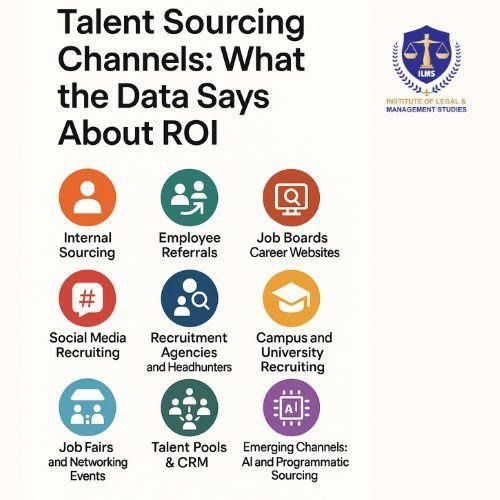
2. Overview of Talent Sourcing Channels
2.1 Internal Sourcing
Internal sourcing involves identifying and promoting candidates who are already part of the organization. This channel includes employee transfers, promotions, and internal job postings. It leverages existing employee skills and institutional knowledge, often resulting in faster hiring and better cultural fit.
Organizations favor internal sourcing because it typically reduces time-to-fill, lowers recruitment costs, and enhances employee morale and retention by providing career growth opportunities. However, its limitations include a restricted candidate pool and potential skill gaps that external hires might fill more effectively.
2.2 Employee Referrals
Employee referrals are a powerful sourcing channel where current employees recommend candidates from their personal or professional networks. Referral programs often include incentives or bonuses, motivating employees to participate actively.
Referrals tend to produce high-quality hires who fit well culturally and exhibit longer retention rates. The cost per hire is often lower than other channels, and time to hire tends to be shorter. However, overreliance on referrals may reduce workforce diversity and limit fresh perspectives.
2.3 Job Boards and Career Websites
Job boards and career websites remain one of the most traditional and widely used sourcing channels. Platforms like Indeed, Glassdoor, LinkedIn, and specialized niche boards enable organizations to post job openings and attract a broad candidate base.
While these platforms provide volume and accessibility, the quality of applications can vary, leading to a need for rigorous screening. Costs can range from free postings to premium listings and sponsored ads, influencing ROI depending on the role and industry.
2.4 Social Media Recruiting
Social media recruiting leverages platforms such as LinkedIn, Facebook, Twitter, and Instagram to engage potential candidates. Recruiters use these platforms to advertise roles, build employer branding, and proactively search for passive candidates.
Social media offers a dynamic and interactive way to connect with talent, particularly younger demographics. It enables targeting based on interests, skills, and behaviors, potentially increasing the quality and fit of applicants. However, it requires ongoing management and content creation, which can impact cost-efficiency.
2.5 Recruitment Agencies and Headhunters
Recruitment agencies and headhunters act as intermediaries between employers and candidates, often specializing in specific industries or job functions. They provide expertise in candidate sourcing, screening, and negotiation.
Agencies can expedite the hiring process and access passive candidates difficult to reach otherwise. However, they usually charge fees based on a percentage of the hired candidate’s salary, which can be costly. Evaluating ROI from agencies depends on the quality and speed of hires relative to expense.
2.6 Campus and University Recruiting
Campus recruiting targets recent graduates and interns through partnerships with universities and colleges. Organizations participate in job fairs, on-campus interviews, and internship programs to attract emerging talent.
This channel helps build a pipeline for entry-level positions and can foster long-term relationships with educational institutions. While cost-effective for volume hiring, it requires investment in branding and relationship management and may yield candidates with limited experience.
2.7 Job Fairs and Networking Events
Job fairs and industry-specific networking events provide opportunities for face-to-face interactions between employers and candidates. These channels facilitate immediate engagement, brand visibility, and relationship building.
Although these events can generate leads and create personal connections, they demand significant planning and resources. The ROI depends on event attendance quality and the organization’s follow-up effectiveness.
2.8 Talent Pools and CRM (Candidate Relationship Management)
Talent pools are curated databases of candidates who have expressed interest or have been identified as potential fits for future roles. CRM systems enable recruiters to organize, nurture, and communicate with these candidates over time.
Effective use of talent pools reduces time to fill and enhances candidate engagement. Investing in CRM technology supports personalized outreach, helping convert passive candidates into hires. However, maintaining updated data and continuous communication require dedicated resources.
2.9 Emerging Channels: AI and Programmatic Sourcing
Artificial intelligence (AI) and programmatic sourcing represent innovative approaches to talent sourcing. AI-powered tools automate resume screening, candidate matching, and predictive analytics to identify high-potential candidates efficiently.
Programmatic sourcing uses automated technology to buy and place job ads across multiple digital platforms in real-time, optimizing reach and cost. These emerging channels promise enhanced targeting, reduced bias, and improved ROI but require upfront investment and technical expertise.
3. Key Metrics to Measure ROI in Talent Sourcing
Understanding and measuring the return on investment (ROI) of talent sourcing requires a structured evaluation of multiple quantitative and qualitative metrics. These metrics help organizations assess the efficiency, effectiveness, and value of their sourcing channels.
3.1 Cost Per Hire (CPH)
Cost Per Hire is one of the most straightforward and essential metrics used to determine ROI. It refers to the total amount spent to hire a candidate, including advertising expenses, recruiter salaries, agency fees, and technology tools. By dividing the total recruitment cost by the number of hires in a given period, companies gain insights into how resource-efficient their sourcing channels are.
A lower CPH indicates efficient sourcing, but it must be balanced with other metrics like quality of hire and retention. Cheap hiring methods may lead to lower quality talent, while higher costs might be justified if the candidates contribute significant long-term value.
3.2 Time to Fill and Time to Hire
Time to Fill measures the number of days it takes to fill a position from the moment it’s opened, while Time to Hire tracks the time from candidate application to acceptance of the offer. These metrics reflect the speed and responsiveness of a sourcing channel.
Shorter time frames often suggest streamlined sourcing and recruitment processes. However, overly rushed hiring may affect candidate quality. Analyzing these metrics across channels helps HR teams identify bottlenecks and optimize workflows for faster, yet informed hiring.
3.3 Quality of Hire
Quality of Hire is a complex, often subjective metric, but critical for assessing ROI. It can be measured using post-hire performance evaluations, promotion rates, productivity, and cultural fit.
Organizations typically develop a scoring system based on KPIs relevant to the role and compare performance over the first 6 to 12 months. High-quality hires who stay and succeed validate the effectiveness of the sourcing channel used to attract them.
- Certificate Course in Labour Laws
- Certificate Course in Drafting of Pleadings
- Certificate Programme in Train The Trainer (TTT) PoSH
- Certificate course in Contract Drafting
- Certificate Course in HRM (Human Resource Management)
- Online Certificate course on RTI (English/हिंदी)
- Guide to setup Startup in India
- HR Analytics Certification Course
3.4 Candidate Experience and Engagement
Candidate experience influences not just the immediate hiring process but also the employer’s brand and future sourcing success. Metrics such as candidate satisfaction surveys, application completion rates, and Net Promoter Scores (NPS) offer insights into how well sourcing methods engage applicants.
Positive experiences lead to higher acceptance rates, improved referrals, and stronger employer branding, while negative experiences—even from rejected candidates—can harm future sourcing outcomes and ROI.
3.5 Retention Rates
Retention rate refers to how long hired employees stay with the organization. High turnover shortly after hiring can indicate poor sourcing and screening strategies. By comparing retention rates across sourcing channels, organizations can identify which methods produce loyal and committed employees.
Retention also affects long-term costs—replacing an employee is often more expensive than investing in effective sourcing from the outset.
3.6 Source of Hire Tracking
This metric tracks the origin of every hire—whether they came from a job board, referral, agency, social media, or internal mobility. Modern applicant tracking systems (ATS) and candidate relationship management (CRM) tools offer source attribution features to provide this visibility.
Accurate source-of-hire data helps organizations allocate budgets strategically, invest in high-performing channels, and phase out low-yield methods.
3.7 Other Important KPIs
Additional metrics that support comprehensive ROI analysis include:
- Offer Acceptance Rate: Indicates the alignment between candidate expectations and job offers.
- Application Drop-off Rate: Highlights user experience issues in the application process.
- Interview-to-Hire Ratio: Reflects screening efficiency.
- Hiring Manager Satisfaction: Measures the alignment between sourcing outcomes and business needs.
- Diversity Metrics: Tracks demographic diversity and inclusion outcomes by sourcing channel.
Together, these KPIs create a data-rich environment for making strategic sourcing decisions.
4. Data-Driven Insights on ROI Across Different Sourcing Channels
Using data collected from thousands of hiring cycles, many organizations and research firms have conducted comparative studies to assess which sourcing channels consistently deliver higher ROI. The following insights provide a channel-by-channel breakdown based on common industry benchmarks and performance analytics.
4.1 ROI from Employee Referral Programs
Employee referrals consistently rank among the top sourcing channels in terms of ROI. Studies by SHRM and LinkedIn reveal that referral hires:
- Are hired 55% faster than through career sites
- Have a 45% higher retention rate after two years
- Cost significantly less than agency hires
Because employees tend to refer people they trust, the quality of hire is generally higher. The only major limitations are potential homogeneity and scalability, especially in large enterprises.
4.2 ROI from Job Boards and Online Platforms
Job boards offer access to large volumes of applicants, but they often suffer from low conversion and high screening costs. Data suggests:
- High volume but lower quality leads
- Longer time to hire (average of 30–45 days)
- Moderate cost per hire depending on sponsorship and visibility
Niche job boards that cater to specific industries tend to offer better ROI compared to generic platforms, especially when targeting skilled professionals.
4.3 ROI from Social Media Recruiting
Social media recruiting, particularly via LinkedIn, shows strong ROI in sourcing passive talent and boosting employer branding. Metrics show:
- Better engagement with passive candidates
- Lower cost than paid job boards
- Enhanced diversity outreach potential
However, the ROI can be diluted without a consistent content strategy and proper targeting tools. Facebook and Instagram are increasingly popular for high-volume hiring in retail and service industries.
4.4 ROI from Recruitment Agencies
Agencies are effective for filling specialized roles and executive positions. ROI data reveals:
- Higher cost per hire (up to 20–30% of annual salary)
- Shorter time to hire (especially for niche roles)
- Variable quality depending on agency reputation
For urgent and high-impact roles, the cost is often justified, but over-reliance can drain HR budgets. Agencies deliver strong ROI when used selectively and with performance-based contracts.
4.5 ROI from Campus Recruiting
Campus recruiting delivers long-term ROI by cultivating young talent and reducing hiring costs for entry-level roles. Data from NACE indicates:
- Cost-effective for bulk hiring (especially interns)
- Longer ramp-up times but higher long-term retention
- Requires strong employer brand presence on campus
It’s ideal for building future leadership pipelines but may underperform for roles requiring immediate, experienced talent.
4.6 ROI from Job Fairs and Events
While job fairs are valuable for branding and direct candidate interaction, their ROI varies:
- Cost per hire can be high depending on travel, logistics, and booth costs
- Limited scalability and role-specific impact
- Strong networking opportunities but lower conversion rates
Best suited for organizations that value face-to-face outreach and want to target local or niche talent pools.
4.7 ROI from Internal Mobility and Talent Pools
Internal mobility consistently shows high ROI across industries. Internal candidates:
- Require less onboarding time
- Already align with company culture
- Exhibit higher retention
Companies using CRM platforms and talent pool strategies report up to 50% reductions in time to hire and improved workforce engagement. ROI is maximized when internal sourcing is integrated into performance reviews and career development planning.
4.8 Comparative Analysis of Channel Performance by Industry
ROI performance varies significantly by industry. For example:
- Tech and IT: Strongest ROI from referrals, LinkedIn sourcing, and internal mobility
- Healthcare: Better results from agencies and niche job boards
- Retail and Hospitality: High-volume ROI from social media and job fairs
- Education and Nonprofits: Lower CPH with university pipelines and career fairs
Data-driven organizations tailor sourcing strategies based on role type, market dynamics, and historical performance across channels, ensuring resources are invested in methods with proven ROI.
5. Challenges in Measuring Talent Sourcing ROI
While measuring ROI in talent sourcing is essential, it’s also complex. Organizations often encounter numerous challenges that hinder accurate, consistent, and insightful ROI assessment. These challenges range from data collection to interpreting results meaningfully.
5.1 Data Collection and Accuracy
Accurate ROI assessment hinges on reliable data—but data collection itself is frequently inconsistent or incomplete. Many companies fail to capture the full spectrum of sourcing activities, especially when using multiple tools or informal referral processes. Additionally, tracking costs like recruiter time, advertising spend, or internal systems is often fragmented.
Without standardized data inputs, ROI calculations become unreliable, leading to flawed decision-making. Integrating sourcing data across platforms (e.g., ATS, CRM, HRIS) is a necessary step that many companies struggle to implement effectively.
5.2 Attribution Complexity
Attributing a hire to a single sourcing channel is increasingly difficult in today’s multi-touch recruiting environment. A candidate may first encounter a job post on LinkedIn, read about the company on Glassdoor, be referred by a friend, and finally apply via the company’s website.
This makes source attribution murky. Organizations often default to “last-click” attribution, ignoring the earlier, equally impactful touchpoints. Without a clear attribution model, measuring the true influence of each sourcing channel is compromised.
5.3 Long-term vs Short-term ROI Considerations
Short-term metrics such as time to fill or cost per hire may show a channel in a positive light, while long-term metrics like retention, promotion rates, or performance may tell a different story. A channel may deliver candidates quickly and cheaply, but if those hires exit early or underperform, the long-term ROI is negative.
- Certificate Course in Labour Laws
- Certificate Course in Drafting of Pleadings
- Certificate Programme in Train The Trainer (TTT) PoSH
- Certificate course in Contract Drafting
- Certificate Course in HRM (Human Resource Management)
- Online Certificate course on RTI (English/हिंदी)
- Guide to setup Startup in India
- HR Analytics Certification Course
Balancing both short-term efficiency and long-term effectiveness is critical. Yet, many organizations favor immediate hiring metrics due to pressure from hiring managers or performance dashboards.
5.4 Impact of Market and Economic Factors
External factors such as industry demand, economic cycles, labor shortages, and technological disruption can distort ROI metrics. For instance, a job board may show lower performance during a labor shortage, not because the platform is ineffective, but due to broader market constraints.
These factors make it difficult to compare sourcing channel performance over time or across industries without contextualizing the data. Without economic benchmarking, ROI comparisons may be misleading.
5.5 Biases and Data Interpretation Issues
Confirmation bias, availability bias, and selective data usage can skew ROI analysis. Recruiters may favor channels they’ve historically used or interpret ambiguous data in ways that reinforce their existing beliefs.
Additionally, improper statistical methods, lack of context, or over-reliance on vanity metrics (like number of applicants instead of quality) further complicate interpretation. A data-driven sourcing strategy must be rooted in objectivity, transparency, and statistical rigor to be truly effective.
6. Best Practices for Maximizing ROI in Talent Sourcing
To overcome these challenges and boost the effectiveness of sourcing efforts, organizations must adopt strategic, data-backed, and technologically empowered best practices.
6.1 Leveraging Technology and Automation
Modern sourcing requires the use of AI, automation, and advanced platforms. Tools like applicant tracking systems (ATS), programmatic job advertising, and AI-based resume screening help reduce manual effort, ensure accuracy, and enhance candidate targeting.
Automation also accelerates communication and engagement through chatbots, automated interview scheduling, and follow-ups—improving the candidate experience while freeing recruiters for strategic tasks.
6.2 Integrating Analytics and Reporting Tools
Advanced analytics platforms empower recruiters to track, visualize, and interpret sourcing data more effectively. Dashboards that consolidate metrics such as cost per hire, time to fill, source of hire, and diversity indicators enable real-time decision-making.
Predictive analytics also help forecast talent needs and adjust sourcing strategies accordingly. Integration between ATS, CRM, and HRIS platforms ensures data continuity and consistency.
6.3 Candidate Segmentation and Personalization
Different sourcing channels resonate with different candidate segments. By segmenting candidates by role type, experience level, location, and industry, organizations can tailor their sourcing strategy.
Personalization—through targeted content, job descriptions, or communication—enhances engagement and conversion. For instance, tech talent may respond better to GitHub or Stack Overflow sourcing than traditional job boards.
6.4 Multi-Channel Sourcing Strategies
Relying on a single sourcing channel is risky and inefficient. A multi-channel approach ensures broader reach, improves diversity, and balances sourcing efficiency with quality. Organizations should regularly evaluate the performance of each channel and allocate budget dynamically.
Combining internal mobility, referrals, social media, niche job boards, and agencies where appropriate creates a resilient and adaptable sourcing ecosystem.
6.5 Continuous Monitoring and Optimization
Sourcing ROI should not be a one-time analysis. Continuous monitoring enables companies to adapt to changing market dynamics and evolving candidate behavior. Regular audits of metrics, performance reviews, and A/B testing of job advertisements and campaigns are essential.
Optimization requires responsiveness—shifting resources from underperforming channels to high-ROI sources, updating job descriptions, and modifying communication strategies based on feedback.
6.6 Collaboration Between HR and Hiring Managers
HR teams and hiring managers must work closely to define what constitutes a successful hire. Alignment on role requirements, cultural fit, performance expectations, and feedback loops ensures that sourcing strategies meet organizational needs.
Hiring managers provide valuable feedback on candidate quality and interview effectiveness, helping recruiters refine their sourcing efforts. Collaborative hiring models ultimately improve satisfaction, quality of hire, and ROI.
7. Case Studies and Real-World Examples
Understanding theoretical best practices becomes much more impactful when complemented by real-world examples. The following case studies illustrate how various organizations have successfully—and sometimes unsuccessfully—optimized their sourcing ROI.
7.1 Large Enterprise Success Stories
Case: Google’s Internal Mobility and Data-Driven Hiring
Google emphasizes internal sourcing and uses advanced analytics to guide hiring decisions. By encouraging internal mobility and using structured interviews validated by data, they reduce external hiring costs and increase employee engagement.
Their robust candidate tracking system measures long-term performance, leading to high ROI from internal talent pipelines. Google’s case highlights the power of combining talent analytics with strategic sourcing.
Case: Unilever’s AI Screening via HireVue
Unilever integrated AI-powered video interviews and game-based assessments, reducing time to hire from four months to four weeks. This automation improved candidate experience and allowed broader candidate reach.
Data showed a 90% increase in diversity hires and significant reductions in CPH—proving that tech-led sourcing can enhance both quality and ROI.
7.2 Startups and SMBs: Agile Sourcing Approaches
Case: Zapier’s Remote Hiring through Niche Platforms
As a fully remote company, Zapier focuses on sourcing from niche tech platforms like GitHub and remote job boards. They bypass expensive agencies and traditional job boards, maintaining a high quality of hire at lower cost.
They also use asynchronous interviews and automated outreach to streamline sourcing—demonstrating that agility and targeted sourcing improve ROI in lean hiring environments.
Case: Buffer’s Transparent Hiring
Buffer adopted radical transparency by publishing salaries and hiring criteria online. This attracted value-aligned candidates organically, reducing sourcing spend. Their employee referral program contributed to over 40% of hires, showing strong ROI with low-cost, culturally aligned channels.
7.3 Industry-Specific Talent Sourcing ROI Examples
Tech Industry: Companies like Atlassian found that passive sourcing on LinkedIn and employee referrals led to higher quality hires than job boards. Conversely, generic job boards flooded their pipelines with unqualified candidates, increasing screening costs and time to hire.
Healthcare: Hospitals often partner with staffing agencies due to the urgent and specialized nature of roles. While CPH is higher, the ROI remains positive due to minimized understaffing penalties and faster placements.
Retail: Brands like Walmart invest heavily in social media and mobile job applications, optimizing for high-volume, low-cost sourcing. Their ROI is driven by speed, automation, and candidate accessibility.
7.4 Lessons Learned from Failed Sourcing Strategies
Case: Overreliance on One Channel
A mid-sized IT firm heavily depended on job boards for hiring but faced high attrition. Post-analysis revealed that candidates attracted via job boards lacked alignment with company values. Shifting to employee referrals and internal mobility improved retention and reduced sourcing costs by 30%.
Case: Poor Candidate Experience
A financial services company implemented an AI screening tool that filtered out many qualified applicants due to overly rigid algorithms. Negative feedback on social media impacted the employer brand. The lesson: ROI depends not just on efficiency, but also on candidate trust and transparency.
8. Future Trends Impacting Talent Sourcing ROI
As the talent landscape continues to evolve rapidly, several trends are emerging that will significantly shape the ROI of sourcing channels. These trends blend technological innovation with shifting workforce behaviors and expectations, compelling HR leaders to stay agile and informed.
8.1 Artificial Intelligence and Machine Learning
AI and machine learning are set to revolutionize talent sourcing by automating labor-intensive processes and generating actionable insights from vast candidate datasets. These technologies improve efficiency by:
- Certificate Course in Labour Laws
- Certificate Course in Drafting of Pleadings
- Certificate Programme in Train The Trainer (TTT) PoSH
- Certificate course in Contract Drafting
- Certificate Course in HRM (Human Resource Management)
- Online Certificate course on RTI (English/हिंदी)
- Guide to setup Startup in India
- HR Analytics Certification Course
- Scanning and ranking resumes faster and more accurately
- Recommending candidates based on predictive fit models
- Optimizing job ad placement through programmatic advertising
Machine learning algorithms become more accurate over time, enhancing candidate matching and reducing cost per hire. Companies that invest early in ethical, bias-aware AI solutions are likely to see higher ROI through smarter decision-making and accelerated hiring.
8.2 Predictive Analytics and Talent Forecasting
Predictive analytics uses historical data to anticipate future hiring needs, sourcing outcomes, and workforce shifts. With these tools, HR teams can:
- Forecast talent gaps months in advance
- Identify the most effective sourcing channels per role or region
- Proactively build talent pipelines aligned with business goals
Talent forecasting enables companies to avoid reactionary hiring, reduce time-to-fill, and gain a competitive edge by staying ahead of labor market fluctuations. As tools mature, predictive analytics will become integral to ROI-focused talent sourcing.
8.3 Candidate Experience as a Competitive Advantage
As job markets become more candidate-driven, the experience applicants have during the sourcing and recruitment process is becoming a critical factor in ROI. Poor candidate experiences can lead to offer rejections, negative reviews, and damage to employer branding.
Future sourcing strategies will emphasize:
- Transparent communication
- Fast, respectful engagement
- Mobile-optimized applications
- Feedback loops and follow-ups
Companies that prioritize candidate experience will not only improve hiring outcomes but also build advocacy pipelines through referrals and social sharing—channels that consistently deliver high ROI.
8.4 The Role of Employer Branding
Employer branding is no longer a secondary HR concern—it is central to attracting high-quality candidates. Organizations with strong reputations and values-aligned branding:
- Reduce sourcing costs by generating organic interest
- Experience higher offer acceptance and retention rates
- Benefit from social proof via platforms like Glassdoor, LinkedIn, and Indeed
Investments in brand storytelling, employee testimonials, and authentic culture representation will increasingly differentiate successful sourcing efforts from their competitors. Brand equity translates to sourcing ROI when it attracts the right talent with less effort and cost.
8.5 Evolving Workforce Expectations and Remote Hiring
The shift towards remote and hybrid work models has drastically reshaped talent sourcing. Geographic limitations have disappeared, allowing employers to tap into global talent pools. However, this also intensifies competition for top talent.
To remain competitive and maximize sourcing ROI, organizations must:
- Redesign job descriptions to highlight flexibility and remote culture
- Leverage remote-friendly platforms and virtual interviewing tools
- Develop compensation models adapted to location-independent roles
Additionally, workforce expectations around purpose, diversity, and inclusion are influencing where and how candidates choose to engage. Future ROI in talent sourcing will depend on how well companies align with these evolving expectations.
9. Conclusion
9.1 Summary of Key Findings
The data clearly indicates that no one-size-fits-all approach exists in talent sourcing. Employee referrals, internal mobility, and social media channels often deliver high ROI, while job boards and agencies provide volume and niche access, respectively. However, the effectiveness of any sourcing channel is contingent upon thoughtful measurement and contextual understanding.
Key ROI metrics such as cost per hire, quality of hire, retention, and candidate experience must be continuously tracked and analyzed. Data-driven sourcing decisions are essential for optimizing performance and ensuring that organizations get the best return on their hiring investments.
9.2 Strategic Recommendations for HR Leaders
To maximize ROI in talent sourcing, HR leaders should:
- Adopt a multi-channel sourcing strategy that balances internal and external methods.
- Invest in data infrastructure and analytics tools to capture real-time sourcing metrics.
- Prioritize long-term value metrics like retention and performance, not just cost or speed.
- Leverage automation and AI to streamline repetitive tasks and enhance candidate matching.
- Continuously refine the candidate experience as a tool for attraction and conversion.
- Align sourcing strategies with employer branding and workforce expectations.
These actions create a sustainable, agile, and efficient talent acquisition function capable of adapting to market changes.
9.3 Final Thoughts on Data-Driven Talent Sourcing
The future of talent sourcing lies in combining human intuition with technological precision. As HR evolves into a more analytical and strategic discipline, sourcing decisions must be grounded in data—not assumptions. ROI is no longer a vague concept but a measurable outcome that reflects how well an organization understands its talent ecosystem.
Companies that treat talent sourcing as a strategic investment—rather than an operational cost—will not only improve hiring outcomes but also build a competitive advantage rooted in workforce excellence. The challenge is not just to hire, but to hire smartly, sustainably, and with foresight.
Frequently Asked Questions (FAQ)
1. What are talent sourcing channels?
Talent sourcing channels refer to the various platforms, strategies, and networks used by organizations to find, attract, and engage potential candidates. Examples include job boards, social media, employee referrals, recruitment agencies, and university hiring programs.
2. Why is ROI important in talent sourcing?
Measuring Return on Investment (ROI) in talent sourcing helps organizations understand which sourcing channels yield the best hiring results relative to their costs. It ensures the recruitment budget is spent efficiently and helps improve hiring quality, speed, and retention.
3. What is the most cost-effective talent sourcing channel?
Data consistently shows that employee referrals tend to be the most cost-effective channel, offering high-quality hires at a lower cost and with faster onboarding. However, effectiveness can vary by company size, industry, and role.
4. How can I track ROI from different sourcing channels?
You can track ROI by measuring key metrics such as Cost Per Hire (CPH), Time to Fill, Quality of Hire, Source of Hire, and Retention Rates. Use applicant tracking systems (ATS), recruitment analytics tools, and CRM systems to monitor and compare performance across channels.
5. Is social media recruiting effective?
Yes, social media recruiting—especially through LinkedIn, Facebook, and X (formerly Twitter)—can be highly effective for reaching passive candidates, building employer brand awareness, and engaging with talent directly. Its ROI depends on the strategy and audience targeting.
6. How do recruitment agencies compare in terms of ROI?
Recruitment agencies typically offer specialized expertise and access to passive candidates, but they come with higher costs. Their ROI can be justified for hard-to-fill roles or when speed is critical, but may not be ideal for bulk hiring.
7. Can internal sourcing really reduce costs?
Yes. Internal sourcing—filling roles with existing employees—eliminates many recruitment costs and often results in quicker, more successful hires due to cultural familiarity and shorter onboarding times. It also improves employee engagement and retention.
8. What challenges affect accurate ROI measurement?
Common challenges include inconsistent data collection, attribution issues (especially in multi-touch sourcing), bias in interpreting results, and the difficulty of quantifying long-term impacts like retention or performance.
9. What role does employer branding play in sourcing ROI?
A strong employer brand reduces the effort and cost needed to attract top talent. Candidates are more likely to apply, convert, and accept offers when they perceive an organization as reputable, purpose-driven, and employee-centric.
10. What trends will shape the future of sourcing ROI?
Key future trends include:
- AI and automation in candidate screening
- Predictive analytics for workforce planning
- Programmatic job advertising
- Remote hiring and global sourcing
- A shift toward candidate-centric experiences and personalization
- Certificate Course in Labour Laws
- Certificate Course in Drafting of Pleadings
- Certificate Programme in Train The Trainer (TTT) PoSH
- Certificate course in Contract Drafting
- Certificate Course in HRM (Human Resource Management)
- Online Certificate course on RTI (English/हिंदी)
- Guide to setup Startup in India
- HR Analytics Certification Course