
1. Introduction
The Strategic Disconnect: Why Business KPIs and HR Metrics Often Misalign
In today’s dynamic business world, organizations rely heavily on data-driven decision-making to remain competitive, productive, and sustainable. Business leaders track Key Performance Indicators (KPIs) to assess financial growth, operational efficiency, and market performance. Simultaneously, HR departments measure their success using specific metrics related to workforce performance, engagement, and development. However, despite being part of the same ecosystem, these two measurement systems frequently operate in silos. This strategic disconnect between business KPIs and HR metrics often stems from a lack of shared language, misaligned priorities, and differing interpretations of success.
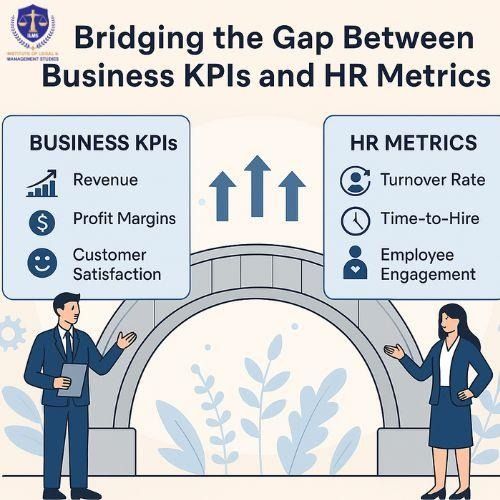
While business leaders might prioritize revenue growth or market share, HR often focuses on turnover rates, employee satisfaction, or time-to-hire. These indicators, though important on their own, may not naturally align unless intentionally bridged. As a result, HR data can appear irrelevant or purely administrative to business leaders, while strategic KPIs may seem out of reach or unrelated to HR's daily work. This disconnect not only weakens collaboration between departments but also hampers the organization's ability to fully leverage its people strategy in achieving business goals.
Importance of Bridging the Gap in the Modern Business Environment
Bridging the gap between business KPIs and HR metrics is no longer a luxury—it is a necessity. Organizations today are navigating increasing complexity due to technological change, economic uncertainty, and shifting employee expectations. In such a landscape, workforce-related decisions directly influence outcomes like productivity, innovation, customer satisfaction, and even financial performance. For instance, high employee engagement is often correlated with better customer service and higher revenue per employee, while poor hiring decisions can derail business initiatives.
By creating a strong link between HR metrics and overarching business goals, organizations can ensure that people strategies are not just operational but strategic drivers of success. Aligning these metrics fosters a unified performance narrative, enabling decision-makers to understand how talent acquisition, retention, and development influence outcomes like profit margins or product launches. Moreover, such alignment enhances accountability across functions, encourages cross-departmental collaboration, and supports a holistic view of performance that is essential for long-term sustainability.
2. Understanding Business KPIs
Definition and Purpose
Business Key Performance Indicators (KPIs) are quantifiable measures used by organizations to evaluate their success in achieving specific strategic objectives. These indicators help leadership monitor performance over time, assess the health of business operations, and identify areas that require corrective action. Business KPIs serve as benchmarks for performance improvement, providing a clear picture of how well the company is moving toward its goals.
Unlike one-time metrics, KPIs are designed to be tracked continuously. They are tied to a company’s mission and vision and usually influence major business decisions. Whether the goal is to increase market share, reduce operational costs, or enhance customer loyalty, KPIs offer the measurable insights necessary for tracking progress and adjusting strategy as needed. In this sense, KPIs form the foundation of business intelligence and are central to strategic planning and performance management.
Common Types of Business KPIs
There are numerous KPIs businesses use, depending on their industry, scale, and strategic objectives. However, some KPIs are universally relevant across sectors:
- Revenue Growth: Tracks increases in company earnings over time. It is a primary indicator of financial health.
- Profit Margins: Measures how much profit the company retains from its total revenue, reflecting operational efficiency.
- Customer Satisfaction (CSAT): Evaluates the quality of customer experience, often measured via surveys or Net Promoter Scores (NPS).
- Operating Costs: Helps monitor expenditure in relation to budget or output, crucial for cost management strategies.
- Return on Investment (ROI): Assesses the profitability of investments, including product development, marketing, or hiring decisions.
- Market Share: Indicates how much of the industry market the company controls, providing insight into competitiveness.
- Employee Productivity: While often seen as an HR metric, it's also a core business KPI linked to output and efficiency.
These KPIs provide essential insights for different departments, from finance and marketing to operations and customer service, and ultimately support high-level decision-making.
Strategic Role of Business KPIs in Decision-Making
Business KPIs are not just measurement tools—they are strategic instruments that shape corporate action. At the executive level, KPIs help set priorities, justify investments, allocate resources, and manage risks. For instance, if customer retention metrics are dropping, leadership may initiate a strategy overhaul or reallocate marketing budgets. Similarly, if profit margins decline, cost-control initiatives or process optimizations may be implemented.
Strategic KPIs also ensure transparency and focus across all levels of the organization. They offer employees clarity on what success looks like and align team efforts with organizational goals. When properly selected and monitored, KPIs allow businesses to anticipate challenges, seize opportunities, and adapt quickly in fast-changing markets. Importantly, when HR metrics are also aligned with these KPIs, organizations unlock the ability to leverage talent strategies as direct enablers of growth, innovation, and resilience.
3. Decoding HR Metrics
Definition and Scope
HR metrics are quantifiable indicators used to measure the efficiency and effectiveness of human resource practices within an organization. These metrics help HR professionals evaluate processes related to recruitment, training, performance management, employee engagement, and retention. Traditionally, HR was viewed as a support function focused on administrative tasks, but today, HR metrics are gaining strategic importance as organizations realize the critical link between people and performance.
The scope of HR metrics extends beyond headcount or payroll calculations. They encompass a wide range of indicators that assess the quality of the workforce, the health of the workplace culture, and the alignment between employee capabilities and organizational goals. When tracked over time, these metrics provide valuable insights into workforce trends, identify areas needing improvement, and inform strategic planning related to talent management.
Key HR Metrics (Turnover Rate, Time-to-Hire, Employee Engagement, etc.)
Some of the most widely used HR metrics include:
- Turnover Rate: This measures the percentage of employees who leave the organization during a specific period. High turnover rates can signal dissatisfaction, poor hiring decisions, or ineffective leadership.
- Time-to-Hire: This tracks the average time taken to fill a vacancy, from job posting to offer acceptance. It reflects the efficiency of the recruitment process and impacts productivity.
- Cost-per-Hire: This evaluates the total cost involved in hiring a new employee, including advertising, recruiter fees, and onboarding expenses. It is crucial for budgeting and ROI analysis of recruitment strategies.
- Employee Engagement Score: Typically measured through surveys, this indicates how emotionally committed employees are to their organization. High engagement correlates with better performance and lower attrition.
- Absenteeism Rate: This metric highlights the frequency and duration of employee absences, which can affect productivity and morale.
- Training Effectiveness: Measures the impact of learning programs on employee performance, using pre- and post-training assessments or performance reviews.
- Diversity Ratio: Reflects the representation of different demographics within the workforce. It’s increasingly important for fostering inclusive workplaces and improving innovation.
These metrics are not just operational indicators but also provide leading insights into future workforce behaviour, satisfaction, and alignment with business goals.
Evolution of HR Metrics from Administrative to Strategic
Historically, HR metrics were limited to headcount reports, payroll compliance, and basic attendance tracking. The function was considered administrative and reactive, focusing on enforcing rules rather than enabling performance. However, with the rise of digital tools, data analytics, and the growing recognition of human capital as a competitive advantage, HR has evolved significantly.
Today, HR metrics serve a strategic purpose. They are used to forecast workforce needs, guide leadership decisions, shape culture, and drive business outcomes. Advanced analytics tools enable HR departments to move from descriptive statistics to predictive and prescriptive insights. For instance, predictive models can identify employees at risk of leaving, while prescriptive analytics can recommend targeted retention strategies. This shift empowers HR to be a proactive business partner, translating people data into actionable insights that impact profitability, growth, and innovation.
4. The Gap Explained
Root Causes of Misalignment
The misalignment between business KPIs and HR metrics often stems from foundational differences in focus and approach. While business KPIs are geared toward external outcomes such as revenue growth, market penetration, and customer acquisition, HR metrics traditionally revolve around internal functions like hiring speed, employee satisfaction, or training effectiveness. This divergence in priorities means that HR's contributions are often undervalued or misunderstood in terms of their impact on the business bottom line.
Another core reason is the lack of a shared performance language. Without a direct translation of HR outcomes into business results, it's challenging to demonstrate how improvements in HR processes lead to financial gain. For instance, an increase in employee engagement may not be explicitly tied to improved customer service metrics or increased productivity unless a connection is deliberately made through data.
Communication Barriers Between HR and Business Units
A significant factor reinforcing this gap is poor communication and collaboration between HR and other business units. HR professionals may not be included in early strategic discussions or fail to grasp the financial and operational language used by senior leadership. Conversely, business leaders may not fully understand the value or meaning behind HR metrics, often viewing them as disconnected from key business outcomes.
These communication barriers can result in siloed efforts, where HR initiatives are designed without understanding how they align with larger organizational goals. This lack of integration can make HR seem reactive rather than strategic, further widening the disconnect between workforce data and business success.
Traditional vs Modern Perspectives on HR's Role
Traditionally, HR was viewed as a cost center responsible for administrative tasks like hiring, compliance, and record-keeping. In this model, success was defined by internal process efficiency rather than business contribution. As a result, HR metrics focused on operational effectiveness rather than strategic impact.
However, the modern perspective recognizes HR as a value-adding function that drives business outcomes through people. In this view, HR is expected to align talent strategies with organizational objectives, contribute to innovation, and shape culture to support agility and growth. This evolution requires a redefinition of HR metrics—moving from transactional measures to ones that directly link to business performance, such as how training programs influence product development cycles or how leadership development impacts succession planning and business continuity.
5. Impact of the Gap on Organizational Performance
Missed Opportunities in Talent Optimization
When HR metrics are not aligned with business KPIs, organizations risk overlooking critical insights that could drive performance. For example, if HR is focused on minimizing recruitment costs without considering the quality of hires or their impact on innovation or customer satisfaction, the organization may sacrifice long-term gains for short-term savings. Similarly, failing to link employee engagement scores with revenue per employee may prevent leadership from recognizing the productivity benefits of investing in workplace culture.
This misalignment can also hinder efforts to optimize talent deployment. High-performing employees might not be identified or nurtured appropriately, succession planning could be ineffective, and training investments might not target the most impactful areas. These missed opportunities limit the organization's ability to remain agile and competitive in a rapidly changing environment.
Ineffective Strategic Planning
Strategic planning requires an integrated view of business performance—one that includes financial data, market intelligence, and workforce insights. When HR metrics are excluded from the strategic conversation or fail to align with business KPIs, planning efforts become fragmented. Leadership may make decisions without fully understanding the implications for talent, capability development, or workforce readiness.
For instance, a plan to expand into a new market may succeed or fail based on talent availability and cultural alignment—factors best understood through HR data. Without incorporating these metrics into planning processes, organizations risk underestimating the human resource requirements of growth strategies, leading to execution delays or failure.
Case Studies Highlighting the Consequences
Several real-world examples underscore the impact of this gap:
- Tech Company with High Turnover: A mid-sized tech firm experienced stagnating innovation despite high R&D spending. Investigation revealed high turnover among software engineers, which disrupted project continuity. HR was tracking turnover but not relating it to innovation KPIs. Once they aligned exit data with project timelines, the root cause became clear: poor onboarding and limited career growth. Addressing these issues led to a 30% improvement in project delivery rates.
- Retail Chain Ignoring Engagement Scores: A national retail chain experienced declining customer satisfaction scores. Leadership focused solely on sales KPIs and overlooked HR's internal surveys showing plummeting employee engagement. Eventually, poor morale led to high absenteeism, long checkout lines, and customer frustration. Only after integrating engagement metrics with customer service KPIs did the company implement workforce experience programs that reversed the trend.
- Manufacturing Firm with Misaligned Training Programs: A large manufacturing company rolled out a costly training initiative to boost productivity. Despite initial enthusiasm, results were disappointing. HR had focused on training completion rates, not on performance KPIs tied to production output. A revised approach that linked training modules directly to skill gaps identified in production data led to a 25% gain in line efficiency.
These cases illustrate that when HR and business metrics remain isolated, critical insights are lost, and performance suffers. Bridging this gap not only avoids such pitfalls but unlocks powerful synergies that drive holistic success.
- Certificate Course in Labour Laws
- Certificate Course in Drafting of Pleadings
- Certificate Programme in Train The Trainer (TTT) PoSH
- Certificate course in Contract Drafting
- Certificate Course in HRM (Human Resource Management)
- Online Certificate course on RTI (English/हिंदी)
- Guide to setup Startup in India
- HR Analytics Certification Course
6. Aligning HR Metrics with Business Strategy
Translating Business KPIs into People Goals
For HR to meaningfully contribute to organizational success, it must translate high-level business KPIs into actionable people goals. This means identifying the workforce capabilities, behaviours, and structures that directly support business outcomes. For instance, if a business KPI is to improve customer satisfaction by 20% over the next year, HR must align goals such as improving frontline staff training, reducing employee turnover in customer-facing roles, or enhancing service-related competencies.
This translation process involves more than just mapping HR activities to business priorities—it requires rethinking what success looks like through a people lens. HR should ask: what kind of talent, engagement, and leadership is needed to meet revenue, market share, or innovation targets? Once these questions are answered, HR can develop metrics that track progress in building that workforce capacity. These people goals become the bridge between abstract business aspirations and tangible human actions.
Strategic Workforce Planning
Strategic workforce planning (SWP) is a critical tool for aligning HR metrics with business objectives. SWP anticipates future talent needs based on business strategies and ensures the organization has the right people in the right roles at the right time. Rather than reacting to workforce shortages or surpluses, SWP takes a proactive approach to managing skills, capabilities, and workforce size.
An effective SWP process begins by analyzing current workforce data, including skill inventories, performance trends, and demographic risks. This data is then compared to future business requirements, such as entering new markets or adopting new technologies. The resulting gap analysis helps HR define strategic interventions—like upskilling, reskilling, succession planning, or targeted recruitment—linked to both HR and business KPIs.
When HR metrics (e.g., internal mobility rate, training ROI, bench strength) are explicitly designed to support workforce planning objectives, they evolve from administrative measures into strategic enablers of business success.
Role of HR Business Partners in Driving Alignment
HR Business Partners (HRBPs) play a pivotal role in aligning HR metrics with business strategy. Positioned as liaisons between HR and functional business units, HRBPs must understand both workforce dynamics and business objectives. Their job is to ensure that HR initiatives are directly tied to department-level strategies, and that the outcomes of those initiatives are measurable and meaningful from a business perspective.
Effective HRBPs work alongside department heads and senior leadership to co-create talent strategies that drive business results. For example, if a business unit is struggling with high customer churn, the HRBP may work on improving employee training, redesigning incentive programs, or refining recruitment profiles—all while tracking metrics that reflect both people and performance improvements.
By focusing on integrated outcomes rather than isolated processes, HRBPs help institutionalize a culture of alignment, turning HR into a key contributor to revenue, innovation, and competitive advantage.
7. Frameworks and Models for Integration
The HR Scorecard Approach
The HR Scorecard is a model designed to align HR systems and strategies with business objectives. Developed by Becker, Huselid, and Ulrich, this approach begins with identifying the business strategy, defining HR deliverables, and then designing a measurement system that tracks HR’s impact on those deliverables.
The core components of the HR Scorecard include:
- Defining strategic performance drivers (e.g., innovation, operational excellence).
- Identifying critical HR practices that influence these drivers.
- Establishing outcome metrics to measure success (e.g., increased productivity, reduced turnover).
- Creating feedback loops for continuous improvement.
Unlike traditional scorecards that may focus only on compliance or operational efficiency, the HR Scorecard measures how HR activities contribute to broader business outcomes. It provides a structured way for HR to demonstrate its value in quantifiable terms and fosters accountability for results beyond the HR department.
Balanced Scorecard and Strategy Maps
The Balanced Scorecard (BSC), pioneered by Kaplan and Norton, extends performance measurement beyond financial results to include customer, internal process, and learning & growth perspectives. For HR, this framework offers a holistic method to link human capital investments with strategic goals.
In a BSC framework:
- Financial Perspective might be supported by HR initiatives that improve cost efficiency or drive ROI through talent optimization.
- Customer Perspective can relate to employee behaviour that influences customer satisfaction and loyalty.
- Internal Process Perspective reflects HR’s contribution to process improvements, such as streamlining recruitment or enhancing knowledge management.
- Learning & Growth Perspective aligns with training, leadership development, and succession planning.
Strategy maps complement the BSC by visually linking strategic objectives across these perspectives, illustrating how HR initiatives support business value chains. For example, improving employee engagement (learning & growth) may enhance innovation (internal process), which improves product quality (customer), ultimately boosting revenue (financial).
OKRs (Objectives and Key Results) for HR
OKRs—Objectives and Key Results—are a goal-setting methodology popularized by companies like Google. They offer a flexible yet focused way to ensure HR initiatives directly contribute to organizational priorities.
In an OKR structure:
- Objectives are qualitative goals aligned with business strategy (e.g., “Improve workforce readiness for digital transformation”).
- Key Results are quantitative metrics that measure progress (e.g., “Train 90% of staff on AI tools by Q4”; “Reduce digital skill gap assessment failures by 50%”).
By using OKRs, HR teams can set ambitious, time-bound goals that are transparent across departments. This fosters alignment and clarity while enabling quick iteration and accountability. OKRs also help HR move from process-heavy targets to outcome-driven initiatives that reflect real business impact.
8. Technology as a Bridge
HR Analytics and Data Integration Platforms
Technology is a critical enabler in bridging the gap between business KPIs and HR metrics. HR analytics platforms allow organizations to consolidate data from multiple sources—HRIS, payroll, performance systems, learning management systems, and business operations—into a single, unified view. These platforms support descriptive, diagnostic, predictive, and prescriptive analytics, providing actionable insights into workforce behaviour and business outcomes.
With advanced analytics, HR teams can move beyond reporting metrics like “number of training hours” to understand which training programs drive improved performance or retention. Integration with business systems enables correlations between HR inputs (e.g., onboarding quality) and business outputs (e.g., sales ramp-up speed), offering a compelling case for HR’s strategic contribution.
Data integration also enables real-time decision-making, automates compliance reporting, and reduces the manual effort of aligning disparate datasets, allowing HR to spend more time on strategic analysis and planning.
Real-Time Dashboards and Predictive Insights
Real-time dashboards give both HR and business leaders visibility into workforce metrics and their relation to key business outcomes. These dashboards can display live updates on KPIs like attrition risk, engagement scores, diversity representation, or productivity trends, alongside financial and operational data. This immediate access allows for quicker course correction and more responsive strategy execution.
Moreover, predictive insights powered by machine learning algorithms allow HR to forecast trends and prepare for future challenges. For example, predictive models can estimate the likelihood of high performers leaving within six months, enabling preemptive retention strategies. Such forward-looking analytics empower organizations to act, rather than react, and ensure that workforce dynamics remain aligned with business ambitions.
Case Examples of Successful Tech-Driven Alignment
- Unilever’s People Data Center – Unilever uses AI and analytics to predict workforce trends and identify key drivers of employee engagement. Their HR metrics are integrated with product innovation cycles, ensuring talent strategies are directly tied to time-to-market goals and brand performance.
- IBM’s Watson Analytics for Talent – IBM developed predictive models that forecast attrition risk and correlate it with project delivery metrics. This insight helped the company proactively retain critical talent, saving millions in recruitment costs while improving client satisfaction.
- Google’s People Analytics – Google applies rigorous statistical analysis to understand what makes teams effective. The data feeds directly into leadership development, hiring, and team-building strategies that support innovation KPIs and organizational agility.
These examples illustrate how organizations that leverage technology not only align HR and business metrics but also gain a competitive advantage through agility, transparency, and data-informed decision-making.
9. Cross-Functional Collaboration
Bridging the gap between business KPIs and HR metrics is not solely the responsibility of the HR department. It requires strong, sustained collaboration across all business units. When HR functions in isolation, its metrics often fail to resonate with organizational goals. But when HR operates in close partnership with operations, finance, marketing, product, and customer experience teams, it enables a dynamic and cohesive strategy that aligns people outcomes with business performance.
Cross-functional collaboration ensures that people strategies are designed with a clear understanding of functional challenges, customer needs, and market realities. It transforms HR from a service provider to a strategic enabler—one that co-owns success with business leaders.
Building Stronger Relationships Between HR and Other Departments
To effectively align metrics, HR must cultivate stronger relationships with other departments. This involves regular cross-functional meetings, inclusion in strategic planning sessions, and collaborative project execution. These interactions allow HR professionals to better understand the operational objectives and challenges of each department and identify where human capital initiatives can deliver the most value.
For instance, working closely with the sales team can help HR understand seasonal talent needs, skill requirements, or motivational drivers. Collaborating with the product team might uncover the need for creative hiring strategies to attract niche tech talent. Such relationships foster mutual trust and ensure that HR’s initiatives are not only relevant but deeply integrated into business strategies.
Shared Ownership of Talent and Performance Metrics
One of the key ways to institutionalize cross-functional collaboration is through shared ownership of talent and performance metrics. Instead of HR being solely responsible for metrics like engagement or turnover, accountability is distributed across leadership.
For example, line managers should be held accountable for team engagement scores, diversity hiring goals, or development milestones. Similarly, business leaders can be evaluated on how effectively they support career progression, succession planning, and learning initiatives. This shared responsibility ensures that HR metrics are seen not as bureaucratic KPIs but as vital components of business health.
Shared dashboards, joint reviews, and incentive structures that reward collaboration across people and performance goals can reinforce this integrated approach.
Training HR Professionals in Business Acumen
To effectively collaborate with business leaders, HR professionals must develop business acumen—the ability to understand company financials, industry dynamics, customer behaviour, and strategic objectives. When HR understands the “why” behind business decisions, it can design people strategies that align with and support those decisions.
- Certificate Course in Labour Laws
- Certificate Course in Drafting of Pleadings
- Certificate Programme in Train The Trainer (TTT) PoSH
- Certificate course in Contract Drafting
- Certificate Course in HRM (Human Resource Management)
- Online Certificate course on RTI (English/हिंदी)
- Guide to setup Startup in India
- HR Analytics Certification Course
Training in areas like financial literacy, competitive analysis, and operational strategy can elevate the strategic conversations HR professionals can engage in. This also enables HR to present its own metrics in a language the business understands, such as ROI, productivity impact, or contribution to customer satisfaction.
Organizations that invest in developing the business literacy of their HR teams report stronger alignment, faster decision-making, and greater influence for HR at the leadership table.
10. Measuring What Matters: Choosing the Right Metrics
Not all metrics are equally valuable. Effective alignment requires organizations to be deliberate about which metrics they track, how they interpret them, and what actions they inspire.
Leading vs Lagging Indicators
A key consideration in selecting HR metrics is the balance between leading and lagging indicators:
- Lagging indicators reflect outcomes after the fact, such as employee turnover, absenteeism, or sales results. While useful for understanding what happened, they offer little insight into how to improve future performance.
- Leading indicators, on the other hand, are predictive in nature. These include metrics like training completion rates, engagement survey feedback, or internal mobility trends—factors that often signal future performance outcomes.
An overreliance on lagging indicators can make HR reactive. Strategic alignment demands that organizations emphasize leading indicators that allow proactive intervention. For example, if engagement scores drop among high-potential employees, timely retention strategies can prevent turnover before it affects business performance.
Customizing Metrics for Industry and Company Context
There is no universal set of HR metrics that works for every organization. Metrics must be customized to reflect an organization’s industry, maturity, structure, and strategic objectives. A startup in a hypergrowth phase may focus on rapid onboarding and cultural assimilation, while a manufacturing giant may prioritize safety training and workforce stability.
For example:
- A logistics company may track driver retention and delivery efficiency.
- A retail brand may focus on training effectiveness for customer-facing staff.
- A SaaS firm may measure engineering productivity and innovation pipeline metrics.
Custom metrics ensure relevance and improve the credibility of HR reporting. They also help business leaders see the direct connection between people strategy and operational outcomes.
Avoiding Vanity Metrics in HR
Vanity metrics are figures that look impressive but offer little actionable value. Examples include the number of training hours completed, number of applicants per job, or total employees onboarded—without tying these to performance outcomes.
These metrics may provide a false sense of accomplishment and mislead leadership into thinking progress is being made. True alignment means measuring impact, not just activity.
To avoid vanity metrics:
- Ask: What decision will this metric influence?
- Tie each metric to a business goal.
- Prefer quality over quantity (e.g., training impact vs hours trained).
- Regularly review metrics to ensure relevance.
Focusing on meaningful, outcome-based metrics creates a results-driven culture and makes it easier to justify HR investments.
11. Culture and Leadership in Bridging the Gap
Beyond processes and systems, organizational culture and leadership commitment are essential to bridging the gap between HR and business outcomes. Without cultural buy-in, even the most advanced tools and metrics will fail to drive change.
Fostering a Data-Driven Culture
A data-driven culture values evidence-based decision-making at all levels of the organization. In such environments, decisions are informed by analysis rather than intuition or hierarchy. For HR, this means moving away from gut-feel assessments of talent and toward analytics-driven planning and forecasting.
To build this culture:
- Encourage open data sharing between departments.
- Make dashboards and insights accessible to all managers.
- Provide training in data interpretation and storytelling.
- Promote transparency in how metrics influence decisions.
When data is democratized, collaboration increases and accountability is shared across the organization.
Leadership Buy-In and Accountability
Leadership support is the single most important factor in aligning HR and business metrics. Without executive buy-in, HR initiatives may lack the legitimacy or resourcing required for sustained impact. Leaders must actively use HR metrics in decision-making, model data-driven behaviour, and hold themselves accountable for people outcomes.
This includes:
- Including people metrics in regular executive dashboards.
- Assigning ownership for talent initiatives to business leaders.
- Publicly recognizing HR contributions to strategic success.
- Supporting data-driven innovation in workforce planning and development.
When leaders treat talent as a strategic asset, the entire organization begins to align around the belief that people drive performance.
Embedding Alignment in Organizational Values
Finally, alignment must be embedded in the core values and operating philosophy of the organization. If the culture values collaboration, transparency, innovation, and people-first decision-making, then alignment between HR and business KPIs becomes natural.
Organizations should:
- Codify alignment principles into value statements and leadership competencies.
- Incorporate people and business KPIs into performance reviews for managers.
- Celebrate examples where integrated thinking led to tangible results.
Over time, this institutionalizes alignment as “how we do things here,” rather than a temporary project or compliance initiative.
12. Challenges in Implementation
While the benefits of aligning HR metrics with business KPIs are clear, the journey toward integration is often fraught with practical challenges. These hurdles can range from cultural resistance and technological fragmentation to skill deficits and misaligned incentives. Recognizing these obstacles is the first step in overcoming them.
Resistance to Change
One of the most persistent barriers is resistance to change. Both HR professionals and business leaders may be accustomed to operating within their traditional domains. HR may resist adopting new performance accountability models, while business leaders may doubt the strategic relevance of HR metrics.
This resistance often stems from fear of transparency, loss of control, or skepticism about the value of data-driven HR. Change management practices—such as stakeholder engagement, phased implementation, and quick wins—can help ease transitions. Strong sponsorship from top leadership and visible success stories can also shift mindsets and create buy-in across the organization
Data Silos and Inconsistent Definitions
Another major challenge lies in data silos. HR and business functions often use different systems to store and manage data. For example, HR may use one platform for performance management and another for payroll, while sales or operations use entirely different tools for productivity tracking. These fragmented data ecosystems make integration difficult and analytics unreliable.
In addition, inconsistent definitions—such as what constitutes a “high performer” or “attrition”—can lead to confusion and misinterpretation. Standardizing data definitions, establishing data governance protocols, and investing in integrated platforms can significantly mitigate these issues and improve data trustworthiness.
Skills Gap in HR Teams
The shift toward strategic, data-driven HR demands new capabilities. Many HR professionals lack formal training in data analysis, business finance, or digital tools. This skills gap can limit HR’s ability to interpret data effectively, build compelling narratives, or engage confidently in strategic discussions.
To close this gap, organizations should invest in upskilling HR teams through certifications, cross-functional exposure, and mentorship programs. Hiring data-savvy HR professionals or creating hybrid roles—like HR data analysts or talent strategists—can also accelerate the shift toward analytics-enabled decision-making.
13. Case Studies of Successful Alignment
Despite the challenges, many organizations have successfully aligned HR metrics with business KPIs, resulting in improved performance, culture, and agility. Here are three illustrative examples:
Example 1: Tech Company Aligning Hiring Metrics with Innovation KPIs
A fast-growing tech startup sought to maintain its innovation edge while scaling rapidly. Business KPIs included the number of new patents filed and product release frequency. HR partnered with the R&D team to redefine hiring metrics, shifting from time-to-hire to quality-of-hire based on innovation output.
- Certificate Course in Labour Laws
- Certificate Course in Drafting of Pleadings
- Certificate Programme in Train The Trainer (TTT) PoSH
- Certificate course in Contract Drafting
- Certificate Course in HRM (Human Resource Management)
- Online Certificate course on RTI (English/हिंदी)
- Guide to setup Startup in India
- HR Analytics Certification Course
Using post-hire analytics, HR tracked how quickly new engineers contributed to patent applications or code commits. They refined sourcing channels and interview assessments to prioritize candidates with higher innovation potential. Within a year, the company saw a 30% increase in R&D productivity and maintained its innovation benchmarks without compromising speed.
Example 2: Retail Chain Tying Employee Engagement to Customer Experience
A large retail chain identified declining customer satisfaction scores as a key business concern. Data revealed that stores with higher employee engagement had better Net Promoter Scores (NPS). HR and operations collaborated to redesign engagement surveys, focusing on drivers that influence frontline behaviour, such as recognition, training, and autonomy.
They introduced engagement KPIs into store manager performance dashboards and linked incentive programs to improvements in both employee engagement and customer experience. Within two quarters, participating stores saw a 15% lift in NPS and a 10% reduction in turnover, demonstrating the power of people-driven customer outcomes.
Example 3: Manufacturing Firm Linking Training Metrics to Productivity
A global manufacturing company faced inefficiencies in plant operations due to skill gaps and outdated training programs. Business KPIs included equipment downtime, error rates, and output per worker. HR conducted a skill gap analysis and revamped its training programs using microlearning and job simulations.
By linking learning outcomes with operational data, they established training effectiveness metrics, such as post-training productivity increases and reduced operational errors. Plants with targeted training programs reported a 20% improvement in uptime and a 12% reduction in quality defects. The initiative proved that employee development directly drives performance gains.
14. Future Trends and the Road Ahead
The relationship between HR and business strategy is evolving rapidly, and emerging trends point toward deeper, more dynamic alignment in the future.
AI and Predictive Talent Analytics
Artificial Intelligence (AI) is revolutionizing the HR function by enabling predictive talent analytics. From forecasting attrition risk to identifying high-potential employees, AI-driven tools allow organizations to anticipate challenges and make proactive decisions.
These technologies not only automate routine HR tasks but also uncover complex patterns in workforce behaviour, helping organizations align talent management with business objectives at an unprecedented scale and speed. As AI matures, ethical use, transparency, and data governance will become critical focus areas.
Rise of People-Centric Business Strategies
As organizations grapple with labor shortages, remote work, and employee well-being, a people-centric approach to business strategy is becoming essential. Instead of viewing human capital as a cost center, forward-looking companies are positioning talent as a competitive advantage.
In this paradigm, HR is not just aligned with business KPIs—it is central to business strategy. Success metrics increasingly include diversity, equity, inclusion (DEI), psychological safety, and well-being, alongside traditional financial outcomes.
Continuous Alignment as a Competitive Advantage
The future of workforce management lies in continuous alignment, where HR metrics and business KPIs are constantly reviewed, adjusted, and co-created. This agile approach ensures that as markets evolve, customer expectations shift, or new challenges emerge, people strategies remain synchronized with organizational goals.
Continuous alignment fosters innovation, responsiveness, and employee engagement—making it a core source of competitive advantage in a volatile business environment.
15. Conclusion
Recap of the Strategic Importance of HR-Business KPI Integration
The alignment of HR metrics with business KPIs is not a theoretical exercise—it is a strategic imperative. It transforms HR from a transactional support function to a proactive business partner. When alignment is achieved, organizations gain clearer visibility into performance drivers, better decision-making, and stronger execution of strategic goals.
By translating business KPIs into people strategies, investing in cross-functional collaboration, leveraging advanced analytics, and embedding alignment into culture and leadership practices, companies can unlock the full potential of their workforce.
Final Thoughts on Achieving Sustainable Alignment
Achieving sustainable alignment is not a one-time initiative—it is an ongoing commitment. It requires courage to challenge legacy practices, investment in new capabilities, and a mindset of collaboration and continuous improvement.
Organizations that succeed in this endeavour will not only outperform their peers—they will also create workplaces that inspire, empower, and retain top talent. In a future where agility, innovation, and human capital drive business value, the integration of HR metrics and business KPIs is not just best practice—it’s the foundation of success.
Frequently Asked Questions (FAQs)
1. What is the difference between business KPIs and HR metrics?
Business KPIs (Key Performance Indicators) are quantifiable measures used to evaluate overall organizational performance—such as revenue growth, profit margins, or customer retention.
HR metrics, on the other hand, focus on workforce-related data like turnover rate, time-to-hire, and employee engagement. While business KPIs assess what the company achieves, HR metrics help understand how people-related factors influence those outcomes.
2. Why do HR metrics and business KPIs often fail to align?
Misalignment usually arises from organizational silos, poor communication, lack of mutual understanding, or outdated views of HR as merely administrative. When HR and business functions don’t collaborate or use a common strategic language, their goals and metrics tend to diverge.
3. How can organizations align HR metrics with business strategy?
Alignment can be achieved by translating business goals into people-related objectives, using strategic workforce planning, involving HR in key decision-making processes, and applying integration frameworks such as the HR Scorecard, Balanced Scorecard, and OKRs (Objectives and Key Results).
4. What role does technology play in aligning HR and business KPIs?
Technology enables real-time data sharing, predictive analytics, and integrated dashboards that help both HR and business leaders visualize how workforce dynamics impact overall performance. Platforms for HR analytics and data integration are central to modern alignment efforts.
5. What are some common pitfalls when choosing HR metrics?
Organizations often fall into the trap of tracking vanity metrics—figures that appear impressive but have little strategic value. Another common mistake is over-relying on lagging indicators instead of using predictive, actionable insights (leading indicators).
6. How can HR professionals build business acumen?
HR professionals can enhance their business acumen by studying finance, operations, and market strategy, participating in cross-functional projects, and engaging in continuous learning. Understanding business context enables HR to create more relevant and impactful strategies.
7. What are leading vs lagging indicators in HR?
Leading indicators are predictive metrics that forecast future trends (e.g., engagement scores, training completion rates).
Lagging indicators reflect past performance (e.g., turnover, absenteeism). A balanced mix helps HR proactively drive business results.
8. How can leadership support HR-business alignment?
Leaders must champion data-driven HR practices, incorporate people metrics into executive reporting, assign ownership of people outcomes to managers, and promote a culture of shared accountability and collaboration between departments.
9. What are some examples of successful HR-business metric alignment?
- A tech company aligning hiring metrics with innovation KPIs (e.g., patent output).
- A retail chain tying employee engagement to customer experience scores.
- A manufacturing firm linking training outcomes to equipment productivity.
10. What trends are shaping the future of HR-business metric integration?
Key trends include the rise of AI in predictive talent analytics, the shift to people-centric business strategies, and the emphasis on continuous alignment as a core driver of competitiveness in a fast-changing market.
- Certificate Course in Labour Laws
- Certificate Course in Drafting of Pleadings
- Certificate Programme in Train The Trainer (TTT) PoSH
- Certificate course in Contract Drafting
- Certificate Course in HRM (Human Resource Management)
- Online Certificate course on RTI (English/हिंदी)
- Guide to setup Startup in India
- HR Analytics Certification Course