
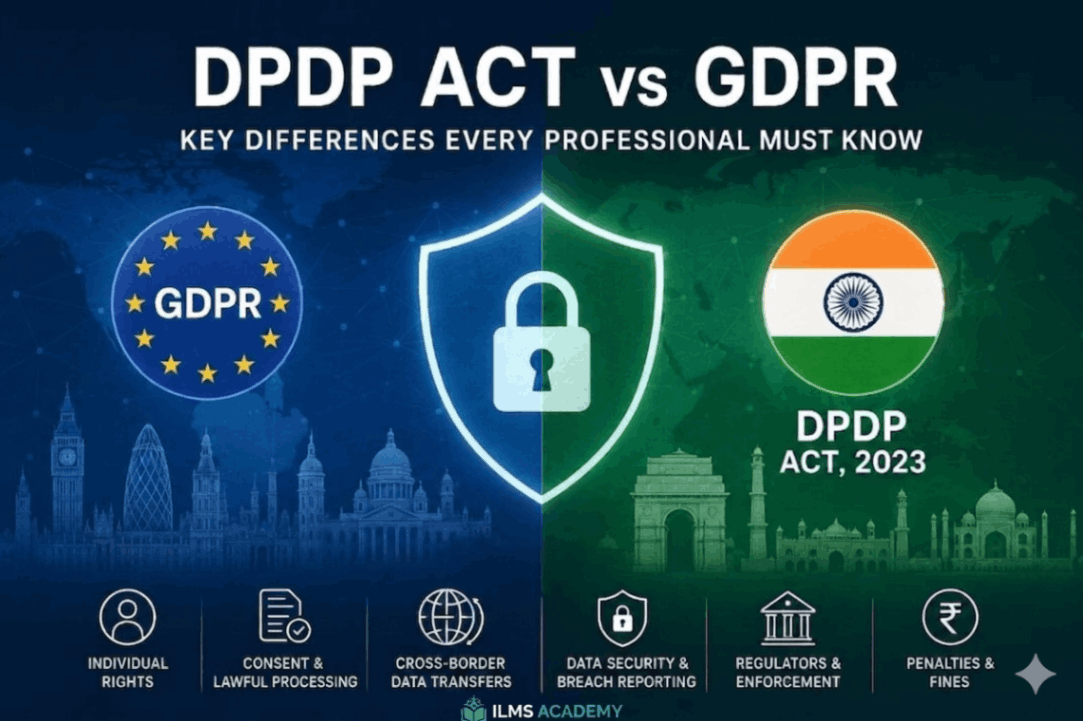
Introduction
Rise of Global Privacy Regulations
The rapid expansion of digital technologies, artificial intelligence, cloud computing, social-media platforms, and data-driven business models has transformed personal data into one of the world’s most valuable resources. Businesses across industries increasingly collect and process enormous quantities of personal information relating to identity, finances, health, behaviour, location, and online activity. As digital ecosystems expanded, governments across the world began recognising that unrestricted collection and misuse of personal data could create serious risks involving surveillance, profiling, cybersecurity threats, financial fraud, and loss of individual autonomy.
This global concern led to the emergence of modern privacy regulations aimed at strengthening data protection and organisational accountability. The European Union’s General Data Protection Regulation (GDPR) became one of the most influential privacy frameworks in the world after its enforcement in 2018. The GDPR established strict obligations relating to consent, transparency, accountability, data security, and individual rights.
India also entered the global privacy-governance landscape through the Digital Personal Data Protection Act, 2023 (DPDP Act), which establishes India’s first comprehensive framework specifically governing digital personal data. The Act, along with the DPDP Rules, 2025, reflects India’s effort to balance technological innovation, economic growth, and protection of individual privacy rights.
Why Comparing DPDP and GDPR Matters
The comparison between GDPR and the DPDP Act has become increasingly important because both frameworks now influence how businesses collect, process, store, transfer, and protect personal information. Although the DPDP framework draws inspiration from several global privacy principles reflected within GDPR, the two laws differ significantly in philosophy, structure, enforcement mechanisms, consent models, exemptions, and compliance obligations.
The GDPR follows a strongly rights-based and human-rights-oriented approach rooted in European constitutional traditions. In contrast, the DPDP framework adopts a comparatively governance-oriented and innovation-focused structure that attempts to balance privacy rights with India’s rapidly expanding digital economy. These differences have major implications for multinational corporations, technology companies, startups, compliance professionals, legal advisors, and policymakers.
Understanding these distinctions is particularly important for organisations operating across jurisdictions because a company compliant with GDPR may not automatically satisfy all DPDP obligations, and vice versa. Comparative analysis therefore helps professionals understand overlapping obligations, compliance gaps, operational risks, and strategic governance requirements.
Importance for Businesses and Professionals
Privacy compliance is no longer limited to legal departments alone. Modern organisations increasingly require coordinated governance involving legal teams, cybersecurity professionals, compliance officers, HR divisions, operational managers, cloud-service providers, and technology departments. Data protection laws now directly influence customer trust, cybersecurity governance, cross-border operations, AI systems, digital advertising, vendor management and risk assessment practices.
Failure to comply with privacy regulations can expose organisations to significant financial penalties, regulatory scrutiny, reputational damage, operational disruption, and loss of consumer confidence. The GDPR is widely recognised for imposing some of the world’s strictest privacy penalties, while the DPDP framework also permits substantial monetary penalties for serious violations involving personal-data breaches and non-compliance.
Consequently, lawyers, compliance professionals, business leaders, cybersecurity experts, and policymakers must understand both frameworks in detail in order to operate effectively within modern digital ecosystems.
Understanding the DPDP Act and GDPR
What is the GDPR?
The General Data Protection Regulation (GDPR) is the European Union’s comprehensive privacy and data-protection law governing how organisations process personal data relating to individuals within the European Union and European Economic Area. Adopted in 2016 and enforced from 25 May 2018, the GDPR modernised Europe’s privacy framework and replaced the earlier Data Protection Directive of 1995.
The GDPR establishes detailed obligations for organisations processing personal data and grants extensive rights to individuals, known as “data subjects.” The regulation applies not only to organisations located within the EU but also to foreign entities offering goods or services to individuals within the EU or monitoring their behaviour online. This broad extraterritorial reach significantly increased GDPR’s global influence.
The GDPR is widely regarded as one of the world’s strictest and most influential privacy frameworks because it emphasise lawful processing, transparency, accountability, data minimisation, storage limitation, security safeguards and strong individual rights.
What is the DPDP Act, 2023?
The Digital Personal Data Protection Act, 2023 is India’s primary legislation governing processing of digital personal data. The law establishes a framework regulating how organisations collect, process, store, share, and use digital personal information while recognising the rights of individuals over their data.
The DPDP framework applies to digital personal data processed within India and, in certain situations, to processing outside India where goods or services are offered to individuals in India. The Act creates a legal relationship between “Data Principals” and “Data Fiduciaries.” A Data Principal refers to the individual to whom the personal data relates, while a Data Fiduciary is the entity determining the purpose and means of processing such data.
The framework also establishes the Data Protection Board of India, introduces obligations relating to consent and breach notification, creates rights for individuals, and imposes penalties for non-compliance.
Objectives of Both Frameworks
Both GDPR and DPDP seek to regulate processing of personal information while strengthening organisational accountability and protecting individuals from misuse of data. The two frameworks share several common objectives involving lawful processing of personal data, transparency, security safeguards, accountability and protection of privacy rights.
However, the broader policy orientation differs between the two frameworks. GDPR strongly emphasises privacy as a fundamental right rooted within European human-rights law. The DPDP framework, while recognising privacy rights, also places considerable emphasis on governance efficiency, innovation, ease of doing business, and growth of India’s digital economy.
The DPDP Rules, 2025 specifically describe the framework as “citizen-centric” while also promoting responsible innovation and operational practicality.
Evolution of Privacy Law in India and Europe
Europe’s privacy framework evolved gradually through decades of human-rights jurisprudence and data-protection legislation. The European Convention on Human Rights and the EU Charter of Fundamental Rights recognised privacy and protection of personal data as important rights, eventually leading to adoption of GDPR.
India’s privacy framework evolved differently. Before the DPDP Act, India mainly relied on fragmented provisions under the Information Technology Act, 2000 and sector-specific regulations. These mechanisms were increasingly viewed as insufficient for addressing modern digital-governance challenges involving AI systems, large-scale data analytics, digital platforms, and cybersecurity threats.
Rapid digitalisation, growth of fintech systems, expansion of online platforms, and increasing cybersecurity concerns eventually created pressure for a dedicated privacy law in India.
Influence of the Puttaswamy Judgment
One of the most important developments shaping India’s privacy framework was the Supreme Court’s landmark judgment in Justice K.S. Puttaswamy v. Union of India. In this case, the Supreme Court recognised privacy as a fundamental right protected under Article 21 of the Constitution.
The Puttaswamy judgment significantly influenced India’s movement toward a comprehensive data-protection framework because it established constitutional recognition of informational privacy and individual autonomy. The judgment strengthened the legal foundation for modern privacy governance in India and accelerated discussions surrounding data protection, surveillance, and digital rights.
The DPDP framework emerged within this broader constitutional and governance context and represents India’s attempt to develop a structured privacy ecosystem suited to its own economic and technological environment.
Scope and Applicability
Territorial Scope of GDPR
The GDPR has one of the broadest territorial scopes among global privacy laws. It applies not only to organisations established within the European Union but also to foreign entities processing personal data relating to individuals in the EU where goods or services are offered to them or their behaviour is monitored.
This extraterritorial approach significantly expanded GDPR’s global influence because multinational corporations worldwide became subject to European privacy obligations even without physical presence within Europe.
Territorial Scope of DPDP
The DPDP Act applies to processing of digital personal data within India where such data is collected in digital form or subsequently digitised. The Act also extends to processing outside India if it relates to offering goods or services to individuals within India. Unlike GDPR, the DPDP framework focuses specifically on “digital personal data” rather than all forms of personal information.
Applicability to Foreign Companies
Both GDPR and DPDP possess extraterritorial application in certain circumstances. Foreign technology companies, e-commerce platforms, social-media businesses, cloud-service providers, and AI-driven systems may fall within the scope of these frameworks if they process personal data relating to individuals within the relevant jurisdiction.
Consequently, multinational organisations increasingly require harmonised compliance strategies capable of addressing overlapping obligations under multiple privacy laws.
What Data is Covered?
The GDPR applies broadly to “personal data,” meaning information relating to an identified or identifiable natural person. This includes direct identifiers as well as indirect identifiers capable of identifying an individual.
The DPDP framework defines personal data as any data about an individual who is identifiable by or in relation to such data. However, the DPDP Act applies specifically to digital personal data rather than offline personal information generally.
Another major distinction is that GDPR separately recognises “special categories” of sensitive personal data such as biometric, health, and political information, whereas the DPDP framework currently does not create separate categories for sensitive personal data.
Exclusions and Exemptions
Both frameworks contain exclusions and exemptions, although their scope differs significantly. The GDPR excludes certain activities involving national security, law enforcement, and purely personal or household activities. Similarly, the DPDP framework excludes personal or domestic processing and publicly available data in specified circumstances.
However, one of the most debated aspects of the DPDP framework involves government-related exemptions and state powers under Section 17. Critics argue that broad exemptions relating to sovereignty, security, and public order may create concerns regarding surveillance and accountability.
Key Definitions Compared
Personal Data
Under both GDPR and DPDP, personal data broadly refers to information capable of identifying an individual directly or indirectly. This may include:
- names,
- contact details,
- financial records,
- biometric data,
- online identifiers,
- and behavioural information.
The GDPR adopts a particularly expansive interpretation of personal data, covering both direct and indirect identifiers.
Data Subject vs Data Principal
The GDPR refers to individuals whose personal data is processed as “Data Subjects.” The DPDP framework instead uses the term “Data Principal.” Although the terminology differs, both concepts broadly refer to the individual whose personal data is being processed.
Under the DPDP Act, the definition additionally includes parents or lawful guardians in relation to children and certain persons with disabilities.
Data Controller vs Data Fiduciary
The GDPR uses the term “Data Controller” for entities determining the purpose and means of processing personal data. The DPDP framework uses the term “Data Fiduciary” for a similar concept. The use of the term “fiduciary” within Indian law reflects a governance philosophy emphasising responsibility and trust in handling personal information.
Data Processor
Both frameworks recognise “Data Processors” as entities processing personal data on behalf of controllers or fiduciaries. Examples include cloud-service providers, outsourced IT vendors, analytics firms and operational support providers. Both laws impose obligations relating to contractual safeguards and accountability involving processors.
Consent Managers and Significant Data Fiduciaries
One of the unique features of the DPDP framework is the concept of Consent Managers. These entities act as interoperable platforms enabling individuals to give, manage, review, and withdraw consent relating to processing of personal data.
The DPDP framework also introduces the concept of Significant Data Fiduciaries (SDFs), which are organisations identified by the Central Government based on factors such as:
- volume of data processed,
- sensitivity of information,
- risks to individual rights,
- and impact on national interests.
These entities face enhanced compliance obligations involving Data Protection Officers, audits, and impact assessments.
Consent and Lawful Processing
Meaning of Valid Consent
- Certificate Course in Labour Laws
- Certificate Course in Drafting of Pleadings
- Certificate Programme in Train The Trainer (TTT) PoSH
- Certificate course in Contract Drafting
- Certificate Course in HRM (Human Resource Management)
- Online Certificate course on RTI (English/हिंदी)
- Guide to setup Startup in India
- HR Analytics Certification Course
Consent forms one of the foundational principles of modern privacy law because it reflects the individual’s control over personal information. Under both GDPR and the DPDP framework, consent must represent a genuine, informed, and voluntary agreement to the processing of personal data. Consent cannot be treated as valid if it is obtained through coercion, deception, vague notices, or excessive data-collection practices.
Modern privacy regulations increasingly emphasise that consent should not merely function as a formal checkbox mechanism. Instead, it should ensure that individuals understand:
- what personal data is being collected,
- why it is being collected,
- how it will be used,
- and the consequences of agreeing to such processing.
The DPDP Act specifically states that consent must be “free, specific, informed, unconditional and unambiguous” and must involve a clear affirmative action by the Data Principal. Similarly, GDPR also requires consent to be freely given, specific, informed, and unambiguous.
Consent Requirements under GDPR
The GDPR adopts one of the world’s strictest consent frameworks. Organisations relying on consent as the legal basis for processing must demonstrate that the individual clearly agreed to the processing activity. Silence, pre-ticked boxes, or implied consent generally do not satisfy GDPR standards. The GDPR also requires organisations to maintain transparency regarding purposes of processing, categories of data collected, retention periods, third-party sharing and rights available to data subjects.
Another important feature of GDPR is that consent must be granular. Individuals should be able to separately agree to different processing purposes instead of being forced into bundled consent structures. The GDPR also places a strong burden on organisations to prove that valid consent was obtained lawfully.
Consent Requirements under DPDP
The DPDP framework also strongly emphasises consent-based processing. Section 6 of the Act requires consent to be presented in clear and plain language while providing individuals access to notices in English or any language listed in the Eighth Schedule of the Constitution. The DPDP Rules, 2025 further strengthen operational requirements relating to consent notices and transparency obligations. The Rules specifically require organisations to issue separate and understandable consent notices explaining the specific purpose for which personal data is collected and processed.
Unlike GDPR, the DPDP framework adopts a comparatively simplified and operationally flexible consent structure. The law attempts to reduce excessive compliance complexity while still ensuring that individuals retain meaningful control over their personal data. One unique feature of the DPDP framework is the introduction of Consent Managers, which are specialised entities helping individuals manage, review, and withdraw consent across digital platforms.
Legitimate Interests vs Certain Legitimate Uses
One of the major differences between GDPR and DPDP lies in their approach toward lawful processing beyond consent. The GDPR recognises several lawful bases for processing personal data, including consent, contractual necessity, legal obligations, public interest, vital interests and “legitimate interests.”
The concept of legitimate interests under GDPR allows organisations to process personal data without consent in certain situations where such processing is necessary for reasonable business or operational purposes, provided the rights and freedoms of individuals are not overridden.
The DPDP framework adopts a different structure through the concept of “certain legitimate uses” under Section 7. These include situations involving:
- employment purposes,
- medical emergencies,
- state functions,
- legal obligations,
- public health,
- disaster response,
- and voluntarily provided information.
Unlike GDPR’s broader balancing-test approach, the DPDP framework specifies recognised categories where processing may occur without explicit consent. This reflects India’s comparatively governance-oriented and operationally pragmatic privacy model.
Withdrawal of Consent
Both GDPR and DPDP recognise that individuals should retain the ability to withdraw consent after previously agreeing to data processing. The GDPR requires withdrawal of consent to be as easy as giving consent. Organisations cannot create unnecessarily difficult mechanisms for opting out of processing activities. Similarly, the DPDP Act explicitly states that the ease of withdrawing consent must be comparable to the ease with which consent was originally provided.
However, withdrawal of consent does not automatically invalidate processing already carried out before withdrawal. In many cases, organisations may also continue processing where another lawful basis exists under applicable law. The DPDP framework additionally requires Data Fiduciaries and Data Processors to cease processing personal data within a reasonable time once consent is withdrawn, unless continued processing is authorised under law.
Consent Fatigue and Practical Challenges
One of the growing criticisms of modern privacy frameworks involves “consent fatigue.” As individuals interact with numerous apps, websites, social-media platforms, fintech systems, and online services, they are constantly presented with lengthy privacy notices and consent requests. Many users accept such notices without actually understanding the implications of data processing.
This creates practical concerns regarding whether consent mechanisms genuinely enhance user autonomy or simply generate procedural compliance. Excessively complex consent structures may reduce meaningful engagement while increasing operational burdens on organisations.
Both GDPR and DPDP therefore face the challenge of balancing transparency, user autonomy, operational efficiency and practical usability within large digital ecosystems. The introduction of Consent Managers under the DPDP framework partly reflects an attempt to simplify consent governance for ordinary users operating across multiple digital services.
Rights of Individuals
Right to Access Information
Both GDPR and DPDP recognise that individuals should have the right to know how their personal data is being processed. Transparency forms one of the central principles of modern privacy governance because individuals cannot meaningfully exercise control over information they cannot access or understand.
Under GDPR, data subjects have the right to obtain confirmation regarding whether their personal data is being processed and to access information relating to processing purposes, categories of personal data, recipients of data, retention periods and safeguards relating to international transfers.
Similarly, Section 11 of the DPDP Act grants Data Principals the right to obtain a summary of personal data being processed, details regarding processing activities, and identities of Data Fiduciaries or Data Processors with whom the data has been shared.
Right to Correction and Erasure
The right to correction and erasure is another important feature of both frameworks. Inaccurate or outdated personal data can negatively affect individuals in areas involving employment, financial services, digital profiling, and online decision-making.
The GDPR allows individuals to seek rectification of inaccurate personal data and, in certain circumstances, erasure of information under the “right to be forgotten.” Similarly, Section 12 of the DPDP Act grants Data Principals the right to correction, completion, updating, and erasure of personal data. However, erasure rights are not absolute under either framework. Organisations may retain data where retention is legally necessary or required for legitimate operational purposes.
Right to Withdraw Consent
The right to withdraw consent reflects the broader principle of informational autonomy. Individuals should not remain permanently bound by earlier consent decisions if they later change their preferences regarding processing of personal data.
Both GDPR and DPDP permit individuals to withdraw consent at any time. The DPDP framework additionally requires Data Fiduciaries to ensure that Data Processors also stop processing personal data after withdrawal of consent unless lawful grounds for continued processing exist.
Right to Grievance Redressal
The DPDP framework places significant emphasis on grievance redressal mechanisms. Section 13 grants Data Principals the right to accessible grievance-redressal systems against Data Fiduciaries and Consent Managers.
The DPDP Rules, 2025 further strengthen this framework by requiring Data Fiduciaries to respond to requests relating to correction, access, updating, or erasure within ninety days.
Similarly, GDPR enables individuals to lodge complaints before supervisory authorities and seek judicial remedies in situations involving unlawful processing or privacy violations.
Right to Data Portability and Right to be Forgotten under GDPR
One major distinction between GDPR and DPDP involves the broader range of individual rights under GDPR.
The GDPR specifically recognises the right to data portability, the right to object to processing, the right to restrict processing and the right to be forgotten.
The right to data portability enables individuals to obtain and transfer their personal data across digital services in structured formats. The right to be forgotten allows individuals, in certain situations, to request removal of personal data from digital systems and public visibility. The DPDP framework currently does not provide an explicit statutory right to data portability or a broad “right to be forgotten” comparable to GDPR.
Right to Nominate under DPDP
One unique feature of the DPDP framework is the right to nominate another individual who may exercise privacy rights on behalf of the Data Principal in situations involving death or incapacity. This reflects the growing importance of digital rights management within modern societies where personal data increasingly remains embedded within financial systems, healthcare platforms, communication networks, and online identities.
Comparative Analysis of Individual Rights
The GDPR generally provides a broader and more rights-intensive framework for individuals compared to the DPDP Act. European privacy law strongly emphasises informational self-determination and human-rights-based privacy protections.
The DPDP framework, while still recognising important rights involving access, correction, consent withdrawal, grievance redressal, and nomination, adopts a comparatively streamlined and operationally simplified structure.
This difference reflects broader policy priorities. GDPR prioritises extensive individual control and detailed compliance mechanisms, whereas DPDP attempts to balance privacy rights with governance efficiency, ease of implementation, and digital-economy expansion.
Obligations of Organisations
Transparency and Privacy Notices
Transparency is one of the most important principles under both GDPR and DPDP. Organisations processing personal data are expected to provide clear and understandable notices explaining what information is collected, why it is collected, how it will be used and how individuals may exercise their rights.
The DPDP Act specifically requires Data Fiduciaries to provide notices describing the personal data being processed, the purpose of processing, and grievance-redressal mechanisms. The GDPR similarly imposes detailed transparency obligations relating to privacy notices, lawful processing bases, retention periods, third-party sharing, and cross-border transfers.
Data Minimisation and Storage Limitation
Both frameworks emphasise that organisations should collect only such personal data as is necessary for lawful and specified purposes. Excessive or unnecessary data collection increases privacy risks and cybersecurity exposure.
The GDPR strongly incorporates the principles of data minimisation and storage limitation. The DPDP framework similarly requires erasure of personal data once the specified purpose is no longer served unless retention is legally required. The DPDP Rules also reinforce responsible retention practices and operational accountability.
Security Safeguards and Breach Reporting
Modern privacy governance increasingly overlaps with cybersecurity governance. Organisations processing personal data are expected to implement appropriate technical and organisational safeguards protecting information from hacking, ransomware attacks, accidental disclosures, insider misuse and unauthorised access.
The DPDP Act specifically requires Data Fiduciaries to maintain reasonable security safeguards and report personal-data breaches to both the Board and affected individuals. Similarly, GDPR imposes obligations relating to security measures and breach notification within specified timelines.
Vendor and Processor Management
Both GDPR and DPDP recognise that organisations frequently rely on third-party processors such as cloud-service providers, IT vendors, outsourced operational providers and analytics firms.
The DPDP framework requires Data Fiduciaries to engage Data Processors only under valid contracts. The GDPR similarly imposes detailed contractual obligations governing processor relationships, accountability standards, and operational safeguards. Consequently, vendor-management systems have become an important component of modern privacy-compliance programmes.
Accountability and Governance Obligations
Modern privacy frameworks increasingly emphasise organisational accountability rather than merely procedural compliance. Organisations are expected to establish governance systems involving compliance monitoring, operational safeguards, employee awareness, risk management, audits and documentation mechanisms.
The GDPR strongly reflects this accountability model through record-keeping obligations, impact assessments, processor governance, and supervisory oversight. The DPDP framework similarly introduces governance-oriented obligations involving breach reporting, security safeguards, grievance mechanisms, and enhanced compliance requirements for Significant Data Fiduciaries.
Compliance Burden on Businesses
Although privacy laws strengthen trust and accountability within digital ecosystems, they also create substantial compliance burdens for organisations. Businesses increasingly need to invest in cybersecurity infrastructure, governance systems, employee training, privacy audits, legal advisory services and operational redesign.
Large multinational companies may face particularly complex compliance challenges because they must simultaneously comply with multiple privacy frameworks across jurisdictions. Startups and MSMEs may additionally struggle with the financial and technical costs associated with implementing sophisticated privacy-governance systems.
Significant Data Fiduciaries, DPOs and Compliance Structures
- Certificate Course in Labour Laws
- Certificate Course in Drafting of Pleadings
- Certificate Programme in Train The Trainer (TTT) PoSH
- Certificate course in Contract Drafting
- Certificate Course in HRM (Human Resource Management)
- Online Certificate course on RTI (English/हिंदी)
- Guide to setup Startup in India
- HR Analytics Certification Course
Data Protection Officers under GDPR
The GDPR requires certain organisations to appoint Data Protection Officers (DPOs), particularly where large-scale processing or monitoring activities are involved. DPOs play an important role in monitoring compliance, advising organisations, coordinating privacy-governance functions and acting as contact points for supervisory authorities. The GDPR framework treats DPOs as important institutional safeguards promoting accountability and independent compliance oversight.
Significant Data Fiduciaries under DPDP
The DPDP framework introduces the concept of Significant Data Fiduciaries (SDFs), which are organisations identified by the Central Government based on factors such as:
- volume and sensitivity of personal data,
- risks to rights of individuals,
- public order concerns,
- and national-security implications.
Because organisations processing large volumes of personal data may create greater operational and privacy-related risks, they are subject to enhanced compliance obligations.
Data Protection Impact Assessments
Both GDPR and DPDP recognise the importance of proactive risk assessment. The GDPR requires Data Protection Impact Assessments (DPIAs) where processing activities are likely to create high risks for individuals. Similarly, Section 10 of the DPDP Act requires Significant Data Fiduciaries to undertake periodic Data Protection Impact Assessments involving description of processing activities, assessment of risks and management of privacy-related concerns. These mechanisms reflect the growing shift from reactive compliance toward proactive governance and risk management.
Independent Audits and Compliance Reviews
The DPDP framework additionally requires Significant Data Fiduciaries to appoint independent data auditors and conduct periodic audits. Similarly, GDPR encourages structured compliance reviews, governance assessments, and accountability mechanisms capable of demonstrating organisational compliance. Independent audits are becoming increasingly important because privacy governance now intersects with cybersecurity, operational resilience, AI governance and enterprise risk management.
Organisational Accountability Models
One of the most important developments in modern privacy governance is the shift toward accountability-based compliance models. Organisations are no longer expected merely to obey isolated legal provisions; they are increasingly expected to establish comprehensive governance ecosystems capable of continuously managing privacy risks.
Both GDPR and DPDP therefore encourage structured governance systems, operational accountability, privacy-by-design approaches, cybersecurity preparedness, and continuous compliance monitoring. As digital ecosystems continue expanding and AI systems become increasingly dependent on personal data, organisational accountability is likely to become even more central within global privacy regulation.
Children’s Data Protection
Child Privacy under GDPR
Children’s privacy has become one of the most sensitive issues within modern digital governance because children increasingly interact with social-media platforms, online gaming systems, educational applications, streaming services and AI-driven digital ecosystems.
The GDPR recognises that children are particularly vulnerable to manipulative digital practices, behavioural profiling, targeted advertising, and excessive data collection. Consequently, the regulation imposes stricter standards for processing children’s personal data, especially in relation to online services offered directly to minors.
The GDPR also emphasises that privacy notices directed toward children must be written in clear and understandable language so that minors can reasonably understand how their information is being processed.
Child Privacy under DPDP
The DPDP framework also provides special safeguards for children’s personal data. Section 9 of the Act prohibits Data Fiduciaries from processing children’s data in ways likely to cause detrimental effects on their well-being.
The framework additionally restricts behavioural monitoring of children, targeted advertising directed at children and certain forms of profiling involving minors. The DPDP Rules, 2025 further strengthen these protections by requiring verifiable parental consent before processing children’s data except in limited circumstances involving essential services such as healthcare, education, or real-time safety measures.
One important distinction is that the DPDP framework defines a child as any individual below eighteen years of age. This age threshold is significantly higher than many international privacy frameworks and has generated considerable debate regarding operational practicality and impact on digital innovation.
Verifiable Parental Consent
Both GDPR and DPDP emphasise parental involvement in situations involving children’s data processing.
Under GDPR, parental consent is generally required for processing personal data relating to children below a specified age for online information-society services. EU member states may determine this threshold within certain limits.
Similarly, the DPDP framework requires Data Fiduciaries to obtain verifiable consent from parents or lawful guardians before processing children’s personal data. The concept of “verifiable consent” is particularly important because organisations must ensure that parental approval is genuine and legally valid rather than merely relying on self-declared age confirmations.
Restrictions on Behavioural Monitoring and Targeted Advertising
One of the most important child-protection provisions under both frameworks involves restrictions on behavioural profiling and targeted advertising. Modern digital platforms frequently rely on recommendation algorithms, behavioural analytics, targeted advertising systems and engagement-maximisation models.
Critics argue that such systems may manipulate children, encourage addictive digital behaviour, and exploit psychological vulnerabilities. The DPDP Act explicitly prohibits tracking, behavioural monitoring, and targeted advertising directed toward children. GDPR also imposes strong safeguards relating to profiling and automated decision-making involving minors.
These restrictions reflect growing international concerns regarding ethical technology governance and child safety within digital environments.
Safety vs Innovation Debate
Although child-protection measures are widely supported, they have also generated debate regarding operational feasibility and impact on digital innovation. Technology companies and startups have argued that strict age-verification obligations and broad restrictions on children’s data processing may create compliance complexity, operational burdens, increased infrastructure costs and usability challenges.
Critics of the DPDP framework particularly argue that the uniform eighteen-year threshold may be overly restrictive for ordinary digital services frequently used by teenagers. At the same time, privacy advocates argue that stronger child-protection measures are necessary because children often lack the maturity to fully understand the consequences of digital profiling, algorithmic manipulation, and large-scale data collection.
Cross-Border Data Transfers
International Data Transfers under GDPR
The GDPR contains one of the world’s most sophisticated frameworks regulating international transfers of personal data. The regulation recognises that privacy protections may be undermined if personal information is transferred to jurisdictions lacking adequate safeguards.
Consequently, GDPR permits cross-border data transfers only under specified legal mechanisms designed to ensure continued protection of personal information outside the European Union. The European framework strongly emphasises maintaining equivalent standards of privacy protection even after personal data leaves EU territory.
Adequacy Decisions and SCCs
The GDPR primarily relies on mechanisms such as adequacy decisions, Standard Contractual Clauses (SCCs), Binding Corporate Rules (BCRs) and other approved safeguards. An adequacy decision means that the European Commission has recognised a foreign country as providing an adequate level of data protection comparable to EU standards.
Where adequacy decisions are unavailable, organisations frequently rely on SCCs, which are contractual clauses designed to ensure appropriate safeguards during international data transfers. These mechanisms have become critically important for multinational corporations operating cloud infrastructure, outsourcing systems, AI services, and international digital platforms.
Cross-Border Transfers under DPDP
The DPDP framework adopts a comparatively different and more flexible approach toward international data transfers. Section 16 of the DPDP Act allows cross-border transfers of personal data except to countries or territories specifically restricted by the Central Government.
This represents a major policy distinction from GDPR because the Indian framework currently follows a “negative list” model rather than requiring comprehensive adequacy assessments for all transfers. The DPDP approach reflects India’s broader attempt to balance privacy protection with:
- digital-economy growth,
- international business operations,
- technological innovation,
- and ease of doing business.
Data Localisation Debate
Data localisation has become one of the most debated issues within global privacy governance. Supporters of localisation argue that storing data within national borders improves regulatory control, law-enforcement access, cybersecurity oversight and digital sovereignty. Critics, however, argue that strict localisation requirements increase operational costs, technological inefficiency, compliance burdens, and barriers to innovation.
The final DPDP framework adopts a comparatively moderate position compared to earlier proposals that strongly favoured localisation mandates. However, the government still retains powers to impose restrictions relating to specified categories of data and certain jurisdictions.
Impact on Multinational Businesses
Cross-border transfer rules significantly affect multinational businesses operating across multiple jurisdictions. Technology companies, fintech platforms, cloud-service providers, healthcare systems, AI companies, and outsourcing firms frequently depend on international data flows for:
- analytics,
- operational management,
- cloud storage,
- customer support,
- and cybersecurity operations.
Consequently, organisations increasingly require harmonised governance systems capable of addressing overlapping obligations under GDPR, DPDP, and other emerging global privacy laws.
Enforcement, Penalties and Regulatory Authorities
European Data Protection Authorities
The GDPR is enforced through independent supervisory authorities established across EU member states. These Data Protection Authorities (DPAs) possess powers involving investigations, audits, enforcement actions, corrective orders and financial penalties.
The GDPR framework strongly emphasises regulatory independence and coordinated enforcement through the European Data Protection Board. European regulators have imposed major penalties on technology companies for violations involving unlawful processing, inadequate consent, insufficient transparency and cybersecurity failures.
Data Protection Board of India
The DPDP framework establishes the Data Protection Board of India as the primary regulatory and adjudicatory authority under the Act. The Board functions as a digital-first institution responsible for:
- examining complaints,
- addressing breaches,
- conducting inquiries,
- imposing penalties,
- and ensuring compliance.
The DPDP Rules, 2025 additionally establish a fully digital complaint and grievance mechanism allowing citizens to file complaints and track proceedings online. Unlike GDPR’s decentralised European enforcement structure, India’s framework adopts a comparatively centralised regulatory model.
Breach Notification Obligations
Both GDPR and DPDP impose obligations relating to personal-data breach notification. The GDPR requires organisations to notify supervisory authorities of certain breaches within specified timelines and, in some situations, also inform affected individuals.
Similarly, Section 8 of the DPDP Act requires Data Fiduciaries to notify both the Board and affected Data Principals regarding personal-data breaches. The DPDP Rules additionally require breach notifications to be communicated in plain language while explaining:
- the nature of the breach,
- possible consequences,
- and measures taken to address the incident.
Penalties under GDPR
The GDPR is widely known for its stringent penalty framework. Depending on the nature of the violation, organisations may face fines reaching up to €20 million or 4% of global annual turnover, whichever is higher. The scale of potential penalties significantly increased global corporate attention toward privacy compliance and cybersecurity governance.
Penalties under DPDP
The DPDP framework also permits substantial financial penalties for serious violations. According to the DPDP Rules explanatory framework, failure to maintain reasonable security safeguards may attract penalties up to ₹250 crore, while failures involving breach notification or children’s data obligations may attract penalties up to ₹200 crore.
Section 33 of the DPDP Act authorises the Board to impose monetary penalties after considering:
- nature of the breach,
- gravity,
- duration,
- impact on individuals,
- and mitigation measures taken by the organisation.
Appeals, Adjudication and Enforcement Challenges
The DPDP framework permits appeals before the Telecom Disputes Settlement and Appellate Tribunal (TDSAT). However, both GDPR and DPDP face practical enforcement challenges involving regulatory capacity, technological complexity, multinational operations, AI governance, and rapidly evolving cybersecurity risks. In India particularly, the long-term effectiveness of the DPDP framework will likely depend upon institutional preparedness, regulatory consistency, technical expertise and practical implementation capabilities.
DPDP Rules, 2025 and Their Practical Impact
- Certificate Course in Labour Laws
- Certificate Course in Drafting of Pleadings
- Certificate Programme in Train The Trainer (TTT) PoSH
- Certificate course in Contract Drafting
- Certificate Course in HRM (Human Resource Management)
- Online Certificate course on RTI (English/हिंदी)
- Guide to setup Startup in India
- HR Analytics Certification Course
Why the Rules Were Introduced
The DPDP Act established the broad statutory framework for digital personal-data governance in India. However, several operational and procedural aspects required further clarification for practical implementation. The DPDP Rules, 2025 were therefore introduced to operationalise the framework and provide detailed guidance regarding consent mechanisms, breach reporting, governance obligations, compliance structures and citizen rights. Without operational rules, many organisations would face uncertainty regarding practical implementation requirements.
Operationalisation of the DPDP Framework
The Rules transform the DPDP Act from a broad legislative framework into a functioning compliance and governance system. The Rules specifically introduce:
- phased implementation timelines,
- practical compliance expectations,
- governance obligations,
- digital complaint systems,
- and operational accountability mechanisms.
This phased implementation approach recognises that organisations require time to redesign systems, strengthen cybersecurity infrastructure, and adapt governance practices.
Consent Notice and Breach Reporting Requirements
The DPDP Rules strengthen requirements relating to consent notices and breach reporting. Data Fiduciaries are required to issue separate and understandable consent notices clearly explaining the purpose of processing personal data.
The Rules additionally require breach notifications to:
- be communicated promptly,
- use plain language,
- explain possible consequences,
- and provide assistance details for affected individuals.
These provisions aim to improve transparency and operational accountability within digital ecosystems.
Rights of Citizens under the Rules
The Rules reinforce several rights already recognised under the Act. Citizens may seek:
- access to personal data,
- correction and updating,
- erasure in certain circumstances,
- and grievance redressal.
The Rules additionally require organisations to respond to requests within ninety days. This operational clarity is particularly important because procedural uncertainty can weaken practical enforcement of statutory rights.
Digital-First Compliance and Grievance Mechanisms
One of the distinctive features of the DPDP framework is its digital-first regulatory approach. The Data Protection Board is designed to function primarily through digital systems involving:
- online complaints,
- digital proceedings,
- electronic communication,
- and technology-driven grievance management.
This reflects India’s broader emphasis on digital governance and administrative efficiency.
Criticisms and Practical Challenges
Criticism of GDPR
Although GDPR is widely regarded as one of the strongest privacy frameworks globally, it has also faced criticism. Many businesses argue that GDPR compliance can become excessively complex, operationally burdensome and financially expensive.
Critics also argue that smaller businesses often struggle to maintain sophisticated governance systems comparable to large multinational corporations. Additionally, some commentators believe that excessive consent notices and cookie banners have created procedural overload without necessarily improving meaningful user understanding.
Criticism of the DPDP Act
The DPDP framework has similarly generated debate among legal scholars, privacy advocates, businesses, and policy experts. Some critics argue that the framework adopts a comparatively diluted approach toward privacy rights compared to GDPR because it provides fewer individual rights, broader exemptions and comparatively flexible compliance structures. Others argue that the framework appropriately balances privacy with India’s economic and technological realities.
Government Exemptions and Surveillance Concerns
One of the most debated aspects of the DPDP framework involves government exemptions under Section 17.
Privacy advocates argue that broad exemptions relating to:
- sovereignty,
- public order,
- security of the State,
- and law-enforcement functions
may weaken accountability and create concerns regarding surveillance powers.
Supporters of the framework argue that such exemptions are necessary for governance, national security, and public administration.
Compliance Complexity and Cost
Both GDPR and DPDP create significant compliance obligations involving cybersecurity systems, governance structures, audits, employee training, legal advisory and operational redesign. Privacy compliance therefore increasingly functions as a long-term organisational investment rather than merely a legal formality.
Challenges for Startups and MSMEs
Startups and MSMEs may face particular difficulties because implementing sophisticated privacy-governance systems often requires:
- financial investment,
- technical expertise,
- specialised personnel,
- and operational restructuring.
Many smaller businesses lack mature governance infrastructure and may struggle to balance innovation with evolving compliance obligations.
Which Framework is Stronger?
Areas Where GDPR is More Stringent
The GDPR is generally considered more stringent because it provides:
- broader individual rights,
- stricter consent standards,
- detailed cross-border transfer mechanisms,
- stronger regulatory oversight,
- and severe administrative penalties.
The regulation also strongly emphasises privacy as a fundamental human right.
Areas Where DPDP is More Flexible
The DPDP framework adopts a comparatively simplified and operationally flexible structure.
India’s framework:
- reduces procedural complexity,
- permits broader legitimate-use categories,
- adopts a more flexible transfer regime,
- and focuses significantly on ease of implementation.
This reflects India’s attempt to support digital-economy growth while gradually strengthening privacy governance.
Which Framework is More Business-Friendly?
From an operational perspective, many businesses may consider the DPDP framework comparatively more business-friendly because it imposes fewer procedural obligations than GDPR. However, flexibility can also create uncertainty because several aspects of India’s privacy ecosystem may continue evolving through:
- future rules,
- regulatory guidance,
- judicial interpretation,
- and enforcement practices.
Which Framework Provides Stronger Privacy Rights?
The GDPR generally provides stronger and more extensive individual rights compared to DPDP.
European privacy law strongly prioritises:
- informational self-determination,
- autonomy,
- and human-rights-based governance.
The DPDP framework, while still recognising important privacy protections, adopts a comparatively governance-oriented and innovation-focused approach.
Practical Takeaways for Professionals
For businesses and professionals, the most important takeaway is that privacy compliance is becoming a global operational necessity rather than merely a regional legal requirement. Organisations increasingly require integrated governance involving cybersecurity, legal compliance, AI governance, operational risk management and enterprise accountability. Understanding the differences between GDPR and DPDP is therefore essential for navigating modern digital ecosystems.
Future of Privacy Regulation
AI Governance and Data Regulation
Artificial intelligence systems increasingly depend on large quantities of personal and behavioural data. As AI technologies expand, governments worldwide are examining issues involving profiling, algorithmic accountability, automated decision-making and ethical data usage. Future privacy regulation will likely become increasingly interconnected with AI governance frameworks.
Evolution of India’s Privacy Ecosystem
India’s privacy ecosystem is still evolving. The DPDP framework will likely continue developing through judicial interpretation, regulatory guidance, operational enforcement and future amendments. The long-term direction of India’s privacy governance will significantly influence digital business practices across sectors.
Global Harmonisation of Privacy Laws
As multinational digital ecosystems expand, there is growing international pressure toward harmonisation of privacy standards. Although complete uniformity remains unlikely, many jurisdictions increasingly share common principles involving transparency, accountability, consent, cybersecurity and protection of individual rights.
Emerging Compliance Trends
Privacy governance is gradually becoming integrated with enterprise risk management, cybersecurity governance, ESG frameworks, AI ethics and digital trust systems. Consequently, privacy compliance is likely to remain one of the most important governance challenges for modern organisations.
Conclusion
Key Differences Between DPDP and GDPR
Although GDPR and DPDP share several foundational privacy principles, they differ significantly in regulatory philosophy, compliance structure, individual rights, enforcement mechanisms and governance priorities. The GDPR adopts a more rights-intensive and stringent approach, while the DPDP framework emphasises operational flexibility and digital-governance practicality.
Importance of Privacy Compliance
Privacy compliance is no longer optional within modern digital ecosystems. Organisations processing personal data must increasingly invest in governance systems, cybersecurity safeguards, transparency mechanisms, and accountability frameworks. Failure to comply can create significant financial, operational, and reputational consequences.
Impact on Businesses, Lawyers and Compliance Professionals
The growth of privacy regulation has transformed legal compliance, cybersecurity governance, AI regulation, and operational risk management. Businesses, lawyers, policymakers, compliance officers, and technology professionals must therefore understand evolving privacy obligations in order to function effectively within global digital economies.
The Future of Digital Privacy Governance
The future of privacy governance will likely involve increasing interaction between data protection, AI regulation, cybersecurity governance, digital sovereignty and ethical technology development. As digital ecosystems continue expanding, privacy law will remain one of the most important areas shaping the future of technology, governance, and individual rights worldwide.
- Certificate Course in Labour Laws
- Certificate Course in Drafting of Pleadings
- Certificate Programme in Train The Trainer (TTT) PoSH
- Certificate course in Contract Drafting
- Certificate Course in HRM (Human Resource Management)
- Online Certificate course on RTI (English/हिंदी)
- Guide to setup Startup in India
- HR Analytics Certification Course