
1. Introduction
1.1. Purpose of the Article
In today’s ever-evolving professional world, Human Resource (HR) professionals play a critical role in shaping the success of organizations. This article is designed to serve as a comprehensive guide for both budding and experienced HR professionals. It delves into essential HR knowledge areas such as compensation structures, employee relations, regulatory compliance, modern recruitment practices, technological integration, and more. The ultimate aim is to provide readers with practical insights and updated strategies that can be applied in real-world HR scenarios to enhance employee satisfaction, drive organizational performance, and maintain legal and ethical standards.
1.2. Overview of Key HR Challenges
The HR function is no longer confined to administrative duties. HR professionals now face a diverse range of challenges including talent acquisition in a competitive job market, ensuring employee engagement and retention, managing remote or hybrid workforces, maintaining pay equity, complying with constantly evolving labor laws, and leveraging technology for better decision-making. Additionally, the increased emphasis on diversity, equity, and inclusion has added new layers of responsibility. Navigating these challenges requires a robust understanding of both traditional HR principles and innovative strategies.
1.3. The Changing Landscape of HR Practices
Human Resources has undergone a significant transformation from a supportive, clerical role to a strategic partner in organizational growth. In the past, HR was seen mainly as the department that handled hiring, payroll, and employee records. However, the modern HR landscape emphasizes workforce analytics, employee experience, organizational culture, and proactive engagement with long-term business goals. The rise of digital tools, remote work environments, and a dynamic gig economy has redefined how HR operates. Today’s HR professionals must be agile, tech-savvy, and forward-thinking to adapt to these ongoing changes and help organizations thrive.
2. The HR Professional’s Role in Modern Organizations
2.1. Strategic Versus Administrative HR Functions
Historically, HR departments were largely administrative—focused on processing employee paperwork, maintaining compliance, and handling basic employment issues. However, the role has now expanded to include strategic contributions to business planning and execution. Strategic HR functions involve aligning talent management with long-term business objectives, forecasting workforce needs, and crafting policies that support organizational development. While administrative responsibilities still exist, they are increasingly automated or outsourced, allowing HR professionals to focus on driving performance and fostering a positive workplace culture.
2.2. The Evolving Role of HR in a Digital World
With digital transformation sweeping across industries, HR has embraced a host of new technologies. From cloud-based HR systems to artificial intelligence in recruitment, digital tools are reshaping how HR functions. The integration of Human Resource Information Systems (HRIS), data analytics, and employee self-service portals has increased efficiency and enabled data-driven decision-making. These advancements not only streamline HR operations but also provide valuable insights into workforce trends, employee behavior, and organizational needs. HR professionals must now be comfortable with technology and continuously upskill themselves to manage digital platforms effectively.
2.3. Aligning HR Goals with Organizational Objectives
A key responsibility of HR today is ensuring that its goals are in sync with the broader strategic objectives of the organization. This alignment ensures that talent management initiatives contribute directly to business success. For example, if a company’s goal is to expand into international markets, HR must develop a global talent acquisition strategy and provide cross-cultural training. Similarly, if innovation is a priority, HR should focus on fostering a creative workplace culture and offering professional development opportunities. By aligning HR strategies with business goals, organizations can create a more cohesive, productive, and forward-thinking workforce.
3. Wages vs. Salary: Concepts and Implications
3.1. Definitions and Basic Concepts
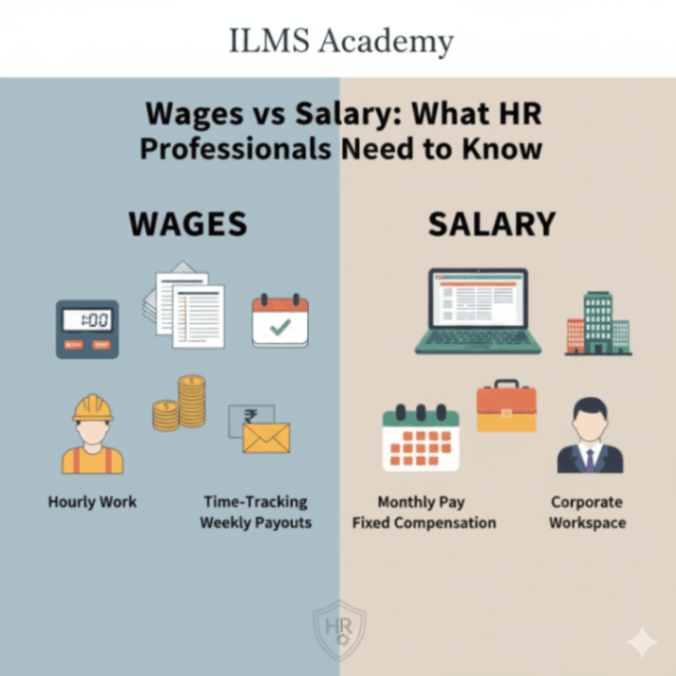
Wages and salary are both forms of employee compensation, but they operate on fundamentally different principles. Wages are typically paid on an hourly or daily basis and are most common in blue-collar or part-time jobs. Employees are compensated based on the number of hours worked or units produced. Salary, on the other hand, is a fixed amount paid periodically—usually monthly or bi-weekly—regardless of hours worked. It is commonly associated with white-collar, full-time roles that involve ongoing responsibilities and often include benefits such as paid leave, insurance, and bonuses. Understanding these distinctions is essential for HR professionals when designing roles and pay structures.
3.2. Key Differences Between Wages and Salary
The primary difference lies in how the compensation is calculated and administered. Wage earners are often eligible for overtime pay and are more likely to receive compensation for every extra hour worked. Salaried employees, however, are generally not paid for extra hours unless specified otherwise in the employment contract. Wages provide flexibility and are linked directly to hours worked, while salaries offer stability and predictability. From an employer's standpoint, salaried positions simplify payroll and budgeting but may require close monitoring to avoid burnout and ensure work-life balance. For employees, wages can result in higher earnings with extra work, while salaries offer financial security.
3.3. Pros and Cons of Different Compensation Structures
Each compensation structure comes with its own advantages and disadvantages. Wage-based compensation is advantageous for short-term jobs and tasks that require variable labor. It allows workers to increase their earnings based on effort but lacks stability. It may also create budgeting challenges for organizations. Salaried compensation offers predictability, fosters employee loyalty, and is easier to manage in long-term employment contexts. However, it may lead to dissatisfaction if employees are overworked without additional compensation. HR professionals must assess the nature of the job, industry norms, and employee expectations to determine the most suitable structure.
3.4. Impact on Employee Motivation and Retention
Compensation is one of the most powerful tools for motivating employees and influencing retention rates. Wage earners may be driven by the opportunity to earn more through overtime, but they may also feel less committed due to the transactional nature of their employment. Salaried employees, with added benefits and job security, often show higher levels of organizational commitment. However, when workloads become excessive without corresponding rewards, it can lead to burnout and attrition. HR teams must regularly review compensation policies to ensure fairness, competitiveness, and alignment with performance and organizational goals.
4. Compensation Planning and Management
4.1. Developing a Compensation Strategy
A well-thought-out compensation strategy is essential to attract, retain, and motivate employees while maintaining budgetary discipline. This strategy should align with the company’s mission, culture, and business objectives. HR professionals must consider factors such as organizational size, industry standards, geographic location, and workforce demographics. The strategy must balance internal equity (fairness among employees) with external competitiveness (matching market rates). It should also be dynamic, capable of adapting to economic changes, labor market trends, and evolving employee expectations.
4.2. Benchmarking and Market Analysis
Benchmarking involves comparing an organization’s compensation packages with those of competitors or industry standards. Through salary surveys, HR professionals gather data on what other companies are offering for similar roles. This information helps ensure that the company remains competitive and doesn’t lose talent to better-paying employers. Benchmarking also helps avoid underpaying or overpaying employees, which can lead to dissatisfaction or financial inefficiency. Regular market analysis is crucial to keeping compensation strategies relevant in a rapidly changing job market.
4.3. Pay Structures and Salary Bands
Pay structures define the range of salaries for different job categories within an organization. Salary bands or grades are commonly used to provide a framework that ensures consistent and equitable pay practices. These bands are based on job roles, experience levels, responsibilities, and qualifications. Clear pay structures promote transparency and help manage employee expectations. They also assist in performance evaluations, promotions, and internal mobility. By standardizing compensation, HR professionals can reduce biases and foster a culture of fairness and trust.
4.4. Incentives, Bonuses, and Performance-Based Pay
Beyond base pay, organizations often use performance-based incentives to encourage higher productivity and reward exceptional performance. These can include bonuses, commissions, profit-sharing, and stock options. Incentive programs must be carefully designed to reflect measurable outcomes and ensure they motivate rather than pressure employees. When aligned with clear KPIs and communicated effectively, these tools can significantly enhance performance and morale. However, inconsistent or unfair incentive distribution can have the opposite effect, causing frustration and disengagement.
4.5. Addressing Pay Equity and Transparency
Pay equity refers to the concept of compensating employees fairly regardless of gender, race, or other unrelated factors. Transparent pay practices are increasingly demanded by employees and are often mandated by law in many jurisdictions. Addressing pay equity involves conducting regular audits, identifying gaps, and taking corrective actions. Transparency in pay builds trust, enhances the employer brand, and reduces the risk of legal challenges. HR must work closely with legal, finance, and leadership teams to ensure policies and practices reflect a commitment to fairness, equality, and compliance.
5. Regulatory and Legal Frameworks
5.1. Overview of Employment Laws and Regulations
- Certificate Course in Labour Laws
- Certificate Course in Drafting of Pleadings
- Certificate Programme in Train The Trainer (TTT) PoSH
- Certificate course in Contract Drafting
- Certificate Course in HRM (Human Resource Management)
- Online Certificate course on RTI (English/हिंदी)
- Guide to setup Startup in India
- HR Analytics Certification Course
HR professionals must possess a solid understanding of employment laws to ensure compliance and mitigate legal risks. These laws govern various aspects of the employer-employee relationship, including hiring, wages, working hours, workplace safety, benefits, discrimination, and termination. In many countries, statutes such as the Fair Labor Standards Act (FLSA), Equal Employment Opportunity laws, and Occupational Safety and Health Administration (OSHA) regulations shape the legal environment of HR. Non-compliance can lead to costly lawsuits, penalties, and reputational damage. Therefore, HR teams must stay updated with evolving regulations and collaborate with legal experts when drafting and enforcing policies.
5.2. Minimum Wage Standards and Compliance
Minimum wage laws exist to protect workers from exploitation and ensure they earn a basic living income. These laws vary significantly across countries and even regions within a country. For HR professionals, understanding and implementing minimum wage standards is a legal and ethical responsibility. They must ensure that employees—especially those in hourly wage positions—are paid in accordance with applicable laws. Regular payroll audits, wage analysis, and alignment with government updates are necessary to remain compliant. Failing to adhere to minimum wage regulations can result in legal action, financial penalties, and damage to the employer's brand.
5.3. Overtime, Benefits, and Fair Compensation Practices
Labor laws also regulate overtime pay, mandating that eligible employees be compensated at a higher rate for hours worked beyond the standard workweek. HR departments must accurately classify employees as exempt or non-exempt and monitor working hours to ensure correct payment. Similarly, benefits such as health insurance, retirement contributions, maternity/paternity leave, and paid time off must comply with legal standards. Fair compensation practices also extend to the equal pay for equal work doctrine, which aims to eliminate discriminatory pay disparities. Adhering to these rules helps HR build a compliant, ethical, and inclusive workplace culture.
5.4. Navigating International and Local Labor Laws
Global organizations face the challenge of managing HR policies across multiple jurisdictions, each with its own set of labor laws. HR professionals must navigate international regulations concerning work permits, employee rights, taxation, social security, and termination procedures. This is especially critical when managing a geographically dispersed or remote workforce. In addition, local laws related to working hours, contract types, and employee protections must be factored into HR practices. Employing legal counsel, using localized HR tools, and training HR staff on regional laws are crucial steps for multinational compliance and smooth operations.
6. Key HR Policies and Procedures
6.1. Employee Handbook and Policy Development
An employee handbook serves as a foundational document that outlines an organization’s expectations, procedures, and cultural values. It includes information about company policies on attendance, dress code, leave, harassment, disciplinary procedures, and more. Developing a clear, accessible, and legally compliant handbook ensures consistency in employee treatment and protects the organization during disputes. HR professionals must regularly review and update the handbook to reflect legislative changes and organizational developments. Transparent communication of these policies during onboarding and periodic training reinforces their importance.
6.2. Recruitment and Onboarding Policies
Effective recruitment policies define the procedures for attracting, evaluating, and hiring talent. They ensure that hiring practices are fair, unbiased, and compliant with anti-discrimination laws. A structured onboarding policy, meanwhile, facilitates a smooth transition for new employees, familiarizing them with company culture, job expectations, and internal systems. Proper onboarding reduces turnover, increases engagement, and enhances productivity. HR should also establish guidelines for conducting background checks, verifying credentials, and issuing offer letters to maintain consistency and legal compliance throughout the hiring process.
6.3. Performance Management and Appraisal Systems
A robust performance management system is key to evaluating and improving employee productivity. It includes setting clear goals, providing continuous feedback, conducting periodic performance reviews, and linking appraisals to development plans and compensation. HR policies must ensure that appraisals are objective, consistent, and aligned with organizational goals. Using Key Performance Indicators (KPIs), 360-degree feedback, and regular check-ins creates a culture of accountability and development. Transparent performance evaluations also reduce bias and improve trust between employees and management.
6.4. Conflict Resolution and Employee Relations
Conflicts in the workplace are inevitable, but well-established HR policies can address them constructively. These policies must cover complaint procedures, mediation processes, anti-harassment protocols, and grievance redressal mechanisms. HR professionals act as neutral facilitators who investigate disputes fairly and propose solutions that prioritize employee well-being and organizational harmony. Strong employee relations policies help maintain morale, reduce turnover, and prevent legal issues. It’s vital for HR to promote open communication, provide training on conflict resolution, and maintain documentation of all cases handled.
6.5. HR Documentation and Recordkeeping Best Practices
Accurate and organized recordkeeping is critical for legal compliance, performance tracking, and operational efficiency. HR departments are responsible for maintaining employee files, attendance records, appraisal reports, payroll data, disciplinary actions, and benefits documentation. These records must be kept secure, confidential, and accessible only to authorized personnel. In many jurisdictions, laws specify the minimum duration for retaining certain documents. Digitizing records and using secure HR software can enhance data management, ensure privacy, and improve audit readiness.
7. Best Practices in Talent Acquisition and Retention
7.1. Modern Recruitment Strategies
Recruitment has evolved beyond traditional job postings and interviews. Today, HR professionals must embrace multi-channel sourcing strategies that include social media platforms, job boards, career fairs, and employee referrals. Leveraging technology, such as Applicant Tracking Systems (ATS), helps in managing applications, shortlisting candidates, and maintaining compliance. Additionally, data-driven recruitment—analyzing metrics like time-to-hire, quality of hire, and cost-per-hire—enhances decision-making. Structured interviews, behavioral assessments, and diversity-focused hiring practices also contribute to attracting top talent aligned with organizational values.
7.2. Employer Branding and Employee Value Proposition
A strong employer brand differentiates an organization in a competitive job market. It reflects the company’s culture, mission, values, and work environment. HR professionals must collaborate with marketing teams to communicate this brand through websites, social media, and employee testimonials. Simultaneously, the Employee Value Proposition (EVP)—the unique set of benefits employees receive in return for their skills—must be compelling and consistent. A clear EVP, which includes career growth, work-life balance, and inclusivity, attracts high-caliber candidates and improves retention by reinforcing employee satisfaction.
7.3. Strategies for Reducing Turnover
High employee turnover is costly and disruptive. To reduce it, HR must first analyze exit interview data and employee feedback to identify root causes. Creating clear career paths, recognizing achievements, offering competitive compensation, and promoting a healthy work culture are key tactics. Regular one-on-one meetings, transparent communication, and training opportunities enhance engagement and commitment. Proactive talent management—identifying and addressing dissatisfaction before it escalates—is more effective than reactive retention measures.
7.4. Employee Engagement and Satisfaction Initiatives
Engaged employees are more productive, innovative, and loyal. Engagement initiatives must go beyond team outings and focus on meaningful work, recognition, autonomy, and purpose. HR should conduct periodic surveys to assess engagement levels and implement action plans based on the results. Initiatives like wellness programs, flexible work arrangements, learning and development (L&D) opportunities, and feedback channels help create a positive work environment. HR’s role is to ensure these initiatives are inclusive, aligned with business goals, and backed by leadership support.
7.5. Developing Future Leaders Through Succession Planning
Succession planning ensures business continuity and minimizes disruptions during leadership transitions. HR professionals must identify high-potential employees early and invest in their development through mentoring, stretch assignments, and leadership training. A structured succession plan maps out critical roles, required competencies, and readiness timelines. It also fosters internal mobility, boosts morale, and prepares the organization to adapt to change. Succession planning should be a continuous process, integrated with performance reviews and career development programs.
8. Leveraging Technology in HR Management
8.1. HR Information Systems (HRIS) and Data Analytics
HRIS platforms are the backbone of modern HR operations, integrating core functions such as payroll, recruitment, attendance, benefits, and employee records. They streamline administrative tasks and enhance data accuracy. Combined with HR analytics, these systems allow professionals to derive actionable insights from workforce data—such as predicting turnover, evaluating performance trends, and identifying training needs. Data-driven HR practices promote strategic decision-making and enable continuous improvement in talent management.
8.2. The Role of AI and Automation in HR
Artificial Intelligence (AI) is transforming how HR functions are executed. AI-powered chatbots handle employee queries, machine learning algorithms screen resumes, and automated scheduling tools optimize interview coordination. These innovations reduce manual workload and improve efficiency. Moreover, AI can analyze employee sentiment, predict flight risks, and recommend personalized development plans. While automation brings significant benefits, it must be implemented ethically, with transparency and fairness, ensuring it supports rather than replaces human judgment.
8.3. Digital Tools for Employee Engagement
- Certificate Course in Labour Laws
- Certificate Course in Drafting of Pleadings
- Certificate Programme in Train The Trainer (TTT) PoSH
- Certificate course in Contract Drafting
- Certificate Course in HRM (Human Resource Management)
- Online Certificate course on RTI (English/हिंदी)
- Guide to setup Startup in India
- HR Analytics Certification Course
From collaborative platforms like Slack and Microsoft Teams to pulse survey tools like Officevibe and Culture Amp, digital tools have become essential for maintaining engagement—especially in remote or hybrid workplaces. Virtual recognition tools, digital learning portals, and internal social networks foster community and involvement. HR must select tools that align with the organization’s size, culture, and workforce needs. Successful integration of these platforms depends on training, adoption, and ongoing feedback from users.
8.4. Cyber security and Data Privacy in HR Operations
HR departments handle vast amounts of sensitive employee data, making them prime targets for cyber threats. Data breaches can lead to financial loss and reputational damage, as well as legal penalties under data protection laws like GDPR. HR professionals must work closely with IT teams to implement strong cyber security measures—such as encrypted systems, role-based access controls, and secure storage solutions. Data privacy policies should be clearly communicated to employees, ensuring transparency and trust. Regular audits, compliance checks, and staff training are critical components of an HR-focused cybersecurity strategy.
9. The Impact of Global Trends on HR Practices
9.1. Remote Work and Flexible Employment Arrangements
The global shift toward remote work, accelerated by the COVID-19 pandemic, has redefined traditional employment structures. HR professionals now oversee hybrid teams and remote work policies that emphasize flexibility without compromising productivity. This trend necessitates the development of clear guidelines around work hours, performance expectations, communication protocols, and cybersecurity. Remote work also requires a culture of trust and autonomy, supported by virtual collaboration tools and digital monitoring systems. Flexibility in work arrangements—such as compressed workweeks or part-time roles—has become a key factor in employee satisfaction and retention.
9.2. Diversity, Equity, and Inclusion (DEI) Initiatives
Diversity, equity, and inclusion are no longer optional—they are strategic imperatives. HR professionals are at the forefront of driving DEI initiatives that ensure representation, fairness, and belonging across all organizational levels. This includes revising hiring practices to eliminate unconscious bias, offering inclusive training, and setting measurable DEI goals. Policies must also consider accessibility, gender equity, and cultural sensitivity. A diverse and inclusive workplace boosts creativity, enhances decision-making, and reflects a commitment to social responsibility. To succeed, DEI must be embedded into company values and championed by leadership.
9.3. The Rise of the Gig Economy and Alternative Work Models
The gig economy—comprising freelancers, contract workers, and part-time contributors—has introduced a more fluid approach to employment. Organizations now benefit from tapping into specialized talent on-demand without long-term commitments. However, managing gig workers poses unique challenges in areas like onboarding, performance tracking, engagement, and benefits administration. HR professionals must design flexible work models that balance business needs with legal compliance and fairness. This may involve creating hybrid policies that integrate gig and full-time workers while maintaining a cohesive culture.
9.4. Impact of Globalization on HR Policies
Globalization has expanded the geographical scope of HR operations, necessitating a nuanced understanding of cultural diversity, international labor laws, and regional business practices. HR professionals must adapt policies to local contexts while maintaining consistency across the global organization. Issues such as expatriate management, cross-border recruitment, and cultural integration require specialized knowledge. Language barriers, time zone differences, and varying social norms must be addressed to ensure seamless collaboration. Global HR policies should be flexible, scalable, and sensitive to local needs without compromising corporate integrity.
10. Employee Development and Training
10.1. Assessing Skills Gaps and Training Needs
A strategic approach to employee development begins with identifying current and future skills gaps. HR professionals must conduct training needs assessments (TNAs) through performance evaluations, surveys, and competency mapping. This analysis helps align individual development plans with organizational objectives. Understanding gaps in soft skills, technical competencies, and leadership abilities allows HR to design targeted interventions that close those gaps effectively.
10.2. Designing Effective Employee Development Programs
Effective development programs are tailored, goal-oriented, and scalable. They combine formal training sessions, on-the-job learning, mentorship, and e-learning platforms. HR should ensure content relevance, inclusivity, and adaptability to different learning styles. Collaboration with department heads is key to customizing programs by role and career level. Development plans should be integrated into performance reviews and succession planning efforts to create a seamless growth trajectory for employees.
10.3. Evaluating Training Program Effectiveness
Measuring the impact of training is essential for justifying investments and ensuring continuous improvement. HR professionals can use the Kirkpatrick Model, which evaluates training on four levels: reaction, learning, behavior, and results. Pre- and post-training assessments, feedback forms, and performance metrics provide insights into learning outcomes. Key indicators such as productivity increases, improved customer satisfaction, and reduced error rates also reflect training success. These insights enable HR to refine programs and maximize ROI.
10.4. The Role of Continuous Learning in HR Success
In an era of rapid technological and organizational change, continuous learning is vital for both employees and HR professionals. Lifelong learning fosters adaptability, innovation, and engagement. HR must cultivate a culture of curiosity and growth by providing access to learning resources, certification programs, and peer-learning communities. Encouraging employees to upskill regularly supports career advancement and strengthens the talent pipeline. For HR teams, staying updated with emerging tools, methodologies, and labor regulations ensures relevance and leadership in the evolving workplace.
11. Measuring HR Effectiveness and ROI
11.1. Key Metrics for HR Performance
HR professionals must measure the effectiveness of their initiatives to ensure that investments in talent management, development, and employee engagement are delivering value. Key performance indicators (KPIs) for HR typically include turnover rates, time-to-fill, employee engagement levels, retention rates, and training effectiveness. Additionally, metrics like cost-per-hire, absenteeism rates, and internal mobility provide insights into the efficiency of HR processes. Using these metrics, HR teams can assess whether their strategies align with organizational goals, uncover areas for improvement, and make data-driven decisions.
11.2. Tools and Techniques for HR Analytics
HR analytics, also known as people analytics, involves the use of data analysis tools to measure and improve HR effectiveness. Tools such as HRIS (Human Resource Information Systems), applicant tracking systems (ATS), and performance management software enable HR professionals to collect and analyze data across various functions. Advanced techniques, including predictive analytics and machine learning, can forecast turnover trends, identify high-potential employees, and optimize recruitment strategies. Data visualization tools, such as Tableau and Power BI, help HR teams interpret complex data sets and present actionable insights to senior leadership.
11.3. Case Studies of Successful HR Interventions
Case studies offer real-world examples of how HR interventions can drive business success. For instance, a global company that implemented a comprehensive employee engagement program saw a 20% increase in retention and a 15% improvement in productivity. Another example might be an organization that introduced flexible work arrangements and saw a reduction in absenteeism and increased employee satisfaction. HR professionals can draw valuable lessons from these case studies, identifying best practices that can be adapted to their own organizational contexts.
11.4. Challenges in Quantifying HR Contributions
One of the ongoing challenges in HR is quantifying its direct contributions to the organization’s bottom line. Unlike sales or production departments, the impact of HR activities—such as employee engagement, development programs, and workplace culture—can be difficult to measure in financial terms. HR professionals must develop a methodology for linking HR outcomes to organizational performance, such as improved customer satisfaction, increased productivity, or reduced turnover costs. While the qualitative benefits of HR interventions are often clear, translating them into measurable ROI remains a complex task.
12. Future Directions for HR Professionals
12.1. Evolving Skill Sets for HR Leaders
The role of HR leaders is undergoing a transformation, requiring new skills and competencies. Future HR leaders must combine traditional people management expertise with a strong understanding of technology, data analytics, and strategic thinking. Skills in change management, digital literacy, and leadership coaching are becoming increasingly important as HR professionals guide organizations through technological disruption, cultural shifts, and remote work dynamics. HR leaders must also be adept at fostering diversity and inclusion, managing complex talent ecosystems, and ensuring that HR aligns closely with the broader business strategy.
12.2. Trends Shaping the Future of Work
- Certificate Course in Labour Laws
- Certificate Course in Drafting of Pleadings
- Certificate Programme in Train The Trainer (TTT) PoSH
- Certificate course in Contract Drafting
- Certificate Course in HRM (Human Resource Management)
- Online Certificate course on RTI (English/हिंदी)
- Guide to setup Startup in India
- HR Analytics Certification Course
The future of work will be shaped by several key trends, including automation, artificial intelligence, and remote or hybrid work models. AI-powered tools will take over administrative tasks, allowing HR professionals to focus on more strategic work. Meanwhile, remote work and flexible employment arrangements will continue to gain traction, reshaping the traditional office environment. The gig economy will also expand, with more workers seeking flexible, project-based roles. Additionally, the demand for reskilling and upskilling will intensify, driven by rapid technological advances and the need for employees to adapt to new roles and industries.
12.3. Preparing for Emerging Challenges in HR
As organizations face new challenges such as digital transformation, the increasing gig workforce, and global talent acquisition, HR professionals must be proactive in preparing for these changes. The rise of automation and AI may lead to workforce displacement, requiring HR to manage transitions and reskilling programs. Remote work poses challenges related to employee engagement, collaboration, and maintaining company culture. In addition, global HR teams must navigate the complexities of diverse labor laws, cross-cultural communication, and time-zone management. Anticipating these challenges and developing agile, future-focused HR strategies will be critical for organizations to thrive.
12.4. Strategic Recommendations for the Next Decade
Looking ahead, HR professionals should focus on several key areas to remain effective and relevant:
- Investing in technology: Adopting AI, HRIS, and data analytics tools will help HR professionals make better-informed decisions and streamline operations.
- Fostering diversity and inclusion: DEI initiatives should be embedded into the organization’s DNA, fostering a culture where all employees feel valued and respected.
- Emphasizing employee well-being: A focus on mental health, work-life balance, and wellness programs will be crucial in retaining top talent.
- Agile HR practices: HR must become more flexible and responsive to business needs, especially in times of disruption or rapid change.
- Reskilling and upskilling: Investing in the development of the workforce will be vital for staying competitive and adapting to new business needs.
13. Conclusion
13.1. Summary of Key Points
This article has explored the ever-evolving role of HR professionals in modern organizations. We have examined the distinction between wages and salary, the strategic importance of compensation planning, and how HR practices are shaped by global trends such as remote work and the gig economy. Furthermore, we delved into the growing emphasis on employee development, HR analytics, and the impact of diversity, equity, and inclusion (DEI) initiatives. As organizations increasingly rely on HR for not only operational support but also strategic direction, HR professionals must adapt by leveraging technology, enhancing employee engagement, and continually refining talent management strategies.
13.2. Final Thoughts on Strategic HR Management
Strategic HR management goes beyond day-to-day operations. It involves understanding the broader business landscape, aligning HR practices with organizational goals, and embracing innovative approaches to talent management. As the workforce continues to diversify, and as technology and globalization reshape how work is done, HR professionals must be at the forefront of driving organizational change. By adopting a proactive, data-driven approach and embracing new tools and methodologies, HR can not only contribute to organizational success but also act as a catalyst for cultural transformation.
13.3. Actionable Steps for HR Professionals Moving Forward
HR professionals should take several actionable steps to ensure their practices remain effective in the evolving work environment:
- Leverage Technology: Invest in HR analytics, AI tools, and cloud-based HRIS systems to streamline operations, improve decision-making, and enhance employee experience.
- Embrace Flexibility and Remote Work: Develop and refine flexible work policies to accommodate the growing trend of remote and hybrid work models.
- Foster a Culture of Learning: Prioritize continuous learning and development, ensuring employees have the skills needed to thrive in the future of work.
- Strengthen DEI Initiatives: Build inclusive and diverse workplaces by revising recruitment processes, offering DEI training, and creating a culture of belonging.
- Measure HR Effectiveness: Use data-driven insights to assess HR initiatives and demonstrate their impact on organizational performance.
- Adapt to Global Trends: Stay informed about global workforce changes, regulatory shifts, and cultural dynamics to ensure HR practices are responsive and relevant.
By focusing on these key areas, HR professionals can continue to evolve in their roles, driving both organizational success and employee satisfaction in an increasingly complex and dynamic business environment.
Frequently Asked Questions (FAQ)
1. What is the difference between wages and salary?
Wages are typically paid hourly and can vary depending on the number of hours worked, whereas salaries are fixed, regular payments made to employees regardless of the hours worked. Wages often apply to blue-collar or hourly workers, while salaries are common for white-collar or professional roles.
2. How can HR contribute to business strategy?
HR can contribute to business strategy by aligning talent management with organizational goals. This includes recruiting the right people, fostering a productive work environment, developing leadership, and using data analytics to improve decision-making. HR also drives culture change, employee engagement, and retention, all of which directly impact organizational success.
3. Why is diversity, equity, and inclusion (DEI) important in HR?
DEI initiatives promote a workplace culture where all employees feel valued and respected, regardless of their background. This not only fosters creativity and innovation but also improves employee satisfaction, reduces turnover, and enhances organizational performance. Companies with strong DEI policies attract top talent and enjoy a more collaborative and harmonious work environment.
4. How do HR professionals measure their effectiveness?
HR effectiveness is measured using key performance indicators (KPIs) such as turnover rates, time-to-hire, employee engagement scores, and retention rates. Advanced HR analytics tools also help track the impact of HR initiatives on business outcomes, such as productivity, customer satisfaction, and financial performance.
5. What role does technology play in modern HR practices?
Technology is transforming HR by automating administrative tasks, enhancing recruitment processes, and providing data-driven insights. HR Information Systems (HRIS), performance management tools, and AI-based recruitment software help streamline operations and improve decision-making. Technology also facilitates remote work, employee engagement, and talent management.
6. How can HR adapt to the rise of the gig economy?
HR can adapt by creating policies that accommodate gig and contract workers, ensuring they are integrated into company culture and receive fair compensation. Developing flexible work arrangements, performance tracking systems, and offering benefits tailored to non-full-time employees are critical steps in managing the gig workforce effectively.
7. What are the emerging trends in HR?
Emerging trends in HR include the increased use of AI and automation, a shift to hybrid and remote work models, the rise of the gig economy, and a greater focus on employee well-being and mental health. Additionally, diversity, equity, and inclusion (DEI) remain key priorities, alongside efforts to reskill and upskill employees for future roles.
8. How can HR manage a remote or hybrid workforce effectively?
Effective management of a remote or hybrid workforce involves clear communication, flexible work policies, and the use of digital tools to foster collaboration and productivity. HR must also focus on maintaining company culture, engaging employees through virtual team-building activities, and offering support for mental health and well-being.
9. How do HR professionals address challenges related to global talent management?
HR professionals address global talent management challenges by staying informed about international labor laws, cultural differences, and market trends. This involves creating adaptable recruitment policies, managing cross-border teams, and ensuring that compensation and benefits packages are competitive and compliant with local regulations.
10. What skills are necessary for HR leaders in the future?
HR leaders of the future will need a blend of traditional people management skills and modern competencies, such as data analytics, digital literacy, and strategic thinking. They should also have expertise in change management, employee engagement, and fostering a diverse and inclusive culture. Continuous learning and adaptability are essential for staying relevant in a rapidly changing workforce.
- Certificate Course in Labour Laws
- Certificate Course in Drafting of Pleadings
- Certificate Programme in Train The Trainer (TTT) PoSH
- Certificate course in Contract Drafting
- Certificate Course in HRM (Human Resource Management)
- Online Certificate course on RTI (English/हिंदी)
- Guide to setup Startup in India
- HR Analytics Certification Course