
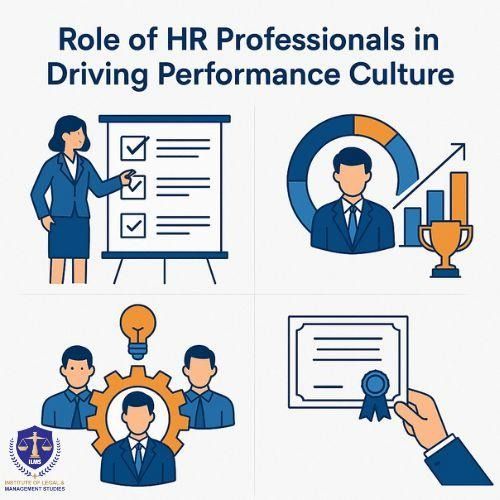
Introduction
In today’s fast-paced and competitive business environment, building and sustaining a performance-driven culture is more crucial than ever. Organizations that foster a culture where employees are motivated, engaged, and aligned with the company’s strategic goals are more likely to achieve long-term success. At the heart of this transformation lies the Human Resource (HR) department, whose role has evolved from administrative support to a strategic partner in shaping organizational culture.
The performance culture of an organization is not merely about achieving high results; it is about creating an environment where continuous improvement, accountability, transparency, and employee development are deeply embedded in the way work is done. HR professionals act as the architects of this environment, ensuring that the systems, policies, and practices encourage excellence and empower individuals at all levels.
This article explores the role of HR professionals in driving a high-performance culture. It begins with a foundational understanding of what performance culture entails and how HR's role has evolved to meet modern organizational demands.
1.1 Understanding Performance Culture
Performance culture refers to the set of shared attitudes, values, goals, and practices that characterizes an organization focused on high achievement. It is an environment where employees are expected and inspired to deliver their best work, take ownership of their responsibilities, and align their performance with organizational goals. Unlike traditional work cultures that may emphasize hierarchy or routine, a performance culture promotes meritocracy, agility, innovation, and collaboration.
A strong performance culture is built on several key pillars: clear communication of expectations, well-defined performance metrics, regular feedback mechanisms, effective leadership, and a commitment to personal and professional growth. It empowers employees not just to meet their goals, but to exceed them. It is also inherently inclusive—everyone, from frontline workers to top executives, contributes to and is accountable for the organization’s success.
Moreover, performance culture is not static; it evolves with the business environment, technology, and workforce expectations. It requires consistent reinforcement, measurement, and fine-tuning to remain relevant and effective. This is where HR plays a central role—translating organizational values into everyday behaviors, aligning talent strategies with business objectives, and embedding performance mindsets into the DNA of the company.
1.2 The Evolving Role of HR in Modern Organizations
Historically, HR was primarily viewed as a support function—responsible for payroll, hiring, compliance, and record keeping. While these tasks remain essential, the expectations from HR have shifted dramatically. In the modern workplace, HR professionals are expected to be strategic enablers of organizational success, especially through culture building and performance management.
Today’s HR professionals operate at the intersection of people, strategy, and performance. They are instrumental in shaping leadership behaviors, fostering employee engagement, and designing systems that reward and recognize high performance. They must be adept in data analytics, change management, technology integration, and talent development to effectively nurture a performance-oriented environment.
With the rise of digital transformation, hybrid work models, and increasingly diverse workforces, HR’s role has become more complex and dynamic. They are now responsible for creating cultures that support both individual and collective success, often in dispersed teams and across global contexts. They must balance performance with well-being, drive accountability while ensuring inclusivity, and manage innovation alongside compliance.
This evolution positions HR not just as a participant, but as a driver of performance culture—working collaboratively with leadership and employees to align values, behaviors, and business outcomes.
2. Defining Performance Culture
Establishing a performance culture means creating a workplace environment where continuous improvement, excellence, and accountability are standard expectations. It’s a culture where performance is not just measured, but valued and celebrated. This type of culture prioritizes the development of individuals and teams, aligning their goals with the strategic objectives of the organization. In such an environment, every action and decision is made with a focus on driving better results, innovation, and employee engagement.
Performance culture doesn’t happen by accident—it is carefully cultivated through intentional policies, leadership commitment, and consistent behavior. When deeply rooted, it becomes a self-sustaining system where high performance is the norm, not the exception.
2.1 Key Elements of a High-Performance Culture
Several core elements define and sustain a high-performance culture:
- Clear Vision and Goals: Employees must understand the broader organizational vision and how their roles contribute to achieving it. Clear, measurable goals at every level ensure alignment and direction.
- Strong Leadership: Leaders play a vital role by modeling expected behaviors, providing regular feedback, and recognizing performance. Their attitude towards growth and accountability shapes team culture.
- Employee Empowerment: A performance culture encourages autonomy and trust. Employees are given the space to make decisions, take ownership, and contribute meaningfully.
- Continuous Feedback and Development: Regular, constructive feedback and learning opportunities allow individuals to grow, adapt, and improve their performance over time.
- Accountability and Transparency: High-performance environments have systems that hold everyone accountable. Transparency in performance expectations, assessments, and outcomes fosters fairness and motivation.
- Recognition and Rewards: A culture that appreciates and celebrates achievements reinforces high performance. Recognition can be formal or informal but must be timely and meaningful.
- Adaptability and Innovation: A performance-driven culture thrives on change. It values creative thinking and problem-solving as essential parts of growth.
2.2 Importance of Performance Culture for Organizational Success
The impact of a strong performance culture extends far beyond individual employee output. It influences the overall productivity, competitiveness, and resilience of an organization. When performance is woven into the organizational culture:
- Employee Engagement Increases: People are more likely to be engaged when they see that their efforts are recognized and their development is supported.
- Retention Rates Improve: Talented individuals are drawn to and remain in environments where they can grow and succeed.
- Innovation Thrives: A focus on results often goes hand in hand with a willingness to experiment, fail, and improve—creating fertile ground for innovation.
- Customer Satisfaction Grows: Motivated and high-performing employees tend to deliver better services and solutions, directly impacting customer experience.
- Business Outcomes Strengthen: When every department and individual is aligned toward a common goal, operational efficiency and strategic execution improve significantly.
A high-performance culture acts as a strategic asset. It becomes the foundation on which sustainable growth is built, especially in competitive and rapidly changing industries.
3. Strategic Role of HR in Cultivating Performance Culture
The Human Resources department is uniquely positioned to influence all aspects of performance culture—from recruitment and training to leadership development and employee engagement. In the modern workplace, HR’s role is no longer reactive; it is proactive and strategic. Rather than simply managing people processes, HR professionals now co-create systems and experiences that drive continuous performance improvements.
To build a high-performance culture, HR must function as both a strategist and a change agent, working closely with senior leadership to ensure that cultural goals are aligned with business priorities. HR must also act as a mediator between organizational expectations and employee experiences, ensuring balance, fairness, and motivation.
3.1 Aligning HR Strategy with Business Goals
To effectively cultivate a performance culture, HR must align its practices with the overall strategic vision of the organization. This begins with a deep understanding of business priorities, market dynamics, and competitive positioning.
HR strategies must support business needs in the following ways:
- Workforce Planning: Anticipating future talent requirements and ensuring the organization is staffed with skilled, motivated employees.
- Performance Metrics: Developing systems that measure individual and team contributions in ways that reflect organizational goals.
- Strategic Hiring: Recruiting individuals not only with the right skills but also with the mindset and values that match a performance-oriented culture.
- Goal-Driven Learning: Providing learning opportunities that directly enhance capabilities related to organizational success.
When HR strategies are fully integrated into business planning, every people-related initiative contributes directly to performance, innovation, and profitability. This alignment ensures consistency, focus, and clarity across the organization.
3.2 HR as a Cultural Architect
HR professionals are the architects of organizational culture. Through the design and implementation of policies, systems, and communication channels, they shape how performance is understood, measured, and rewarded.
As cultural architects, HR professionals:
- Set the Tone: From onboarding to leadership training, HR instills the values and behaviors that support a performance-driven environment.
- Build Systems: HR creates performance management frameworks, feedback tools, learning platforms, and recognition systems that reinforce desired behaviors.
- Champion Inclusion: HR ensures that performance culture is inclusive and equitable, providing every employee with the opportunity to succeed.
- Lead Change: When performance expectations evolve, HR leads the communication and training efforts required to embed new practices into daily operations.
Ultimately, HR defines what high performance looks like and ensures that every employee understands their role in achieving it. Their influence spans both the structural and emotional aspects of the organization—making them essential to the cultivation of a lasting performance culture.
4. Talent Acquisition and Onboarding
Talent acquisition and onboarding are critical entry points for embedding performance culture within an organization. The individuals brought into an organization—and how they are introduced to the workplace environment—significantly influence the performance standards that are set, maintained, and grown over time. HR professionals, therefore, play a vital role in ensuring that hiring processes and onboarding programs are intentionally designed to support a performance-driven culture from day one.
4.1 Hiring for Cultural Fit and Performance Potential
Recruitment is not just about filling vacancies—it is about selecting individuals who will contribute positively to the organization’s culture and growth. Hiring for cultural fit ensures that new employees align with the organization’s values, behaviors, and expectations, while hiring for performance potential ensures they have the capacity and motivation to grow within the role.
To do this effectively, HR professionals must:
- Define Cultural Attributes Clearly: Before evaluating candidates, HR and hiring managers must understand and articulate what performance culture looks like in practice—what behaviors, attitudes, and mindsets are expected and valued.
- Integrate Cultural Fit into Interviews: Beyond technical skills, interviews should assess how well candidates align with team dynamics, adaptability, work ethic, accountability, and openness to feedback.
- Assess for Growth Mindset: Candidates with a willingness to learn, take initiative, and handle constructive criticism are more likely to succeed in high-performance cultures.
- Use Behavioral Assessments and Situational Questions: These tools help identify how candidates respond to real-world challenges and how they’ve demonstrated ownership, resilience, and collaboration in past roles.
When done thoughtfully, hiring for performance and cultural fit contributes to lower attrition, faster integration, and stronger team performance.
4.2 Onboarding Programs That Instill Performance Values
Onboarding is not merely an administrative process—it is the first real immersion into the company’s culture and expectations. A well-structured onboarding program introduces new hires to the performance values that define the organization and prepares them to contribute effectively from the outset.
An effective onboarding program includes:
- Certificate Course in Labour Laws
- Certificate Course in Drafting of Pleadings
- Certificate Programme in Train The Trainer (TTT) PoSH
- Certificate course in Contract Drafting
- Certificate Course in HRM (Human Resource Management)
- Online Certificate course on RTI (English/हिंदी)
- Guide to setup Startup in India
- HR Analytics Certification Course
- Cultural Orientation: Introducing new employees to the company’s mission, values, and performance standards. This includes discussions around accountability, excellence, communication, and feedback practices.
- Goal Alignment: Early-stage conversations between new hires and managers to set clear expectations, define short-term goals, and link their contributions to broader business objectives.
- Mentorship and Peer Support: Assigning mentors or onboarding buddies helps new employees feel supported and accelerates cultural integration.
- Feedback Loop from Day One: Encouraging early feedback, both given and received, helps normalize a culture of transparency and continuous improvement.
A strong onboarding experience sets the tone for performance expectations and reduces the time it takes for new employees to become productive contributors.
5. Performance Management Systems
Performance management is the structural foundation upon which a performance culture is built and sustained. It encompasses the processes and tools used to plan, monitor, evaluate, and improve employee performance in alignment with organizational goals. HR plays a pivotal role in designing and maintaining these systems to ensure that they are fair, consistent, forward-looking, and motivating.
Rather than being an annual task, performance management in a thriving culture is a continuous process—one that fosters communication, collaboration, and growth at every level of the organization.
5.1 Designing Effective Performance Appraisal Systems
An effective appraisal system is more than a formality—it’s a strategic tool for evaluating, guiding, and rewarding employee performance. It should reflect both individual contributions and collective impact.
Key considerations in designing such systems include:
- Clarity and Consistency: Employees must understand how their performance will be measured. Appraisal criteria should be transparent, well-documented, and consistent across roles.
- Balanced Evaluation: Appraisals should consider a mix of qualitative and quantitative metrics, including behaviors, results, teamwork, and innovation.
- Multi-Stakeholder Feedback: Incorporating peer, subordinate, and self-evaluations provides a more complete picture of performance and helps reduce bias.
- Link to Development: Appraisals should not merely judge past performance but identify growth opportunities, training needs, and career progression paths.
HR ensures that the appraisal system is perceived as fair, useful, and aligned with both employee aspirations and organizational objectives.
5.2 Continuous Feedback and Coaching
Traditional performance reviews that occur once or twice a year are no longer sufficient to support high performance. Instead, continuous feedback and coaching have become essential tools in sustaining momentum, correcting course, and encouraging improvement in real-time.
HR professionals encourage and enable this by:
- Training Managers to Give Constructive Feedback: Managers should be equipped with skills to offer timely, specific, and actionable feedback that motivates rather than demoralizes.
- Creating Feedback-Friendly Environments: Employees should feel safe to receive and give feedback. HR fosters this through psychological safety, open-door policies, and peer-to-peer feedback tools.
- Embedding Coaching into the Workday: Coaching doesn’t have to be formal—it can happen through regular check-ins, project reviews, and collaborative reflection sessions.
Continuous feedback promotes agility, faster growth, and stronger engagement by ensuring employees are always clear on how they’re doing and what they can improve.
5.3 Goal Setting and KPIs
Clear goals and measurable performance indicators (KPIs) are essential for aligning individual and team efforts with broader business strategies. When done right, goal-setting boosts focus, accountability, and motivation.
HR’s role in effective goal management includes:
- Facilitating SMART Goal Setting: Goals should be Specific, Measurable, Achievable, Relevant, and Time-bound to ensure clarity and achievability.
- Aligning Goals Across the Organization: There should be a clear connection between an employee’s objectives and the company’s strategic vision. This alignment creates a sense of purpose and direction.
- Using KPIs to Track Progress: KPIs offer quantifiable insights into performance. HR helps teams define KPIs that reflect both outcomes and behaviors, ensuring a holistic view of success.
- Encouraging Regular Review and Adaptation: Goals are not static. HR promotes periodic review cycles to ensure goals remain relevant and achievable, especially in dynamic business environments.
By anchoring performance conversations around clear goals and KPIs, organizations create a culture of transparency, focus, and shared success.
6. Learning and Development (L&D)
A strong performance culture cannot thrive without continuous learning at its core. As industries evolve and job roles shift, the ability of employees to adapt, grow, and enhance their capabilities becomes essential. Learning and Development (L&D) is not just about offering training—it's about building a system that empowers people to perform at their best while staying relevant in an ever-changing business environment. HR professionals are responsible for designing and implementing these systems, ensuring they align with both individual potential and organizational goals.
6.1 Upskilling and Reskilling for Performance Excellence
The need for upskilling and reskilling has grown exponentially in today’s competitive landscape. Upskilling focuses on enhancing an employee's current skill set to meet evolving role demands, while reskilling prepares them for new responsibilities or entirely different job functions. For a performance culture to be sustainable, HR must anticipate future skill gaps and respond proactively.
This means regularly assessing workforce competencies, understanding market trends, and aligning learning initiatives with strategic priorities. Personalized development plans, access to digital learning platforms, cross-functional training, and stretch assignments are just a few methods through which HR can drive capability-building. When employees see that their growth is taken seriously and that learning leads to career advancement, they become more engaged and committed to delivering high performance.
6.2 Building a Learning Culture
Beyond programs and workshops, a true learning culture is one where curiosity, experimentation, and knowledge-sharing are embedded in daily work. In such environments, mistakes are treated as opportunities, and continuous improvement is valued more than short-term perfection. HR plays a key role in shaping this mindset across the organization.
Creating a learning culture involves encouraging employees to ask questions, challenge assumptions, and take initiative. Leaders must model this behavior by openly sharing their learning journeys and supporting their teams in doing the same. HR can further nurture this culture by recognizing learning achievements, facilitating peer-to-peer learning sessions, and making learning resources easily accessible. Over time, a learning culture leads to a more agile, adaptable, and empowered workforce—essential qualities for sustaining performance excellence.
7. Employee Engagement and Motivation
Employee engagement is often the fuel behind high performance. When employees feel connected to their work, respected by their peers, and inspired by their leadership, they are more likely to go the extra mile. Motivation, while personal in nature, can be significantly influenced by organizational practices. HR professionals play a strategic role in designing systems and experiences that uplift employee morale, align personal values with company goals, and foster long-term commitment.
7.1 HR Initiatives to Boost Morale and Drive
High-performing organizations recognize that motivation is not solely driven by salary or promotions—it stems from a sense of purpose, belonging, and recognition. HR teams can influence motivation through a range of initiatives that strengthen the emotional and psychological connection employees have with their workplace.
Open communication channels, inclusive leadership practices, mental well-being support, flexible work policies, and clear career pathways all contribute to greater employee satisfaction. Regular engagement surveys can help HR gather insights and address concerns before they escalate into disengagement. When employees see that their voices matter and that their feedback leads to action, they become more invested in their roles. Celebrating milestones, offering learning opportunities, and involving employees in decision-making also enhance engagement.
7.2 Recognition and Rewards Systems
Recognition is one of the most powerful drivers of employee motivation. People naturally want their efforts to be noticed and appreciated. A well-designed recognition and rewards system not only acknowledges high performance but also reinforces the behaviors that align with the organization’s core values.
Recognition doesn’t always have to be monetary. A simple thank-you note from a manager, peer recognition platforms, spotlight awards, or shout-outs in team meetings can go a long way in boosting morale. However, structured reward systems—like performance bonuses, incentive programs, or growth-based promotions—must also be transparent and merit-based. HR is responsible for ensuring that recognition is timely, inclusive, and linked to meaningful contributions. When employees feel valued for their work, they are more likely to remain loyal, productive, and performance-focused.
8. Leadership Development and Succession Planning
Leadership development and succession planning are critical for any organization aiming to sustain its performance culture over time. Without strong leadership at every level, a high-performance culture can quickly unravel. HR professionals play a strategic role in ensuring that there is a continuous pipeline of capable leaders who can guide teams, drive organizational objectives, and uphold the values that define the company. Investing in leadership development and having a clear succession plan is not just about ensuring stability—it’s about preparing for future growth and challenges.
8.1 Nurturing Future Leaders
Nurturing future leaders requires a combination of formal training, mentoring, and real-world experience. It starts with identifying high-potential employees early in their careers and providing them with tailored development opportunities. This may include leadership training programs, cross-functional projects, stretch assignments, and exposure to different aspects of the business. HR’s role is to identify individuals who exhibit the potential to grow into leadership roles based not just on technical skills, but on their ability to inspire, communicate, and collaborate effectively.
A culture that values leadership development also fosters a growth mindset—where employees at all levels feel encouraged to develop their skills and take on leadership responsibilities. For HR, this involves creating a structured yet flexible framework that allows employees to progress along different career paths. Mentoring and coaching programs can also be crucial for shaping future leaders by providing them with guidance and feedback from more experienced colleagues. When organizations prioritize leadership development, they create a robust pipeline of talent that is capable of managing and evolving the performance culture for years to come.
8.2 HR's Role in Identifying and Developing Talent Pipelines
One of HR’s most strategic functions is the identification and development of talent pipelines. Succession planning goes beyond just filling vacancies—it’s about ensuring that the organization has a ready supply of skilled and motivated individuals who can step into critical roles as they become available. HR professionals use tools like performance reviews, leadership assessments, and potential mapping to identify candidates who show the capabilities and traits necessary for leadership roles in the future.
- Certificate Course in Labour Laws
- Certificate Course in Drafting of Pleadings
- Certificate Programme in Train The Trainer (TTT) PoSH
- Certificate course in Contract Drafting
- Certificate Course in HRM (Human Resource Management)
- Online Certificate course on RTI (English/हिंदी)
- Guide to setup Startup in India
- HR Analytics Certification Course
To develop effective talent pipelines, HR must ensure that career paths are clearly outlined and that employees understand the skills, experiences, and milestones required for advancement. Development programs should be personalized to the needs of individuals, but also linked to organizational priorities. Whether it’s through rotational programs, leadership academies, or specific training interventions, HR should actively work to prepare employees to take on roles in key departments, thus minimizing the risk of skill gaps in the future.
Succession planning also involves anticipating and planning for future leadership transitions—whether due to retirements, promotions, or external hires. Proactively identifying and developing talent for these transitions helps reduce the uncertainty and disruption that can occur when leadership changes take place. When done effectively, succession planning ensures that the organization’s performance culture is not only maintained but strengthened as it evolves.
9. Fostering a Culture of Accountability and Ownership
A performance-driven organization thrives when every individual takes responsibility for their actions, results, and contributions. Accountability and ownership are not just managerial expectations; they are cultural pillars that must be nurtured across all levels. When employees hold themselves accountable and take initiative without waiting for external pressure, it builds a foundation of trust, proactivity, and integrity. HR professionals play a crucial role in creating this environment through policies, communication, and leadership support.
9.1 Building Trust and Transparency
Trust and transparency are the precursors to true accountability. Employees must feel safe in admitting mistakes, asking for help, and providing honest feedback. In organizations where information is hoarded or communication is opaque, employees often become disengaged or fearful of taking risks. HR can counter this by promoting open-door policies, conducting regular town halls, and encouraging two-way communication between leadership and staff.
Transparent performance criteria, clearly defined roles, and consistent feedback mechanisms are key to ensuring that accountability doesn’t feel like micromanagement. When expectations are clear and fair, employees are more likely to own their responsibilities and strive to meet or exceed them. HR also contributes by training managers to have honest yet supportive conversations about performance, helping create a safe and transparent atmosphere where everyone understands their role in the bigger picture.
9.2 Empowering Employees to Take Initiative
Ownership emerges when employees are empowered—when they are trusted with responsibilities, provided with the right resources, and supported in decision-making. Empowerment does not mean a lack of oversight; rather, it involves giving employees autonomy within a structured environment. HR professionals can foster this through role clarity, goal alignment, and development opportunities that stretch individuals beyond their comfort zones.
Encouraging employees to propose solutions, lead initiatives, and contribute ideas during team meetings promotes a proactive mindset. Additionally, HR can build empowerment into organizational processes by recognizing self-driven behaviors and providing platforms for innovation and experimentation. When employees feel a sense of control over their work and are encouraged to act like owners, performance improves not just at an individual level but across the entire organization.
10. Technology and Data-Driven HR
The integration of technology into HR practices has transformed how organizations drive performance. Modern HR is no longer solely about administrative efficiency—it’s about using data and digital tools to make smarter decisions, personalize employee experiences, and measure what truly matters. From predictive analytics to AI-powered feedback tools, HR technology plays a pivotal role in shaping and sustaining a high-performance culture.
10.1 Leveraging HR Analytics to Drive Performance
HR analytics allows organizations to go beyond intuition and base decisions on real-time insights. By analyzing employee performance trends, engagement scores, attrition risks, and training effectiveness, HR teams can proactively address challenges and optimize strategies. These insights help identify high-potential employees, flag performance bottlenecks, and assess the impact of learning programs or managerial effectiveness.
For example, tracking KPIs across teams can reveal which management styles foster better performance or which departments may need additional support. Predictive analytics can even help anticipate workforce shifts or training needs before they become urgent. When HR decisions are backed by data, interventions become more timely, targeted, and impactful. However, it’s equally important to ensure that data is interpreted ethically and used to enhance employee experiences rather than monitor them excessively.
10.2 Digital Tools Supporting High-Performance Culture
Digital tools have become indispensable in maintaining performance standards, especially in hybrid and remote work environments. Platforms for real-time feedback, goal tracking, learning management, and employee recognition have changed how performance is managed and measured. Tools like OKR software, 360-degree feedback systems, and AI-enabled learning apps make it easier for organizations to remain agile and focused.
HR professionals must stay updated with technological trends and continuously evaluate which tools align with their organizational culture. These tools should simplify processes rather than overcomplicate them, and they must be user-friendly, secure, and adaptable. Moreover, digital tools should facilitate human connections—enabling better collaboration, communication, and engagement.
By embedding technology into the fabric of HR functions, organizations can streamline operations while reinforcing a culture of accountability, learning, and high achievement.
11. Challenges Faced by HR in Driving Performance Culture
Driving a high-performance culture is not without its challenges. HR professionals often face resistance, differing expectations, and the need to balance multiple priorities. Overcoming these obstacles is crucial for ensuring the sustained growth of the organization. While the goal of fostering a performance culture is clear, the path to achieving it requires navigating a range of issues, from internal resistance to external pressures, all while maintaining a focus on employee well-being.
11.1 Resistance to Change
One of the biggest challenges HR faces in building a performance culture is resistance to change. Employees who are accustomed to a certain way of working may feel threatened or disillusioned by new performance metrics, feedback processes, or expectations. Resistance can manifest in many forms: skepticism about new initiatives, reluctance to embrace new technologies, or simply a lack of motivation to shift from old habits. HR must approach this with empathy, understanding that change can be uncomfortable and overwhelming.
To manage resistance, HR must communicate the benefits of the new performance culture clearly and involve employees in the change process. Leaders should serve as role models, demonstrating the behaviors and mindset shifts that are expected. Providing employees with the right tools, training, and support during transitions helps minimize resistance and builds trust in the process. Moreover, HR should ensure that change initiatives are implemented gradually, with clear milestones and feedback loops, to create a sense of progress and buy-in from employees.
11.2 Managing Diverse Workforce Expectations
Modern organizations often have a highly diverse workforce, with employees from different backgrounds, generations, and cultures. These varying perspectives can lead to differing expectations around work styles, performance measurement, and feedback. What motivates one employee might not work for another. HR must navigate these differences carefully, ensuring that performance culture initiatives are inclusive and respectful of all employee needs.
HR professionals must adopt a personalized approach to performance management that takes into account the diverse motivations and work styles of employees. This might involve offering flexible work arrangements, tailoring feedback to individual preferences, or providing multiple channels for communication. By creating an environment where different voices are heard and valued, HR ensures that the performance culture is accessible and engaging for all employees, regardless of their background or personal preferences.
11.3 Balancing Performance with Wellbeing
The drive for high performance should never come at the expense of employee wellbeing. Striking a balance between pushing for results and maintaining a supportive, healthy work environment is a complex task. Organizations that focus too heavily on performance metrics risk burnout, disengagement, and even talent attrition. On the other hand, an excessive focus on wellbeing without sufficient performance accountability can lead to stagnation and underachievement.
HR must foster a holistic approach that integrates performance goals with wellbeing initiatives. This involves promoting mental health support, encouraging work-life balance, and ensuring that employees are not overloaded with unrealistic expectations. HR can also advocate for flexible working arrangements, access to wellness programs, and regular check-ins that prioritize employee well-being while maintaining performance expectations. A healthy workforce is more likely to stay engaged, innovative, and committed to achieving high performance.
12. Best Practices and Case Studies
Learning from the success stories of organizations that have successfully built and sustained high-performance cultures can provide valuable insights. Best practices and case studies offer concrete examples of what works—and what doesn’t—when it comes to aligning HR practices with performance culture goals. These examples demonstrate how organizations have overcome challenges, introduced innovative practices, and ultimately achieved business success through a focus on performance and people.
12.1 Organizations with Exemplary Performance Cultures
There are many examples of companies that have cultivated extraordinary performance cultures, and examining these cases offers HR professionals practical takeaways. For instance, companies like Google, Zappos, and Microsoft have created cultures where high performance is both expected and supported. At Google, the focus on innovation and autonomy encourages employees to perform at their best, while Zappos emphasizes customer satisfaction and employee empowerment as integral to their performance culture. Similarly, Microsoft’s shift towards a growth mindset and team collaboration is often cited as a model for transforming organizational culture.
These organizations invest heavily in leadership development, recognition programs, and employee engagement, creating environments where performance is celebrated and everyone feels accountable for their success. HR professionals can learn from these companies by adopting similar strategies tailored to their own organizational needs. Key takeaways from these best practices include the importance of leadership buy-in, continuous feedback, and a commitment to development and wellbeing.
12.2 HR Innovations That Made an Impact
HR technology has played a transformative role in shaping performance culture. From using HR analytics to refine talent acquisition strategies to implementing performance management systems that provide real-time feedback, HR innovations are enabling organizations to align people strategies with business goals. Companies that leverage data-driven insights, such as predictive analytics for talent management or AI-powered tools for employee development, are seeing significant improvements in both individual and organizational performance.
Innovative companies are also embracing flexible work models, digital collaboration tools, and virtual recognition platforms to keep performance high in increasingly remote work environments. Tools like 360-degree feedback, peer recognition apps, and performance tracking software are revolutionizing the way employees receive feedback and stay aligned with organizational goals. These innovations help HR teams foster a performance-driven culture while providing employees with the support and resources they need to excel.
13. Future Trends in HR and Performance Culture
- Certificate Course in Labour Laws
- Certificate Course in Drafting of Pleadings
- Certificate Programme in Train The Trainer (TTT) PoSH
- Certificate course in Contract Drafting
- Certificate Course in HRM (Human Resource Management)
- Online Certificate course on RTI (English/हिंदी)
- Guide to setup Startup in India
- HR Analytics Certification Course
As businesses continue to evolve, the role of HR in shaping and maintaining a high-performance culture is undergoing significant transformations. Technological advancements, changes in workforce dynamics, and shifting expectations from employees are all influencing how HR approaches performance management. HR professionals must stay ahead of these trends to ensure their organizations remain agile, resilient, and competitive in the face of constant change.
13.1 Evolving HR Roles in the Digital Era
The digital transformation of organizations has reshaped the HR landscape. With advancements in AI, machine learning, and HR analytics, HR professionals are now able to make data-driven decisions that were previously impossible. The future of HR will see a greater emphasis on strategic partnerships, where HR teams are not only executing policies but also influencing business direction through insights derived from data.
In the digital era, HR will become increasingly involved in talent forecasting, predictive analytics, and optimizing the employee experience through technology. Tools that enable continuous performance tracking, virtual coaching, and automated administrative tasks will free up HR professionals to focus on more strategic roles, such as talent development, culture shaping, and leadership alignment. Additionally, HR will need to manage the integration of new technologies and ensure that employees are equipped to work effectively in digital environments, which requires ongoing upskilling initiatives.
With the rise of remote work, HR's role in maintaining engagement, monitoring performance, and ensuring inclusion and diversity will be more critical than ever. HR will play a vital role in maintaining organizational culture through virtual channels, ensuring that employees feel connected even when working from different locations.
13.2 The Rise of Agile and Remote Work Cultures
The shift toward agile work methodologies and remote work is perhaps the most profound change in the workplace in recent years. Agile practices, which emphasize flexibility, collaboration, and rapid iteration, are influencing how teams are structured and how performance is measured. HR’s role in fostering an agile culture involves creating environments that support fast decision-making, autonomy, and continuous improvement.
At the same time, the rise of remote work has redefined how organizations measure performance. Traditional metrics like hours worked and physical presence are being replaced by outcomes-focused performance indicators. HR professionals must adopt new strategies for managing performance remotely, using digital tools that allow for real-time feedback, regular check-ins, and transparent communication.
As remote and hybrid work environments continue to gain popularity, HR will need to prioritize building a culture of trust, self-management, and results-driven performance. This shift requires a recalibration of how performance is tracked and recognized. Flexibility in work schedules, personalized career development plans, and mental health support will all become critical components of sustaining performance in a remote-first world.
14. Conclusion
The role of HR in cultivating a performance culture is both challenging and rewarding. As organizations continue to evolve, HR’s strategic influence in driving high performance through talent management, learning, and organizational design will be more critical than ever. HR professionals must continually adapt to changing dynamics, embrace new technologies, and stay attuned to the needs of a diverse workforce to maintain a culture of excellence.
14.1 Summary of HR's Role
HR professionals are the architects of performance culture. They are responsible for shaping and nurturing the environment where high performance thrives, from talent acquisition and onboarding to leadership development and succession planning. By aligning HR strategies with organizational goals, HR fosters a culture of accountability, innovation, and continuous learning. As the workplace continues to evolve, HR’s role in driving performance culture becomes increasingly important, with a focus on balancing performance outcomes with employee well-being, engagement, and development.
In addition, HR’s responsibility in embracing technology and data-driven decision-making is pivotal to ensuring the long-term success of performance cultures. Through innovation and strategic thinking, HR can foster a high-performance culture that is sustainable, inclusive, and adaptable to change.
14.2 The Road Ahead for HR Professionals
The future for HR professionals in driving performance culture is both exciting and filled with opportunities. As businesses become more digitally connected, agile, and diverse, HR will continue to play a key role in shaping the workplace of tomorrow. HR professionals will need to expand their skills in technology, data analytics, and leadership development, ensuring that they remain at the forefront of organizational change.
To succeed in the future, HR must focus on building resilient, adaptive organizations that can thrive in an uncertain world. This involves embracing continuous learning, fostering collaboration, and prioritizing diversity and inclusion. HR will also need to remain agile in adjusting to new trends such as hybrid work models, AI integration, and a greater focus on employee well-being.
Ultimately, the road ahead for HR professionals is one of transformation—where HR moves from a support function to a strategic driver of organizational success. Those who can successfully navigate these changes will be at the heart of building organizations that not only perform at their best but also adapt and thrive in an ever-evolving business landscape.
Frequently Asked Questions (FAQ)
1. What is a performance culture?
A performance culture is an organizational environment where employees are encouraged and empowered to achieve high levels of performance through clear expectations, continuous feedback, recognition, accountability, and a shared commitment to organizational goals. It thrives on transparency, meritocracy, and a strong alignment between individual and business objectives.
2. How do HR professionals influence performance culture?
HR professionals play a strategic role by designing and implementing systems that support performance—such as hiring practices, performance appraisals, leadership development, learning initiatives, and recognition programs. They also act as cultural architects, embedding performance values into the organization’s DNA and ensuring leaders model the right behaviors.
3. What are the key elements of a high-performance culture?
Some key elements include:
- Clear and aligned goals
- Continuous performance feedback
- Employee empowerment and accountability
- Recognition and rewards
- Leadership development
- A culture of trust and transparency
4. Why is hiring for cultural fit important in building a performance culture?
Hiring individuals who align with the organization’s performance values ensures smoother integration, faster ramp-up time, and a stronger sense of ownership. Cultural fit enhances collaboration, motivation, and long-term engagement, all of which are crucial for maintaining high performance.
5. How can HR promote accountability without micromanaging?
By setting clear expectations, providing regular feedback, offering autonomy in how work is done, and measuring results instead of activities. HR can foster trust by creating systems where employees take ownership of their goals while being supported through coaching and development.
6. What role does technology play in driving a performance culture?
Technology enables HR to track performance in real-time, facilitate remote collaboration, provide learning resources on demand, and automate routine tasks. Tools like HR analytics, digital recognition platforms, and performance management software help HR make informed decisions and keep employees engaged and aligned with business goals.
7. How can HR balance performance pressure with employee wellbeing?
HR must create a holistic strategy that includes mental health support, flexible work options, realistic goal-setting, and an open culture where employees can voice concerns. Promoting balance through policies and programs helps sustain performance over the long term without leading to burnout.
8. What are some common challenges HR faces in driving performance culture?
- Resistance to change
- Diverse expectations across teams or generations
- Aligning individual goals with business objectives
- Balancing performance and wellbeing
- Lack of leadership buy-in or support
- Remote work management complexities
9. What are best practices for creating a performance culture?
Best practices include:
- Leadership modelling desired behaviours
- Aligning HR practices with strategic goals
- Building a strong feedback and recognition system
- Creating learning pathways for continuous improvement
- Encouraging collaboration and innovation
- Using data to drive decisions
10. What is the future of HR’s role in performance culture?
The future HR role will be increasingly strategic and tech-driven. HR will focus on leveraging data, supporting remote and agile teams, and maintaining a people-first approach. As organizations become more dynamic, HR’s ability to adapt and innovate will be central to sustaining performance cultures.
- Certificate Course in Labour Laws
- Certificate Course in Drafting of Pleadings
- Certificate Programme in Train The Trainer (TTT) PoSH
- Certificate course in Contract Drafting
- Certificate Course in HRM (Human Resource Management)
- Online Certificate course on RTI (English/हिंदी)
- Guide to setup Startup in India
- HR Analytics Certification Course