
Introduction
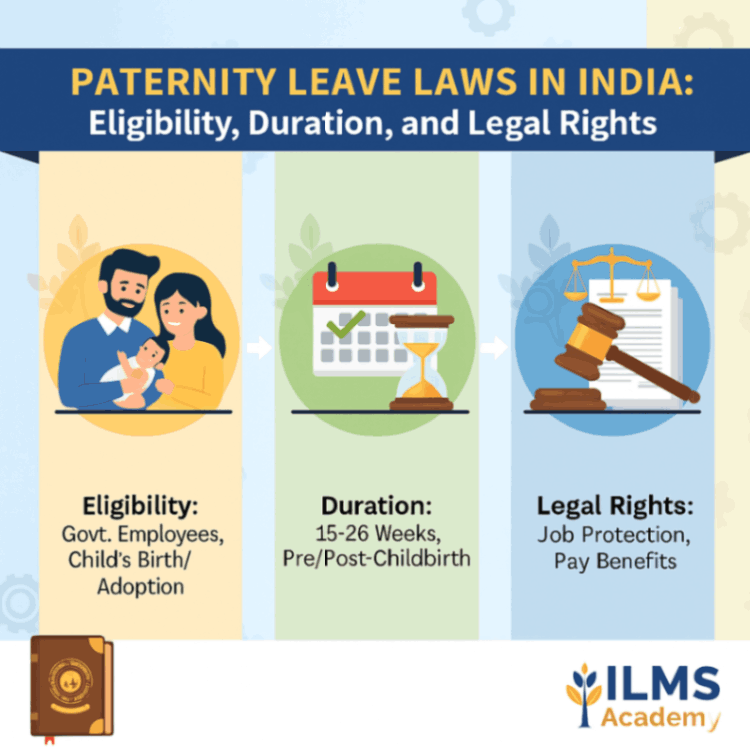
In today’s evolving work environment, family-friendly policies have become integral to promoting employee well-being, job satisfaction, and gender equality. While maternity leave has long been a cornerstone of such policies, paternity leave is emerging as a vital benefit for modern workplaces. Paternity leave allows fathers to support their spouses, bond with their newborns, and share in early childcare responsibilities. In India, the legal framework for paternity leave is limited primarily to central government employees, leaving private-sector policies largely at the discretion of individual employers. This article provides an in-depth analysis of paternity leave laws in India, examining eligibility criteria, duration, legal rights, recent developments, and comparative perspectives, while also suggesting ways for future improvements.
Legal Framework for Paternity Leave in India
Statutory Provisions for Government Employees
The only statutory provision for paternity leave in India is found in the Central Civil Services (Leave) Rules, 1972. Under these rules:
- Eligibility: A male central government employee with less than two surviving children is eligible for paternity leave. The employee must have completed at least 80 days of service in the 12 months preceding the expected delivery or adoption.
- Duration: The leave is fixed at 15 days and can be taken either up to 15 days before the expected date of childbirth or within six months following the birth or adoption of the child.
- Salary: During the leave period, the employee is entitled to receive a leave salary equal to his last drawn pay.
- Non-Deductibility: This leave is provided in addition to other leave benefits and is not deducted from annual or casual leave balances.
These provisions, while beneficial, are limited only to government employees, and the 15-day period is considered modest by global standards.
Private Sector Policies
Currently, there is no comprehensive legal mandate for paternity leave in the private sector in India. As a result:
- Company Discretion: Private companies have the freedom to design their own paternity leave policies.
- Varied Duration: Some progressive organizations in sectors like IT and multinational corporations have introduced paternity leave policies ranging from one week to as much as 26 weeks. However, many companies offer minimal or no paternity leave, reflecting the absence of uniform regulations.
- Eligibility Criteria: The criteria for availing paternity leave in the private sector generally include a minimum period of employment and may restrict eligibility to permanent employees. Some companies adopt guidelines similar to those of the central government (e.g., a requirement of fewer than two surviving children), while others set their own parameters.
Recent Proposals and Judicial Trends
Efforts have been made to broaden the scope of paternity leave in India. The proposed Paternity Benefit Bill, 2017, aimed to extend leave benefits to all working fathers across sectors. Although the bill has not been passed into law, judicial interpretations and state-level initiatives sometimes influence company policies. Courts have occasionally ruled in favor of employees seeking paternity leave under arguments of non-discrimination and the right to a healthy work-life balance. Despite these developments, a national legislative framework remains elusive.
Eligibility Criteria for Paternity Leave
For Central Government Employees
Eligibility for paternity leave under the Central Civil Services (Leave) Rules, 1972, includes:
- Service Requirement: The employee must have served at least 80 days in the preceding 12 months.
- Number of Children: The leave is applicable only if the employee has fewer than two surviving children.
- Employment Status: The employee must be a permanent employee; contractual or temporary staff do not qualify.
- Application Window: The leave must be taken within six months of the child’s birth or adoption, or it will lapse.
For Private Sector Employees
In the private sector, eligibility criteria are defined by company policy. Although there is no statutory requirement, many organizations follow best practices that include:
- Tenure Requirements: A minimum period of employment may be required before paternity leave can be availed.
- Family Status: Some companies may require that the employee has fewer than two surviving children, mirroring the central government criteria.
- Employment Type: Benefits are typically reserved for permanent employees, with contractual or temporary staff often excluded.
- Policy-Specific Conditions: Each company may have unique guidelines regarding application procedures and documentation (e.g., a requirement to submit a birth or adoption certificate).
Duration of Paternity Leave
Statutory Leave for Government Employees
For central government employees, the duration of paternity leave is fixed at 15 days. This leave can be taken either as a block before the expected birth or within six months after the child is born or adopted.
- Certificate Course in Labour Laws
- Certificate Course in Drafting of Pleadings
- Certificate Programme in Train The Trainer (TTT) PoSH
- Certificate course in Contract Drafting
- Certificate Course in HRM (Human Resource Management)
- Online Certificate course on RTI (English/हिंदी)
- Guide to setup Startup in India
- HR Analytics Certification Course
Duration in the Private Sector
In the private sector, the duration of paternity leave is not standardized:
- Short-Duration Policies: Many companies offer a minimal period, such as 5–10 days of paternity leave.
- Progressive Policies: Some forward-thinking organizations offer extended leave of up to 26 weeks. For example, certain multinational corporations have begun implementing policies that provide extended paternity leave as part of broader parental leave benefits.
- Variability: The significant variation in duration among private companies leads to a lack of uniformity, highlighting the need for statutory intervention to standardize benefits across sectors.
Legal Rights and Protections During Paternity Leave
Job Security
Employees who take paternity leave are legally protected against dismissal or adverse employment actions solely on the basis of taking such leave. For government employees, the Central Civil Services rules ensure that a paternity leave taker retains his position and benefits. In the private sector, while the law does not specifically mandate this protection, many companies include such safeguards in their internal policies to promote a supportive work environment.
Wage Entitlement
- Central Government Employees: During the 15 days of paternity leave, the employee is entitled to full pay, equal to his last drawn salary.
- Private Sector Employees: Payment during paternity leave is determined by the company’s policy. Many progressive firms offer fully paid leave, while others might provide partial payment or unpaid leave. The absence of a statutory requirement in the private sector means that wage entitlement can vary significantly.
Procedural Safeguards
Employers are expected to establish a clear and transparent process for applying for paternity leave:
- Written Application: Employees must submit a formal written request, often accompanied by supporting documentation such as a birth certificate or adoption papers.
- Timely Approval: Best practices dictate that the application process should be prompt and fair, minimizing delays that could affect the employee’s ability to take leave during the crucial period.
- Non-Deductibility: Paternity leave should not be deducted from other leave balances such as casual or sick leave, ensuring that employees do not suffer a loss in overall leave entitlement.
Remedies for Denial of Leave
In cases where an employer unjustly denies paternity leave to an eligible employee, legal recourse is available. Although government employees have clear statutory protections, private-sector employees may challenge denial through labor tribunals or seek redress under general principles of labor law and non-discrimination.
Comparative Perspective: India Versus Global Standards
International Benchmarks
Globally, paternity leave policies vary widely, but many countries have established more extensive provisions than those available to Indian government employees. For example:
- Nordic Countries: In Sweden, fathers are entitled to a “use-it-or-lose-it” quota of approximately 90 days as part of a total of 480 days of shared parental leave. Norway similarly offers 15 weeks exclusively for fathers, with a significant uptake due to strong cultural support for gender equality.
- United Kingdom: The UK provides statutory paternity leave of 2 weeks, along with the option for shared parental leave that allows parents to share up to 50 weeks of leave.
- United States: Although there is no federal mandate for paid paternity leave in the U.S., the Family and Medical Leave Act (FMLA) provides up to 12 weeks of unpaid leave for eligible employees.
India’s Position
Compared to these international standards, India’s provision of 15 days of paternity leave for government employees is relatively modest. Moreover, the absence of any mandatory paternity leave policy for the private sector creates a gap in support for a large segment of the workforce. The disparity between sectors and the overall short duration of leave underscore the need for policy reform to align with global best practices and to promote greater gender equity in parenting roles.
Practical Considerations for Legal Practitioners and Employers
For Legal Practitioners
- Certificate Course in Labour Laws
- Certificate Course in Drafting of Pleadings
- Certificate Programme in Train The Trainer (TTT) PoSH
- Certificate course in Contract Drafting
- Certificate Course in HRM (Human Resource Management)
- Online Certificate course on RTI (English/हिंदी)
- Guide to setup Startup in India
- HR Analytics Certification Course
Legal advisors must:
- Stay Updated: Keep abreast of evolving labor laws and judicial interpretations regarding paternity leave. Recent proposals like the Paternity Benefit Bill, although not yet enacted, may signal future changes.
- Advise on Policy Drafting: Assist organizations in drafting comprehensive, non-discriminatory paternity leave policies that comply with existing regulations and reflect global best practices.
- Handle Disputes: Provide legal support in cases where employees face discrimination or wrongful denial of leave.
For Employers
Employers, especially in the private sector, should:
- Benchmark Against Global Standards: Design paternity leave policies that are competitive, offering longer and fully paid leave periods where possible.
- Communicate Clearly: Ensure that all employees are aware of their rights and the procedures for applying for paternity leave.
- Promote a Supportive Culture: Foster a workplace culture that encourages both parents to take leave and share childcare responsibilities. This not only benefits employees but can also enhance productivity and employee retention.
- Implement Robust HR Systems: Use automated HR management systems to track eligibility, leave balances, and facilitate smooth processing of leave applications. Such systems reduce administrative errors and ensure compliance with internal policies.
Challenges in Implementing Paternity Leave Policies
Despite the recognized benefits, several challenges impede the effective implementation of paternity leave policies in India:
Cultural Barriers
- Traditional Gender Roles: Deep-seated cultural norms often view childcare as the sole responsibility of women, discouraging men from taking paternity leave. Overcoming these stereotypes requires a cultural shift within both families and organizations.
- Workplace Stigma: In many traditional workplaces, taking paternity leave may be perceived as a lack of commitment to work, which can adversely affect career progression.
Lack of Uniformity
- Private Sector Disparities: With no statutory mandate, the duration and benefits of paternity leave vary widely between companies. This lack of uniformity leads to inequities and confusion among employees.
- Limited Awareness: Many employees, particularly in smaller or unorganized sectors, are not fully aware of their potential rights to paternity leave, resulting in underutilization even when such benefits are available.
Financial Implications for Small Businesses
- Cost Concerns: Smaller companies may struggle to absorb the financial cost of extended paid leave, which can lead to resistance in implementing generous policies.
- Resource Allocation: Finding temporary replacements or redistributing work during an employee’s leave can be challenging and may impact productivity.
Legal and Procedural Challenges
- Documentation and Verification: Ensuring that employees meet the eligibility criteria (e.g., the 80-day service requirement) and providing necessary documentation can be administratively burdensome.
- Inconsistent Enforcement: Without a nationwide statutory framework, enforcement of paternity leave policies can be inconsistent, leading to potential disputes and litigation.
Benefits of Robust Paternity Leave Policies
Despite these challenges, there are compelling benefits to implementing robust paternity leave policies:
Improved Employee Retention and Attraction
Organizations that offer generous family leave benefits are more likely to retain their employees and attract top talent. Employees are increasingly prioritizing work-life balance and are willing to choose employers that support their family needs.
Enhanced Employee Productivity and Engagement
When employees are able to take time off to care for their families without fear of reprisal, they return to work with reduced stress and increased focus. Studies have shown that improved work-life balance correlates with higher productivity and job satisfaction.
Promotion of Gender Equality
Shared parental responsibilities lead to more equitable divisions of labor at home. When both parents are encouraged to take leave, it helps break down traditional gender roles and supports the broader goal of gender equality in the workplace.
- Certificate Course in Labour Laws
- Certificate Course in Drafting of Pleadings
- Certificate Programme in Train The Trainer (TTT) PoSH
- Certificate course in Contract Drafting
- Certificate Course in HRM (Human Resource Management)
- Online Certificate course on RTI (English/हिंदी)
- Guide to setup Startup in India
- HR Analytics Certification Course
Better Family and Child Outcomes
Active paternal involvement in early childcare has been linked to improved cognitive and emotional development in children. Additionally, a supportive home environment contributes to the overall well-being of the family.
Positive Employer Branding
Companies known for their progressive family leave policies often enjoy enhanced reputations, which can translate into increased brand loyalty and better relationships with customers, investors, and other stakeholders.
Global Trends Influencing Indian Policies
India can learn from global best practices to enhance its paternity leave policies:
- Nordic Model: Countries like Sweden and Norway offer extensive shared parental leave, which incentivizes both parents to take time off. India could consider introducing a “use-it-or-lose-it” quota for fathers.
- United Kingdom’s Shared Parental Leave: The UK’s model allows parents to share up to 50 weeks of leave, providing flexibility in how leave is utilized.
- Corporate Innovations in the United States: Despite the absence of federal mandates, several U.S. companies have voluntarily implemented generous paternity leave policies, setting a benchmark for best practices.
Adopting elements of these models could help India move toward a more inclusive, standardized approach that benefits all working parents, regardless of the sector.
Future Directions and Policy Recommendations
To create a more equitable and supportive environment for working fathers, several recommendations can be considered:
- Legislative Action: Enact a comprehensive Paternity Benefit Bill that extends statutory paternity leave rights to private-sector employees. This would help standardize leave durations and wage payments across all industries.
- Standardization of Policies: Establish uniform eligibility criteria and minimum leave durations, ensuring that all employees receive at least a baseline of 15 days of fully paid paternity leave.
- Promotion of Shared Parental Leave: Encourage policies that allow both parents to share a combined parental leave quota, thereby promoting gender equality and reducing the pressure on mothers.
- Incentives for Private Employers: Offer tax benefits or subsidies to companies that implement progressive and gender-neutral paternity leave policies. Such incentives could help small businesses absorb the cost of extended leave.
- Awareness Campaigns: Launch initiatives to educate employers and employees about the benefits of paternity leave. Increasing awareness can help overcome cultural barriers and ensure that employees are informed of their rights.
- Integration with HR Technologies: Encourage the adoption of advanced HR management systems to streamline leave applications, track eligibility, and ensure compliance with both statutory and company-specific policies.
The Role of HR Technology in Strengthening Leave Management
Modern HR management systems can significantly enhance the administration of paternity leave policies. Platforms that automate leave tracking and management help organizations maintain accurate records and ensure that employees receive their entitled benefits without administrative delays. Key functionalities include:
- Automated Eligibility Verification: Systems can automatically verify whether an employee meets the service requirements, reducing the risk of human error.
- Streamlined Application Processes: Digital leave applications allow for quicker processing, transparent communication, and easier document management.
- Policy Compliance and Reporting: Integrated HR systems ensure that leave policies are implemented consistently across the organization and can generate reports for internal audits and compliance reviews.
By integrating these technologies, employers not only enhance operational efficiency but also build a culture that values and supports work-life balance.
Conclusion
Paternity leave is a critical yet underdeveloped aspect of India’s employment landscape. The current legal provisions, limited to a 15-day leave for central government employees, fall short of international standards and do not address the needs of the private sector. As societal norms evolve and the importance of shared parental responsibilities becomes more recognized, there is a compelling case for reform.
A more comprehensive legislative framework, combined with proactive company policies, can ensure that all working fathers in India are given the opportunity to bond with their children and support their families during the crucial early stages of child-rearing. Such measures would not only contribute to individual well-being but also foster a more inclusive, equitable, and productive work environment.
For legal practitioners, employers, and policymakers alike, the time is ripe to advocate for robust paternity leave policies that align with global best practices. By doing so, India can create a future where family-friendly work environments are the norm rather than the exception—benefiting employees, businesses, and society as a whole.
- Certificate Course in Labour Laws
- Certificate Course in Drafting of Pleadings
- Certificate Programme in Train The Trainer (TTT) PoSH
- Certificate course in Contract Drafting
- Certificate Course in HRM (Human Resource Management)
- Online Certificate course on RTI (English/हिंदी)
- Guide to setup Startup in India
- HR Analytics Certification Course