
1. Introduction
1.1 Overview of HRM and Talent Development
Human Resource Management (HRM) plays a pivotal role in shaping the overall success and sustainability of an organization. At its core, HRM involves recruiting, managing, and directing people within an organization. However, in the modern workplace, HRM has evolved far beyond administrative functions. It now encompasses a strategic approach to managing people, nurturing potential, and aligning employee goals with organizational objectives.
One of the most critical areas within HRM is talent development. This includes a variety of initiatives aimed at improving the skills, knowledge, and competencies of employees. Talent development strategies ensure that employees are not only equipped to perform their current roles but are also prepared for future responsibilities and leadership opportunities. The growing emphasis on employee experience and lifelong learning has pushed organizations to adopt more personalized and impactful development interventions. Among the most effective of these are mentoring and coaching.
While training programs and workshops offer structured learning, mentoring and coaching provide a more individualized approach. These methods create a space for reflection, growth, and transformation, addressing not just technical skill development but also behavioral competencies, emotional intelligence, and leadership capabilities.
1.2 Importance of Employee Growth and Support
Employees are the backbone of any organization. When they grow, the organization grows. This is why investing in employee development is no longer optional—it's essential. Companies that focus on nurturing their talent witness improved productivity, better engagement, higher morale, and increased retention. Furthermore, they build a culture of trust, transparency, and continuous learning.
Growth and support are also key elements in adapting to change. In today’s dynamic business environment, where market trends, technologies, and customer expectations evolve rapidly, employees must be agile learners. HRM must respond by creating support systems that empower employees to build resilience, adapt quickly, and thrive in uncertainty.
Mentoring and coaching are foundational to this supportive infrastructure. While mentoring offers guidance and wisdom rooted in experience, coaching helps employees unlock their own potential through focused conversations and goal-setting. Together, they enable organizations to create environments where employees feel valued, supported, and capable of achieving their best.
1.3 Purpose of Comparing Mentoring and Coaching
Although mentoring and coaching are often used interchangeably, they are fundamentally different in purpose, approach, and execution. Both are powerful tools in HRM, but their effectiveness depends on aligning the right method with the right context. Understanding their unique characteristics allows HR professionals to deploy them strategically.
The purpose of this comparison is not to determine which method is better, but to highlight their respective strengths and when each is most appropriate. By delving into their definitions, objectives, structures, and impact, this article aims to provide a comprehensive understanding of mentoring and coaching in the HRM landscape. It will serve as a practical guide for HR leaders, managers, and organizational development professionals seeking to maximize the potential of their workforce through tailored development strategies.
2. Understanding Mentoring
2.1 Definition and Core Concepts
Mentoring is a structured yet personal development relationship in which a more experienced or knowledgeable individual—called the mentor—guides, supports, and encourages the growth of a less experienced person, known as the mentee. This concept, although rooted in ancient traditions, has evolved into a professional tool widely used in Human Resource Management (HRM) to support career development and knowledge sharing within organizations.
Unlike coaching, which often focuses on short-term performance improvement and specific outcomes, mentoring is a long-term relationship that nurtures overall development. It is less about instruction and more about creating an environment where the mentee can learn from the mentor’s experiences, perspectives, and advice. This relationship is grounded in trust, mutual respect, and a shared commitment to the mentee’s success. Mentoring is particularly valuable because it promotes both professional and personal growth, often going beyond the job description to touch on areas like confidence building, work-life balance, and leadership capabilities.
Mentoring can take various forms—formal or informal—but its core remains centered on learning, development, and growth. It plays a critical role in nurturing potential, bridging generational gaps in knowledge, and creating a culture of continuous learning.
2.2 Objectives of Mentoring in HRM
Within the framework of HRM, mentoring serves several key objectives that align with both organizational and individual goals. One of the primary purposes is to foster employee engagement by making individuals feel valued and supported. Employees who have access to mentorship often demonstrate higher levels of job satisfaction and loyalty to the organization. This sense of belonging and connection often translates into improved retention rates.
Mentoring also plays a vital role in leadership development. Organizations that invest in mentorship programs often use them to identify high-potential employees and groom them for future leadership positions. This process not only builds a strong internal talent pipeline but also ensures smoother succession planning.
Another important goal of mentoring is to ease the onboarding process for new employees. Being guided by a mentor helps new hires acclimate to the company culture, understand organizational norms, and quickly become productive contributors. Moreover, mentoring programs can support diversity and inclusion initiatives by ensuring underrepresented employees receive the guidance and exposure necessary for career advancement.
Finally, mentoring ensures the transfer of critical institutional knowledge. As experienced professionals near retirement or transition to different roles, mentoring allows them to pass on insights, unwritten rules, and best practices that are essential for maintaining organizational continuity and performance.
2.3 Types of Mentoring
Mentoring in HRM can be implemented in different ways depending on the goals, resources, and culture of the organization. One common approach is formal mentoring, which involves structured programs with defined goals, timelines, and matching processes. These are often overseen by HR departments and are designed to address specific developmental needs.
Informal mentoring, on the other hand, evolves naturally and is based on mutual interest, respect, or compatibility. These relationships are typically more flexible and can often be more meaningful because they grow organically without administrative intervention.
A relatively modern variation is reverse mentoring, where younger or less experienced employees mentor senior colleagues, particularly in areas like digital tools, new technologies, or social and cultural trends. This type of mentoring encourages mutual learning and helps bridge generational gaps within the workplace.
Group mentoring is another format where a single mentor works with several mentees simultaneously. This model not only allows for knowledge sharing from mentor to mentees but also fosters peer learning among the group. It’s especially useful in training programs, leadership development initiatives, and knowledge transfer efforts.
Each type of mentoring offers unique benefits, and organizations often implement a combination of these formats to meet the diverse needs of their workforce.
2.4 Key Roles and Responsibilities of a Mentor
The mentor plays a critical and multifaceted role in the development of the mentee. Beyond being an advisor, the mentor is a source of encouragement, a sounding board for ideas, and a role model whose behavior and decisions can influence the mentee's growth. Effective mentors take the time to understand the mentee's career goals, strengths, and areas for improvement. They provide guidance not by dictating solutions, but by helping mentees think through problems and explore their options.
A mentor listens actively and empathetically, offering both professional insights and emotional support. They share stories from their own experiences, not just to educate but to build trust and inspire confidence. Through constructive feedback and occasional challenges, mentors help mentees step out of their comfort zones and take ownership of their development.
The mentor's role is not static—it evolves over time as the relationship matures. In the early stages, the mentor may be more directive and hands-on. As the mentee gains confidence and independence, the mentor transitions into a more consultative and supportive role. Ultimately, the goal is to empower the mentee to make informed decisions and grow into a capable, self-directed professional.
2.5 Phases of a Mentoring Relationship
A successful mentoring relationship typically progresses through a series of phases, each with its own characteristics and goals. The first phase is Initiation, where the mentor and mentee establish their relationship. During this stage, they set mutual expectations, clarify goals, define boundaries, and begin building trust. It is essential to develop a foundation of open communication and mutual respect at this stage, as it sets the tone for the entire relationship.
The next phase is Development, which is the core of the mentoring process. Here, regular interactions take place, and the mentee begins to benefit from the mentor’s knowledge and guidance. Discussions may range from career planning and skill development to navigating workplace challenges. The mentor provides feedback, encourages reflection, and challenges the mentee to grow beyond current limitations.
As the relationship strengthens, it enters the Maturity phase. At this point, the bond is well-established, and the mentee becomes more self-sufficient. The mentor may take on a less active role, acting more as a sounding board than a guide. The focus shifts from instruction to collaboration, and the mentee is encouraged to take greater initiative in decision-making and problem-solving.
Finally, the relationship reaches the Closure phase. This may occur naturally when the mentee has met their goals or when circumstances change. A formal conclusion helps both parties reflect on their journey, celebrate progress, and discuss ways to maintain a professional connection. Closure is not the end of the relationship but a transition to a new dynamic—often one of peer-level respect and continued support.
3. Understanding Coaching
3.1 Definition and Core Concepts
Coaching is a forward-focused, performance-driven developmental process in which a trained professional—called a coach—works with individuals to enhance their skills, achieve specific goals, and improve overall effectiveness. While mentoring centers around long-term growth through relationship-building, coaching is more structured, goal-oriented, and time-bound. In the context of Human Resource Management (HRM), coaching is employed as a tool to help employees unlock their full potential and perform at their best, whether in their current role or in preparation for future responsibilities.
At its core, coaching is built on powerful conversations that foster self-awareness, clarity, and accountability. The coach does not necessarily have to be an expert in the coachee's field of work; instead, their strength lies in asking the right questions, listening actively, and guiding the individual toward discovering their own solutions. The essence of coaching lies in empowering employees to take ownership of their progress, challenge their assumptions, and develop their decision-making skills. This individualized attention helps bridge the gap between potential and performance, making coaching a valuable component of modern HR strategies.
3.2 Objectives of Coaching in HRM
The implementation of coaching within HRM serves a variety of objectives, each geared toward strengthening organizational performance through individual development. One of the most prominent goals is to improve employee productivity by identifying obstacles and facilitating the development of strategies to overcome them. Whether it's time management, communication skills, or leadership ability, coaching provides tailored support that addresses specific performance challenges.
Another critical objective is to support leadership development. As organizations grow and evolve, they need leaders who can adapt, innovate, and inspire. Coaching helps emerging and established leaders sharpen their strategic thinking, emotional intelligence, and decision-making skills—competencies that are vital in today’s dynamic business environment. Through personalized feedback and reflection, coaching accelerates leadership readiness and confidence.
Coaching is also instrumental in managing change. In periods of restructuring, mergers, or cultural shifts, employees may feel uncertain or overwhelmed. A coach can serve as a stabilizing influence, helping individuals navigate change with resilience and clarity. Additionally, coaching fosters a growth mindset across the organization, encouraging employees to continuously learn, experiment, and stretch their capabilities.
Lastly, coaching contributes to talent retention and engagement. When employees feel invested in and supported, they are more likely to stay committed to their roles and contribute meaningfully. Coaching sends a strong message that the organization values their development and is willing to invest in their success.
3.3 Types of Coaching
In the realm of HRM, coaching takes several forms, each designed to serve specific professional or personal needs. One of the most recognized types is Executive Coaching, which is tailored for senior leaders and executives. It focuses on enhancing strategic thinking, leadership presence, decision-making, and stakeholder management. These engagements often support CEOs, directors, and other high-level professionals as they navigate complex organizational challenges or prepare for larger roles.
Performance Coaching is another widely used form, geared toward improving an individual’s effectiveness in their current role. This type of coaching is especially useful when an employee is underperforming or facing specific difficulties. The coach collaborates with the employee to identify gaps, create action plans, and build the confidence necessary to meet or exceed performance expectations.
Career Coaching helps individuals plan their professional paths by identifying career aspirations, strengths, and opportunities for growth. This is particularly helpful during transitions, such as promotions, role changes, or exploring entirely new career directions. Career coaching provides structure and clarity for those seeking advancement or reevaluation of their goals.
Lastly, Life Coaching, though not always directly tied to organizational objectives, can play a crucial role in HRM, particularly in wellness and work-life balance initiatives. It addresses personal development goals, stress management, or overall life satisfaction. Organizations that prioritize employee well-being may offer life coaching as part of broader support programs to enhance mental and emotional wellness.
Each of these coaching types may overlap depending on the context, but all contribute meaningfully to individual empowerment and organizational development.
3.4 Key Roles and Responsibilities of a Coach
A coach plays a pivotal role as a facilitator of growth rather than a provider of solutions. The primary responsibility of a coach is to create a safe, confidential, and non-judgmental space where the coachee can reflect, explore options, and gain clarity on goals and challenges. Unlike a manager or mentor who might give advice or direction, the coach empowers the individual to arrive at their own conclusions through inquiry and insight.
- Certificate Course in Labour Laws
- Certificate Course in Drafting of Pleadings
- Certificate Programme in Train The Trainer (TTT) PoSH
- Certificate course in Contract Drafting
- Certificate Course in HRM (Human Resource Management)
- Online Certificate course on RTI (English/हिंदी)
- Guide to setup Startup in India
- HR Analytics Certification Course
One of the coach’s central tasks is to listen deeply and ask thought-provoking questions. These questions are designed to challenge assumptions, uncover limiting beliefs, and stimulate creative thinking. Through this process, the coachee often gains a fresh perspective on their situation and is able to develop solutions that are more aligned with their values and strengths.
In addition to facilitating self-discovery, a coach holds the coachee accountable. By setting specific, measurable, and time-bound goals, the coaching process helps ensure that progress is monitored and that actions are followed through. This accountability structure is essential for translating insights into lasting change.
The coach also serves as a mirror, providing honest feedback when necessary. This can help the coachee see blind spots, recognize patterns of behavior, and make informed choices. However, the coach must always maintain trust, uphold confidentiality, and demonstrate empathy and respect throughout the engagement.
Ultimately, the coach’s success lies not in being directive but in enabling the coachee to become more self-reliant, confident, and capable of managing challenges independently.
3.5 Phases of a Coaching Process
The coaching process typically unfolds in several structured phases that guide the relationship from initiation to conclusion. The first phase is Contracting, where the coach and coachee agree on the terms of the engagement. This includes defining the scope of the coaching relationship, setting clear objectives, establishing confidentiality rules, and deciding on the duration and frequency of sessions. A formal coaching agreement is often drawn up to provide clarity and commitment from both parties.
Following this, the process enters the Discovery phase. Here, the coach works with the coachee to explore their current situation, identify goals, and assess strengths and development areas. Tools such as self-assessments, 360-degree feedback, or personality profiles may be used to deepen understanding. This phase sets the foundation for focused and relevant coaching conversations.
The third phase is Action and Development, which is the core working phase. In each session, the coach facilitates dialogue that helps the coachee explore options, set priorities, and create action plans. The coachee applies these insights in real-time work situations and reports back on progress. The coach supports this application by offering encouragement, constructive feedback, and sometimes introducing models or frameworks to aid reflection and decision-making.
As the coaching progresses, the focus gradually shifts to the Evaluation phase. In this stage, the coach and coachee assess the impact of coaching, review goals achieved, and identify remaining areas for improvement. This reflection allows for celebrating progress, addressing unresolved issues, and ensuring the sustainability of change.
The final phase is Closure, where the formal coaching relationship comes to an end. The coach encourages the coachee to summarize their learning journey and consider how they will continue their development independently. Although the relationship may continue informally, closure is important to reinforce autonomy and acknowledge the transformation that has taken place.
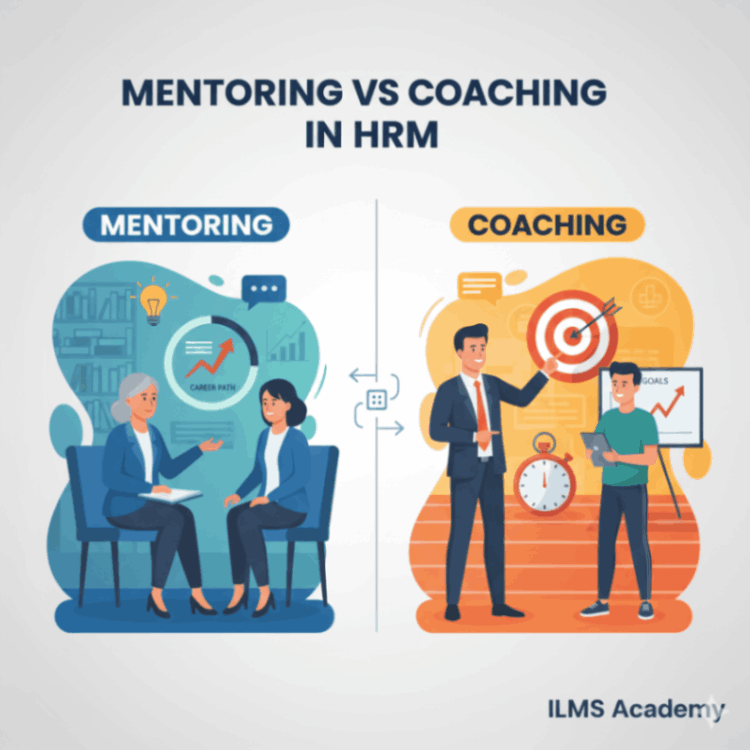
4. Key Differences Between Mentoring and Coaching
Although both mentoring and coaching aim to support personal and professional development, they differ significantly in terms of structure, goals, duration, and methodology. Understanding these differences helps organizations deploy the right approach for specific developmental needs.
4.1 Relationship Dynamics
Mentoring typically involves a long-term, informal relationship where a more experienced individual (the mentor) provides guidance, wisdom, and support to a less experienced mentee. The dynamic is often nurturing and collaborative, built on mutual trust and respect over time. The relationship can be more personal, with the mentor often acting as a role model.
Coaching, on the other hand, is usually a formal, structured engagement focused on achieving specific outcomes. The coach and the coachee may not have a pre-existing relationship. The coach's role is more facilitative, helping the individual discover their own solutions rather than offering direct advice.
4.2 Focus and Goals
Mentoring focuses on broad, long-term career and personal development. It may include guidance on career choices, leadership skills, and navigating organizational culture. The goals are often open-ended and evolve over time based on the mentee’s growth.
Coaching is goal-specific and performance-driven. It targets specific skills, behaviors, or performance outcomes, such as improving leadership communication or achieving quarterly KPIs. The goals are clearly defined at the beginning and are often linked to organizational objectives.
4.3 Structure and Duration
Mentoring tends to be informal and flexible in its structure. Meetings are often scheduled on an as-needed basis, and the duration can last for several months or even years. The emphasis is on building a sustained, developmental relationship.
Coaching is usually time-bound and follows a structured process. It includes scheduled sessions (weekly or bi-weekly), progress assessments, and a formal beginning and end. Coaching engagements often last from three to twelve months, depending on the complexity of the goals.
4.4 Qualifications and Expertise
Mentors are typically seasoned professionals within the same field or organization. They may not have formal training in mentorship but are valued for their experience, insights, and ability to guide others through personal anecdotes and lessons learned.
Coaches often possess certifications from recognized coaching bodies such as the International Coaching Federation (ICF) or the Center for Credentialing & Education (CCE). They are trained in coaching methodologies, active listening, and behavioral change, though they may not necessarily have domain-specific experience.
4.5 Approach: Developmental vs. Performance-Oriented
Mentoring is developmental in nature. It seeks to cultivate the mentee’s overall potential, foster self-awareness, and support career progression. The approach is holistic, often encompassing both personal and professional dimensions.
Coaching is performance-oriented. It focuses on addressing immediate challenges, closing skill gaps, and enhancing specific competencies. The coach uses targeted questioning, feedback, and goal setting to drive measurable improvements in performance.
4.6 Feedback and Measurement of Success
Mentoring feedback is informal and ongoing, based on the mentor’s observations and experiences. Success is often subjective and measured by the mentee’s long-term development, career satisfaction, and confidence levels.
Coaching incorporates regular, structured feedback mechanisms. Success is measured through clear, quantifiable metrics such as improved performance ratings, achievement of specific goals, and feedback from stakeholders. Formal evaluations are often part of the coaching process.
5. When to Use Mentoring vs Coaching in HRM
Deciding whether to implement mentoring or coaching within an organization depends on several factors, including the stage of an employee’s career, organizational goals, and specific development needs. While both strategies are powerful tools for human resource management, understanding when each is most effective helps ensure the right support is provided at the right time.
5.1 Based on Employee Lifecycle (Onboarding, Mid-Career, Leadership)
Mentoring is especially effective during key transitions in an employee’s career. During onboarding, a mentor can help a new hire integrate into the organizational culture, build internal networks, and gain clarity on unwritten norms. The relationship offers emotional support and long-term career guidance, helping the newcomer feel more connected and confident.
For mid-career professionals, mentoring supports broader career exploration, leadership preparation, and work-life balance strategies. At this stage, mentees often seek wisdom and perspective on long-term planning, lateral moves, or preparing for executive roles.
In contrast, coaching becomes more relevant in periods of targeted development or performance challenges. For example, when an employee is promoted into a leadership position, coaching can help refine executive presence, decision-making, and team management skills. The coach provides structured feedback and holds the leader accountable to specific behavioral changes.
Thus, mentoring is ideal for sustained guidance across a career path, while coaching is suited for skill-building and performance enhancement during pivotal moments.
5.2 Organizational Needs and Objectives
The choice between mentoring and coaching is also influenced by what the organization aims to achieve. If the objective is to foster a strong internal culture, improve retention, and develop leadership pipelines, mentoring is a strategic choice. It supports knowledge sharing, succession planning, and employee engagement.
On the other hand, when the goal is to address a specific performance issue, boost productivity, or prepare individuals for immediate challenges, coaching is more appropriate. For instance, if a sales team is underperforming, individual coaching sessions may help identify mindset blocks or refine sales techniques. If an organization is going through change management or adopting a new system, coaching ensures smoother transitions by equipping employees with necessary adaptive skills.
Essentially, mentoring serves broader developmental goals aligned with long-term vision, while coaching delivers rapid, targeted outcomes to meet immediate business needs.
5.3 Individual Development Plans (IDPs)
Individual Development Plans (IDPs) provide a personalized roadmap for employee growth and are a critical context in which the decision between mentoring and coaching is made. If an IDP reveals that an employee seeks career direction, internal networking, or overall confidence building, then mentoring is the ideal tool. It aligns well with aspirations that are long-term and developmental.
In contrast, if the IDP highlights specific competency gaps—such as poor time management, ineffective communication, or weak project leadership—coaching offers a more structured approach to improvement. A coach helps the employee set SMART goals (Specific, Measurable, Achievable, Relevant, Time-bound) and works through targeted exercises to improve those competencies within a defined timeframe.
Ultimately, aligning the mentoring or coaching method with the goals of the IDP ensures that employee development is intentional and impactful.
6. Benefits of Mentoring and Coaching
Mentoring and coaching are instrumental in shaping a positive workplace culture and building high-performing teams. Their impact extends across all levels—employees, mentors/coaches, and the organization.
6.1 For Employees
Employees benefit immensely from mentoring and coaching programs. Mentoring provides emotional support, career guidance, and long-term development opportunities. Mentees gain insights from experienced professionals, which helps them make informed decisions and avoid common career pitfalls. It also enhances confidence, encourages goal setting, and fosters a sense of belonging within the organization.
Coaching, on the other hand, offers employees focused attention on specific performance goals or personal development challenges. A coach helps individuals overcome obstacles, build skills, and improve self-awareness. Coaching empowers employees to take accountability for their growth, identify blind spots, and improve soft skills such as communication, leadership, and conflict resolution.
In both cases, employees feel more valued, supported, and motivated, which enhances job satisfaction and performance.
6.2 For Mentors and Coaches
The act of mentoring or coaching is mutually rewarding. Mentors gain a sense of fulfillment from giving back and playing a role in someone else’s growth journey. They also sharpen their leadership and communication skills, improve their listening abilities, and gain fresh perspectives through interaction with mentees.
- Certificate Course in Labour Laws
- Certificate Course in Drafting of Pleadings
- Certificate Programme in Train The Trainer (TTT) PoSH
- Certificate course in Contract Drafting
- Certificate Course in HRM (Human Resource Management)
- Online Certificate course on RTI (English/हिंदी)
- Guide to setup Startup in India
- HR Analytics Certification Course
Coaches, particularly in professional settings, benefit from expanding their networks, enhancing their reputation, and gaining a deeper understanding of human behavior. Internal coaches within organizations often become more empathetic leaders and stronger team players.
In both roles, individuals often report personal growth, improved emotional intelligence, and greater clarity in their own careers.
6.3 For the Organization
Organizations that invest in mentoring and coaching build a more agile, resilient, and high-performing workforce. These programs foster a learning culture, break down silos, and support knowledge transfer across departments and generations.
Mentoring contributes to leadership development and succession planning. It supports diversity and inclusion initiatives by giving underrepresented employees access to senior leaders. Coaching, meanwhile, improves employee effectiveness, drives innovation, and supports organizational change by equipping employees with critical skills.
When done well, both practices lead to better decision-making, higher team collaboration, and increased adaptability to market changes.
6.4 Impact on Employee Retention and Engagement
One of the most significant benefits of mentoring and coaching is their impact on employee retention and engagement. Employees who receive support through structured development programs are more likely to stay committed to their organizations. They feel recognized, encouraged, and confident in their growth path.
Mentoring builds loyalty by connecting employees to the company culture and leadership, while coaching increases engagement by helping individuals feel successful in their roles. Both methods enhance trust, reduce attrition, and lower the costs of recruitment and training new talent.
7. Challenges in Implementing Mentoring and Coaching Programs
Despite their benefits, mentoring and coaching programs are not without obstacles. Many organizations face difficulties in designing, implementing, and maintaining effective programs.
7.1 Resistance to Change
One of the first hurdles is resistance from employees or leadership. Some individuals may view these programs as unnecessary or fear exposure of their weaknesses. Others may be skeptical of the outcomes or reluctant to take time out of their daily work to participate.
Overcoming this resistance requires strong communication, clear value propositions, and visible endorsement from top management.
7.2 Misalignment of Expectations
When the goals of mentors, coaches, and participants are not clearly defined, mismatched expectations can arise. A mentor may expect a passive mentee, while the mentee seeks proactive guidance. Similarly, a coach might push for behavioral change while the coachee expects advice rather than introspection.
To avoid confusion, it is essential to outline roles, responsibilities, and desired outcomes at the beginning of the relationship.
7.3 Lack of Training or Infrastructure
Effective mentoring and coaching require specific skills such as active listening, empathy, goal-setting, and feedback delivery. Without adequate training, mentors and coaches may struggle to provide the support needed.
Additionally, organizations may lack the technological infrastructure to match pairs, monitor progress, or gather feedback. The absence of structured frameworks can lead to inconsistency and limited impact.
7.4 Time and Resource Constraints
Time commitment is a practical challenge. Both mentors and coaches often juggle multiple responsibilities and may find it difficult to prioritize development sessions. Employees, too, may be overwhelmed with workloads and unable to engage meaningfully in the process.
Furthermore, allocating budgets for external coaches or building internal coaching teams can be resource-intensive, especially for small or mid-sized organizations.
7.5 Confidentiality and Trust Issues
Trust is the foundation of both mentoring and coaching relationships. If participants fear that their conversations are not confidential, they may withhold important information, reducing the program’s effectiveness.
Organizations must create a safe, confidential environment and communicate clearly about data privacy, professional boundaries, and the independence of the mentoring or coaching relationship.
8. Best Practices for Effective Mentoring and Coaching
Implementing mentoring and coaching programs with care and strategy is essential to ensure they deliver meaningful impact. The following best practices can help HR leaders and organizations establish successful, sustainable initiatives.
8.1 Establishing Clear Objectives and Guidelines
The foundation of any effective mentoring or coaching program lies in defining clear goals. Organizations should outline what they aim to achieve—be it leadership development, performance improvement, diversity and inclusion, or employee engagement.
Once objectives are set, clear guidelines should follow. This includes defining the scope of mentoring or coaching relationships, the frequency of meetings, expected outcomes, and boundaries. Setting these expectations helps participants understand their roles and minimizes confusion or mismatched goals.
8.2 Training Mentors and Coaches
Being a mentor or coach requires more than subject matter expertise—it demands strong interpersonal skills, emotional intelligence, and a structured approach to development. Therefore, organizations must invest in training mentors and coaches.
This training should cover active listening, giving constructive feedback, maintaining confidentiality, managing difficult conversations, and guiding goal-setting processes. For internal coaches or mentors, workshops and certification programs can be invaluable in equipping them with the tools necessary to support others effectively.
8.3 Regular Monitoring and Feedback
Ongoing monitoring is essential to ensure mentoring and coaching relationships remain productive. HR teams should periodically check in to gather feedback from both participants and identify challenges early.
This feedback loop enables program managers to provide additional support, realign mismatched pairs, or offer resources where needed. Regular progress tracking—whether through surveys, review meetings, or digital platforms—also helps assess whether the program is on track to meet its objectives.
8.4 Ensuring Confidentiality and Trust
Trust is critical in any developmental relationship. Participants must feel safe discussing challenges, goals, and personal growth without fear of judgment or repercussions. Organizations should reinforce strict confidentiality policies and provide training on ethical conduct.
Mentors and coaches should be seen as allies, not evaluators. A neutral, non-judgmental environment fosters honesty, introspection, and deeper learning—essential elements for success.
8.5 Evaluating Outcomes and ROI
To justify investment and continuously improve, organizations must measure the impact of their mentoring and coaching initiatives. This can include both qualitative and quantitative data—such as participant feedback, improvements in performance reviews, promotion rates, employee satisfaction, and retention metrics.
Additionally, tracking how these programs support broader HR goals (e.g., leadership pipeline strength or DEI targets) can help demonstrate ROI. Using data analytics and impact assessments enables organizations to evolve their programs and maintain executive support.
9. Role of Technology in Mentoring and Coaching
As workplaces become increasingly digital and dispersed, technology has emerged as a powerful enabler of mentoring and coaching. From matching platforms to performance analytics, tech tools help streamline and enhance the experience for all stakeholders.
9.1 Digital Platforms and Tools
Modern mentoring and coaching programs often rely on digital platforms that manage the entire process—matching participants, scheduling meetings, tracking progress, and capturing feedback. These tools use algorithms to pair individuals based on goals, preferences, or competencies, making the matching process more effective and inclusive.
Platforms also provide templates for session agendas, communication channels, and centralized dashboards for administrators to oversee the program’s status. Some well-known tools include MentorcliQ, Chronus, CoachHub, and BetterUp.
9.2 AI and Data-Driven Insights
Artificial Intelligence (AI) is transforming how coaching and mentoring are delivered. AI-powered tools can analyze behavior, engagement patterns, and feedback to provide personalized learning paths, recommend content, and offer predictive analytics.
For instance, AI can highlight trends in participant feedback, flag disengaged pairs, or suggest conversation prompts based on past interactions. Data-driven insights allow HR teams to optimize program design, identify skill gaps, and tailor development efforts to individual and organizational needs.
9.3 Virtual Mentoring and Coaching in Hybrid Workplaces
With remote and hybrid work becoming the norm, virtual mentoring and coaching have gained prominence. Video conferencing tools, collaboration platforms, and mobile apps allow participants to connect regardless of location.
Virtual relationships offer flexibility, increase access to diverse mentors and coaches, and expand opportunities for cross-functional or cross-geographical engagement. However, they also require intentional effort to build rapport and maintain consistency, making digital literacy and virtual etiquette critical skills for participants.
- Certificate Course in Labour Laws
- Certificate Course in Drafting of Pleadings
- Certificate Programme in Train The Trainer (TTT) PoSH
- Certificate course in Contract Drafting
- Certificate Course in HRM (Human Resource Management)
- Online Certificate course on RTI (English/हिंदी)
- Guide to setup Startup in India
- HR Analytics Certification Course
Technology not only enables scalability but also helps democratize development opportunities—ensuring employees at all levels and locations can benefit from structured support.
10. Case Studies
Real-world examples offer invaluable insights into how mentoring and coaching programs operate in practice. These case studies illustrate the impact of such initiatives across different organizational contexts and highlight best practices that others can emulate.
10.1 Successful Mentoring Programs (e.g., Google, Deloitte)
Google has long been recognized for fostering a strong mentorship culture. Rather than assigning mentors through top-down processes, Google allows employees to choose their mentors based on mutual interests, career aspirations, and professional backgrounds. Their internal platforms and tools facilitate this matching process. The company integrates mentoring into leadership development programs and diversity efforts, ensuring underrepresented groups receive targeted support. One notable outcome has been increased employee engagement and retention, especially among new hires and junior staff.
Deloitte has embedded formal mentoring as part of its talent development strategy. The firm operates a structured mentoring framework where high-potential employees are paired with senior leaders. These relationships are goal-oriented, focused on succession planning, career guidance, and inclusion. Deloitte also uses data analytics to evaluate the impact of its mentoring initiatives and refine them continually. As a result, mentoring has become integral to leadership development and a key driver of organizational success.
10.2 Coaching Success Stories (e.g., IBM, GE)
IBM implemented a global coaching program to support leadership transformation across its distributed teams. Executive coaching was initially introduced for senior leaders, helping them navigate change, build agility, and foster innovation. Over time, IBM expanded access to coaching through a mix of internal and external coaches, supplemented by digital coaching platforms. A notable success was improved cross-cultural leadership competencies and employee satisfaction, particularly during organizational restructuring phases.
General Electric (GE) has a long-standing reputation for investing in coaching as part of its management development programs. GE’s Crotonville leadership institute incorporates personalized coaching into many of its learning tracks. Coaches help participants identify strengths, overcome leadership blind spots, and translate learning into action. Feedback mechanisms are tightly integrated, allowing GE to track development outcomes. The coaching program has been instrumental in building a resilient leadership pipeline and driving cultural transformation.
10.3 Comparative Analysis and Lessons Learned
Comparing these case studies reveals key takeaways for other organizations:
- Flexibility vs. Structure: While Google thrives on informal, self-initiated mentoring, Deloitte’s success is tied to structured, goal-driven relationships. Organizations must choose the right model based on their culture and objectives.
- Scalability through Technology: IBM’s use of digital coaching tools demonstrates how technology can scale personalized development across geographies.
- Integration into Talent Strategy: Whether it’s GE aligning coaching with leadership programs or Deloitte linking mentoring to succession planning, integrating these initiatives into broader HRM strategies significantly enhances their impact.
- Measurement and Feedback: All successful programs share a commitment to evaluation—tracking participation, engagement, and outcomes to ensure continuous improvement.
11. Global Perspectives and Cultural Considerations
As organizations expand their operations across borders, mentoring and coaching initiatives must adapt to diverse cultural and regional contexts. Recognizing and respecting these differences is crucial for the effectiveness of global programs.
11.1 Differences in Approaches Across Regions
Cultural norms significantly influence how mentoring and coaching are perceived and practiced. For instance, in Western cultures such as the United States or the UK, coaching and mentoring often emphasize open dialogue, direct feedback, and individual development. In contrast, in Asian cultures like Japan or India, hierarchical norms may lead to more reserved interactions and a preference for senior-led guidance.
In European countries, coaching tends to be widely accepted in professional development, especially in Northern and Western Europe, where leadership coaching and work-life balance are emphasized. Meanwhile, Latin American regions may blend mentoring with strong relational values, where trust-building and personal rapport are given significant importance.
11.2 Cross-Cultural Mentoring and Coaching
Cross-cultural relationships—where the mentor/coach and mentee/coachee come from different cultural backgrounds—present both challenges and opportunities. These relationships require heightened cultural sensitivity, awareness of communication styles, and mutual respect.
For example, misunderstandings may arise from differences in how feedback is delivered. What may be seen as constructive in one culture might be interpreted as harsh or disrespectful in another. Training participants on cultural intelligence and equipping them with inclusive communication techniques can help overcome these barriers.
Organizations must also consider language preferences, time zone differences, and regional HR practices when designing cross-cultural programs. Tailoring the program to regional realities while maintaining a consistent global vision is key.
11.3 Adapting Programs for Global Workforces
To ensure inclusivity and relevance, global companies must customize their mentoring and coaching programs based on local contexts without diluting their strategic intent. This includes:
- Offering multilingual resources and culturally adapted training materials.
- Providing flexibility in matching processes to accommodate regional preferences.
- Recognizing local career progression patterns, which may differ from Western models.
- Involving regional HR teams in implementation to ensure better alignment with local employee needs and compliance standards.
Virtual mentoring and AI-driven platforms are increasingly facilitating this customization at scale, enabling global organizations to offer consistent yet context-sensitive development opportunities across their workforces.
12. Future Trends in Mentoring and Coaching in HRM
As the workforce evolves and technology continues to transform HR practices, mentoring and coaching are also adapting to meet emerging needs. The future of these development tools lies in greater personalization, cultural integration, and technological enhancement.
12.1 Personalized Learning and Development Paths
Traditional one-size-fits-all programs are being replaced by customized development paths tailored to individual goals, competencies, and career trajectories. Leveraging data from performance reviews, employee assessments, and learning management systems (LMS), HR teams can now match employees with mentors or coaches based on skill gaps, aspirations, and behavioral tendencies.
AI-enabled platforms are also playing a major role by offering personalized suggestions for coaching topics, mentor matches, and learning resources. This level of personalization ensures greater relevance and effectiveness, making coaching and mentoring not just support mechanisms, but strategic accelerators for individual growth.
12.2 Coaching Culture in Organizations
More companies are moving beyond isolated coaching sessions toward embedding coaching into their organizational culture. A coaching culture emphasizes continuous feedback, open communication, and developmental conversations at all levels—from senior executives to frontline employees.
Managers are being trained as internal coaches, equipped with coaching techniques to guide, support, and develop their team members. This approach democratizes coaching, making it a regular part of performance discussions, team development, and conflict resolution. Organizations that cultivate this kind of environment often report higher levels of engagement, trust, and innovation.
12.3 Integration with Talent Management Systems
The future of mentoring and coaching lies in their seamless integration with broader talent management frameworks. This means embedding coaching and mentoring into workflows such as:
- Succession planning and leadership pipeline development
- Learning and development strategies
- Performance management and reviews
- Career pathing and promotions
By embedding these practices within digital HR ecosystems, such as HCM (Human Capital Management) platforms and Talent Development suites, organizations can ensure consistency, scalability, and data-driven insights. This integration enables HR teams to measure impact, identify high-potential talent early, and continuously optimize development strategies.
13. Conclusion
13.1 Summary of Key Insights
Mentoring and coaching are two of the most impactful tools for employee development in modern Human Resource Management. While mentoring emphasizes long-term personal and professional growth through guidance and experience-sharing, coaching focuses on short-term, goal-oriented performance enhancement. Both approaches, when implemented strategically, support talent retention, improve employee engagement, and nurture future leaders.
We’ve explored their definitions, differences, benefits, implementation challenges, and emerging trends. From case studies to global perspectives, it’s clear that both mentoring and coaching must be tailored to organizational context and employee needs to be truly effective.
13.2 Strategic Importance for HR Professionals
For HR professionals, the ability to design, deploy, and sustain effective mentoring and coaching programs is no longer a luxury—it's a necessity. These tools are critical in addressing skill gaps, managing change, supporting diversity, and aligning individual development with organizational goals.
By cultivating a mentoring and coaching culture, HR leaders empower employees to take ownership of their growth while enabling managers to become proactive developers of talent.
13.3 Final Thoughts and Recommendations
- Adopt a hybrid model: Blend formal and informal mentoring/coaching for flexibility and inclusiveness.
- Leverage technology: Use AI and analytics for better matching, tracking, and impact measurement.
- Invest in training: Equip mentors and coaches with the skills needed to guide others effectively.
- Focus on trust and confidentiality: Create safe environments that encourage honest dialogue and reflection.
- Evaluate and evolve: Regularly assess program effectiveness and refine strategies based on feedback and organizational shifts.
As the future of work continues to unfold, mentoring and coaching will remain indispensable pillars of workforce development—helping individuals reach their potential and organizations achieve sustainable growth.
Frequently Asked Questions (FAQ)
1. What is the main difference between mentoring and coaching in HRM?
The main difference lies in their focus and approach. Mentoring is typically a long-term relationship focused on overall personal and professional development, often guided by a more experienced mentor. Coaching, on the other hand, is usually short-term, goal-oriented, and performance-driven, facilitated by a trained coach who may or may not have industry-specific experience.
2. Can mentoring and coaching be used together in an organization?
Absolutely. In fact, combining both approaches creates a more comprehensive development ecosystem. For example, new hires can benefit from mentoring during onboarding, while mid-career professionals might use coaching to improve leadership or performance. Many companies integrate both to address different stages of the employee lifecycle.
3. Who should be a mentor or a coach within an organization?
- Mentors are often senior employees or subject matter experts with significant experience who can offer guidance and insights based on their career journey.
- Coaches can be either internal HR professionals trained in coaching techniques or external certified coaches with expertise in personal and professional development.
4. Is coaching more effective than mentoring?
Neither is inherently more effective; it depends on the context and objectives. Coaching is more suitable for specific goals like improving performance or acquiring new skills quickly. Mentoring is more effective for holistic, long-term development, including leadership grooming, cultural integration, and navigating complex organizational dynamics.
5. What are the signs of a successful mentoring or coaching relationship?
Key signs include:
- Mutual trust and open communication
- Clear, agreed-upon goals
- Regular progress check-ins
- Observable improvement in skills, confidence, and performance
- Positive feedback from both parties
6. How long should a coaching or mentoring program last?
There’s no fixed duration:
- Mentoring relationships may span 6 months to several years, depending on goals.
- Coaching engagements typically last a few weeks to several months, often structured around specific outcomes or performance cycles.
7. What tools or platforms can assist in mentoring and coaching?
Modern HR tech offers several platforms such as:
- Mentoring tools: Together, MentorcliQ, Chronus
- Coaching platforms: BetterUp, CoachHub, Torch These tools help with matching, scheduling, tracking progress, and analytics to measure impact.
8. How do organizations measure the success of mentoring or coaching programs?
Success can be measured through:
- Employee feedback and satisfaction
- Improvements in performance appraisals
- Promotion or retention rates
- Achievement of predefined developmental goals
- ROI analysis through HR metrics like productivity and engagement
9. Are mentoring and coaching confidential?
Yes, confidentiality is crucial for building trust in both mentoring and coaching relationships. Information shared during sessions should be protected, with clear boundaries defined at the beginning of the engagement.
10. What are common challenges in implementing these programs?
Common challenges include:
- Lack of alignment between goals and expectations
- Poor mentor/coach selection
- Resistance from employees or managers
- Time constraints and scheduling conflicts
- Lack of structured frameworks or training
- Certificate Course in Labour Laws
- Certificate Course in Drafting of Pleadings
- Certificate Programme in Train The Trainer (TTT) PoSH
- Certificate course in Contract Drafting
- Certificate Course in HRM (Human Resource Management)
- Online Certificate course on RTI (English/हिंदी)
- Guide to setup Startup in India
- HR Analytics Certification Course