1. Introduction
Job performance is a cornerstone of organizational success. It refers to how well an individual fulfills the responsibilities and expectations of their role within a company. In today’s competitive and rapidly changing business environment, maintaining high levels of job performance is essential not only for individual career growth but also for the collective progress of an organization. Whether it's achieving sales targets, maintaining high customer satisfaction, or driving innovation, effective job performance drives key outcomes that determine an organization's market position and sustainability.
Despite its importance, job performance is a multifaceted concept influenced by a wide range of factors. These influencers can be internal, such as an employee's motivation, skills, or emotional intelligence, or external, such as leadership styles, organizational culture, or technological tools. As workplaces become more complex and interconnected, understanding these influences becomes critical for human resource managers, team leaders, and even employees themselves.
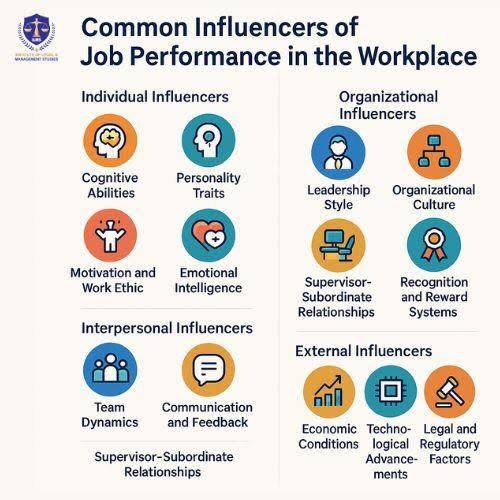
This article explores the most common influencers of job performance in the workplace. By examining the individual, organizational, interpersonal, and external factors that impact how people perform at work, we can develop a more holistic understanding of what drives productivity, satisfaction, and long-term success. The aim is to provide insights into not just what affects job performance, but how these factors interact and how they can be managed to foster a thriving work environment.
2. Understanding Job Performance
To explore the influencers of job performance effectively, it is essential to first understand what job performance means in practical terms. Job performance generally refers to the behaviors and outcomes that are expected of employees as part of their role. It encompasses not only the completion of assigned tasks but also how those tasks are approached, the quality of output, and the attitude maintained throughout the work process. This performance is usually evaluated by supervisors or managers through various formal or informal methods, which may include performance appraisals, feedback sessions, and key performance indicators (KPIs).
However, job performance is not a monolithic concept. It includes several dimensions such as task performance, contextual performance, adaptive performance, and counterproductive work behavior. Task performance refers to the core duties specific to a job role—like a data analyst producing reports or a teacher delivering lessons. Contextual performance involves behaviors that contribute to the organizational environment, such as helping coworkers or showing initiative. Adaptive performance highlights the ability to cope with change, which is increasingly critical in dynamic industries. On the other hand, counterproductive work behavior includes actions that harm the organization, such as tardiness, lack of cooperation, or intentional errors.
Job performance is often seen as the output of the dynamic interplay between an employee's abilities, motivation, and environment. High performance does not result from talent alone; it requires alignment between personal competencies and organizational support systems. Therefore, any serious analysis of job performance must go beyond measuring outcomes and must instead delve into the contributing factors that drive or inhibit performance levels. This understanding sets the stage for identifying what truly influences how employees perform and how organizations can intervene to support continuous improvement.
3. Individual Influencers
Individual influencers are personal attributes and characteristics that significantly affect how an employee performs at work. While organizational structures and external factors certainly shape the work environment, the core of job performance lies within the person doing the job. These internal factors—ranging from cognitive abilities to emotional intelligence—play a foundational role in determining an employee's capacity to meet expectations, adapt to challenges, and contribute meaningfully to organizational goals. Understanding these influencers allows managers to align tasks with the right talent and tailor developmental strategies to support individual growth.
3.1. Cognitive Abilities
Cognitive abilities refer to an individual’s mental capabilities related to learning, reasoning, problem-solving, and decision-making. These abilities are among the most well-researched predictors of job performance, particularly for complex tasks. Employees with high cognitive abilities tend to grasp new concepts quickly, adapt to change more effectively, and handle multiple variables in problem-solving situations. These skills become especially critical in roles that require analytical thinking, planning, and strategic decision-making.
However, cognitive ability alone does not guarantee high performance. It must be paired with the right motivation and environment. A highly intelligent individual may still underperform if they are disengaged, poorly managed, or placed in an ill-fitting role. Moreover, cognitive demands vary by job—while high levels may be necessary for technical roles, other positions may prioritize interpersonal or physical skills more heavily.
3.2. Personality Traits
Personality traits influence not just how individuals behave at work but also how they interact with others, handle stress, and respond to feedback. The Five-Factor Model—comprising openness to experience, conscientiousness, extraversion, agreeableness, and neuroticism—is commonly used to understand personality's impact on performance. Among these, conscientiousness has shown the strongest correlation with job performance across various roles and industries. Individuals who score high on this trait tend to be organized, responsible, and dependable—qualities that are universally valuable in any workplace.
Openness to experience often predicts success in creative or innovative roles, while extraversion may benefit individuals in sales or leadership positions that require social engagement. Agreeableness can enhance teamwork and cooperation, but extremely agreeable individuals may struggle with assertiveness. On the other hand, high levels of neuroticism—often associated with emotional instability—can negatively impact performance by increasing stress, reducing focus, and impairing decision-making. While personality traits are relatively stable over time, awareness of these characteristics can help organizations assign roles where natural dispositions align with job requirements.
3.3. Motivation and Work Ethic
Motivation is the internal drive that propels individuals to take action and sustain effort toward achieving goals. It is a dynamic force influenced by both intrinsic factors—such as passion, curiosity, and the desire for self-fulfillment—and extrinsic factors, like financial rewards, promotions, or recognition. High motivation enhances job performance by increasing persistence, creativity, and the willingness to go beyond minimum expectations.
Closely related is work ethic, which refers to a set of values centered around diligence, responsibility, and commitment to doing one’s best. Employees with a strong work ethic typically show up on time, meet deadlines, and demonstrate resilience in the face of obstacles. While motivation can fluctuate depending on context and incentives, work ethic is more stable and often rooted in personal upbringing or cultural values. Together, motivation and work ethic are powerful predictors of how consistently and effectively someone will perform, especially when challenges arise.
3.4. Emotional Intelligence
Emotional intelligence (EI) is the ability to perceive, understand, manage, and regulate emotions—both one’s own and those of others. In today's collaborative and often emotionally complex workplaces, EI has become a crucial predictor of success. Employees with high emotional intelligence can navigate interpersonal relationships more effectively, manage workplace stress, and respond constructively to feedback. They are also more likely to demonstrate empathy, patience, and adaptability.
Unlike IQ, which is relatively fixed, EI can be developed over time through self-awareness, mindfulness, and coaching. Leaders and team members with high EI contribute to healthier workplace dynamics, reduced conflict, and greater cooperation. In performance-driven environments, EI helps individuals remain composed under pressure, respond diplomatically to challenges, and foster a supportive atmosphere that boosts both individual and team productivity.
3.5. Physical and Mental Health
An individual’s physical and mental health significantly impacts their ability to perform consistently and effectively. Good physical health supports stamina, concentration, and energy levels, which are necessary for productivity, especially in physically demanding or long-hour roles. Conversely, health issues—such as chronic pain, fatigue, or frequent illness—can limit an employee’s ability to stay focused, meet deadlines, or participate fully in team activities.
Mental health plays an equally critical role. Stress, anxiety, burnout, and depression can severely undermine job performance by affecting memory, focus, motivation, and interpersonal relationships. Organizations are increasingly recognizing the need to support employee well-being through health benefits, wellness programs, mental health days, and a non-judgmental work culture. When employees feel mentally and physically well, they are more engaged, resilient, and capable of handling the demands of their roles.
4. Organizational Influencers
While individual characteristics play a foundational role in shaping job performance, the organizational environment often determines how those traits are expressed and sustained. The internal ecosystem of a workplace—its leadership, culture, job structures, and support mechanisms—can either elevate or hinder employee performance. A well-structured organization creates clarity, fosters engagement, and aligns personal goals with organizational objectives. On the contrary, unclear expectations, poor leadership, or lack of resources can frustrate even the most capable employees. Thus, understanding organizational influencers is key to building a high-performance workforce.
4.1. Leadership Style
Leadership is one of the most influential forces within any organization. A leader’s style—whether autocratic, democratic, transformational, or laissez-faire—directly affects employee motivation, engagement, and productivity. Transformational leaders, who inspire and empower their team through vision, empathy, and support, often create a climate of trust and innovation. Such leadership not only enhances morale but also encourages individuals to exceed expectations and take ownership of their responsibilities.
On the other hand, autocratic leaders, who rely on control and authority, may deliver short-term results but often stifle creativity and intrinsic motivation in the long run. Similarly, a laissez-faire approach, where leaders are hands-off and disengaged, can lead to confusion, lack of direction, and poor accountability. The ideal leadership style often depends on the team’s maturity, the task’s complexity, and the organizational culture, but in all cases, leaders who communicate clearly, provide feedback, and demonstrate empathy are more likely to foster high performance.
4.2. Organizational Culture
Organizational culture refers to the shared values, beliefs, and behavioral norms that shape how work is done within a company. It influences everything from how decisions are made to how employees interact with one another. A culture that promotes trust, inclusion, innovation, and collaboration is far more likely to inspire high performance than one characterized by fear, rigidity, or favoritism.
Culture also affects employees' sense of belonging and purpose. In organizations where the culture aligns with individual values, employees are more likely to be motivated, loyal, and productive. Conversely, a toxic or misaligned culture can lead to disengagement, high turnover, and poor job performance. Therefore, cultivating a healthy culture—through open communication, respect, transparency, and shared vision—is essential for sustainable success.
4.3. Job Design and Role Clarity
How a job is structured—its tasks, responsibilities, autonomy, and purpose—can greatly influence an employee’s motivation and effectiveness. Good job design ensures that roles are not only aligned with organizational goals but also provide a balance of challenge and skill development for the individual. Characteristics like task variety, significance, and autonomy help foster engagement and satisfaction, which in turn boost performance.
Equally important is role clarity. Employees must clearly understand their duties, expectations, performance standards, and reporting lines. Ambiguity in roles can lead to confusion, overlapping responsibilities, missed deadlines, and even interpersonal conflict. When individuals are clear about what is expected and how their work contributes to broader organizational objectives, they are more likely to feel accountable, confident, and committed.
4.4. Work Environment and Resources
The physical and psychological environment in which employees operate has a direct impact on their productivity and satisfaction. A clean, well-lit, ergonomically designed workspace contributes to focus, safety, and comfort. Factors such as noise levels, temperature, access to rest areas, and even aesthetic appeal influence how easily individuals can concentrate and perform their tasks.
Beyond the physical setting, access to adequate tools and resources—like up-to-date technology, software, training, and support staff—is equally critical. A lack of necessary resources can delay work, increase frustration, and reduce efficiency. Conversely, when employees have what they need to succeed and face minimal logistical barriers, they can dedicate more time and energy to meaningful, value-adding tasks. The presence of psychological safety—a sense that one can speak up, ask for help, or admit mistakes without fear—is another crucial component of a healthy work environment.
4.5. Recognition and Reward Systems
Recognition and rewards are powerful motivators that reinforce positive behaviors and signal that employees’ efforts are valued. Whether formal (such as bonuses and promotions) or informal (like verbal appreciation or thank-you notes), recognition contributes to a culture of encouragement and appreciation. Employees who feel recognized are more likely to stay committed, exceed expectations, and advocate for the organization.
A fair and transparent reward system also promotes trust and equity. When rewards are perceived as biased or inconsistent, morale declines and resentment can spread. Effective reward systems are tailored to both organizational goals and individual preferences, recognizing that different people are motivated by different incentives—some may value financial bonuses, while others may be more driven by development opportunities, flexible work arrangements, or public acknowledgment. Ultimately, when employees see a clear connection between their efforts and rewards, performance naturally improves.
5. Interpersonal Influencers
- Certificate Course in Labour Laws
- Certificate Course in Drafting of Pleadings
- Certificate Programme in Train The Trainer (TTT) PoSH
- Certificate course in Contract Drafting
- Certificate Course in HRM (Human Resource Management)
- Online Certificate course on RTI (English/हिंदी)
- Guide to setup Startup in India
- HR Analytics Certification Course
In any organizational setting, human interaction is inevitable—and often, it is these interactions that significantly impact job performance. Interpersonal influencers refer to the quality of relationships, communication, and collaboration that occur within teams and between individuals. Even the most competent employees may struggle to perform if interpersonal dynamics are strained, whereas a supportive and communicative work environment can elevate overall productivity and morale. These influencers are particularly important in collaborative environments where teamwork and cohesion are necessary for success. Understanding how interpersonal factors shape individual and collective performance helps organizations foster healthier, more productive work cultures.
5.1. Team Dynamics
Team dynamics describe the psychological and behavioral forces that influence how team members interact, cooperate, and perform together. These dynamics include the balance of roles, interpersonal trust, decision-making processes, and the level of mutual respect among members. A team with positive dynamics typically communicates openly, supports one another, resolves conflicts constructively, and shares responsibilities efficiently. Such teams tend to exhibit higher levels of motivation, innovation, and productivity.
Conversely, poor team dynamics—such as dominance by certain individuals, lack of contribution from others, internal competition, or unresolved tensions—can impede performance. Misaligned goals, unequal workloads, or lack of clarity in roles can further exacerbate dysfunction. Effective team dynamics are cultivated through trust-building activities, clear communication, shared goals, and consistent feedback. Organizations that invest in team development are more likely to foster high-performing and resilient workgroups.
5.2. Communication and Feedback
Effective communication is the foundation of any successful workplace. It ensures that information flows accurately, decisions are made efficiently, and employees remain informed and aligned with organizational goals. Communication can be formal or informal, verbal or written, but its impact on performance remains constant. When messages are clear, timely, and respectful, they minimize misunderstandings and enable smooth operations.
Feedback, as a subset of communication, plays a critical role in guiding employee behavior. Constructive feedback helps individuals understand their strengths and areas for improvement, fostering continuous growth. When delivered regularly and respectfully, feedback motivates employees to perform better and feel more connected to their work. However, poor or absent communication can create confusion, frustration, and a sense of disconnection. To enhance job performance, organizations must prioritize open channels of communication and a culture where feedback—both positive and corrective—is encouraged and normalized.
5.3. Supervisor-Subordinate Relationships
The quality of the relationship between supervisors and their subordinates is a key determinant of employee performance. Supervisors serve as the immediate point of contact for guidance, support, and evaluation. A positive, trust-based relationship fosters openness, loyalty, and motivation. Employees are more likely to seek help, share ideas, and accept feedback when they feel supported and respected by their managers.
Supervisors who demonstrate empathy, fairness, and transparency contribute to higher job satisfaction and engagement among their team members. Conversely, strained relationships marked by micromanagement, favoritism, or lack of support can diminish morale and increase stress, leading to poor performance and higher turnover. Effective supervisors balance authority with approachability and are skilled in coaching, mentoring, and conflict resolution. Their ability to build rapport with subordinates directly influences the latter’s productivity and commitment.
5.4. Workplace Conflict and Collaboration
Conflict is an inevitable part of workplace life, but its management determines whether it becomes a destructive force or a catalyst for growth. Healthy conflict—centered around ideas and strategies—can lead to innovation and improved decision-making. When handled constructively, conflict allows employees to express differing perspectives, challenge assumptions, and arrive at better solutions. However, interpersonal conflict rooted in personality clashes, competition, or miscommunication can quickly deteriorate into resentment, disengagement, and reduced performance.
Collaboration, on the other hand, thrives in environments where respect, inclusion, and shared purpose prevail. It involves not just working together, but actively valuing diverse skills and viewpoints. Effective collaboration enhances problem-solving, increases efficiency, and builds social cohesion within teams. Organizations that provide conflict resolution training, encourage collaborative problem-solving, and promote mutual respect are more likely to see high levels of engagement and productivity, even in challenging situations.
6. External Influencers
While internal factors like personal traits, team dynamics, and organizational culture are significant in shaping job performance, external forces also play a crucial role. These are conditions and elements beyond an organization’s direct control, yet they exert a powerful influence on employee behavior, motivation, and output. From shifting economic trends to evolving technological landscapes, these external influencers often require organizations and individuals to adapt rapidly. Understanding and responding proactively to such external dynamics can make the difference between stagnation and sustainable performance growth.
6.1. Economic Conditions
Economic stability or volatility has a direct impact on organizational resources, strategic priorities, and employee morale. During economic booms, companies may experience increased consumer demand, higher investments, and more opportunities for expansion. This typically leads to greater job security, higher compensation, and enhanced employee motivation and performance. In contrast, economic downturns often trigger budget cuts, hiring freezes, layoffs, and increased workloads, leading to stress, job insecurity, and performance declines.
Employees tend to feel more motivated and confident when they perceive stability and growth in the broader economy. On the other hand, uncertainty and financial stress may cause distraction, low engagement, and higher absenteeism. Employers who communicate transparently during economic fluctuations and support their workforce through benefits and mental health resources can help mitigate the negative effects of economic stressors on performance.
6.2. Technological Advancements
Technology continues to transform the nature of work, redefining job roles, workflows, and performance expectations. From automation and artificial intelligence to collaborative software and data analytics, technological tools are integral to enhancing productivity and accuracy. Employees who are tech-savvy or trained to adapt quickly often show higher efficiency and innovation in their performance.
However, rapid technological changes can also induce anxiety, especially among employees who lack the necessary skills or fear being replaced by machines. The digital divide—differences in technological access and literacy—can exacerbate disparities in performance. Organizations must invest in upskilling programs and ensure that their workforce is comfortable and competent in leveraging new tools. When effectively integrated, technology acts as a performance enabler, streamlining operations and empowering employees to deliver better results.
6.3. Social and Cultural Expectations
Societal norms and cultural values shape employee attitudes, work ethics, and behavioral expectations in the workplace. For instance, in cultures where collectivism is emphasized, teamwork and harmony may be prioritized over individual achievements. Conversely, in more individualistic societies, personal initiative and competition may be viewed as indicators of performance.
Diversity and inclusion, gender equity, and work-life balance have become increasingly important in today’s workplaces due to evolving societal expectations. Employees now seek environments that are respectful of personal identity, inclusive in decision-making, and supportive of holistic well-being. Organizations that align their policies and practices with these cultural shifts often see enhanced engagement and loyalty, which in turn boost overall job performance.
6.4. Legal and Regulatory Factors
Laws and regulations shape the operational boundaries within which organizations function and directly influence job performance. Employment laws governing wages, working hours, discrimination, occupational safety, and labor rights play a central role in protecting employee welfare and promoting fair treatment. Non-compliance not only leads to legal penalties but also damages employee trust and morale.
Regulatory changes may also necessitate shifts in business operations, requiring employees to adapt to new policies, procedures, or compliance standards. For example, data protection laws like the GDPR have redefined how employees handle sensitive information. Training in legal compliance, ethical conduct, and risk management is crucial to ensure that employees perform within legal boundaries while maintaining productivity and integrity.
7. Training and Development as a Performance Enhancer
Training and development are among the most strategic investments an organization can make to boost individual and collective performance. Employees who receive proper training are more competent, confident, and motivated in their roles. Training bridges the gap between current capabilities and job requirements, ensuring that employees remain relevant in a constantly evolving work environment.
Development, which focuses on long-term growth and career advancement, further enhances performance by aligning personal goals with organizational objectives. When employees see a clear path for progression and receive support through mentorship, workshops, or academic programs, they are more likely to stay engaged and perform consistently well.
Moreover, regular training fosters a culture of learning, adaptability, and innovation. Whether it's onboarding for new hires, reskilling for technological adoption, or leadership development for high-potential staff, targeted training initiatives contribute to sustained high performance. Organizations that prioritize learning and growth are better positioned to retain talent and maintain a competitive edge.
8. Work-Life Balance and Its Impact on Performance
Work-life balance refers to the equilibrium between an individual's professional responsibilities and personal life. As the boundary between work and home becomes increasingly blurred—especially with the rise of remote and hybrid work—maintaining this balance has never been more crucial. Employees who can manage both spheres of their lives effectively are generally more satisfied, engaged, and productive at work.
When work-life balance is neglected, employees may experience stress, burnout, and declining physical and mental health. Prolonged work hours, constant connectivity through digital devices, and high job demands often leave little room for rest and personal fulfillment. This leads to fatigue, irritability, poor concentration, and eventually, a decline in job performance.
Conversely, when organizations encourage a healthy work-life balance through flexible schedules, wellness programs, and supportive leave policies, employees are more likely to thrive. They return to work recharged, more focused, and with a greater sense of loyalty and commitment. Work-life balance also reduces turnover, absenteeism, and workplace conflict, all of which indirectly influence performance levels.
Promoting a culture where boundaries are respected and where employees are trusted to manage their time not only boosts individual well-being but also strengthens team cohesion and organizational performance. In modern workplaces, balance is no longer a luxury—it is a necessity for sustainable productivity.
9. Measuring and Evaluating Job Performance
Understanding what drives performance is incomplete without knowing how to measure it. Accurate and fair evaluation methods ensure that efforts are recognized, areas for improvement are identified, and organizational goals are met. Effective performance measurement serves as a feedback mechanism that supports growth, accountability, and motivation.
Traditional evaluation methods often rely on quantitative metrics such as sales numbers, output rates, or attendance records. While these are important, they may overlook qualitative aspects like creativity, collaboration, adaptability, and leadership. A holistic approach that combines both objective and subjective indicators provides a more accurate representation of an employee's contribution.
Performance appraisals, 360-degree feedback, key performance indicators (KPIs), and management by objectives (MBO) are among the widely used tools. However, it is vital to ensure that evaluations are transparent, consistent, and free from bias. Employees should clearly understand the criteria used and receive constructive feedback that helps them grow rather than demotivate them.
Another critical aspect of performance measurement is aligning individual performance with organizational goals. This ensures that every employee’s efforts contribute meaningfully to the company’s mission. Regular reviews, one-on-one discussions, and continuous feedback loops allow organizations to stay agile and responsive to both achievements and challenges.
10. Strategies to Improve Job Performance
Improving job performance is an ongoing process that requires a combination of individual effort, organizational strategies, and effective leadership. Whether an organization is striving to elevate overall performance or address specific weaknesses, a well-rounded approach is essential. Implementing targeted strategies ensures employees are motivated, engaged, and equipped to meet and exceed expectations.
10.1. Providing Clear Expectations and Feedback
- Certificate Course in Labour Laws
- Certificate Course in Drafting of Pleadings
- Certificate Programme in Train The Trainer (TTT) PoSH
- Certificate course in Contract Drafting
- Certificate Course in HRM (Human Resource Management)
- Online Certificate course on RTI (English/हिंदी)
- Guide to setup Startup in India
- HR Analytics Certification Course
One of the most effective strategies for improving job performance is ensuring that employees understand exactly what is expected of them. Clear, measurable goals provide direction and focus. Regular performance reviews or one-on-one meetings between managers and employees can help clarify expectations, assess progress, and identify areas that need improvement.
Feedback is another essential component. Providing consistent, constructive feedback—both positive and corrective—helps employees understand what they are doing well and where they need to improve. When feedback is delivered in a timely and supportive manner, employees are more likely to adjust their behavior and increase their performance.
10.2. Offering Training and Development Opportunities
As discussed earlier, training and development are crucial for enhancing job performance. Regularly upskilling employees ensures they are equipped with the knowledge and tools necessary to perform at their best. Whether it’s technical training to improve specific skills or leadership development programs for future leaders, continuous learning should be embedded in the organizational culture.
Development opportunities also foster motivation, as employees who see that their growth is prioritized tend to feel more committed and engaged. Moreover, employees with access to training are more adaptable and confident in their roles, allowing them to handle new challenges and deliver high-quality results.
10.3. Encouraging Autonomy and Empowerment
Empowering employees with the autonomy to make decisions and manage their work not only fosters a sense of ownership but also boosts motivation and job satisfaction. When employees feel trusted to manage their tasks, they often go above and beyond to meet expectations. This sense of ownership and responsibility leads to higher performance, as employees take greater pride in their contributions.
Autonomy also enables employees to use their creativity and problem-solving skills, which enhances innovation. However, it’s crucial for managers to provide support and guidance when necessary, ensuring that autonomy doesn’t lead to confusion or misalignment with organizational goals.
10.4. Fostering a Positive Work Environment
A positive work environment is one where employees feel valued, respected, and supported. Ensuring that the workplace is free from negativity, harassment, and discrimination promotes mental well-being and job satisfaction. Employees who feel psychologically safe are more likely to speak up, share ideas, and engage fully in their roles.
Creating such an environment involves not just good leadership but also team-building activities, recognition programs, and wellness initiatives. When employees feel supported by their colleagues and the organization as a whole, their commitment and performance improve.
10.5. Offering Competitive Compensation and Recognition
While intrinsic motivation is crucial, extrinsic rewards like competitive compensation, bonuses, and recognition also play a significant role in improving performance. Employees who feel fairly compensated for their efforts are more likely to stay engaged and committed to their work. Furthermore, recognition programs—whether formal or informal—show employees that their hard work is appreciated, which encourages them to continue performing at a high level.
Recognition doesn’t always have to come in the form of financial rewards. Simple acts of acknowledgment, such as praise in team meetings or personalized thank-you notes, can go a long way in motivating employees.
11. Case Studies of Influencing Factors in Real Organizations
Case studies provide concrete examples of how the factors influencing job performance manifest in real organizations. By examining how these factors interact in practice, we can gain valuable insights into successful strategies and potential pitfalls.
11.1. Google: Empowering Innovation Through Autonomy
Google has long been a model of employee engagement and high performance. The company’s strategy of offering employees autonomy and freedom in their roles is a key contributor to its success. Google’s famous “20% time,” which allows employees to spend 20% of their workweek on projects outside their usual duties, fosters innovation and creativity. This empowerment leads to higher job satisfaction, improved job performance, and a constant stream of innovative ideas.
Additionally, Google’s emphasis on learning and development, through programs like Google University and various training initiatives, ensures that employees remain equipped to tackle new challenges. Their culture of transparency, open communication, and collaboration also strengthens team dynamics and enhances overall performance.
11.2. Zappos: Creating a Strong Organizational Culture
Zappos, the online shoe retailer, is another example of how organizational culture can significantly influence job performance. Zappos places a high value on company culture, specifically focusing on creating an environment where employees feel supported and aligned with the company’s values. They invest heavily in employee well-being, offering perks such as free meals, wellness programs, and a relaxed work environment.
This strong organizational culture translates into high employee satisfaction and exceptional customer service, which ultimately leads to improved job performance. Zappos’ commitment to ensuring that their employees are happy and engaged has contributed to their long-term success and a reputation for outstanding performance.
11.3. Microsoft: Transitioning to a Growth Mindset for Better Performance
Microsoft’s transformation under CEO Satya Nadella offers a powerful case study in how leadership and organizational culture can impact job performance. When Nadella took over in 2014, he shifted Microsoft’s culture from one of intense competition to one focused on collaboration and a "growth mindset." By emphasizing learning, innovation, and resilience over simply being the best, Nadella revitalized the company’s workforce and significantly improved job performance across departments.
This shift also included more emphasis on feedback, employee empowerment, and continuous learning. Microsoft’s commitment to employee development and performance management has led to significant improvements in overall productivity and innovation.
12. Challenges in Managing Performance Influencers
Managing job performance is never without its challenges, especially when considering the multitude of internal and external factors that can influence employee outcomes. While many performance influencers can be cultivated or managed strategically, several inherent difficulties arise in their management. These challenges can hinder the effectiveness of initiatives meant to improve performance, and addressing them requires careful consideration, planning, and continuous adaptation.
12.1. Addressing Employee Resistance to Change
One of the most significant challenges in improving job performance is dealing with employee resistance to change. Changes in job roles, work processes, organizational structure, or leadership can be met with reluctance, especially if employees feel uncertain about how these changes will impact their work-life balance or career progression.
Resistance can manifest in various forms, including passive non-compliance, decreased engagement, or outright opposition. To address this, organizations need to communicate the reasons behind changes clearly, involve employees in decision-making, and offer support and training during transitions. Ensuring that employees understand the benefits of change and how it aligns with their goals is essential for overcoming resistance and maintaining performance.
12.2. Overcoming Bias in Performance Evaluation
Another major challenge in managing performance influencers is mitigating bias in performance evaluations. Bias can manifest in many forms—whether unconscious bias towards certain personality types, gender bias, or favoritism towards specific employees. These biases can distort performance appraisals and lead to unfair assessments, which in turn affect employee motivation, job satisfaction, and retention.
To combat this, organizations must implement standardized performance evaluation criteria, provide training for evaluators to recognize and counteract bias, and ensure that performance reviews are based on objective, measurable outcomes. A combination of self-assessment, peer reviews, and manager evaluations can also provide a more holistic and unbiased view of performance.
12.3. Balancing Work-Life Demands
As previously mentioned, work-life balance is a critical determinant of performance, but achieving a sustainable balance can be challenging, especially in today’s fast-paced work environment. The pressure to meet deadlines, achieve targets, and be constantly available—particularly in remote or hybrid work environments—can lead to burnout and decreased performance.
Managers must ensure that work expectations are realistic and manageable while promoting a culture that encourages employees to take time off and recharge. This requires offering flexible work arrangements, establishing clear boundaries between work and personal time, and implementing wellness programs to support employee well-being.
12.4. Navigating Technological Disruptions
The rapid pace of technological change presents another challenge in managing job performance. New tools, software, and automation processes can revolutionize job functions, but they can also overwhelm employees, especially those who struggle to adapt to new technologies. Resistance to using new tools or fear of obsolescence can significantly hinder performance.
Organizations can mitigate these challenges by offering regular upskilling and reskilling programs, ensuring that employees feel confident in using new technologies. Additionally, employees should be given time to adjust to technological transitions, and proper training should be provided to help them incorporate new tools into their workflow seamlessly.
12.5. Aligning Individual Performance with Organizational Goals
A persistent challenge in performance management is aligning individual performance with the broader goals of the organization. While employees may be motivated to perform at a high level, their efforts may not always align with the company’s strategic objectives. This misalignment can lead to inefficiency and lack of focus.
To address this, organizations must ensure that performance metrics and job expectations are clearly tied to company goals. Regular communication between managers and employees, setting clear expectations, and providing continuous feedback will help employees understand how their work contributes to the organization’s success.
13. Future Trends in Job Performance Influencers
As the workplace continues to evolve, new trends are emerging that will shape how job performance is influenced in the future. These trends reflect changes in technology, societal expectations, and organizational practices, and they will play a significant role in how employees perform and how performance is managed.
13.1. Increased Focus on Employee Well-being
Employee well-being is expected to become a more prominent focus in the coming years. Organizations are recognizing the importance of mental health, work-life balance, and overall wellness as critical factors influencing job performance. As employees seek more meaningful work and better quality of life, companies that prioritize well-being through flexible work arrangements, mental health support, and wellness programs will see better job performance, engagement, and retention.
13.2. Integration of Artificial Intelligence and Automation
Artificial Intelligence (AI) and automation are poised to continue reshaping job roles and performance measurement. As AI tools assist with routine tasks, employees will be able to focus on higher-level responsibilities that require creativity, problem-solving, and emotional intelligence—areas where humans excel over machines.
In terms of performance management, AI will play a more significant role in analyzing and tracking employee performance. AI-powered analytics can provide real-time insights into employee productivity, engagement, and well-being, allowing managers to offer personalized support and feedback more effectively.
13.3. Shift Toward Remote and Hybrid Work Models
The COVID-19 pandemic accelerated the adoption of remote and hybrid work models, and these arrangements are likely to remain a dominant feature of the modern workplace. As remote work becomes the norm for many organizations, managing job performance will require a more flexible approach. Managers will need to find new ways to evaluate performance that account for remote work challenges, such as reduced face-to-face interaction and greater autonomy.
Future trends in performance evaluation may focus more on outcomes and results rather than time spent at the desk. Tools that track performance metrics remotely, including communication tools, project management software, and task automation systems, will become more integral to performance management processes.
13.4. Emphasis on Continuous Learning and Development
The rapid pace of technological advancements and market shifts will drive an ongoing need for skill development. Organizations will increasingly focus on continuous learning to ensure that employees are equipped to meet new challenges and adapt to changing job requirements.
In the future, performance will be closely tied to an individual’s ability to learn, adapt, and apply new skills. Organizations that invest in continuous training, learning platforms, and career development opportunities will see a more agile workforce capable of performing well in an ever-changing environment.
13.5. Diversity and Inclusion as Performance Catalysts
Diversity and inclusion will remain key drivers of job performance in the future. Research has shown that diverse teams often outperform homogeneous ones due to a variety of perspectives, creative solutions, and collaborative problem-solving. Organizations will increasingly recognize the importance of fostering inclusive workplaces where diverse employees can thrive and contribute their unique strengths.
Future trends will see organizations focusing on creating inclusive cultures, not just in terms of gender and ethnicity, but also regarding age, experience, and cognitive diversity. By cultivating a diverse and inclusive workforce, organizations can unlock higher levels of innovation and performance.
14. Conclusion
Job performance is a multifaceted and dynamic concept influenced by a wide range of internal and external factors. From individual traits like cognitive abilities, personality, and emotional intelligence, to organizational influences such as leadership style, culture, and resources, understanding the various elements that contribute to performance is essential for both employees and employers.
Addressing the challenges of managing these influencers—such as resistance to change, biases in evaluation, and technological disruptions—requires proactive strategies, clear communication, and a focus on employee well-being. As we look to the future, trends such as the increasing emphasis on work-life balance, the integration of AI and automation, and the shift toward remote and hybrid work models will continue to redefine the way job performance is managed and evaluated.
Ultimately, enhancing job performance is a collective effort that requires the commitment of both individuals and organizations. By focusing on continuous learning, fostering a positive work environment, and aligning individual efforts with organizational goals, companies can ensure sustained success and productivity. In a rapidly evolving work landscape, being adaptable and receptive to new strategies and tools will remain key to maximizing performance and achieving long-term organizational goals.
- Certificate Course in Labour Laws
- Certificate Course in Drafting of Pleadings
- Certificate Programme in Train The Trainer (TTT) PoSH
- Certificate course in Contract Drafting
- Certificate Course in HRM (Human Resource Management)
- Online Certificate course on RTI (English/हिंदी)
- Guide to setup Startup in India
- HR Analytics Certification Course
15. Frequently Asked Questions (FAQ)
Q1: What are the most important factors influencing job performance?
A1: The most important factors influencing job performance include individual cognitive abilities, personality traits, emotional intelligence, motivation, and work ethic. Organizational influences such as leadership style, culture, job design, and work environment also play a significant role. External factors like economic conditions and technological advancements can further shape job performance.
Q2: How can organizations improve employee performance?
A2: Organizations can improve employee performance by providing clear expectations, regular feedback, training and development opportunities, and offering competitive compensation and recognition. Encouraging autonomy, fostering a positive work environment, and supporting work-life balance are also effective strategies. Additionally, aligning individual goals with organizational objectives is essential for improving overall performance.
Q3: Why is emotional intelligence important for job performance?
A3: Emotional intelligence (EI) is crucial for job performance as it enables employees to manage their emotions, understand others’ emotions, and navigate social complexities in the workplace. High EI helps employees build stronger relationships, resolve conflicts effectively, and adapt to changing situations—all of which contribute to higher productivity, teamwork, and leadership.
Q4: How can technology affect job performance?
A4: Technology can positively impact job performance by streamlining processes, automating routine tasks, and improving communication and collaboration. However, technological disruptions may also overwhelm employees if not managed properly. It’s essential for organizations to provide adequate training and ensure that technology enhances, rather than hinders, performance.
Q5: What are the challenges in measuring job performance accurately?
A5: Accurately measuring job performance can be challenging due to biases in performance evaluations, lack of clear performance metrics, and the subjective nature of certain roles. Additionally, external factors like personal issues, market conditions, and organizational changes can impact performance, making it difficult to assess solely based on traditional metrics.
Q6: What is the role of leadership in influencing job performance?
A6: Leadership plays a pivotal role in influencing job performance by setting clear expectations, offering support, and motivating employees. Effective leaders provide guidance, foster a positive work culture, encourage collaboration, and help employees develop the skills they need to excel. A leadership style that promotes trust, communication, and empowerment can significantly boost performance.
Q7: How does work-life balance impact job performance?
A7: Work-life balance directly impacts job performance by reducing stress and preventing burnout. Employees who maintain a healthy balance between their personal and professional lives are more likely to be engaged, productive, and satisfied in their roles. Organizations that prioritize work-life balance typically experience lower turnover, higher employee morale, and improved performance.
Q8: What trends should organizations watch for in the future of job performance management?
A8: In the future, organizations should focus on trends such as the integration of AI and automation, the shift to remote and hybrid work models, increased emphasis on employee well-being, continuous learning and development, and fostering diversity and inclusion. These trends will reshape how job performance is managed, with a greater focus on outcomes, employee empowerment, and adaptability.
Q9: How do cognitive abilities affect job performance?
A9: Cognitive abilities, such as problem-solving, critical thinking, and decision-making, directly influence how effectively an individual performs their job. Employees with strong cognitive abilities can quickly grasp new concepts, adapt to changing tasks, and make informed decisions, leading to higher productivity and better performance in complex or dynamic work environments.
Q10: Can personality traits impact job performance?
A10: Yes, personality traits play a significant role in job performance. Traits such as conscientiousness, agreeableness, and emotional stability contribute to higher levels of performance. For example, conscientious individuals are more organized, detail-oriented, and reliable, which leads to better performance in roles that require precision and accountability.
Q11: How can organizations effectively deal with performance issues in employees?
A11: Organizations can address performance issues by first identifying the root cause, whether it's a lack of skills, motivation, or resources. Open communication with the employee is crucial to understand their perspective. Providing additional training, clearer expectations, and regular feedback can help improve performance. If necessary, job redesign or providing a mentor can also aid in addressing performance problems.
Q12: What is the role of feedback in enhancing job performance?
A12: Feedback is essential for enhancing job performance as it helps employees understand what they are doing well and areas that need improvement. Constructive feedback, both positive and negative, allows employees to make adjustments, improve skills, and boost motivation. Timely feedback ensures that performance is continuously aligned with organizational goals.
Q13: How does motivation impact job performance?
A13: Motivation is a key driver of job performance. Motivated employees are more likely to put in the effort, be proactive, and take initiative in their tasks. Motivation can stem from intrinsic factors (such as personal growth and job satisfaction) or extrinsic factors (such as rewards and recognition). Organizations can increase motivation by setting meaningful goals, offering incentives, and fostering a positive work environment.
Q14: Why is emotional intelligence (EI) important for teamwork and collaboration?
A14: Emotional intelligence is crucial for teamwork and collaboration because it helps individuals manage their own emotions and understand others’ feelings. This ability promotes empathy, better communication, and conflict resolution within teams. Employees with high EI are better at handling workplace stress, building relationships, and maintaining a harmonious work environment, all of which enhance collaboration and overall team performance.
Q15: How can organizations improve job design to enhance performance?
A15: Job design plays a significant role in job performance. Well-designed jobs that provide variety, autonomy, and skill variety tend to improve employee motivation and engagement. Ensuring that employees have a clear understanding of their roles, responsibilities, and how their work aligns with organizational goals can boost performance. Job enrichment, such as adding meaningful tasks and responsibilities, can also improve performance by increasing job satisfaction and reducing monotony.
Q16: How does workplace conflict affect performance?
A16: Workplace conflict can negatively affect job performance by causing stress, reducing collaboration, and creating an uncomfortable working environment. However, when managed properly, conflict can lead to productive discussions, creative problem-solving, and stronger team relationships. Organizations should encourage open communication and provide conflict resolution strategies to minimize its negative impact on performance.
Q17: How do external factors, like the economy, influence job performance?
A17: External factors such as economic conditions, market trends, and industry regulations can impact job performance by influencing job security, workload, and organizational priorities. In times of economic downturns, employees may face additional stress due to budget cuts, job insecurity, or shifting priorities. On the other hand, strong economic conditions can lead to growth opportunities, job satisfaction, and enhanced performance.
Q18: Can training and development improve job performance?
A18: Yes, training and development are key to improving job performance. By equipping employees with new skills, knowledge, and tools, they become better prepared to meet job requirements and take on new challenges. Regular training ensures that employees remain competitive and up-to-date with industry changes, improving their efficiency, innovation, and overall job performance.
Q19: How can managers assess job performance fairly?
A19: To assess job performance fairly, managers should establish clear and objective performance criteria that align with organizational goals. Using a mix of self-assessment, peer reviews, and manager evaluations can help provide a more comprehensive view of performance. Additionally, minimizing bias through training and focusing on measurable outcomes ensures that the evaluation process is fair and unbiased.
Q20: What are the common pitfalls in performance management, and how can they be avoided?
A20: Common pitfalls in performance management include failing to set clear expectations, providing infrequent or vague feedback, and allowing biases to influence evaluations. To avoid these pitfalls, organizations should establish transparent performance criteria, conduct regular performance reviews, and ensure that feedback is specific, timely, and actionable. Training managers to recognize and mitigate biases also helps maintain fairness in the performance management process.
- Certificate Course in Labour Laws
- Certificate Course in Drafting of Pleadings
- Certificate Programme in Train The Trainer (TTT) PoSH
- Certificate course in Contract Drafting
- Certificate Course in HRM (Human Resource Management)
- Online Certificate course on RTI (English/हिंदी)
- Guide to setup Startup in India
- HR Analytics Certification Course