
1. Introduction
1.1. Overview of HR Analytics
Human Resource (HR) Analytics, often known as people analytics or talent analytics, refers to the application of data analysis techniques to human resources data in order to improve organizational outcomes. Traditionally, HR decisions relied on intuition, experience, and historical trends, often lacking the quantitative rigor found in other business functions. With the increasing availability of workforce data and advancements in analytical tools, HR analytics has emerged as a transformative force in human resource management.
At its core, HR analytics involves collecting, processing, and analyzing data related to employee behavior, performance, engagement, hiring, and retention. By identifying patterns and trends, HR departments can make more informed decisions, anticipate workforce needs, and align talent strategies with organizational goals. From predicting employee turnover to assessing the impact of training programs, HR analytics enables data-backed decision-making that enhances operational efficiency and employee experience.
1.2. Emergence of AI in Human Resource Functions
While HR analytics laid the foundation for data-driven HR, the introduction of Artificial Intelligence (AI) has further revolutionized the landscape. AI in HR refers to the integration of intelligent algorithms and machine learning systems that can analyze vast amounts of data, identify insights, and even make autonomous decisions in some contexts. From AI-powered recruitment platforms that screen resumes to sentiment analysis tools that gauge employee morale, AI applications are rapidly permeating every facet of human resource management.
The integration of AI has not only increased the speed and accuracy of HR operations but also allowed for predictive and prescriptive analytics. For example, AI can forecast employee attrition before it occurs or recommend personalized learning paths based on employee behavior and performance metrics. These advancements are enabling HR professionals to shift from being reactive administrators to proactive strategic partners in business success.
However, the rise of AI also brings challenges and concerns. While the promise of efficiency and objectivity is appealing, questions arise about fairness, transparency, and the potential displacement of human judgment. Can algorithms truly understand the nuances of human behavior? Should critical HR decisions, like promotions or terminations, be left to machines?
1.3. Framing the Debate: Partner vs Threat
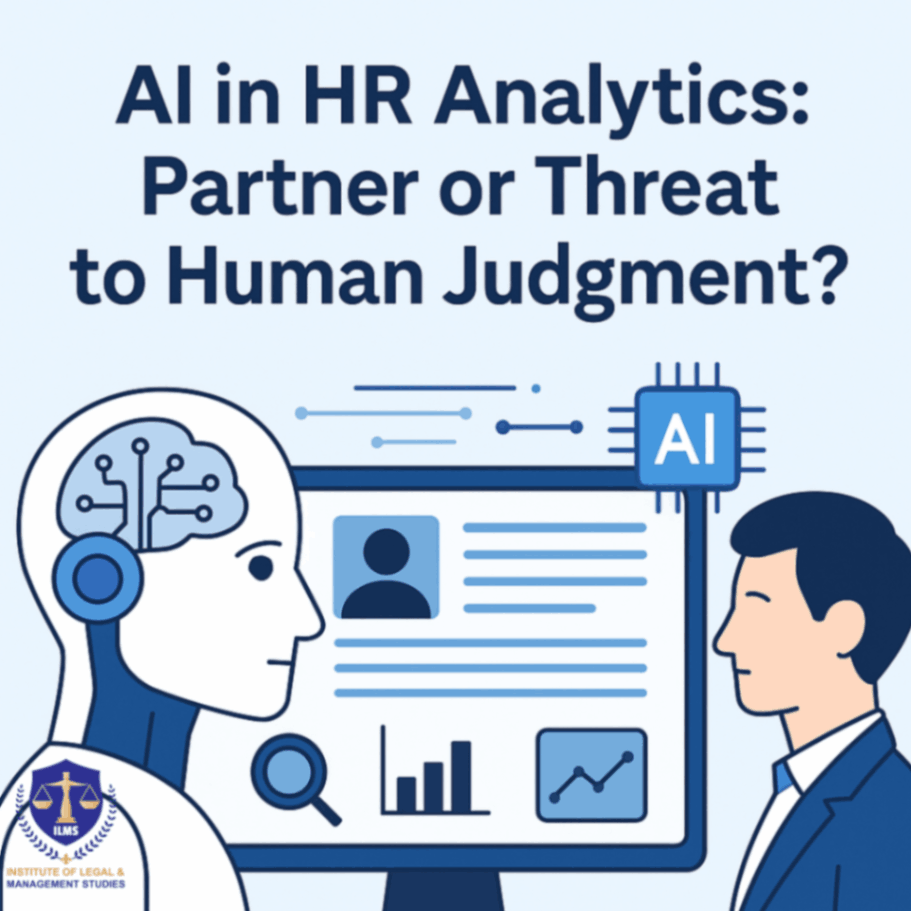
The central theme of this article revolves around a pivotal question: Is AI a partner to human judgment in HR, or does it pose a threat? Supporters argue that AI enhances human capabilities by reducing bias, improving efficiency, and enabling data-driven insights. Critics, however, warn against the over-reliance on opaque algorithms that may replicate existing biases or make dehumanized decisions.
This debate is not merely technological; it is deeply philosophical and ethical. It touches upon the nature of work, the role of human intuition, and the boundaries of automation. As AI becomes more embedded in HR practices, organizations must grapple with the implications—not just in terms of productivity, but in safeguarding fairness, empathy, and human dignity.
This article explores both sides of the argument in depth, beginning with the traditional role of human judgment in HR and tracing the rise of AI in analytics. It evaluates the advantages AI offers as a partner, the threats it may pose, real-world case studies, ethical and legal concerns, and the future trajectory of human-AI collaboration in HR. Through this comprehensive examination, we aim to provide a nuanced understanding of AI's place in the evolving HR landscape.
2. The Role of Human Judgment in Traditional HR Practices
2.1. Intuition, Experience, and Empathy in Decision-Making
For decades, HR decisions were driven by a blend of experience, intuition, and interpersonal understanding. A seasoned HR professional could assess a candidate’s potential in an interview, detect early signs of disengagement from body language, or mediate conflict with emotional intelligence. These skills, while subjective, are deeply rooted in human interaction and organizational culture.
Intuition in HR is often the result of accumulated experience and deep familiarity with people and processes. Empathy allows HR professionals to understand the context behind behaviors—why an employee might be underperforming or how external stressors might affect workplace dynamics. These human-centric qualities form the bedrock of compassionate and context-aware decision-making.
Despite its subjectivity, this approach has its strengths. It enables flexibility, sensitivity to individual circumstances, and a personalized approach to workforce management. In roles involving employee well-being, conflict resolution, and performance development, human judgment plays a critical role in creating trust and engagement.
2.2. Human Biases and Limitations
However, human judgment is not infallible. It is susceptible to a range of cognitive biases, including confirmation bias, halo effect, affinity bias, and unconscious discrimination. These biases can lead to unfair hiring practices, misjudged promotions, or inconsistent performance appraisals. For instance, a manager might favor a candidate who shares a similar background or penalize an employee due to stereotypes, even unconsciously.
Additionally, manual decision-making processes can be inconsistent, slow, and difficult to scale. Relying solely on human intuition can lead to subjective and anecdotal conclusions, especially when large datasets or patterns are involved. Without systematic analysis, it becomes challenging to identify organization-wide issues such as systemic turnover trends or widespread disengagement.
While human judgment is essential, these limitations underscore the need for tools that can bring objectivity, consistency, and scalability—qualities that AI promises to deliver.
2.3. The Evolving Role of HR Professionals
With the rise of data and technology, the role of HR professionals is undergoing a significant transformation. No longer confined to administrative tasks, modern HR practitioners are expected to be strategic partners who can leverage data to drive business outcomes. This evolution demands a new set of skills, including data literacy, technological proficiency, and the ability to interpret and act on complex insights.
Yet, even as data and AI become more central, the human element remains irreplaceable. HR professionals must balance analytical capabilities with emotional intelligence, ensuring that decisions reflect not just efficiency but empathy. The challenge lies in integrating AI into existing practices in a way that augments human judgment rather than replaces it.
In essence, the future of HR may not be a binary choice between human and machine, but a synergistic blend of both. Understanding how and where to draw that line is crucial as we delve into the rise of AI in HR analytics.
3. Rise of AI in HR Analytics
3.1. What is AI in the Context of HR?
Artificial Intelligence, in the HR context, refers to systems that can analyze employee data, recognize patterns, learn from experience, and make predictions or decisions with minimal human intervention. These systems range from simple chatbots that answer HR-related queries to sophisticated algorithms that assess job applicants or forecast workforce attrition.
AI tools in HR go beyond traditional analytics by offering predictive and prescriptive capabilities. For instance, rather than just reporting that turnover is high, an AI system might predict which employees are most at risk of leaving and suggest targeted interventions. Similarly, AI can recommend personalized learning modules based on individual performance trajectories and skill gaps.
Importantly, AI in HR does not function in isolation. It is integrated into broader platforms—such as Human Capital Management (HCM) systems—and often operates alongside data from other business units like finance or operations. This interconnectedness allows for a more holistic view of workforce dynamics and strategic planning.
3.2. Key Technologies (Machine Learning, NLP, Computer Vision)
The backbone of AI in HR is built on several core technologies:
- Machine Learning (ML): ML algorithms identify patterns in data and learn from them. In HR, they are used to predict employee behavior (e.g., likelihood to resign), optimize hiring (e.g., matching resumes to job descriptions), and assess performance trends over time.
- Natural Language Processing (NLP): NLP enables machines to understand and process human language. In HR, NLP powers chatbots, sentiment analysis tools, and resume parsers. It can analyze employee feedback from surveys or communication platforms to detect emerging issues.
- Computer Vision: Though less common in traditional HR, computer vision is being explored for video interview analysis, where algorithms assess facial expressions, tone, and micro-expressions to evaluate candidates—though this is controversial and raises ethical concerns.
These technologies, when applied responsibly, can offer insights that were previously inaccessible or difficult to obtain manually. They can uncover hidden trends, detect anomalies, and support real-time decision-making at scale.
3.3. Use Cases: Recruitment, Performance Management, Retention
AI is currently being deployed across various HR functions:
- Recruitment: AI tools screen resumes, rank candidates, schedule interviews, and even conduct preliminary assessments. Platforms like HireVue and Pymetrics use AI to evaluate candidates through video or game-based assessments.
- Performance Management: AI analyzes performance data, peer feedback, and goal attainment to offer continuous performance reviews rather than annual appraisals. It can also identify high performers and potential leaders early on.
- Employee Retention: Predictive models analyze absenteeism, engagement scores, compensation trends, and exit data to identify employees at risk of leaving. HR can then intervene proactively through personalized engagement strategies.
These applications demonstrate AI’s capacity to enhance operational efficiency, improve candidate and employee experiences, and deliver strategic insights. However, as we will explore in the next section, this growing reliance on AI also comes with significant implications for human judgment and organizational values.
4. Advantages of AI as a Partner in HR
4.1. Enhanced Decision-Making through Data-Driven Insights
One of the most profound contributions of AI in HR is its ability to enhance decision-making. Traditional HR decisions were often based on anecdotal evidence, subjective judgment, or delayed data analysis. AI changes this dynamic by offering real-time, data-driven insights that are both comprehensive and precise.
For instance, AI can evaluate performance trends across departments, correlate them with engagement levels, and suggest interventions. It can identify which hiring sources yield the most successful employees or which training modules improve productivity. These insights help HR leaders make strategic decisions grounded in evidence rather than assumptions.
- Certificate Course in Labour Laws
- Certificate Course in Drafting of Pleadings
- Certificate Programme in Train The Trainer (TTT) PoSH
- Certificate course in Contract Drafting
- Certificate Course in HRM (Human Resource Management)
- Online Certificate course on RTI (English/हिंदी)
- Guide to setup Startup in India
- HR Analytics Certification Course
Moreover, AI helps mitigate information overload. In large organizations where HR professionals deal with thousands of data points—from employee surveys to exit interviews—AI helps synthesize this information into digestible patterns and actionable insights. This analytical edge allows HR to move from reactive problem-solving to proactive workforce planning.
4.2. Eliminating Human Bias (to an extent)
One of the most promising yet contentious advantages of AI in HR is its potential to reduce human bias. Biases—whether conscious or unconscious—often infiltrate hiring, promotions, and performance evaluations. AI, when properly designed and trained, can help identify and minimize such biases by applying consistent rules across the board.
For example, AI systems can anonymize resumes during screening, focusing on skills and experience rather than names, genders, or educational backgrounds that might trigger unconscious biases. Some platforms even analyze historical hiring data to identify patterns of favoritism or discrimination.
However, it's critical to acknowledge that AI can only eliminate bias to an extent. If trained on biased historical data, AI may perpetuate or even amplify those biases. This underscores the importance of continuous monitoring, ethical design, and transparency in algorithm development—a point explored more deeply in later sections.
4.3. Automating Repetitive Tasks
AI's ability to automate repetitive and time-consuming tasks is a significant productivity booster. HR departments often spend considerable time on administrative functions like resume screening, scheduling interviews, answering common employee queries, or managing payroll inputs.
AI-powered chatbots, for instance, can handle basic HR-related inquiries such as leave policies or benefit enrollment. Robotic Process Automation (RPA) tools can automate data entry, compliance checks, and onboarding workflows. This not only saves time but also reduces the risk of human error.
By offloading these routine tasks to AI, HR professionals can focus on higher-order functions like strategic workforce planning, organizational culture building, and employee development. In this way, AI acts not as a replacement but as a supportive partner that elevates human potential.
4.4. Real-Time Monitoring and Predictive Analytics
Another strength of AI lies in its capacity for real-time monitoring and predictive analytics. Unlike traditional methods that analyze data after events occur, AI can assess ongoing activities and provide forward-looking insights.
For example, AI can analyze employee sentiment in real time by processing feedback from surveys, emails, or communication tools. If a team’s sentiment begins to decline, HR can intervene before disengagement turns into attrition. Similarly, AI models can predict future hiring needs based on business forecasts, market trends, and internal movement patterns.
Such predictive capabilities help organizations stay ahead of workforce challenges. Whether it's anticipating a spike in resignations or identifying emerging skills gaps, AI equips HR with a proactive rather than reactive mindset—crucial in today’s fast-paced business environment.
5. The Threat Perspective: Where AI Might Undermine Human Judgment
5.1. Over-Reliance on Algorithms
One of the chief concerns about integrating AI into HR is the risk of over-reliance on algorithms. While AI can provide powerful recommendations, it is not infallible. Algorithms function based on the data and rules they are given—if those are flawed or incomplete, the output will be too.
In critical HR functions such as hiring, firing, or performance evaluations, placing full trust in algorithmic decisions can be dangerous. For instance, an AI system might reject a qualified candidate simply because their profile doesn’t match predefined data points. Or it may misinterpret disengagement signals, prompting unnecessary interventions.
Over-reliance on AI can lead to a loss of critical thinking and human oversight. It may cause HR professionals to defer responsibility to machines rather than question, contextualize, or challenge the decisions AI makes. This mechanical approach can erode the trust and emotional nuance that HR is built upon.
5.2. Hidden Biases in Data and Models
While AI is often touted as a solution to human bias, it can also inherit and entrench existing biases present in training data. AI learns from historical datasets, and if those datasets reflect discriminatory practices—such as hiring mostly men for leadership roles—the AI might replicate those patterns in future recommendations.
These hidden biases are not always apparent, making them even more insidious. For example, Amazon famously scrapped an AI recruiting tool after discovering it downgraded resumes with the word "women’s" (as in “women’s chess club”) because it had been trained on resumes submitted over a decade, mostly by men.
Such cases highlight the danger of assuming AI is neutral. Bias mitigation requires continuous auditing of algorithms, diverse data inputs, and inclusive model design. Without these precautions, AI could perpetuate inequality under the guise of objectivity.
5.3. Loss of Human Empathy and Contextual Understanding
AI lacks emotional intelligence and the ability to understand nuance in human interactions. It processes information logically, but it cannot grasp context in the same way a human can. This can be particularly harmful in HR scenarios that require empathy, such as addressing grievances, evaluating mental health risks, or managing conflicts.
For instance, an AI tool may flag an employee for underperformance based on metrics without understanding that the individual is dealing with a personal crisis. Similarly, automated feedback systems may come across as impersonal or insensitive, undermining morale.
Human empathy is a cornerstone of effective HR. If AI decisions override or diminish this capacity, the result could be a workplace that feels cold, mechanical, and disconnected from employee realities.
5.4. Ethical Dilemmas in AI-Driven HR
The use of AI in HR introduces a host of ethical dilemmas. Should an employee be passed over for promotion based on a prediction model? Is it fair to use sentiment analysis on internal communications without explicit consent? How transparent should algorithmic decision-making be?
These questions touch on issues of privacy, autonomy, accountability, and consent. The lack of legal clarity around AI use in employment further complicates matters. In many jurisdictions, there are limited regulations governing algorithmic decisions in HR, raising concerns about due process and employee rights.
Moreover, ethical use of AI demands transparency—employees should be informed about how AI systems are being used, what data is being collected, and how decisions are made. Without this transparency, trust in both AI and the HR function can erode rapidly.
6. Case Studies
6.1. AI in Recruitment at Unilever
Unilever is a leading example of how AI can transform the recruitment process. The company implemented AI tools to screen resumes, conduct video interviews, and assess candidate performance through gamified cognitive tests. These tools used natural language processing and facial analysis to evaluate traits like confidence and emotional intelligence.
As a result, Unilever reduced the time to hire by 75% and significantly expanded its candidate pool by removing human screening bottlenecks. Importantly, they maintained transparency with candidates and used human recruiters to make the final decisions, preserving a balance between technology and empathy.
This case highlights the potential of AI as a partner—enhancing efficiency without eliminating the human element.
6.2. IBM’s Use of Predictive Analytics in Retention
IBM has long been at the forefront of HR analytics. The company developed AI models that could predict which employees were likely to quit with 95% accuracy. These predictions were based on factors like role changes, commute time, engagement levels, and performance data.
Using these insights, IBM’s HR team initiated personalized interventions, such as offering remote work options or new learning opportunities. According to IBM, this proactive approach helped save over $300 million in retention costs.
- Certificate Course in Labour Laws
- Certificate Course in Drafting of Pleadings
- Certificate Programme in Train The Trainer (TTT) PoSH
- Certificate course in Contract Drafting
- Certificate Course in HRM (Human Resource Management)
- Online Certificate course on RTI (English/हिंदी)
- Guide to setup Startup in India
- HR Analytics Certification Course
This case demonstrates how AI can serve as a strategic partner in workforce planning when guided by thoughtful human action.
6.3. Amazon’s Failed AI Hiring Tool – Lessons Learned
Amazon’s attempt to automate hiring using AI backfired when the system showed gender bias. The algorithm penalized resumes containing the word “women’s” and favored those with masculine language—because it was trained on a decade of resumes mostly submitted by men.
Despite attempts to fix the issue, Amazon eventually abandoned the tool, recognizing that the system’s foundation was fundamentally biased. This failure underscores the importance of ethical AI design and the dangers of uncritically trusting machine outputs.
It also illustrates the “threat” side of the debate: without proper oversight, AI can amplify discrimination and make biased decisions at scale.
6.4. Small Business Use of AI in HR: Boon or Bane?
Small and medium-sized enterprises (SMEs) are increasingly adopting AI tools to streamline HR processes due to limited budgets and HR personnel. Solutions like chatbots for candidate communication or resume screeners help SMEs stay competitive.
However, SMEs often lack the resources to audit and customize AI tools. They may rely on third-party vendors without fully understanding how the algorithms work or whether they comply with ethical and legal standards. This creates a risk of unintended discrimination or poor hiring outcomes.
For small businesses, AI can be a boon if implemented carefully—but without proper guidance, it may create more problems than it solves.
7. Human-AI Collaboration Models in HR
7.1. Augmented Intelligence vs Fully Automated Systems
The concept of augmented intelligence refers to AI systems designed to assist rather than replace human decision-makers. In HR, this model encourages collaboration—where AI provides recommendations, insights, and automation, but the final decision lies with the human professional. This contrasts with fully automated systems, where AI makes decisions with little or no human involvement.
In recruitment, for example, an augmented intelligence model might have an AI rank applicants based on skills and experience, but a human recruiter still reviews and interviews the candidates. In contrast, a fully automated system might select candidates, conduct initial interviews via chatbots, and shortlist applicants without human input.
While full automation offers speed and scalability, it risks eliminating the context, empathy, and ethical judgment that only humans can bring. Augmented intelligence is generally seen as the safer and more effective path, particularly in people-centric functions like HR, where nuances matter greatly.
7.2. Co-Pilot Models for Decision Support
The “co-pilot” model is a practical application of augmented intelligence, where AI tools act as intelligent assistants that guide, inform, and enhance human decision-making. In HR, this might involve dashboards that alert managers about performance anomalies, attrition risks, or workforce imbalances.
These AI-driven co-pilots don't replace the human operator—they empower them. For instance, an HR business partner could use AI-generated forecasts to support budget planning or identify employees who may be ready for promotion based on data trends and competencies.
By surfacing the most relevant data and providing predictive models, AI co-pilots reduce information overload and help HR teams focus on what matters. This model supports both efficiency and empathy by allowing humans to remain at the helm while AI assists in navigating complexity.
7.3. The Role of HR Professionals in Training AI
AI systems learn from data—and HR professionals play a crucial role in ensuring that the data fed into these systems is accurate, unbiased, and meaningful. This is known as training the AI, and it involves curating datasets, labeling data correctly, and defining appropriate metrics for success.
Moreover, HR teams are often the first line of ethical review. They must ensure that AI models reflect organizational values, adhere to labor laws, and treat employees fairly. This includes spotting potential issues in AI-generated outputs, refining algorithms over time, and collaborating with data scientists to continuously improve model behavior.
By actively participating in AI development and monitoring, HR professionals help ensure that AI remains a tool that supports—rather than undermines—organizational integrity and employee trust.
8. Ethical, Legal, and Social Implications
8.1. Data Privacy and Consent
HR departments handle highly sensitive personal data, from salary information to health records and psychological assessments. With AI systems processing this data, ensuring privacy and informed consent becomes even more critical.
AI tools may collect data passively—from email sentiment, calendar patterns, or biometric inputs—often without employees being fully aware. Without explicit consent and clear communication, this can lead to significant privacy breaches and mistrust.
Organizations must adopt robust data governance policies: employees should be informed about what data is collected, how it is used, and who has access. Consent must be opt-in, not hidden in lengthy terms of service. Data anonymization, encryption, and retention policies must align with ethical and legal expectations.
8.2. Fairness, Transparency, and Explainability
One of the biggest criticisms of AI in HR is the black-box nature of many algorithms—where the decision-making process is so complex that even developers can't fully explain how an output was generated. In HR, this lack of transparency can be deeply problematic.
Employees have a right to understand how they are being evaluated, selected, or promoted. AI systems used for such purposes must be explainable, meaning the logic behind their decisions should be understandable to non-technical users.
Fairness is also a legal and moral requirement. Organizations must actively test AI tools for disparate impact—where decisions unintentionally disadvantage certain groups—and correct biases when detected. Without proactive bias audits and fairness frameworks, AI can reinforce systemic inequalities instead of addressing them.
8.3. Regulations and Compliance in HR Tech
Legal regulations around AI in HR are evolving but often lag behind technological advances. In some regions, there are emerging laws that mandate algorithmic transparency, auditability, and consent. For instance, the EU AI Act and New York City's Automated Employment Decision Tools Law place strict conditions on how AI can be used in hiring.
Organizations must stay ahead of this legal curve by implementing compliance by design. This means building AI systems that naturally comply with data protection laws (like GDPR), labor rights, and anti-discrimination laws. Collaboration between HR, legal, and IT departments is crucial to avoid costly legal pitfalls and protect employee rights.
9. The Future Outlook
9.1. Evolving Skillsets for HR Professionals in the Age of AI
As AI becomes a staple in HR operations, the skillset required of HR professionals is evolving rapidly. Beyond people skills and organizational development expertise, modern HR roles increasingly demand data literacy, technological fluency, and ethical reasoning.
HR professionals must learn how to interpret AI outputs, question automated recommendations, and work effectively with data scientists and technologists. Understanding basic principles of machine learning, data visualization, and statistical reasoning will become essential for making informed decisions.
At the same time, soft skills like empathy, communication, and conflict resolution remain irreplaceable. The HR leaders of the future must be hybrid thinkers—able to bridge the human and the technological.
- Certificate Course in Labour Laws
- Certificate Course in Drafting of Pleadings
- Certificate Programme in Train The Trainer (TTT) PoSH
- Certificate course in Contract Drafting
- Certificate Course in HRM (Human Resource Management)
- Online Certificate course on RTI (English/हिंदी)
- Guide to setup Startup in India
- HR Analytics Certification Course
9.2. Reimagining HR as Strategic Advisors with AI Support
The infusion of AI offers HR professionals a unique opportunity to reimagine their role—not as administrators, but as strategic advisors who shape workforce strategy, culture, and leadership development. With AI handling repetitive tasks and providing rich insights, HR can spend more time on high-impact initiatives.
From designing inclusive policies to supporting organizational transformation, AI enables HR to contribute at the C-suite level. Instead of being reactive, HR becomes predictive and proactive—identifying future workforce needs, skill gaps, and engagement trends before they become critical.
This transition requires a mindset shift. HR must see AI not as competition but as a collaborator, expanding what’s possible in their strategic purview.
9.3. AI Governance in HR: Best Practices and Frameworks
To ensure responsible AI use in HR, organizations must adopt AI governance frameworks. These are structured approaches to oversee the development, deployment, and monitoring of AI systems, ensuring they align with ethical, legal, and strategic goals.
Key best practices include:
- Establishing AI ethics committees with diverse representation
- Conducting regular audits of algorithms for fairness and bias
- Ensuring explainability of key HR decisions made or supported by AI
- Defining accountability—who is responsible if the AI system errs?
Frameworks like the OECD AI Principles or IEEE’s Ethically Aligned Design offer useful guidelines for creating transparent, trustworthy, and human-centric AI systems.
9.4. Is a Human-in-the-Loop the Ideal Future?
The human-in-the-loop (HITL) approach is increasingly viewed as the gold standard for using AI in sensitive areas like HR. In this model, humans oversee, validate, and override AI decisions where necessary, ensuring that final decisions are accountable and ethical.
HITL balances the power of automation with the judgment, empathy, and contextual awareness of human professionals. It ensures that AI enhances—not replaces—human capabilities and that crucial decisions remain aligned with organizational values and human dignity.
As AI becomes more sophisticated, this hybrid model ensures a future where technology and humanity coexist productively—each playing to its strengths in service of better outcomes.
10. Conclusion
10.1. Revisiting the Partner vs Threat Debate
The question that has echoed throughout this article—Is AI in HR a partner or a threat to human judgment?—does not have a binary answer. Rather, the evidence suggests a nuanced reality. On one hand, AI emerges as a transformative partner that enables data-driven insights, enhances efficiency, reduces human bias, and supports proactive decision-making. On the other hand, when implemented without due diligence, AI poses real threats: amplifying hidden biases, dehumanizing sensitive processes, and eroding employee trust through opaque decision-making.
In several areas—recruitment, performance management, retention planning—AI has shown immense potential to complement human effort. Yet, its power becomes dangerous when treated as a replacement for human thinking rather than an augmentation. The most responsible approach recognizes that AI is a tool, not a decision-maker. It is as effective—and as fair—as the people and systems that build, train, and monitor it.
Thus, the debate should not be about whether AI is inherently good or bad, but how it is designed, deployed, and governed. When paired with human values, empathy, and oversight, AI can be a powerful ally. When left unchecked, it can turn into an unaccountable force that threatens fairness and trust in the workplace.
10.2. Finding the Balance Between Human and Machine
Striking the right balance between machine precision and human compassion is the crux of responsible AI use in HR. Neither extreme—pure automation nor complete human subjectivity—serves the modern workforce. The future lies in a collaborative model, where AI handles complexity and scale, while humans provide context, ethical judgment, and emotional intelligence.
In this balanced approach:
- AI systems act as co-pilots, surfacing insights and forecasting risks.
- HR professionals remain at the center, interpreting AI outputs and making final calls.
- Governance frameworks ensure AI tools are fair, transparent, and auditable.
- Employees are informed stakeholders, aware of how technology influences their careers.
This partnership requires continual learning, not only for AI systems but for HR practitioners themselves. Upskilling in data literacy, AI ethics, and digital fluency is essential. Equally important is a commitment to inclusivity, employee rights, and a culture that values both innovation and humanity.
10.3. Final Thoughts and Recommendations
The integration of AI into HR analytics is not a passing trend—it is a structural shift that is redefining the future of work. Organizations that embrace this shift thoughtfully will gain strategic advantages. Those that rush forward without guardrails risk reputational damage, employee distrust, and regulatory scrutiny.
To ensure AI in HR remains a partner—not a threat—organizations should:
- Embed human-in-the-loop systems into all critical decision points.
- Conduct regular algorithmic audits to check for bias, fairness, and legal compliance.
- Establish clear communication with employees about the use of AI, ensuring transparency and informed consent.
- Invest in training for HR professionals to develop both technical and ethical AI competencies.
- Adopt inclusive design principles, ensuring diverse perspectives shape AI tools from the start.
Ultimately, the goal is not to choose between human judgment and artificial intelligence—but to combine their strengths. By doing so, HR can evolve into a truly strategic function—guided by data, powered by technology, and grounded in empathy.
In this new era, the most successful organizations will be those that use AI not to replace people, but to empower them—creating workplaces that are not only efficient, but also fair, inclusive, and deeply human.
FAQ Section
1. What is AI in HR Analytics?
AI in HR Analytics refers to the use of artificial intelligence technologies—such as machine learning, natural language processing, and predictive algorithms—to analyze HR data, automate tasks, and support decision-making in areas like hiring, performance management, and employee engagement.
2. How does AI improve decision-making in HR?
AI enhances decision-making by processing vast amounts of workforce data to uncover trends, predict outcomes (like attrition risk), and recommend tailored actions. It brings objectivity, speed, and data-backed insights that help HR professionals make smarter, proactive decisions.
3. Can AI reduce human bias in hiring and promotions?
Yes, AI can help reduce bias by applying consistent criteria to candidate screening or performance evaluation. However, if the training data itself is biased, AI may replicate or even amplify those biases—so regular audits and ethical oversight are essential.
4. Is AI in HR a replacement for human professionals?
No. AI is best used as a partner, not a replacement. While it can handle repetitive tasks and surface insights, human judgment, empathy, and ethical reasoning remain crucial—especially in sensitive areas like conflict resolution, coaching, and employee well-being.
5. What are the risks of over-relying on AI in HR?
Over-reliance can lead to blind trust in algorithms, loss of empathy, unfair decisions, and legal risks if AI systems are opaque or flawed. It may also cause disengagement among employees if they feel dehumanized or surveilled by automated systems.
6. What is the human-in-the-loop approach in HR AI systems?
This is a governance model where AI supports decision-making, but humans always review and validate the final decisions. It ensures that critical HR outcomes remain aligned with ethics, legality, and organizational culture.
7. How do organizations ensure fairness and transparency in AI-driven HR?
By conducting regular bias audits, using explainable AI models, maintaining transparent communication with employees, and involving diverse teams in AI development, companies can build fairness and accountability into their HR systems.
8. Are there legal regulations around using AI in HR?
Yes, though they vary by country. The EU AI Act, GDPR, and U.S. laws like New York City's AEDT Law impose requirements around transparency, bias audits, and consent when using AI for employment decisions. Legal compliance is a growing area of concern.
9. How can HR professionals prepare for an AI-driven future?
HR professionals should develop skills in data literacy, AI ethics, technology adoption, and strategic workforce planning. Staying informed about AI trends and participating in training programs will be essential for future-ready HR roles.
10. Is AI in HR more beneficial for large companies or small businesses?
While large enterprises often have the resources to customize and govern AI tools, small businesses also benefit by automating HR tasks and improving efficiency. However, SMEs must choose AI vendors carefully and stay informed about risks and legal responsibilities.
- Certificate Course in Labour Laws
- Certificate Course in Drafting of Pleadings
- Certificate Programme in Train The Trainer (TTT) PoSH
- Certificate course in Contract Drafting
- Certificate Course in HRM (Human Resource Management)
- Online Certificate course on RTI (English/हिंदी)
- Guide to setup Startup in India
- HR Analytics Certification Course